


Anyone who uses a weight-loss injection will eventually eat considerably less. That is exactly the point: GLP-1 receptor agonists enhance the feeling of satiety, slow gastric emptying and dampen appetite, so that daily energy intake can drop by up to 40 %. That is the lever through which the weight comes off. But it also means: as the amount of food drops, so does the amount of vitamins and minerals you take in at all. And because many people eat not only less but also more one-sidedly under the injection, certain nutrients slip into deficit particularly quickly.
Weight-loss injections are prescription-only medications that are medically supervised. This article does not replace that supervision. It explains which vitamins and minerals most often become scarce under a GLP-1 therapy, why this happens, what you can do about it and how to have your status checked by a doctor. Supplementation is neither a substitute for the injection nor an enhancer of its effect, but a tool to close supply gaps that arise from the changed eating behaviour.
Why nutrient supply suffers under GLP-1
The mechanism is both simple and unpleasant. Your food is the only relevant source for most vitamins and minerals. When the amount drops sharply, intake drops too, even if you generally eat healthily. With a reduction in energy intake of up to 40 %, it is barely possible arithmetically to cover all micronutrients in sufficient amounts at the same time, especially as the basic micronutrient requirement remains regardless of calorie quantity.
On top of that comes the changed variety. Many users report that under the injection not only appetite but also preferences shift. Meat, which provides plenty of iron and B12, is often perceived as heavy, and with fatty fish an important source for omega-3 supply falls away at the same time. Early satiety means that it is precisely the nutrient-dense components that are left on the plate at the end. Anyone who is full after two bites tends to eat what goes down easily, not what provides the most.
The result: the body gets fewer raw materials, precisely in a phase when it is under demand. Weight loss means remodelling, and remodelling needs building blocks. A recent study on GLP-1 users (Frontiers in Nutrition 2025, contextualised among other things in a joint expert recommendation in the AJCN 2025) observes that several micronutrients particularly often slip below the recommended intake. It is exactly these that we now go through one by one.
Which nutrients most often become scarce under the weight-loss injection
The nutrients that most often become scarce among GLP-1 users in studies are vitamin D, magnesium, potassium, choline, iron, vitamin B12, calcium and thiamin (vitamin B1). This is no random pattern: it hits precisely the nutrients that are either hard to cover through food anyway or are found in the foods that are the first to fall away under the injection. Below you will find, for each one, its role in the body, why it becomes scarce and what you can concretely do.
Vitamin D
Vitamin D is involved in bones, muscle and the immune system. In line with the specifications of the European Food Safety Authority (EFSA), it contributes to the maintenance of normal muscle function, to the maintenance of normal bones and to the normal function of the immune system. Muscle function in particular is relevant under the injection, because muscle mass is also lost during weight loss.
Vitamin D is already widely too low in the general population, because the body forms it mainly via sunlight and takes in only a little through food. Under a reduced amount of food, the already small dietary source becomes even smaller. Requirements can be covered practicably via a targeted preparation. How much makes sense and what matters when combining it with vitamin K2 is explained in the Vitamin D3 + K2 guide.
Magnesium
Magnesium is involved in over three hundred enzymatic processes and, according to EFSA, contributes to normal muscle function, normal protein synthesis, electrolyte balance and a reduction of tiredness and fatigue. Especially in the transition phase, when the body has to cope with less food and a changed fluid balance, electrolytes are a topic.
Magnesium is among the most frequently undersupplied minerals among GLP-1 users. It is found in wholegrain products, nuts, legumes and green vegetables, that is, in foods that quickly fall short when the amount eaten is low. Anyone who wants to adjust here will find the basics on requirements and forms in the Magnesium guide.
Potassium
Potassium is a central electrolyte for muscle and nerve function and for the fluid balance. It becomes scarce under the injection because it is found mainly in fruit, vegetables and potatoes, and these amounts are often not reached with early satiety. With gastrointestinal side effects such as vomiting or diarrhoea, additional potassium can be lost.
Potassium is a nutrient where self-dosing via preparations is not advisable, because too much of it can affect heart rhythm. The practicable route is through diet and, if a deficiency is suspected, through medical clarification. With persistent gastrointestinal complaints, this is a point you should actively raise.
Choline
Choline is an often overlooked nutrient that is needed for the fat metabolism of the liver and for the function of cell membranes. The main sources are eggs, meat and fish, that is, exactly the protein-rich, more substantial foods that often become harder to eat under the injection.
Because choline is rarely measured and not covered in many multivitamins, a deficiency hardly stands out. The obvious route here is to deliberately bring eggs and lean protein into the diet, as far as appetite allows. A protein-oriented diet often covers choline automatically. How to build meals when appetite is low is covered in the article Nutrition under the weight-loss injection: what to eat when appetite is gone.
Iron
Iron is indispensable for oxygen transport in the blood and for energy provision. A deficiency often shows up as fatigue, pallor and declining resilience, all symptoms that are easily attributed to the diet itself during a calorie-reduced phase, even though such deficiency symptoms can be recognised early.
Iron becomes scarce under the injection because red meat, as the main source of well-available iron, is often among the foods perceived as too heavy. Iron is also a nutrient where uncontrolled supplementation is not advisable, because too much strains the body. Iron preparations therefore belong in medical hands, ideally after a blood test. At Fifty Five we currently do not have iron in our range, but we consider it important enough to name it clearly here. Incidentally, plant-based iron can be utilised better if you combine it with vitamin C, something that should also be kept in mind for supply.
Vitamin B12
Vitamin B12, according to EFSA, contributes to normal energy-yielding metabolism, the normal functioning of the nervous system, normal psychological function and the formation of red blood cells. Anyone who feels tired, listless and foggy should keep B12 in mind, even though these symptoms can have many causes.
B12 is found almost exclusively in animal foods, above all in meat, fish, eggs and dairy products. It is precisely these that often fall away first under the injection. On top of that: B12 is already a topic for many people without the injection, for example with a plant-based diet. A well-dosed preparation reliably closes this gap. What matters when choosing is covered in the Multivitamin guide: what belongs and what doesn't.
Calcium
Calcium is the central building block for bones and teeth and is involved in muscle contraction and blood clotting. Especially in a phase of weight loss, in which bone metabolism is also under demand, a stable calcium supply is important.
Calcium becomes scarce because dairy products and calcium-rich vegetables often fall short when the amount eaten is reduced. Calcium and vitamin D work together here: vitamin D contributes to the normal absorption and utilisation of calcium. We currently do not have calcium in our range at Fifty Five either. The practicable route is to deliberately plan calcium-rich foods and, where there is well-founded suspicion, to have the status checked by a doctor.
Thiamin (vitamin B1)
Thiamin, that is, vitamin B1, according to EFSA contributes to normal energy-yielding metabolism and the normal function of the nervous system. It plays a key role in converting carbohydrates into usable energy. A deficiency makes itself felt among other things through exhaustion.
Thiamin becomes scarce under sharply reduced food intake because it is barely stored by the body and must be continuously supplied through food. Wholegrain products, legumes and meat are the main sources. If the amount falls away, thiamin intake quickly drops too. A broadly based multivitamin usually covers B1 as well.
How to have your nutrient status checked by a doctor
The most important point up front: you do not have to guess. Much can be measured. Since weight-loss injections are medically supervised anyway, the status of micronutrients is a topic that belongs in this supervision. Actively raise that you eat considerably less under the therapy and want to keep an eye on your supply.
Well determinable via the blood are, among others, vitamin D, vitamin B12, iron including ferritin as a storage value, potassium and calcium. Serum magnesium is only of limited significance, because the bulk sits in the cells, but together with the symptoms it gives an indication. It makes sense to have a baseline value before starting or early in the therapy and to check again over the course.
Professional nutritional counselling complements the medical supervision well. It helps to get the maximum of nutrients out of little food, instead of simply cutting amounts. That is exactly the core: not eating less and hoping, but eating more deliberately and consciously closing gaps.
What you can do against nutrient gaps under the weight-loss injection
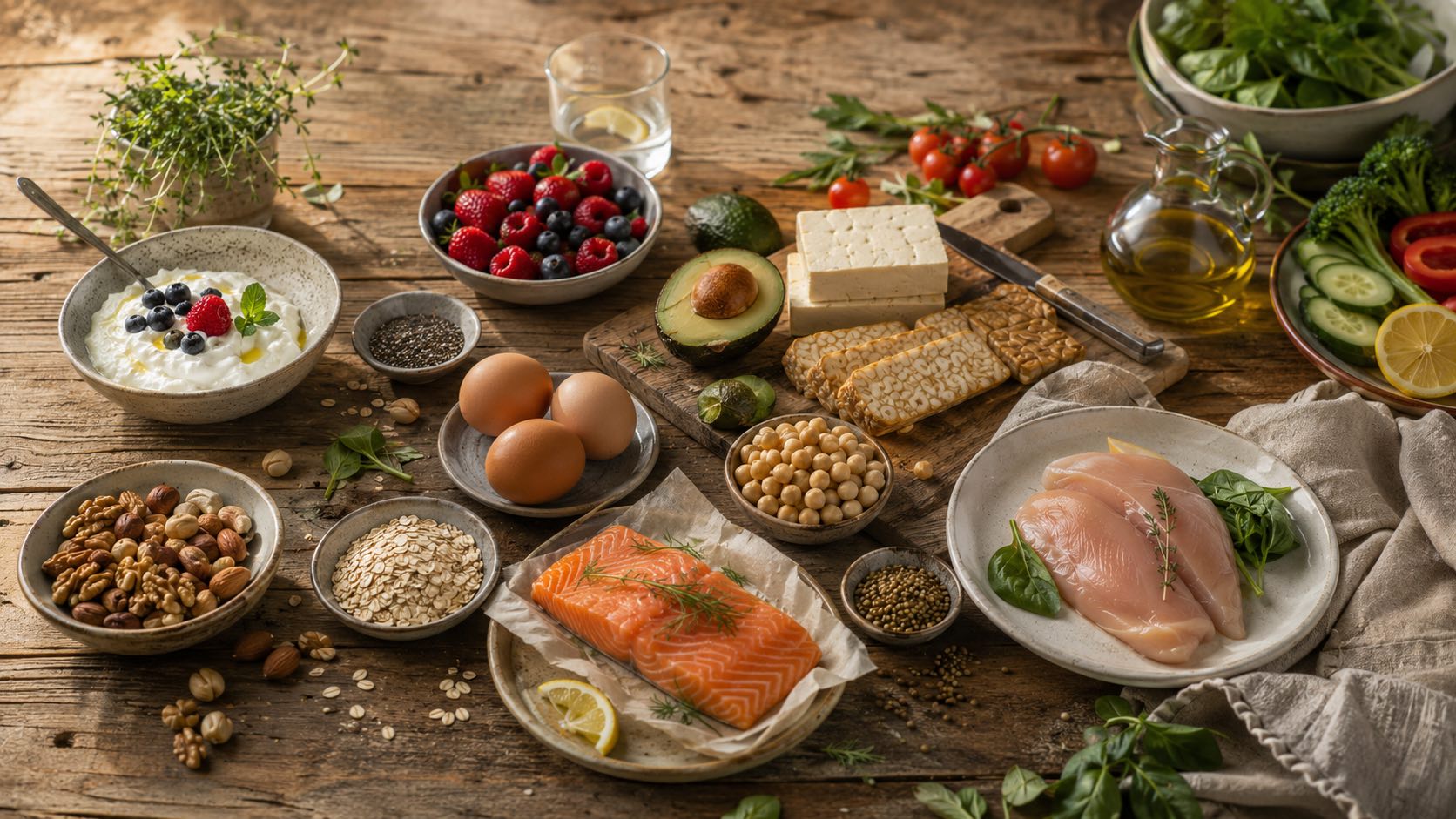
The expert recommendation comes down to two pillars: a diet that is as nutrient-dense as possible and, to cover remaining gaps, a well-composed multivitamin. Nutrient-dense means that each meal provides as much nutritional value per bite as possible, because the bites are limited under the injection. Protein, vegetables and good fats first, empty calories last.
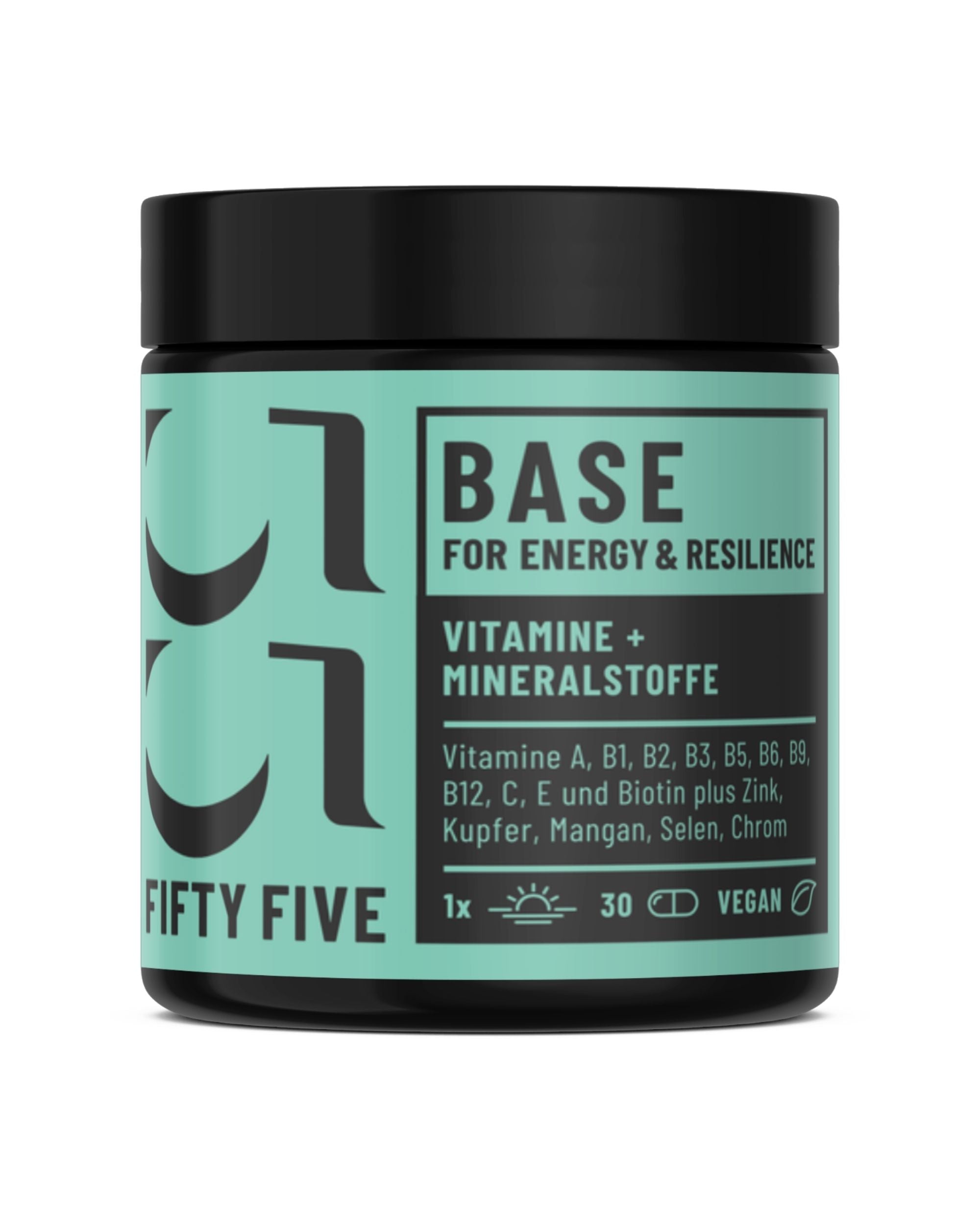
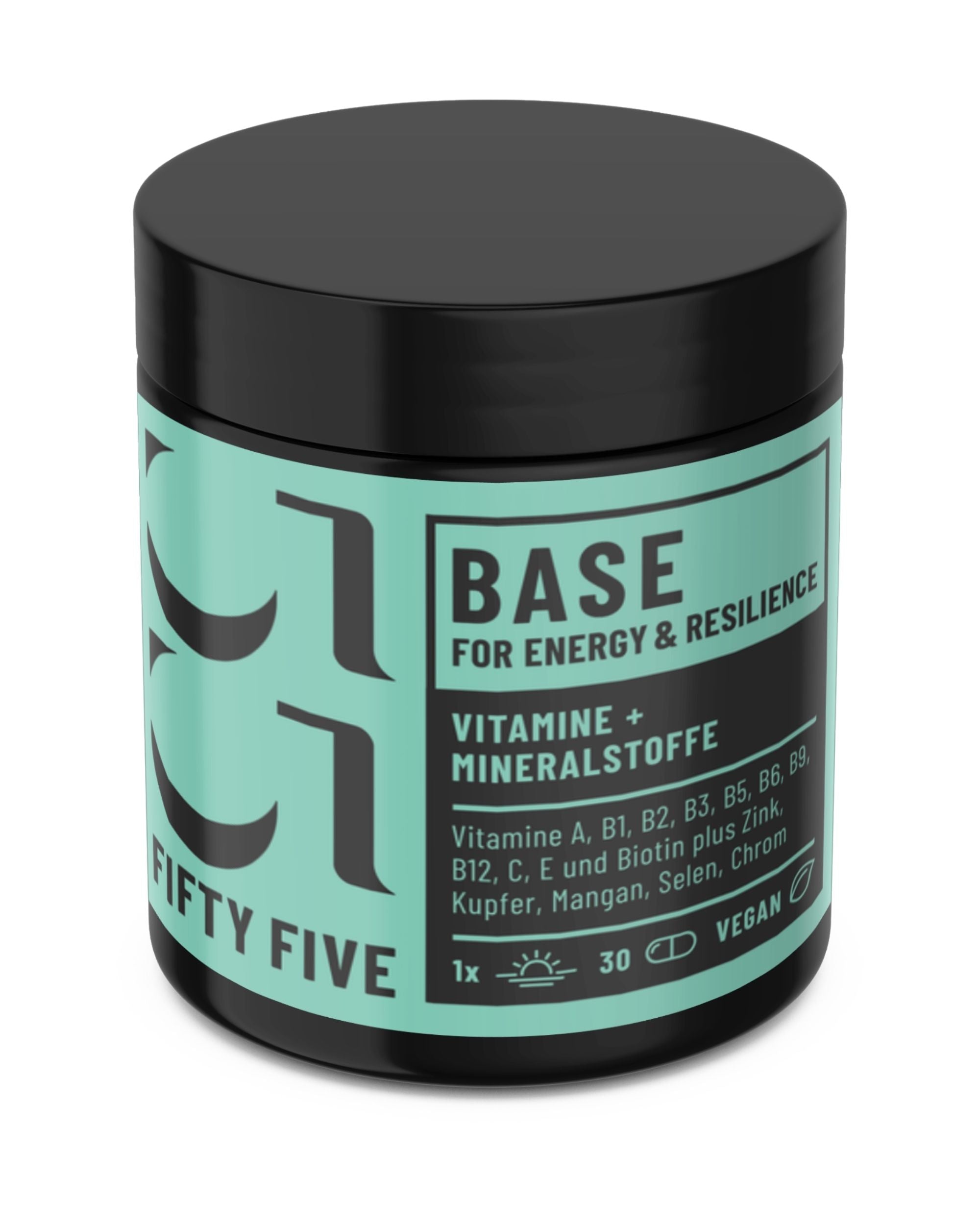
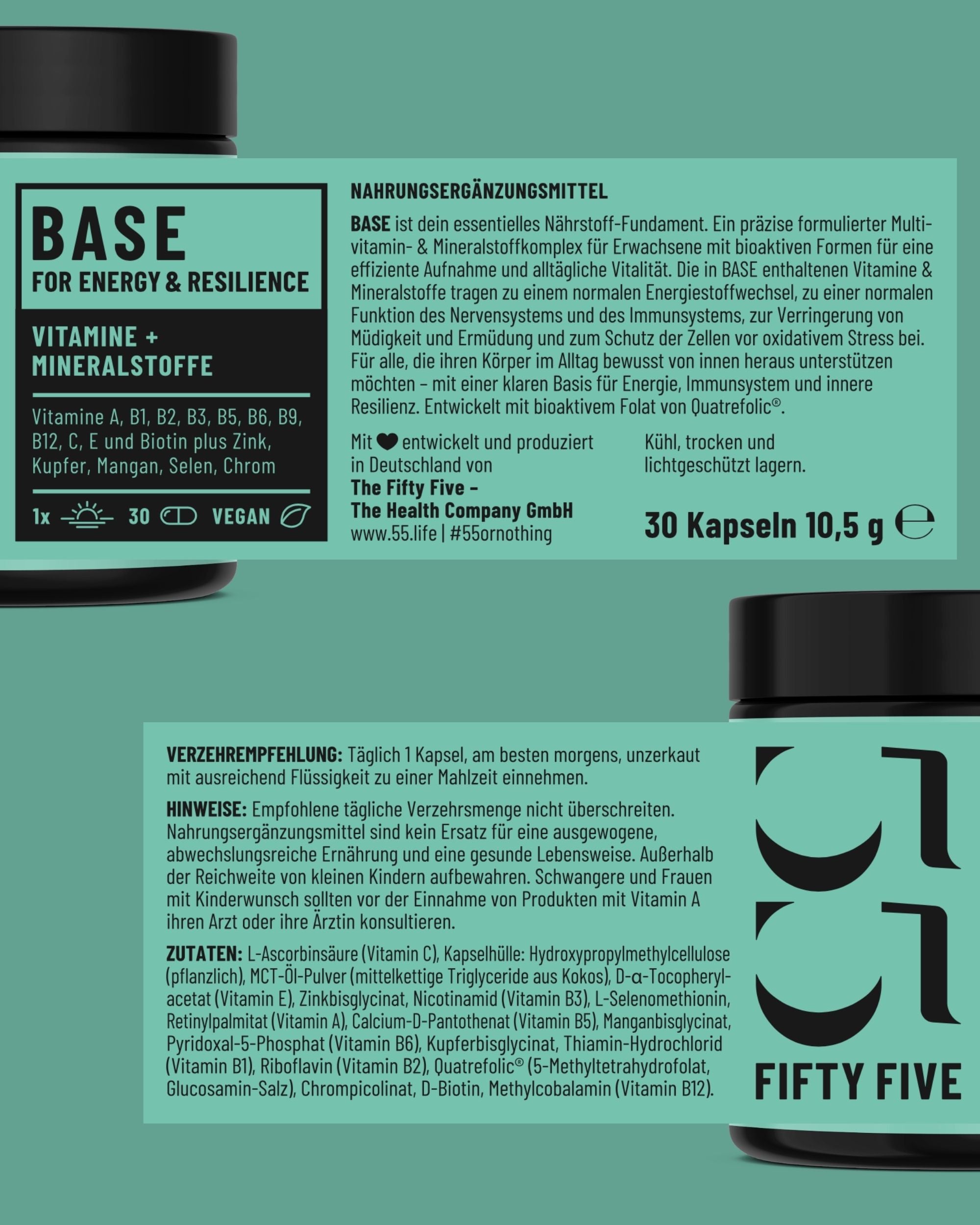
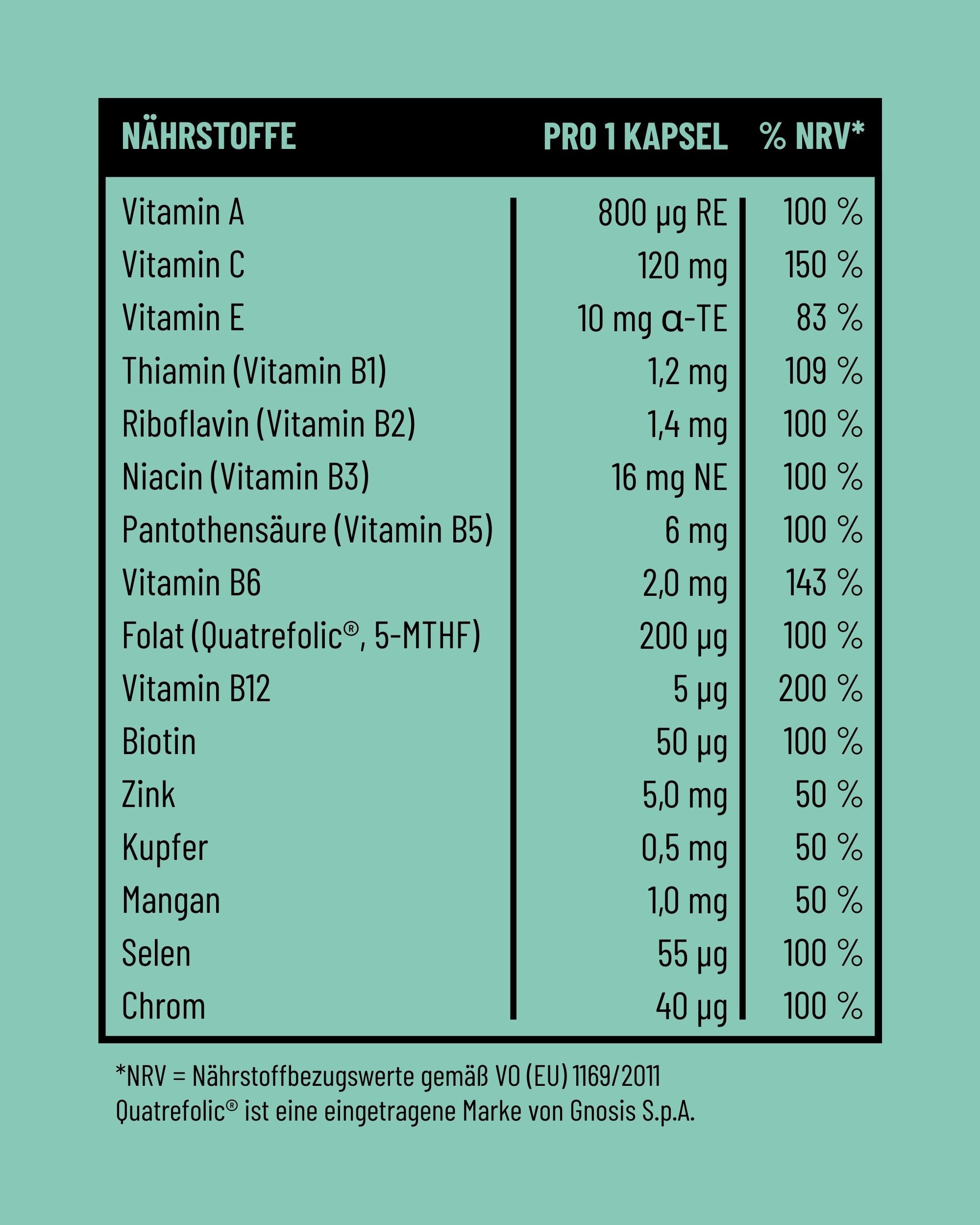
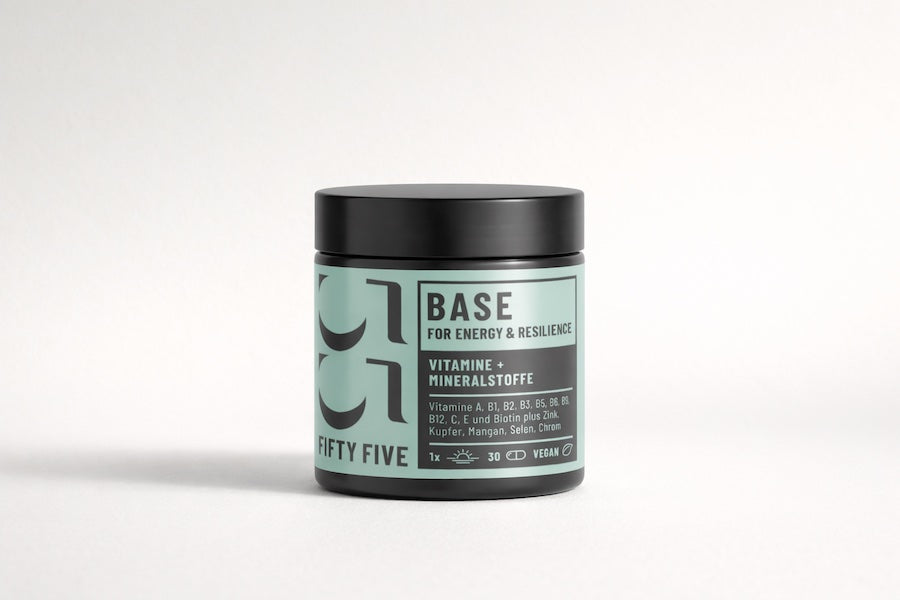
As a broad foundation, BASE by Fifty Five is a good option. BASE provides a broad micronutrient base with vitamin C, zinc, selenium, folate and several B vitamins. With regard to the typical GLP-1 deficits, two ingredients are particularly relevant: vitamin B12 as methylcobalamin, which contributes to normal energy-yielding metabolism and the normal functioning of the nervous system, and thiamin, which likewise contributes to normal energy-yielding metabolism. Both are among the nutrients that quickly become scarce under a reduced amount of food.
The correct allocation is important, because BASE does not cover everything. Vitamin D is not included and is covered specifically via RISE, which contributes to the maintenance of normal muscle function, to the maintenance of normal bones and to the normal function of the immune system. Magnesium is likewise not in BASE, but is covered via CALM, which contributes to normal muscle function, to electrolyte balance and to a reduction of tiredness and fatigue. Iron and calcium we currently do not have in our range, but both are important enough to keep under medical review.
Which supplements under the injection are professionally justified and where the hype begins is assessed in the article Which supplements really make sense under the weight-loss injection. You will find the overall overview of effects, risks, nutrition and muscle preservation in the complete guide to the weight-loss injection.
FAQ
Which nutrients most often become scarce under the weight-loss injection?
In studies, vitamin D, magnesium, potassium, choline, iron, vitamin B12, calcium and thiamin (vitamin B1) most often become scarce. The reason is the sharply reduced amount of food, often by up to 40 %, combined with lower variety and early satiety. Particularly affected are nutrients from meat, fish, wholegrain and vegetables, that is, exactly the foods that often fall short under the injection.
Should I take a multivitamin under the weight-loss injection?
Under GLP-1 therapy, experts often advise a nutrient-dense diet and, in addition, a multivitamin to close supply gaps. A multivitamin is neither a substitute for good nutrition nor an enhancer of the injection, but a tool to cover the gaps arising from eating little. Which preparation fits depends on your individual status, which you should have checked by a doctor.
How do I have my nutrient status checked?
Via a blood test at your doctor's, ideally as part of the supervision of the therapy that is needed anyway. Well measurable are, among others, vitamin D, vitamin B12, iron including ferritin, potassium and calcium. A baseline value early in the therapy and a check over the course make sense, so that deficits stand out early.
Why do I lose energy under the weight-loss injection even though I am losing weight?
Fatigue and listlessness can have many causes, part of which is often the reduced nutrient intake. Vitamin B12, thiamin and iron are directly involved in energy metabolism and oxygen transport respectively, and it is exactly these that quickly become scarce under the injection. If the exhaustion persists, it belongs in medical clarification, instead of attributing it to the diet alone.
Do you have iron and calcium in your range?
No, we currently do not carry iron and calcium at Fifty Five. But both are important nutrients that can become scarce under the weight-loss injection, which is why we name them openly here. Iron in particular should not be supplemented without medical monitoring anyway, because too much strains the body. For vitamin D we use RISE, for magnesium CALM and as a broad foundation BASE.
Disclaimer:
This article is for informational purposes only and does not replace medical advice, diagnosis, or treatment by a physician or pharmacist. The information provided here should not be used for self-diagnosis or self-treatment. Food supplements are no substitute for a balanced, varied diet and a healthy lifestyle. For any health questions or complaints, please always consult a doctor you trust. Fifty Five accepts no liability for any inconvenience or harm resulting from the use of the information presented here.
Sources
- EFSA. Scientific Opinion on Dietary Reference Values for protein. EFSA Journal 2012;10(2):2557.
- German Nutrition Society (DGE). D-A-CH reference values – protein.
- German Obesity Society (DAG). S3 Guideline on the Prevention and Treatment of Obesity. AWMF reg. 050/001.
- German Federal Institute for Risk Assessment (BfR). Maximum levels for vitamins and minerals in food supplements.
- European Commission. EU Register of nutrition and health claims.
- Robert Koch Institute (RKI). DEGS – German Health Interview and Examination Survey for Adults.
- Neeland IJ, et al. Changes in lean body mass with GLP-1-based therapies and mitigation strategies. Diabetes, Obesity and Metabolism. 2024.
- American Journal of Clinical Nutrition. Nutritional priorities to support GLP-1 therapy for obesity: a joint Advisory. 2025.



Nutrition under the weight-loss injection: what to eat when appetite is gone
Tracking meals: how the injection becomes a real change in the way you eat
Share: