


Maybe your muscles twitch in the evening, you lie awake in bed, or you constantly feel "wired" inside. People around you are quick to say: "That's probably magnesium deficiency" or "Just take magnesium." And that is exactly where this article comes in.
You will learn what magnesium deficiency means medically, which signs are typical but unspecific, and what proper diagnostics look like. You will get a clear overview of which everyday factors influence your magnesium needs and how to proceed step by step, from diet and lifestyle to supplements. By the end, you will be better able to decide whether you really need a magnesium supplement, which form fits your daily life, and when medical advice should come before self-testing.
What exactly is magnesium deficiency? (Definition & facts)
Magnesium deficiency means your body does not have enough magnesium available to optimally support important functions such as muscle function, the nervous system, and energy metabolism. Medically, a distinction is made between a lab-confirmed deficiency (clinical hypomagnesemia) and a suboptimal magnesium supply, where values are still within the normal range but complaints are possible. Unspecific symptoms alone are not enough for a reliable diagnosis; that always requires the assessment of a doctor.
Quick answer: what is magnesium deficiency?
Magnesium deficiency is a state in which your body permanently has too little magnesium available for normal muscle function, the nervous system, and energy metabolism.
- Magnesium is involved in many enzyme reactions
- Signs like cramps are possible but unspecific
- Diagnosis is made through blood values and medical history
- Does not replace medical diagnosis or treatment
Mini decision rule: If complaints persist or worsen, have blood values and possible causes medically clarified, and then decide about diet and supplements.
In everyday life, very different situations get lumped together under "magnesium deficiency": from occasional calf cramps to clearly lowered blood values. Professionally, a distinction is therefore made between:
- clinical hypomagnesemia: a lab-confirmed, too-low magnesium concentration in the blood, sometimes with marked complaints
- suboptimal magnesium supply: intake through diet and daily life may not be enough to ideally support all functions, without a severe deficiency necessarily being present
Important for you: your body stores most of its magnesium in bones and cells, not in the blood. Standard lab tests usually measure serum magnesium, which reflects only a small part of this pool. That is why blood values can appear normal even though your supply sits at the lower limit, and vice versa.
Symptoms such as muscle twitching, restlessness, or sleep problems can be indications of a suboptimal magnesium supply, but they can also have many other causes. Take them seriously, but do not jump to conclusions without medical diagnostics.
Why magnesium matters so much for your body
Magnesium is a central mineral for your energy balance and for stimulus processing in the body. It is involved in several hundred enzyme reactions, including wherever ATP, the "energy unit" of your cells, is used. Magnesium thus contributes to normal energy-yielding metabolism and supports the body in handling everyday and athletic demands.
Its role in muscle function and the nervous system is especially noticeable. Magnesium contributes to normal muscle function and to normal functioning of the nervous system. It helps muscle cells relax again after a stimulus and keeps nerve impulses transmitted in an orderly way. If you sit a lot, work long hours at a screen, or train intensively, exactly these processes are permanently active.
Magnesium is also involved in electrolyte balance. It works together with minerals such as sodium, potassium, and calcium to keep fluid distribution and electrical charge inside and outside the cells in equilibrium. This is particularly relevant with heavy sweating or longer endurance efforts.
Not least, magnesium also plays a role in bone metabolism, since part of the body's magnesium is bound in the skeleton. Together with other nutrients, it stabilizes your structure over the long term.
For your everyday life, this means: when ongoing stress, a full to-do list, or sports tax your energy reserves, magnesium is one of the minerals constantly "working along" in the background. A deficiency is therefore not automatically dramatic, but it can have noticeable effects. You can find more about how magnesium works and its forms in our master guide: "Magnesium: how it works, needs, forms & supplements".
How common is magnesium deficiency, and who is at higher risk?
Severe, clearly defined magnesium deficiencies with markedly lowered blood values are rather rare in industrialized countries and occur mainly with certain diseases or medications. More common is a suboptimal magnesium supply: intake sits at the lower edge of the recommended daily amount while strain, stress, or sports increase needs.
Your risk can be elevated if you eat an unbalanced diet, meaning few whole grains, nuts, seeds, legumes, and vegetables. Then an important share of natural magnesium sources goes unused. Many heavily processed products also contain comparatively little magnesium.
Second, your stress level plays a role. Persistent mental strain, deadline pressure, and lack of sleep can lead your body to use more magnesium. If you additionally consume a lot of coffee or energy drinks, that can further strain your overall balance.
Another factor is sports, especially intense endurance training with heavy sweating. Electrolytes are lost through sweat, including magnesium. If you train frequently and rarely pay attention to magnesium-rich foods, your needs may be higher than the average value.
Risk groups also include people who take certain medications long term, for example diuretics (water pills) or proton pump inhibitors for stomach complaints. Elevated alcohol consumption and some chronic diseases of the gut, kidneys, or metabolism can also affect magnesium status.
Important: a risk factor does not automatically mean you have a magnesium deficiency. It only means you should look more closely, at symptoms, diet, and possibly blood values. You get an individual assessment in conversation with a doctor.
Typical signs and symptoms of magnesium deficiency
Possible signs of a magnesium deficiency can, but do not have to, occur and can also have other causes. Typically described are:
- muscle cramps, especially calf cramps
- fine muscle twitching (e.g. of the eyelids)
- nervousness or inner restlessness
- difficulty "powering down" or falling asleep in the evening
- feelings of tension or tension headaches
- increased irritability, difficulty concentrating
- during sports: faster muscular fatigue
If you recognize yourself here, that is initially an indication, not a diagnosis. Many of these complaints also occur with stress, lack of sleep, an unbalanced diet, or other nutrient imbalances.
We have prepared a detailed guide on the implications of magnesium for training and recovery.
How does magnesium deficiency make itself felt?
It can make itself felt through muscle cramps, twitching, restlessness, sleep problems, or faster fatigue. However, these signs are unspecific and can just as well occur with stress, muscle tension, or other nutrient deficits. What matters is the overall picture of complaints, lifestyle, and possibly blood values, ideally interpreted by medical professionals.
Especially in sports contexts, calf cramps are often directly equated with magnesium deficiency. In reality, several factors can interact here: electrolyte loss through sweating, training status, fluid intake, and muscle fatigue. You will find a sober assessment in a dedicated article on magnesium for training and recovery.
If symptoms are persistent, severe, or new, you should seek medical advice. This applies especially if further complaints appear or you already have pre-existing conditions. Supplements are no substitute for an evaluation, but they can, in consultation with professionals, be part of an overall approach.
Diagnostics: how is magnesium deficiency determined?
Whether you actually have a magnesium deficiency can only be reliably clarified through medical diagnostics. The basis is the conversation about complaints, diet, medications, and pre-existing conditions, complemented by blood tests.
Serum magnesium vs. whole blood analysis
Usually, serum magnesium is determined first. This value is well standardized but mainly shows the freely circulating share in the blood. Since most magnesium is stored in bones and cells, it reflects the overall situation only to a limited extent. That is why symptoms can occur even though the serum value is still within the normal range, and vice versa.
In special cases, additional tests can be useful, for example whole blood or erythrocyte magnesium. These tests aim to better reflect magnesium status inside the cells. They belong in the hands of experienced professionals and do not replace the overall assessment of your situation.
In short: clinical hypomagnesemia
Clinical hypomagnesemia is a blood-value-confirmed, markedly too-low magnesium level that goes along with corresponding complaints and possibly findings requiring treatment.
Which blood values show magnesium deficiency?
In practice, the serum magnesium value is mainly used to classify a deficiency. With abnormal findings or complex situations, whole blood or erythrocyte magnesium can be determined in addition. Lab reference ranges, however, are only part of the assessment; what matters is the combination of values, medical history, and further findings in the consultation.
When is the right time for a doctor's appointment? At the latest when:
- complaints are severe, recurring, or unclear
- you have relevant pre-existing conditions
- you take several medications that can affect mineral balance
- you notice no improvement despite adjusting diet and lifestyle
Online self-tests and symptom checklists can offer rough orientation but do not replace individual diagnostics. They are a starting point, not the end point, of the decision.
Causes of magnesium deficiency in everyday life
Often it is not a single trigger but the sum of several factors that contributes to a suboptimal magnesium supply. A look at your daily life helps identify patterns.
Eating habits and "magnesium thieves"
A common reason is a low intake through diet. If whole grains, nuts, seeds, legumes, and green vegetables rarely land on your plate, your body takes in less magnesium than it could. Heavy processing of foods can further reduce the content.
Increased needs through sports and stress
Added to that are increased consumption and losses. Chronic stress activates stress hormones and adaptive responses in which magnesium is used more heavily. When breaks and recovery are missing, there is hardly any time to replenish these reserves. Intense sports and heavy sweating can also lead to higher losses through sweat. Especially when fluids are replaced without considering electrolytes.
Medications and health factors
A third area concerns absorption and excretion. Certain medications, such as diuretics or proton pump inhibitors, can contribute to more magnesium being excreted or absorbed less well. Diseases of the gastrointestinal tract or the kidneys can also affect magnesium status; here, the assessment absolutely belongs in medical hands.
In some stages of life, such as growth or pregnancy, needs are generally elevated. That does not automatically mean you need to supplement, but it makes a conscious look at diet and, where appropriate, medical advice worthwhile.
For you, this means: when several of these factors come together, high stress, lots of sports, few magnesium-rich foods, perhaps additional medications, the likelihood increases that your magnesium balance is working at its limit. That is exactly where the measures in the next section come in.
Preventing and correcting magnesium deficiency
The principle is: stabilize the foundation first, then think about supplements. If you look at your daily life systematically, you will often notice that even small adjustments to diet, sleep, and stress management can achieve a lot, with or without supplements.
Covering magnesium through diet
Magnesium is found above all in whole grains, nuts, seeds, legumes, green leafy vegetables, and some mineral waters. The general recommendations of the D-A-CH reference values for adults are roughly in the range of about 300-400 mg of magnesium per day. Not as a rigid rule, but as a point of orientation.
Practical examples for your everyday life:
- breakfast with oatmeal, nuts, and seeds instead of just white bread
- a whole-grain or legume salad with chickpeas or lentils at lunch
- vegetable dishes with spinach, broccoli, or other greens in the evening
- a small portion of nuts in between instead of only sweet snacks
- a mineral-rich mineral water as a complement to tap water
This way, you gradually build a stable "magnesium base" without radically changing your diet.
Lifestyle factors that influence magnesium needs
Your daily life helps determine how much magnesium your body uses. The most important factors at a glance:
| Factor | Effect on needs | What you can check |
|---|---|---|
| Chronic stress | needs tend to rise | plan breaks, sleep quality, relaxation |
| Intense sports | loss through sweat | training volume, electrolytes, recovery |
| High caffeine intake | more excretion possible | reduce coffee/energy drinks |
| Alcohol | burden on mineral balance | reflect on drinking patterns |
| Heavily processed food | lower Mg intake | add fresh foods, whole grains, nuts |
| Medications (e.g. diuretics, PPIs) | status can be affected | seek medical consultation |
Stress management does not mean you have to change your job. Small adjustments often help: fixed breaks, digital time-outs, relaxation techniques, or sufficient sleep. In sports, not only intensity but also recovery and fluid intake are decisive. Especially with endurance efforts, it can make sense to pay attention to electrolytes and not just water. And if alcohol or caffeine have become daily companions, a critical look at amount and timing is worthwhile.
When can magnesium supplements make sense?
Supplements are no substitute for a balanced lifestyle, but they can complement it in a targeted way. Magnesium supplements can make sense if:
- you have already optimized diet and lifestyle, but complaints remain
- an increased need has been medically determined for you
- you have clear risk constellations, e.g. heavy sweating in competitive sports or a very one-sided diet
A few principles matter here:
- Moderate dosing: not following the motto "more is more," but staying within the recommended total intake.
- Well-tolerated forms: some magnesium forms can have a laxative effect at high doses; a look at composition and your individual reaction is worthwhile.
- Keep total intake in view: diet, mineral water, and multivitamin products also deliver magnesium.
You can find out which magnesium form suits you best in our guide.
What to do about magnesium deficiency?
If you have a justified suspicion of magnesium deficiency, first observe your diet, your stress level, and your sleep. In parallel, a medical evaluation including blood values can make sense, especially with stronger complaints. Then you can decide together whether targeted supplementation, at a moderate dose and with suitable forms, is a sensible addition.
CALM by Fifty Five: targeted supplementation when needed
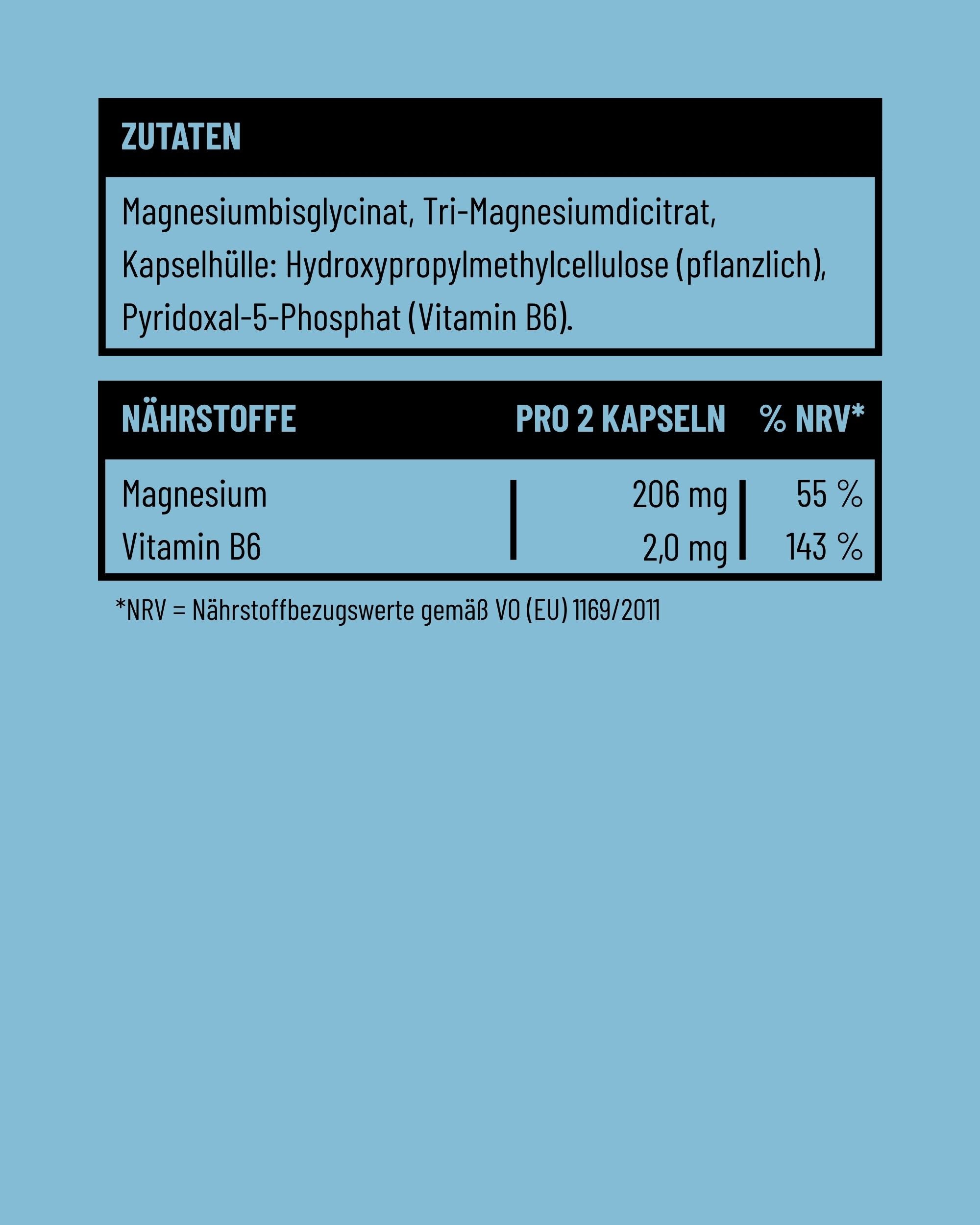
CALM by Fifty Five uses a combination of magnesium bisglycinate, magnesium citrate, and vitamin B6 to logically map everyday situations such as stress, mental activity, and recovery. Without promises of quick "miracle effects."
- Magnesium bisglycinate is a chelate form in which magnesium is bound to the amino acid glycine. It is a popular option for people with a sensitive digestive tract and is often used in the context of calm and relaxation in the evening, particularly with the nervous system in mind.
- Magnesium citrate is a highly soluble form the body can usually absorb quickly. It is often used for recovery after sports or demanding days. At high doses, citrate can have a laxative effect, which is why CALM relies on a moderate, everyday-friendly dose.
- Vitamin B6 contributes to normal energy-yielding metabolism and to normal functioning of the nervous system. Combined with magnesium, it supports exactly those processes relevant during stress, mental exertion, and "powering down" in the evening.
The concept behind CALM follows the principle: better a few well-understood nutrients in a balanced combination than highly complex mixtures of unclear relevance. CALM thus complements the foundation of a broader micronutrient supply, as can be covered by a base formula. You can read more in the overview on why Fifty Five relies on a foundation plus targeted additions.
Quick answer: what to do if you suspect magnesium deficiency?
If you suspect magnesium deficiency, first review your diet, stress, sleep, and training load, and observe your complaints attentively.
- Symptoms are unspecific and have many causes
- Medical evaluation with blood values brings clarity
- Use supplements only as a complement and in moderation
- Does not replace medical diagnosis or treatment
Mini decision rule: If complaints persist or increase, have them medically evaluated and then decide about adjustments to diet, lifestyle, and magnesium supplements.
Supplementing safely: dosage, tolerability, interactions
If you decide on a magnesium supplement, your intake should always be set in the context of your individual needs. That includes diet, daily life, athletic load, and, ideally, a medical assessment, especially with existing conditions.
Typical daily amounts from supplements often sit in the range of the recommended intake or slightly above, whereby the total intake from all sources should be considered. A multivitamin, magnesium-rich mineral water, and your diet already contribute. Higher doses should be examined critically above all when they are taken permanently and without medical supervision.
The most common side effects of too-high magnesium intake include soft stools or diarrhea, especially with certain forms and on an empty stomach. If you notice something like this, it can make sense to split the dose, reduce it, or switch to better-tolerated forms.
Certain groups should take magnesium supplements only after consulting medical professionals, for example people with impaired kidney function, complex chronic diseases, or several medications that affect mineral and fluid balance.
Interactions also need attention: magnesium can affect the absorption of some medications and other minerals when taken at the same time. A time gap (for example from certain antibiotics or thyroid medications) is often recommended; the information from the package insert and the doctor's office is decisive here.
That way, supplementation remains what it should be: a complementary measure, not the central pillar of your health.
Conclusion: calm decisions instead of magnesium panic
Magnesium deficiency is a relevant topic, especially in a daily life full of stress, screen work, or sports. At the same time, most signs, from muscle cramps to sleep problems, are unspecific and can have many causes. Panic or spontaneous high-dose supplementation rarely helps.
Instead, an orderly look is worthwhile: observe symptoms, reflect on daily life and diet, know your risk factors. With severe or persistent complaints, diagnostics belong in medical hands, including assessment of blood values and possible underlying conditions.
On this basis, you can decide whether to sharpen up diet and lifestyle, whether additional electrolytes make sense in sports, and whether a magnesium supplement fits your situation. The choice of form and combination, as in CALM with bisglycinate, citrate, and vitamin B6, should be guided by tolerability, clarity, and everyday scenarios, not by the longest possible ingredient list or maximum dosing.
If you want to go deeper into specific areas, you will find further orientation in articles like "Magnesium & sleep / inner calm", "Magnesium for training and recovery", or "Which magnesium form suits you".
Decision block: how you can proceed
- If you have occasional complaints, first review diet, stress, sleep, and training load.
- If symptoms persist, worsen, or are unclear, have them medically evaluated, including magnesium blood values.
- If you have risk factors and a suboptimal supply, first optimize magnesium-rich foods and basic lifestyle factors.
- If a need remains after that, choose a moderately dosed magnesium supplement with well-tolerated forms, matched to your daily life.
FAQ on magnesium deficiency
How fast does magnesium work for a deficiency?
That is very individual and depends on the starting situation, dose, form, and lifestyle. Some people report changes within days; for others it takes longer. The important thing is not to hope only for quick effects, but to think about diet, stress, and sleep in parallel.
Can I just take magnesium on suspicion?
Short-term at a moderate dose, this is usually uncritical for healthy people, but it does not replace diagnostics. If you have regular complaints or take other medications, talk to a doctor. That way you avoid working past the actual causes.
Is a balanced diet enough for sufficient magnesium?
For many people, yes. Especially if whole grains, nuts, seeds, legumes, and vegetables are regularly on the menu. With high stress, lots of sports, or certain medications, needs can rise. Then a closer look at your overall situation is worthwhile.
Are magnesium tablets or powders better?
More important than the dosage form are amount, composition, and tolerability. Whether a capsule, tablet, or powder is more pleasant for you is often a matter of taste. Pay attention to the magnesium compounds used and to how your body individually reacts.
Which magnesium form is the best?
There is no single "best" form. It depends on your goal and your tolerance. Citrate, bisglycinate, and other compounds each have specific properties. You will find a structured comparison in the article "Which magnesium form suits you".
Disclaimer:
This article is for informational purposes only and does not replace medical advice, diagnosis, or treatment by a physician or pharmacist. The information provided here should not be used for self-diagnosis or self-treatment. Food supplements are no substitute for a balanced, varied diet and a healthy lifestyle. For any health questions or complaints, please always consult a doctor you trust. Fifty Five accepts no liability for any inconvenience or harm resulting from the use of the information presented here.
Sources
- EFSA. Scientific Opinion on Dietary Reference Values for magnesium. EFSA Journal 2015;13(7):4186.
- German Nutrition Society (DGE). D-A-CH reference values – magnesium.
- German Federal Institute for Risk Assessment (BfR). Maximum levels for vitamins and minerals in food supplements.
- European Commission. EU Register of nutrition and health claims.










Is a Multivitamin Worth It? Why Your Body Needs a Stable Micronutrient Foundation
Share: