

With a weight-loss injection, hunger often disappears almost entirely. What sounds like an advantage quickly becomes a trap in everyday life: anyone who barely eats usually also eats the wrong things automatically, namely too little protein and too few nutrients per bite. It is precisely here that it is decided whether you end up losing mainly fat or whether muscle and your nutrient supply are left behind too. Weight-loss injections are prescription-only medications and belong in medical supervision. This article answers the practical question alongside it: what goes on the plate when appetite is gone.
The central idea is simple and, for many, initially counterintuitive. It is not about eating as little as possible. It is about choosing the little you do eat well. When energy intake under a weight-loss injection can drop by up to 40 %, every single meal counts double: fewer opportunities to supply your body with what it needs.
Why you should eat not less but better under the weight-loss injection
The reflex when appetite is barely there is understandable: anyone who is not hungry skips meals and is pleased about the quick progress on the scales. The problem is what lies behind that number. In registration trials (including STEP-1, SURMOUNT-1), summarised in a review (Neeland et al. 2024), around 25 to 40 % of the weight lost comes from fat-free mass (including muscle). Anyone who simply eats less without paying attention to quality accelerates exactly this loss.
Muscle is not just a question of appearance. It is your metabolically active tissue, your support structure and a key factor in being able to maintain your weight after the therapy. That is exactly why the focus shifts away from sheer quantity towards the question of how much substance and how many nutrients are in a small portion.
That changes the order on the plate. Instead of first considering what you leave out, you consider what absolutely has to go in while you still have appetite. Protein first, then vegetables and nutrient-rich sides, and only if there is still room, the rest. The small window in which you actually eat thus becomes the most important part of your day.
How much protein per meal when appetite is lacking
Protein is the number one lever for protecting muscle in a deficit. As a guide per meal, about 20 to 30 g of high-quality protein applies. Older people tend to benefit from 30 to 40 g per meal, because muscle responds less sensitively to protein stimuli with increasing age, an effect known in technical language as anabolic resistance.
Spread over the day, the requirement for muscle preservation in a deficit is around 1.2 to 2.0 g of protein per kilogram of body weight, practicably often in the range of 1.2 to 1.6 g/kg. That sounds like a lot when hunger is lacking, and that is precisely the real challenge. Many do not even reach the lower guideline value under the therapy. Anyone who wants to manage it must deliberately prioritise protein instead of letting it run alongside.
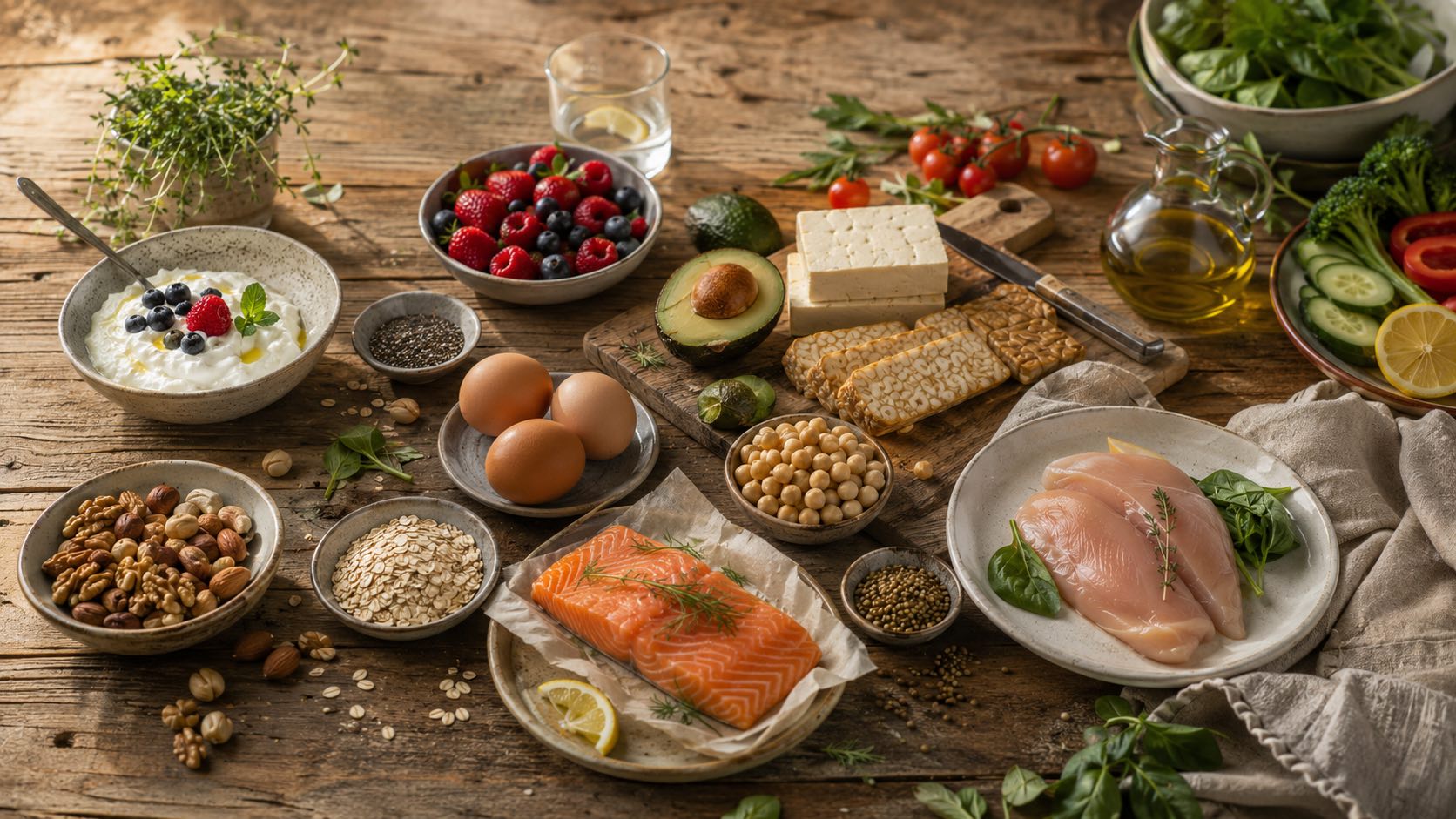
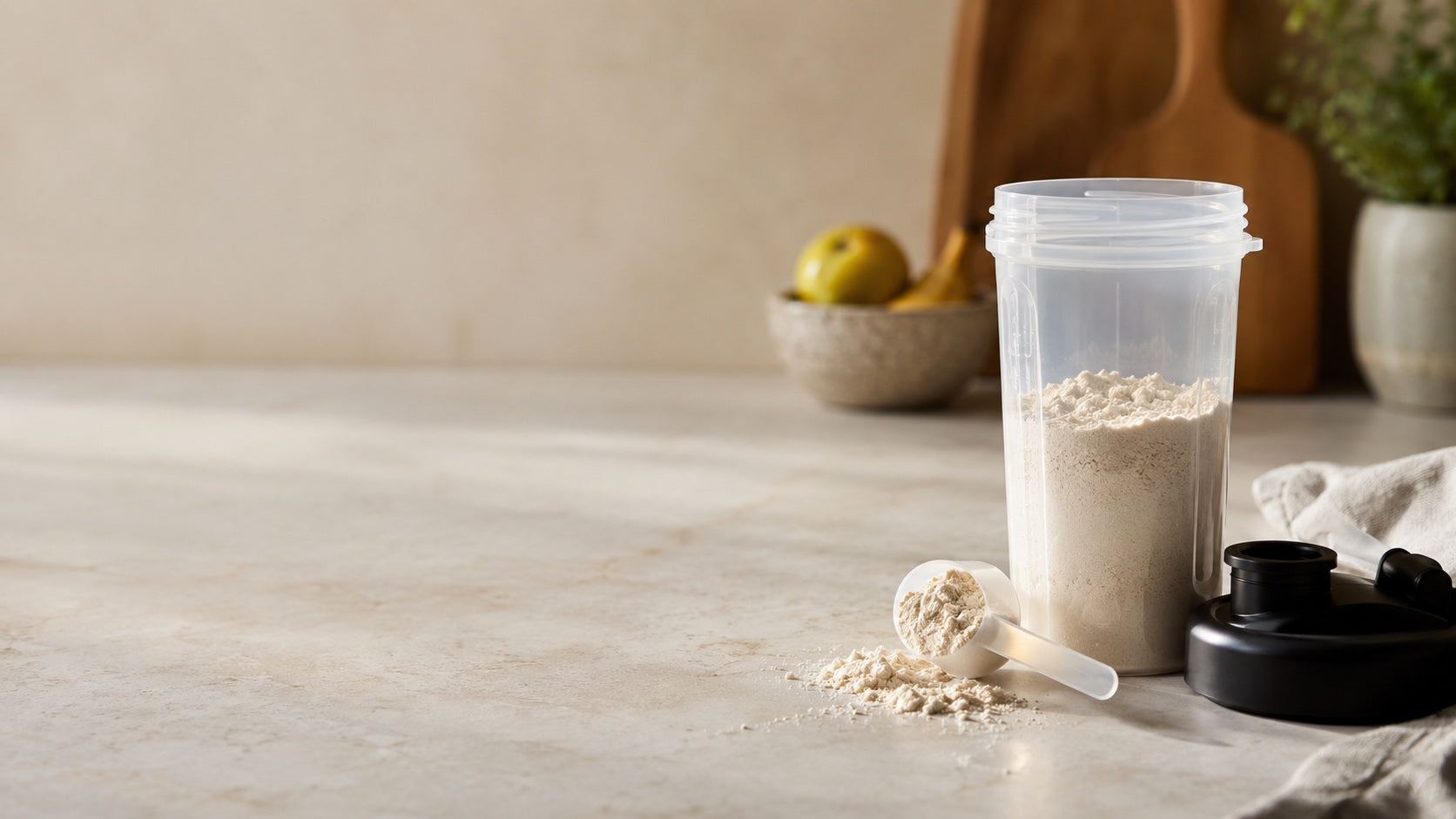
In practice this means: every meal begins with the protein source. Eggs, quark, skyr, chicken, fish, lentils, tofu or a portion of Greek yoghurt are reliable anchors. If three full meals are too much, smaller, protein-focused snacks help. A glass of milk, a handful of skyr or a protein-rich shake fill the gap without you having to struggle through a large plate.
The honest assessment remains important: protein alone is not enough. Muscle preservation only works in combination with strength training. You can read more on this in detail in the article Protein under the weight-loss injection: why 1.2 to 2.0 g per kilo are decisive.
What does nutrient density mean and why does it beat quantity
Nutrient density describes how many nutrients are in a food per calorie. A piece of vegetable, an egg or a portion of fish provides considerably more vitamins, minerals and high-quality protein per bite than a piece of white bread or a bar. When the total amount is low anyway, this density becomes the decisive criterion.
A reduced amount of food, less variety and early-onset satiety are the reasons why deficits can arise under a weight-loss injection. Among the most frequently scarce nutrients are vitamin D, magnesium, potassium, choline, iron, vitamin B12, calcium and thiamin. These are not exotic substances but building blocks that you would normally cover through a varied diet, precisely through the quantity and variety that is now missing.
The practical conclusion from this: favour foods that provide a lot per bite. Colourful vegetables, legumes, eggs, fish, lean meat, nuts in small amounts and wholegrain instead of refined flour. What you can no longer manage in quantity, you make up again through quality. This logic is the common thread through the entire diet under the injection.
Which nutrients specifically become scarce and how you can have this checked is explored in more depth in the article Nutrient deficiencies under the weight-loss injection: which vitamins and minerals become scarce.
What concretely belongs on the plate
A good meal under the weight-loss injection follows a simple structure: a palm-sized protein source, plenty of vegetables and a moderate portion of nutrient-rich carbohydrates or healthy fats. This order ensures that the protein is eaten before satiety sets in and the plate is left standing.
At breakfast, eggs in any form work, skyr or quark with berries and some oats, or a protein-rich shake if nothing goes at all in the morning. At lunch and dinner, fish, chicken, tofu, tempeh or legumes form the core, supplemented with steamed or fried vegetables. Fat sources such as olive oil, avocado or a small portion of nuts provide additional energy in a small space.
For days with particularly little appetite: rather small, dense portions spread over the day than the attempt to manage three large meals. A handful of quark, a hard-boiled egg, a few bites of salmon. It is not about discipline in the sense of going without, but about a smart selection of what you actually still eat.
How to eat despite nausea and little hunger
Nausea, bloating and a quick feeling of satiety are among the most common accompanying effects, especially at the start and after each dose increase. They improve over time for many. In this phase it is normal that large portions simply do not work. The strategy is adaptation, not despair.
What has proven effective are small meals at shorter intervals, eating slowly and deliberately pausing at the first satiety signal. Very fatty, very sweet or heavily spiced foods worsen nausea in some people; mild and rather dry foods are often better tolerated. What does you good you best find out through calm experimentation. How you deliberately safeguard eating despite nausea and loss of appetite is explored in more depth in the article on the side effects of the weight-loss injection.
One point that is easily missed: drinking enough. With a reduced amount of food, you also take in less fluid via food, and accompanying effects such as diarrhoea or vomiting additionally increase the need. Drinking regularly throughout the day, ideally water or unsweetened tea, supports circulation and digestion. With persistent or severe nausea, this always belongs in medical clarification, not solved through diet alone.
What role a multivitamin can play when portions are small
When meals remain permanently small, it becomes harder to cover the full spectrum of micronutrients through food alone. The expert recommendation in this situation is the combination of professional nutritional counselling, a diet that is as nutrient-dense as possible and a multivitamin that catches gaps. The order is clear: food first, then the safeguard.
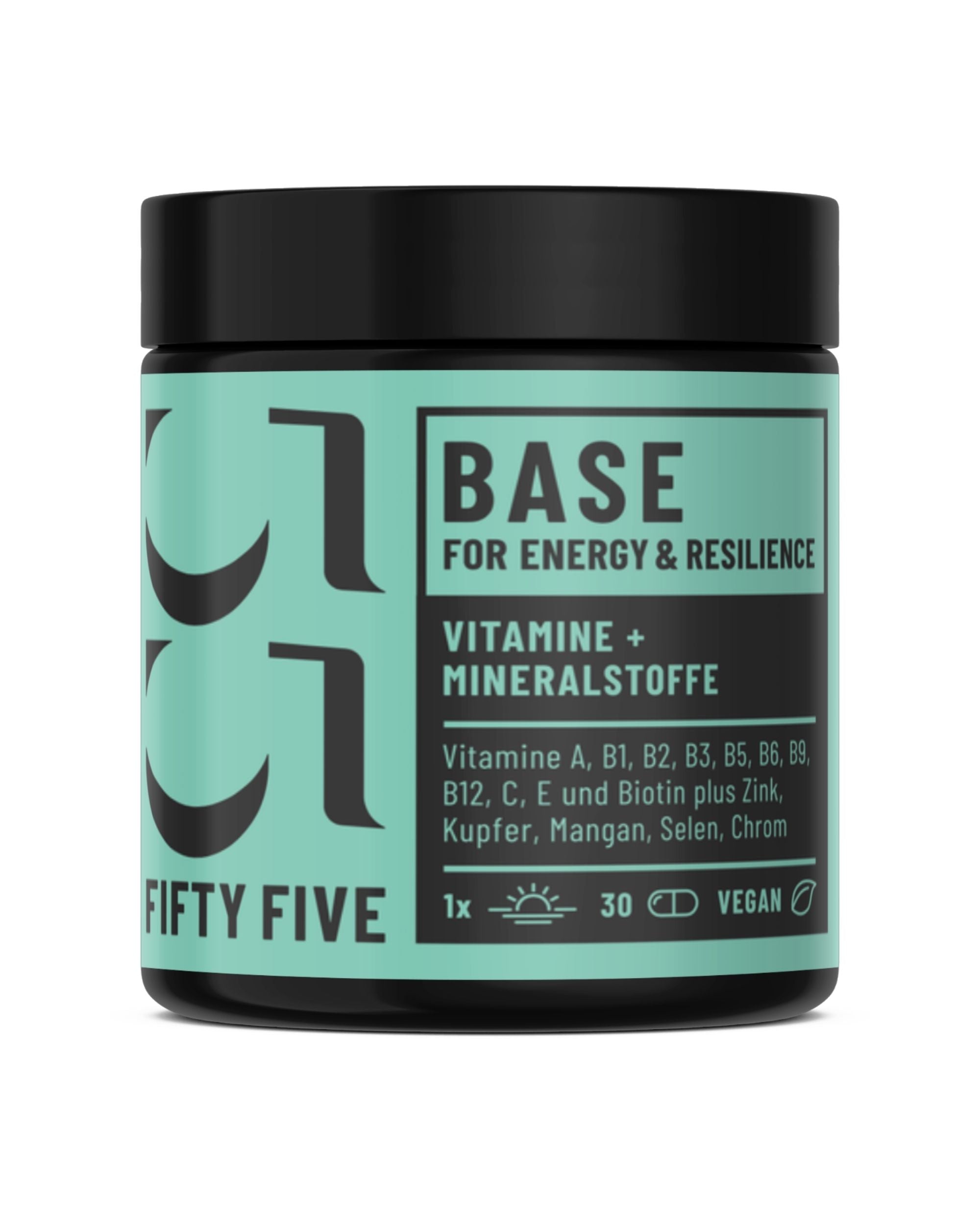
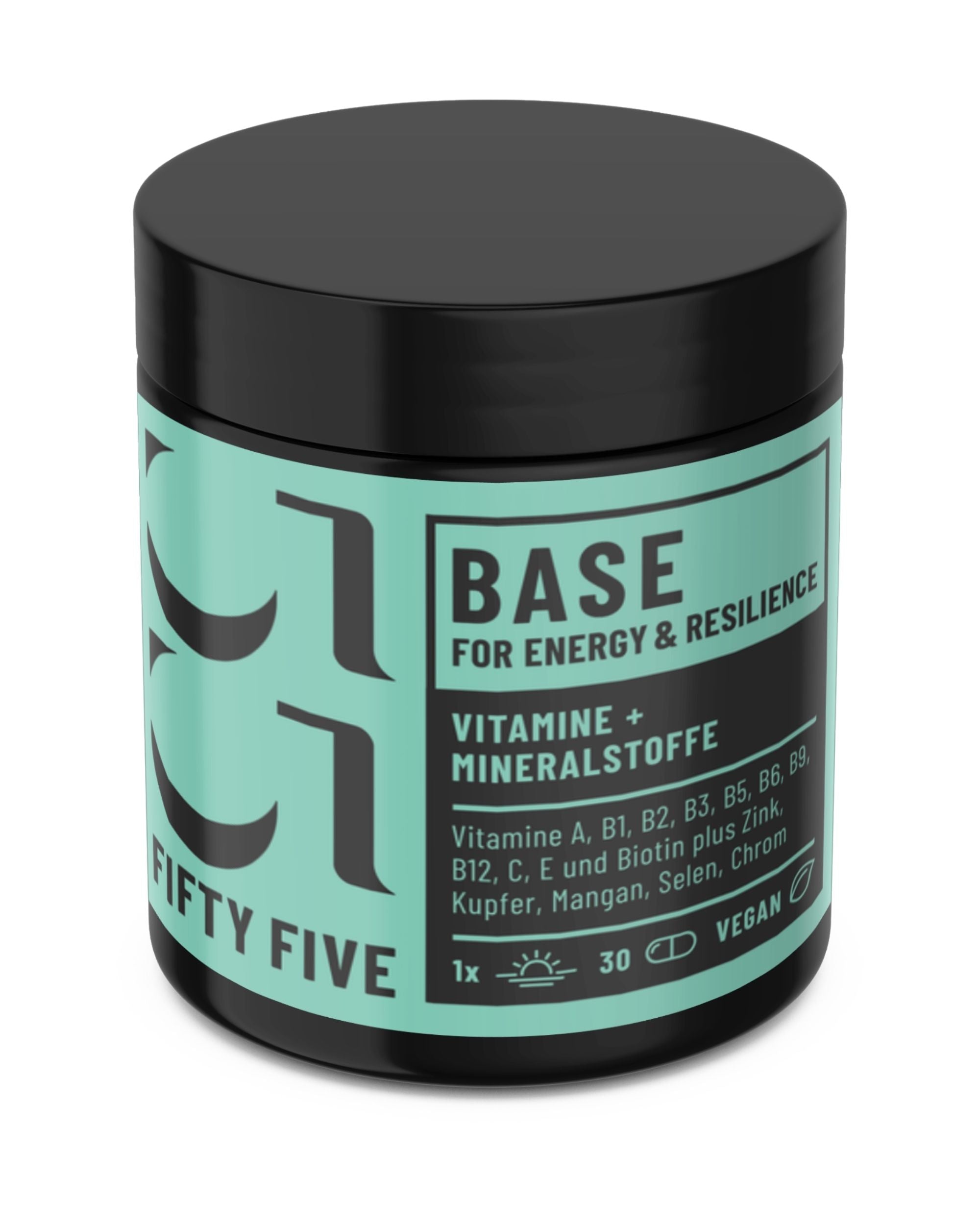
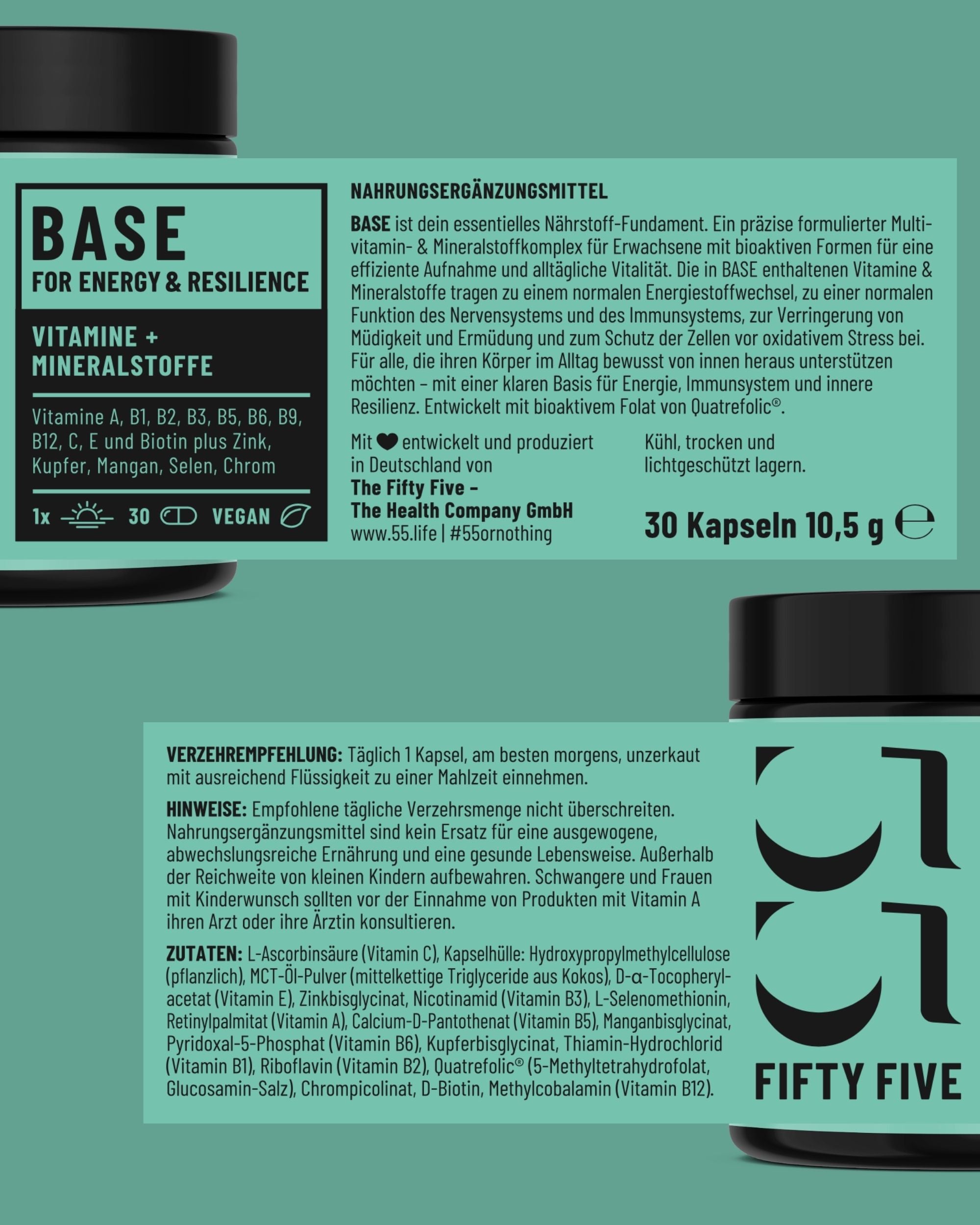
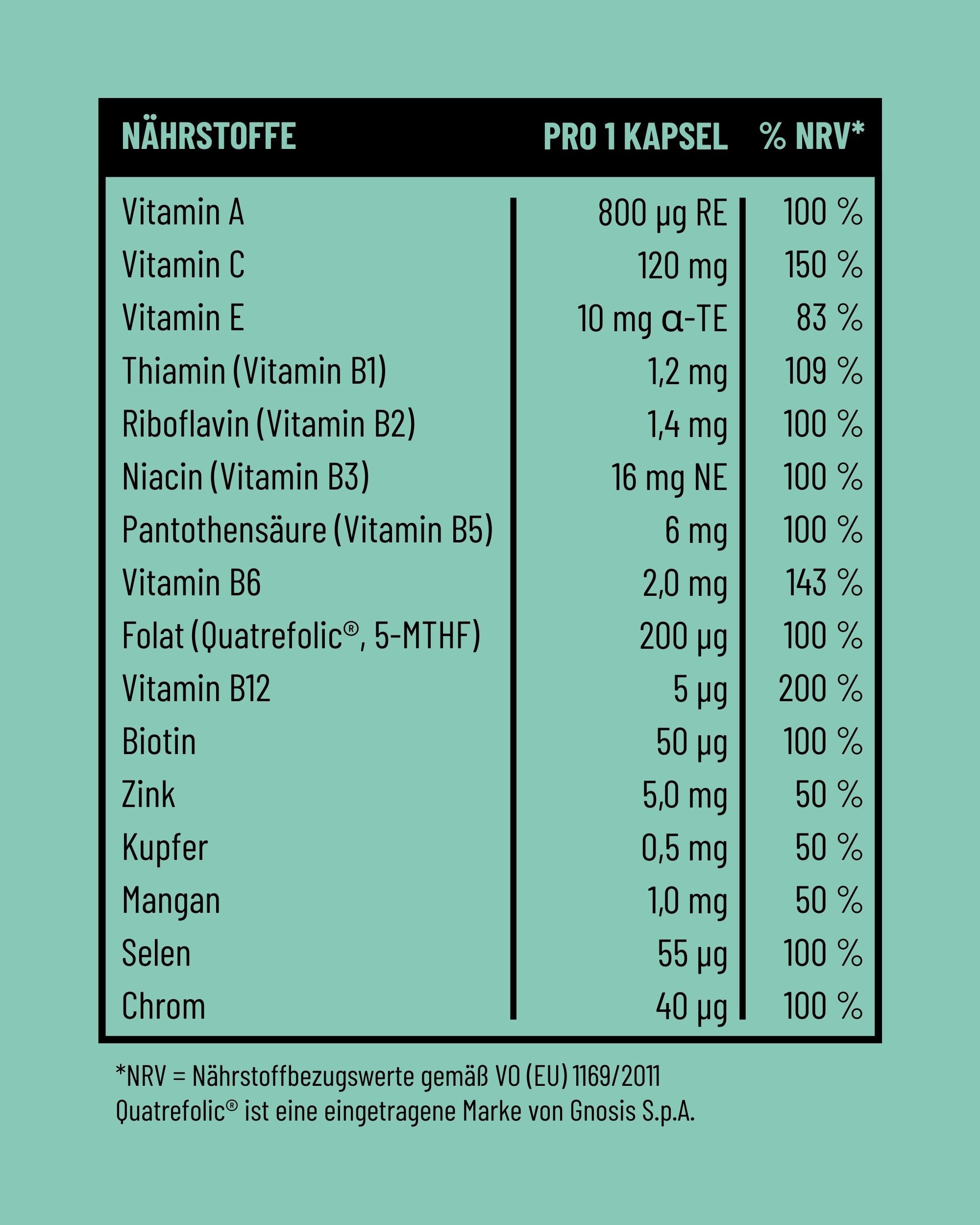
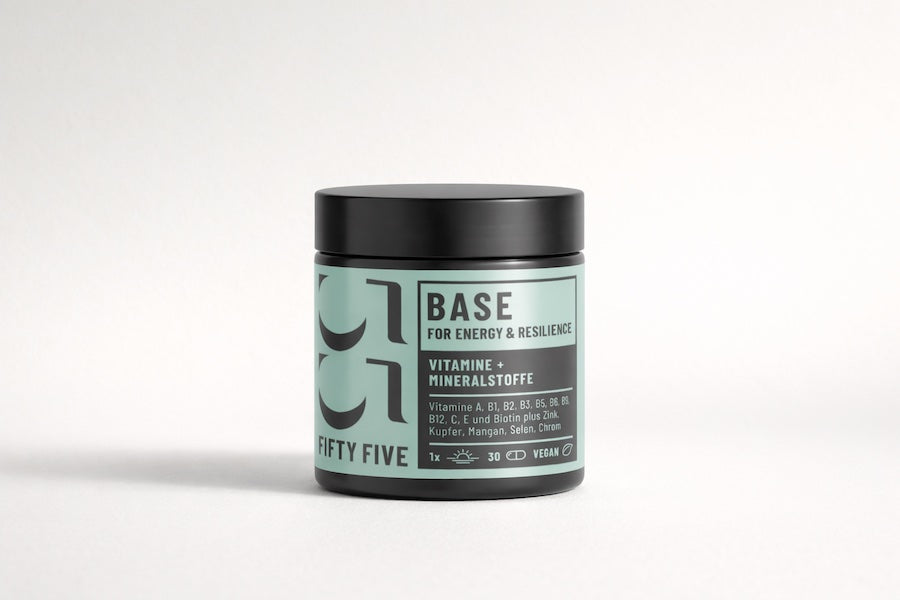
It is precisely for this catching that BASE by Fifty Five is intended: a broad micronutrient foundation for phases in which intake through food is reduced. Two of the nutrients that can become scarce under weight-loss injections with reduced intake are directly covered here. Vitamin B12 and thiamin (vitamin B1), in line with the specifications of the European Food Safety Authority (EFSA), both contribute to normal energy-yielding metabolism, a contribution that counts precisely when little goes on the plate anyway.
What BASE explicitly does not cover is just as important to know: vitamin D, magnesium, calcium and iron are not included. These should, where relevant, be supplemented specifically and ideally after status determination, not blanketly via a multivitamin. BASE also does not replace food. It secures the base, while the actual work continues to happen on the plate.
Why the injection is the chance for a genuine dietary change
A weight-loss injection above all takes one thing off your hands: the constant fight against appetite. This window of time is valuable, because for the first time in a long while you can engage with your diet without cravings. Anyone who understands it only as convenient weight loss wastes this effect. Anyone who grasps it as a learning phase builds habits that also carry after the therapy.
This is also relevant because most people regain weight after stopping. The injection does not hold the weight for you, it buys you time. What emerges in this time in terms of patterns, that is, protein priority, a clear meal structure and an eye on nutrient density, is what determines success in the long run.
The practical entry point for this is manageable: fixed meal windows, protein first, and an honest look at what actually ends up on the plate. How you turn this phase into a lasting change and why tracking helps as a learning instrument is described in the article Tracking meals: how the injection becomes a genuine dietary change. You will find the overall overview of effects, risks and supply in the complete guide to the weight-loss injection.
FAQ
How much protein should I eat per meal under the weight-loss injection?
As a guide, about 20 to 30 g of high-quality protein per meal applies. Older people tend to benefit from 30 to 40 g, because muscle responds less sensitively to protein stimuli in old age. Over the day, the requirement for muscle preservation is around 1.2 to 2.0 g per kilogram of body weight. Begin every meal with the protein source while there is still appetite.
What should I eat when I have no hunger at all under the injection?
Go for small, nutrient-dense portions instead of large plates. Protein-rich anchors such as eggs, quark, skyr, fish or legumes first, then vegetables, then the rest. If solid meals are difficult, protein-focused snacks or a shake help. What matters is the quality per bite, not the quantity.
Does a multivitamin help against nutrient deficiencies under the weight-loss injection?
A multivitamin can catch gaps when portions remain permanently small, but does not replace food or medical clarification. Experts recommend the combination of nutritional counselling, a nutrient-dense diet and a multivitamin. Important: vitamin D, magnesium, calcium and iron are often supplemented specifically and after status determination, not blanketly via a multivitamin.
What helps against nausea when eating under the weight-loss injection?
Small meals at shorter intervals, eating slowly and pausing at the first satiety signal are usually better tolerated. Mild, rather dry foods are often more tolerable than very fatty, very sweet or heavily spiced ones. Nausea often occurs at the start and after dose increases and improves over time for many. With persistent complaints, please have it clarified by a doctor.
Why do I also lose muscle under the weight-loss injection?
In registration trials, around 25 to 40 % of the weight lost comes from fat-free mass (including muscle). This happens in every calorie deficit but is intensified by too little protein and a lack of strength training. Sufficient protein and regular strength training are the most effective levers for protecting muscle.
How much should I drink under the weight-loss injection?
With a reduced amount of food, you also take in less fluid via food, so you should deliberately drink regularly, ideally water or unsweetened tea. Accompanying effects such as diarrhoea or vomiting additionally increase the need. Sufficient fluid supports circulation and digestion. With severe or persistent complaints, medical advice is important.
Disclaimer:
This article is for informational purposes only and does not replace medical advice, diagnosis, or treatment by a physician or pharmacist. The information provided here should not be used for self-diagnosis or self-treatment. Food supplements are no substitute for a balanced, varied diet and a healthy lifestyle. For any health questions or complaints, please always consult a doctor you trust. Fifty Five accepts no liability for any inconvenience or harm resulting from the use of the information presented here.
Sources
- EFSA. Scientific Opinion on Dietary Reference Values for protein. EFSA Journal 2012;10(2):2557.
- German Nutrition Society (DGE). D-A-CH reference values – protein.
- German Obesity Society (DAG). S3 Guideline on the Prevention and Treatment of Obesity. AWMF reg. 050/001.
- German Federal Institute for Risk Assessment (BfR). Maximum levels for vitamins and minerals in food supplements.
- European Commission. EU Register of nutrition and health claims.
- Robert Koch Institute (RKI). DEGS – German Health Interview and Examination Survey for Adults.
- Neeland IJ, et al. Changes in lean body mass with GLP-1-based therapies and mitigation strategies. Diabetes, Obesity and Metabolism. 2024.
- American Journal of Clinical Nutrition. Nutritional priorities to support GLP-1 therapy for obesity: a joint Advisory. 2025.


Muscle loss under the weight-loss injection: how much you lose and how to counteract it
Nutrient deficiencies under the weight-loss injection: which vitamins and minerals become scarce
Share: