


Under the weight-loss injection, something happens that most people underestimate: hunger disappears. Anyone who previously thought about food constantly between breakfast and lunch suddenly notices that the urge is gone. At first this feels like liberation. But it is precisely in this moment that the real opportunity lies, which almost no one uses.
Because as long as appetite is artificially suppressed, you no longer eat out of habit, stress or boredom. You eat because you actively decide to. This makes this phase the best time window to really understand your own eating. And that works most easily if, for a while, you write down what actually ends up on your plate.
Important first: weight-loss injections with active ingredients such as semaglutide or tirzepatide are prescription-only medications and belong under medical supervision. This article does not replace that. It shows how you use the low-appetite phase to turn a medication-supported weight loss into a change in the way you eat that still holds after stopping.
Why the low-appetite phase is the best time to learn
Under a GLP-1 receptor agonist, energy intake often drops significantly, in studies by up to 40 %. The injection mimics the gut hormone GLP-1: it slows gastric emptying, enhances the feeling of satiety and reduces appetite. You eat smaller portions and are full faster, without having to force yourself.
This changes the starting position completely. Anyone who normally fights against their own appetite knows the constant negotiating in their head. Under the injection, this fight largely falls away. What remains is a rare clarity: you see what you eat when hunger no longer steers you.
This clarity is fleeting. The therapy is designed for the long term, but no one necessarily stays on it forever, and after stopping, appetite returns. Anyone who experiences the phase only as a diet and learns nothing from it stands again at the beginning afterwards. Anyone who uses it as a learning window takes away something that stays.
This is exactly why tracking here is not an end in itself and not a lifelong obligation. It is a tool to understand, within a few weeks, what your meals really look like, where the gaps are and which patterns you were not consciously aware of at all.
What tracking meals actually means
Tracking means writing down, for a limited time, what you eat and drink. Not in order to control or punish yourself, but to gather data about yourself. Many immediately associate tracking with uncompromising calorie counting and a bad conscience with every deviation. That is exactly not what is meant here.
It is about patterns, not about perfection. If you honestly record what you eat for two to four weeks, you recognise things that get lost in everyday life: that breakfast almost never contains protein, that the day only gains substance in the evening, that on stressful days whole meals are skipped. These are the truly valuable insights.
Under the injection, this view is particularly revealing, because the portions are small. When little fits on the plate anyway, the composition decides whether the small amount supplies you well or whether important building blocks are missing. Tracking makes exactly this visible.
What you should really pay attention to when tracking
The most important value is not the calorie count, but protein. In a calorie deficit, the body loses not only fat but also muscle mass. In registration trials (STEP-1, SURMOUNT-1), summarised in a review (Neeland et al. 2024), roughly 25 to 40 % of the lost weight comes from fat-free mass (including muscle). Sufficient protein is, alongside strength training, the central lever to counteract this.
For muscle preservation in a deficit, 1.2 to 2.0 g of protein per kilogram of body weight per day are recommended, in practice often 1.2 to 1.6 g/kg. That sounds like not much, but it becomes a challenge under the injection: with small portions and a suppressed appetite, many under the therapy do not even reach the lower value. That is exactly why protein belongs in first place in your record.
In practice this means: note per meal how much protein was in it, and aim for about 20 to 30 g of high-quality protein per meal, and for older people rather 30 to 40 g. In addition, pay attention to the meal structure. Three small, planned meals supply you more reliably than a single meal in the evening that happens to be left over when the day is over.
And track honestly rather than perfectly. If a day gets out of hand, you write it down anyway. It is precisely the imperfect days that show you when and why your eating behaviour tips over. A record that contains only the good days is worthless. You can find more on the practical design of meals with little appetite in the article Nutrition under the weight-loss injection: what to eat when appetite is gone.
How to make tracking practical and uncomplicated
You need no expensive app and no lab scale. A notebook, the notes app on your phone or a simple nutrition app are perfectly enough. What is decisive is not the tool, but that you keep it low-threshold so that you really stick with it.
Start small: at first write down only what you eat, without amounts and numbers. Even that creates awareness. In the second step, you roughly add the protein source per meal, that is, eggs, quark, chicken, fish, legumes, tofu. You don't have to weigh every gram; a good estimate is enough for the learning effect.
A practical rhythm is two to four weeks in a row, after that only on a sample basis. That is enough to recognise your patterns, without tracking becoming a permanent burden. If after a few days you notice that protein is missing in the morning, you have the information you need and can steer specifically.
Keep a clear eye on yourself in the process: tracking is meant to give you orientation, not to create pressure. If writing it down starts to stress you or to strain your relationship with food, that is a signal to pause and, if necessary, to talk to your doctor. The goal is understanding, not self-control to the point of exhaustion.
How to ensure the basic supply when portions stay small
If for weeks you eat considerably less and less varied, the variety of nutrients shrinks along with the quantity. In GLP-1 users, studies more frequently observe gaps in several micronutrients, including vitamin B12 and thiamin (vitamin B1). Tracking helps you to recognise these gaps at all, because you see how one-sided small portions quickly become.
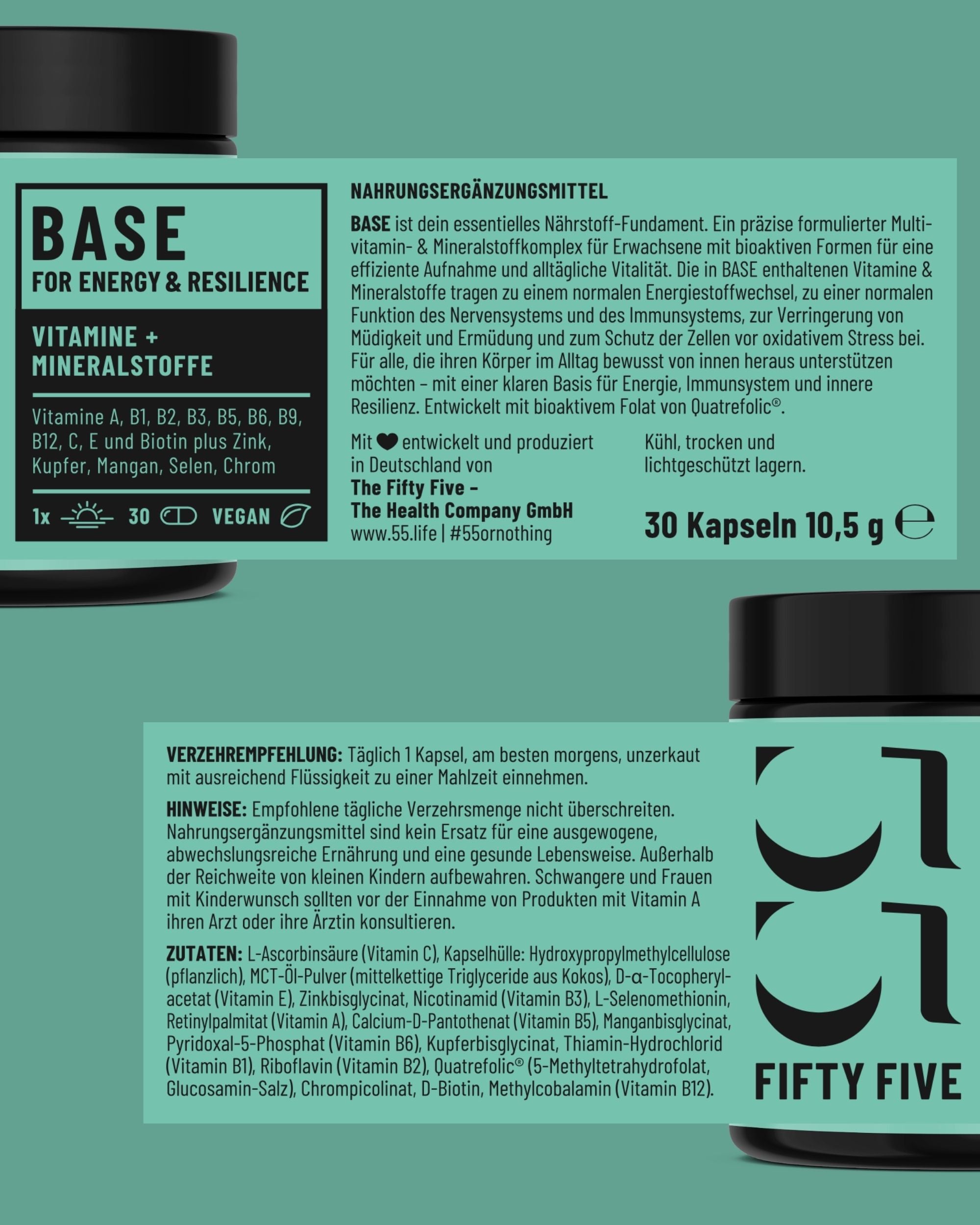
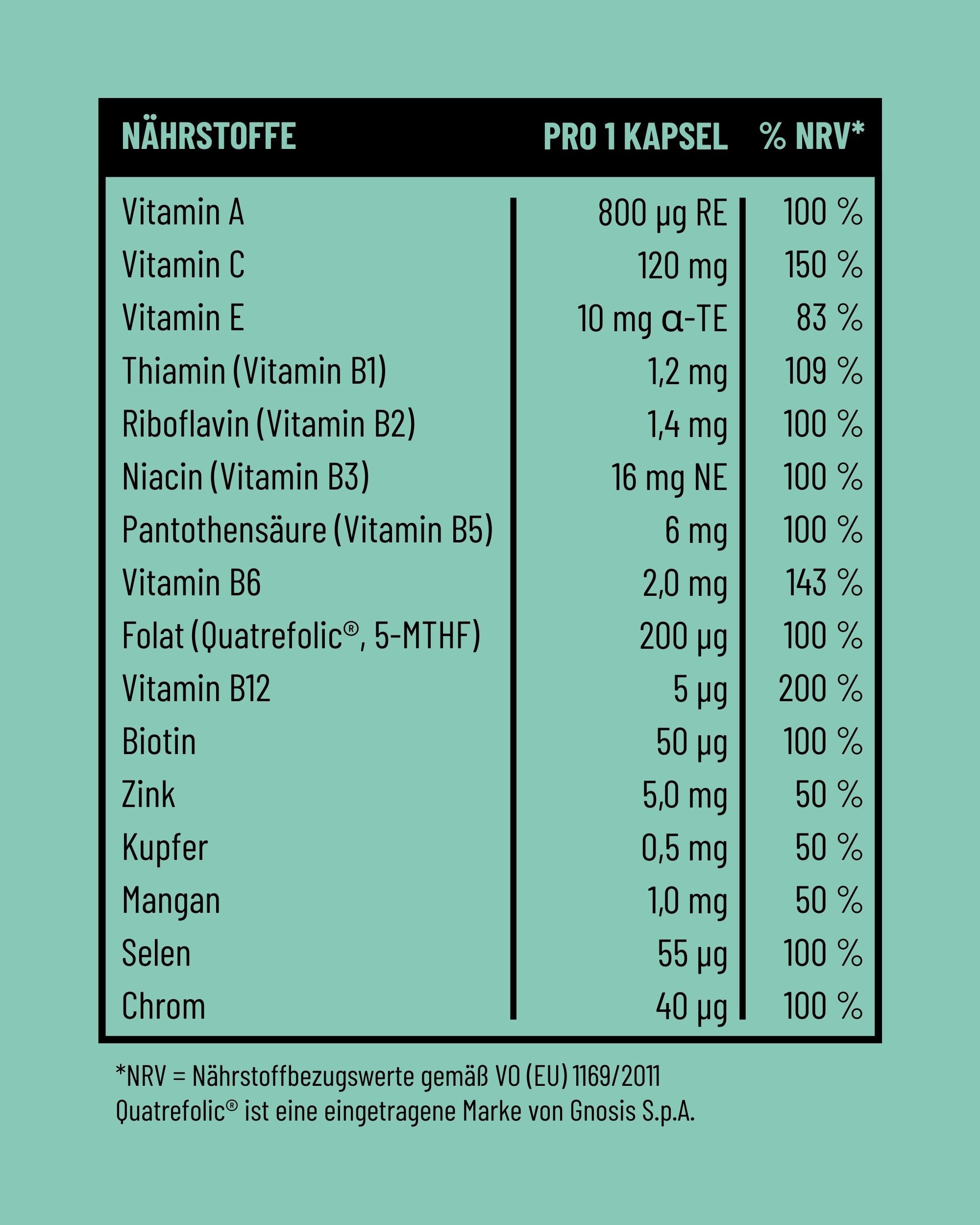
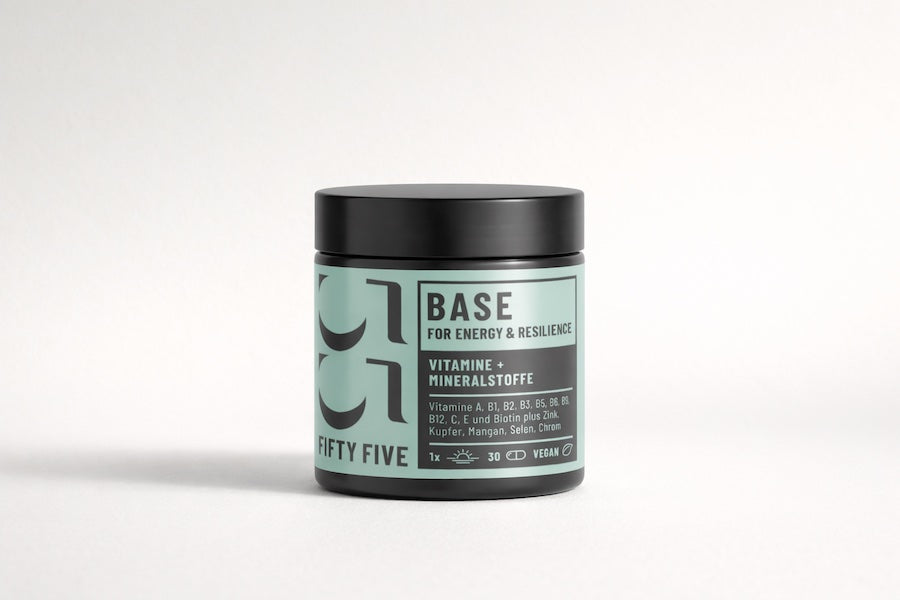
The first answer to this is always the food itself: nutrient-dense foods before sheer quantity, and ideally a professional nutritional consultation that is medically supervised. Where the plate nonetheless does not cover everything, a broadly positioned basic supplement can secure the basic supply. This is exactly what BASE by Fifty Five is intended for: a multivitamin and mineral complex that covers a broad foundation of micronutrients.
Relevant for the low-appetite phase are two of the nutrients it contains, which can become scarce under the injection. According to the requirements of the European Food Safety Authority (EFSA), vitamin B12 contributes to normal energy-yielding metabolism and to a reduction of tiredness and fatigue. According to EFSA, thiamin contributes to normal energy-yielding metabolism and to the normal functioning of the nervous system. This does not replace a balanced diet, but secures what easily falls short with small portions.
BASE deliberately does not cover everything. Vitamin D, magnesium, calcium and iron are not included, and these are among the most common gaps under the injection. If your tracking or a blood test shows deficits here, that is a topic for your medical supervision, not for a single multivitamin.
How tracking turns into lasting habits
The real purpose of tracking only shows after stopping. What you have learned about yourself in the low-appetite phase is what remains when the medication support falls away. Anyone who experienced the injection only as a temporary diet, without building new routines, is afterwards particularly susceptible to the yo-yo effect.
The recognised patterns become routines when you tie them to fixed anchors in everyday life. If your tracking has shown that protein is missing in the morning, this becomes a fixed breakfast structure with a protein source. If you have noticed that you skip meals on stressful days, this becomes a prepared plan for such days. The habit eventually replaces the record.
After stopping, these routines are more valuable than any short-term discipline, because they function without constant willpower. You don't have to decide anew every day to eat enough protein if your breakfast is set up that way anyway. This is exactly what makes the difference between a temporary weight loss and a real change. How you maintain the weight afterwards is explored in more depth in the article After the weight-loss injection: keeping weight off and avoiding the yo-yo effect.
You can find the complete overview of effects, risks, nutrition and muscle preservation under the weight-loss injection in the big weight-loss injection guide.
FAQ
Do I have to track forever under the weight-loss injection?
No, tracking is meant as a time-limited learning tool, not as a permanent obligation. Two to four weeks are usually enough to recognise your eating patterns and possible protein gaps. After that, sample records are sufficient, once the insights have become fixed habits. The goal is understanding, not lifelong counting.
What should I observe first when tracking?
Pay attention to protein first, not to calories. In a deficit, the body loses muscle mass alongside fat, and sufficient protein is, alongside strength training, the most important lever against it. Note per meal how much protein was in it, and check whether you get enough together across the day. Only after that is it worth looking at meal structure and variety.
How much protein should I aim for?
For muscle preservation in a deficit, 1.2 to 2.0 g of protein per kilogram of body weight per day are recommended, in practice often 1.2 to 1.6 g/kg. Per meal, about 20 to 30 g of high-quality protein is a good guide, and for older people rather 30 to 40 g. Under the injection, many users do not reach these values on their own, which is why targeted tracking is particularly worthwhile here.
Doesn't tracking encourage compulsive eating behaviour?
Tracking can be both, depending on how you use it. As a learning tool over a limited period, it creates awareness and orientation. It becomes problematic when it tips over into control, self-punishment or permanent counting. If writing it down stresses you or burdens your relationship with food, pause and raise it with your medical supervision.
Do I need a special app for tracking?
No, a notebook or the notes app on your phone is perfectly enough. What is decisive is not the tool, but that you stick with it in a low-threshold way. You can start small and at first only write down what you eat, and later roughly add the protein source per meal. Weighing every gram is not necessary for the learning effect.
Does a multivitamin help if I eat little under the injection?
A broadly positioned multivitamin can secure the basic supply when small portions limit the variety of nutrients. But it does not replace a balanced diet or medical supervision. Important: not every gap is covered by it. Vitamin D, magnesium, calcium and iron are among the common deficits under the injection and should be clarified through a blood test and medical advice.
Disclaimer:
This article is for informational purposes only and does not replace medical advice, diagnosis, or treatment by a physician or pharmacist. The information provided here should not be used for self-diagnosis or self-treatment. Food supplements are no substitute for a balanced, varied diet and a healthy lifestyle. For any health questions or complaints, please always consult a doctor you trust. Fifty Five accepts no liability for any inconvenience or harm resulting from the use of the information presented here.
Sources
- EFSA. Scientific Opinion on Dietary Reference Values for protein. EFSA Journal 2012;10(2):2557.
- German Nutrition Society (DGE). D-A-CH reference values – protein.
- German Obesity Society (DAG). S3 Guideline on the Prevention and Treatment of Obesity. AWMF reg. 050/001.
- German Federal Institute for Risk Assessment (BfR). Maximum levels for vitamins and minerals in food supplements.
- European Commission. EU Register of nutrition and health claims.
- Robert Koch Institute (RKI). DEGS – German Health Interview and Examination Survey for Adults.
- Neeland IJ, et al. Changes in lean body mass with GLP-1-based therapies and mitigation strategies. Diabetes, Obesity and Metabolism. 2024.
- American Journal of Clinical Nutrition. Nutritional priorities to support GLP-1 therapy for obesity: a joint Advisory. 2025.






Nutrient deficiencies under the weight-loss injection: which vitamins and minerals become scarce
Share: