


Almost everyone has heard of omega-3. Fish oil sits in many households, and algae oil is steadily gaining recognition. Yet the average omega-3 supply, or more precisely the EPA+DHA intake, in Germany falls systematically below the minimum recommendation, and most people do not even know whether they are actually well supplied. This guide explains what omega-3 does in the body, what DHA and EPA each do, and what substantial supply means in practice.
What omega-3 does in the body
Almost everyone knows that omega-3 fatty acids are good. Many associate them with heart health, some with brain function, a few with inflammation. None of that is wrong. But most answers stay vague, and that has consequences: if you do not understand what omega-3 actually does, you also do not know whether you are truly well supplied.
The data on this is sobering. The average daily EPA+DHA intake in Germany, based on estimates from the National Nutrition Survey, is around 150 to 200 mg. The EFSA, however, recommends 250 mg daily for adults as the minimum for effects on heart and brain function. That sounds like a manageable gap. It is not. Behind it lies a structural problem: fish is eaten too rarely, plant sources deliver the wrong forms, and the ratio to omega-6 fatty acids in the Western diet makes the situation even more difficult.
What "essential" really means
In nutritional science, "essential" is a precise term. It describes nutrients the body cannot produce itself and for which it depends on intake through food. For omega-3 fatty acids, this applies.
Fatty acids are long-chain carbon molecules. Their properties depend on the number and position of their double bonds. Omega-3 fatty acids have their first double bond at the third carbon atom from the methyl end of the chain. That makes them chemically reactive and structurally flexible. This flexibility is no biological accident: cell membranes with a high DHA content are more fluid and more permeable. They transmit electrical impulses faster, which is directly relevant for brain and nerve cells.
From a precursor, alpha-linolenic acid (ALA), the body can theoretically produce both EPA and DHA. The problem: the conversion rates are low. About 5 to 10 percent of ALA is converted to EPA, and less than 1 percent to DHA. In men, these rates tend to be even somewhat lower than in women. ALA from flaxseed oil, chia seeds, or walnuts can therefore secure a good ALA supply, but cannot make a measurable contribution to DHA supply.
If you really want to cover your omega-3 needs, you need EPA and DHA directly. They come either from oily sea fish or from algae oil.
DHA: why the brain and eyes need so much of it
Docosahexaenoic acid (DHA) is the longest and most heavily unsaturated of the three nutritionally relevant omega-3 fatty acids. It has 22 carbon atoms and 6 double bonds. That makes it one of the most structurally flexible molecules in the body, and explains why it occurs in particularly high concentrations in certain tissues.
The brain consists of about 60 percent fat by dry weight. A substantial share of it is DHA. In the retina of the eye, DHA is even more concentrated: the outer segments of the photoreceptors are among the most DHA-rich structures in the entire human body. That is no accident. Both organs, brain and retina, depend on fast signal transmission and benefit structurally from the fluidity of DHA-rich membranes.
DHA is particularly relevant for pregnant and breastfeeding women. During brain development in the last three months of pregnancy and in the first year of life, DHA needs are elevated. A dedicated article therefore covers omega-3 for women across all stages of life.
EPA: the systemic omega-3 fatty acid
Eicosapentaenoic acid (EPA) has 20 carbon atoms and 5 double bonds. In public communication about omega-3, EPA is less present than DHA. Biochemically, it is hardly less important.
EPA is the starting material for a group of signaling molecules called eicosanoids. These include prostaglandins, thromboxanes, and leukotrienes, which are involved in processes such as vascular regulation, blood clotting, and immune response. Eicosanoids derived from EPA and those derived from arachidonic acid (AA, an omega-6 fatty acid) often have different physiological effects. That is one of the biochemical reasons why the ratio of omega-3 to omega-6 receives so much attention.
EPA and DHA contribute to normal heart function; for further effects, for example on blood pressure and on triglyceride levels (from 2 g of DHA daily), the EFSA has separate authorized claims, which however require considerably higher doses and should be medically supervised.
You will find the precise comparison between DHA and EPA, with context on how they work together, in the article DHA or EPA: what does what in your body?.
The supply situation in Germany
The EFSA recommendation of 250 mg EPA+DHA daily is the minimum value at which the authorized health claims apply. It is not an optimum. Actual supply in the German population averages below it.
The reasons are structural. The most important: too little oily sea fish. Salmon, herring, mackerel, and sardines are the most reliable food sources of EPA and DHA. One portion twice a week roughly covers the basic recommendation. In practice, a substantial share of the German population eats little or no fish. Anyone living vegetarian or vegan cannot reach EPA and DHA through food at all.
The second structural problem is the omega-6/omega-3 ratio. The Western diet is dominated by omega-6 fatty acids from sunflower oil, corn oil, and processed foods. The ratio of omega-6 to omega-3 in the Western diet averages around 15:1. A ratio of 4:1 or below is considered favorable. Omega-6 and omega-3 compete for the same enzymes in metabolism: a high omega-6 share weakens the effect of the omega-3 you take in and further reduces the already low conversion rate of ALA to EPA and DHA.
What that means concretely, and how you can influence the ratio in your diet, is explained in more detail in our article on omega-6 and omega-3.
Where omega-3 comes from: foods and their limits
The best-known food source of EPA and DHA is oily sea fish. One portion of salmon, herring, or mackerel twice a week delivers, by EFSA assessment, enough EPA and DHA for the basic recommendation. That is the theory, at least.
The practice: fish do not produce EPA and DHA themselves. Fish take in these fatty acids through their food. Small fish eat zooplankton, and the zooplankton eats microalgae. The omega-3 fatty acids originate in the microalgae. They are the primary producers of EPA and DHA in the marine food chain.
If you take in omega-3 through algae oil, you go straight to the source and skip the animal intermediate step entirely. Algae oil delivers DHA and EPA with bioavailability comparable to fish oil, but without the distinctive fishy taste, without the heavy metal risk from the marine food chain, and fully vegan.
You will find the detailed comparison with the strengths and weaknesses of both sources in the article Fish oil or algae oil: where omega-3 really comes from.
How to assess your omega-3 status
Omega-3 deficiency cannot be reliably inferred from symptoms. Dry skin, concentration problems, or increased exhaustion can have many causes. What is genuinely informative is the omega-3 index.
The omega-3 index is a blood parameter that measures the percentage share of EPA and DHA in the membranes of red blood cells. It is considered a stable indicator of long-term status because red blood cells have a lifespan of about 120 days, which smooths out short-term fluctuations.
The scientifically established target range is 8 to 11 percent. Values below 4 percent are considered clearly too low. Studies in Western countries show that many adults in Germany sit between 4 and 6 percent.
Tests for the omega-3 index are available in Germany from various providers, usually as an at-home blood test with laboratory analysis. Alternatively through your general practitioner, though not covered by statutory health insurance. What the values mean, when you should adjust, and what supplementation achieves is explained in our article on recognizing an omega-3 deficiency.
How much EPA and DHA you need daily
The EFSA base recommendation is 250 mg of EPA and DHA daily for adults. This value is the threshold at which the authorized health claims for heart function and brain function apply.
Higher amounts are discussed for certain groups:
- Pregnant and breastfeeding women: 200 mg of DHA in addition to the general recommendation, i.e. 450 mg of DHA daily in total
- For effects on blood pressure: 3 g of EPA+DHA daily (EFSA claim, high dose, medical supervision recommended)
- For effects on triglyceride levels: 2 g of DHA daily (EFSA claim, likewise a high dose)
For healthy adults, a daily supply of 500 to 1,000 mg of EPA+DHA is a well-documented everyday dose. Taking it together with a meal containing fat improves absorption, because omega-3 fatty acids, as lipophilic substances, are better absorbed in the presence of dietary fat.
All the details on dosing logic, the best time to take it, and possible interactions can be found in the article Omega-3 dosage: how much DHA and EPA you need daily.
PULSE: premium algae oil with vitamin E
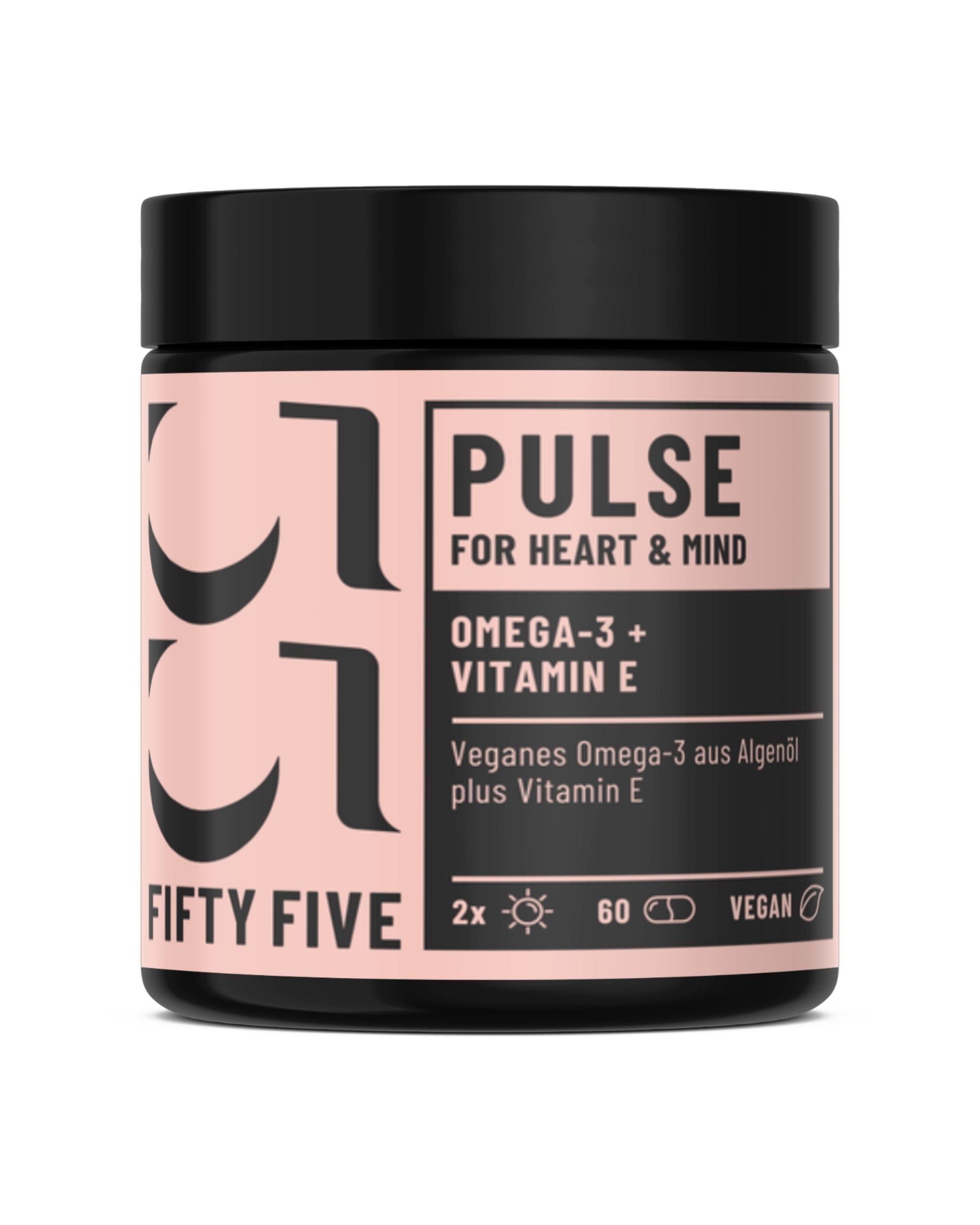
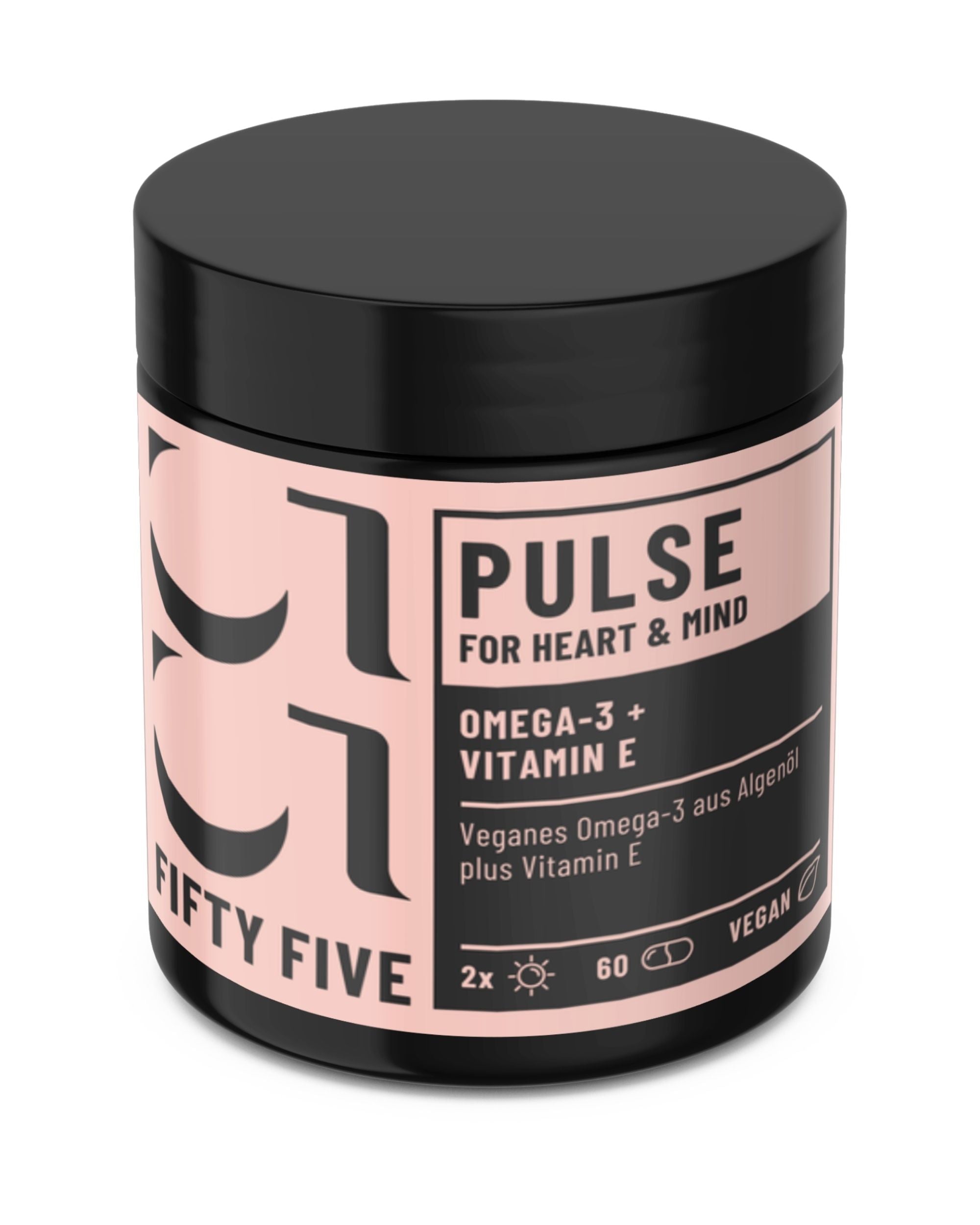
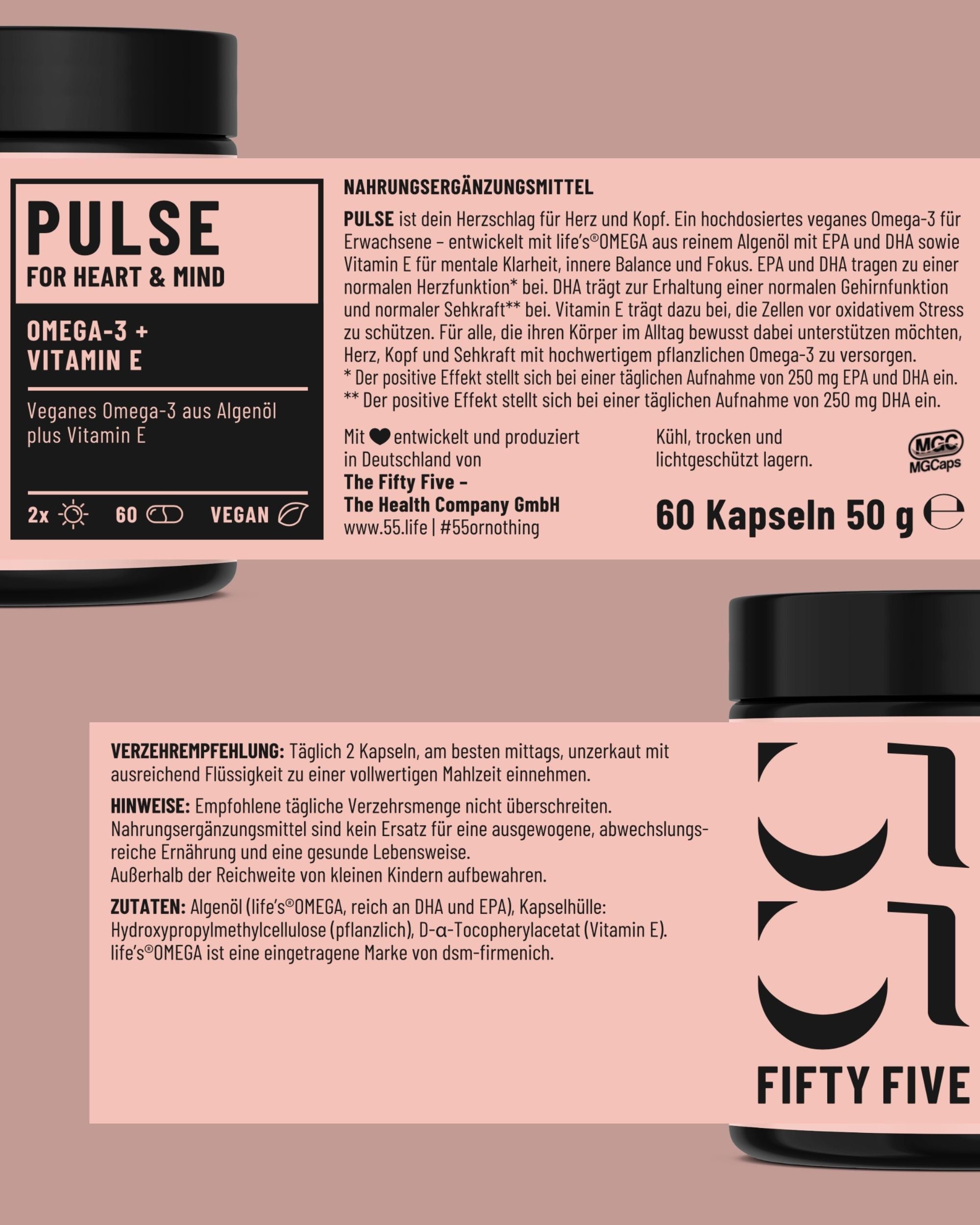
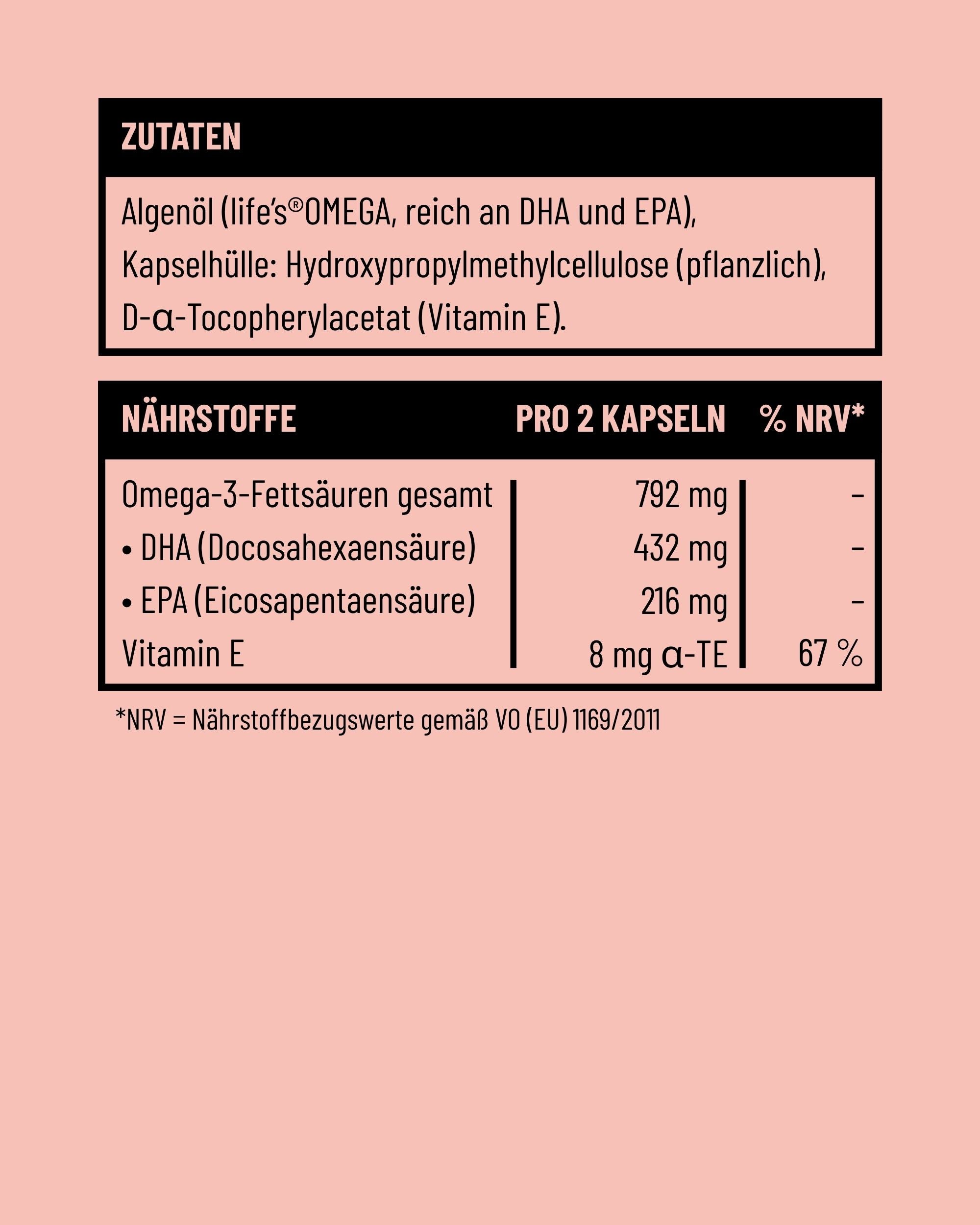
For PULSE by Fifty Five, we rely on DSM Lifes60® algae oil, one of the best-documented branded raw materials in the omega-3 segment. Each daily dose (2 capsules) delivers 792 mg of omega-3, including 432 mg of DHA and 216 mg of EPA. That is almost three times the EFSA base recommendation and reliably covers elevated needs as well.
What sets PULSE apart from most omega-3 products on the market is the formulation with vitamin E. Omega-3 fatty acids are prone to oxidation due to their high degree of unsaturation. DHA, the most reactive of the three forms with six double bonds, is particularly sensitive. Vitamin E is the natural, fat-soluble antioxidant the body itself uses to protect polyunsaturated fatty acids from oxidation. In the context of an omega-3 formulation, this combination is biochemically consistent.
Each daily dose of PULSE contains 8 mg of vitamin E (67% NRV) in the natural D-alpha-tocopheryl form. Vitamin E contributes to the protection of cells from oxidative stress. This combination is rarely found in other omega-3 products on the market.
PULSE is also fully vegan, filled into liquid caps without any fishy taste, and produced in Germany.
Omega-3 by stage of life
The relevance of omega-3 changes depending on your stage of life and context.
For women, DHA plays a special role: during pregnancy through the increased needs for the child's development, but also in other stages of life through its structural importance for the nervous system, skin, and hormonal balance. Omega-3 for women: what DHA and EPA deliver
For men, the heart topic is statistically especially relevant but often underestimated in practice. At the same time, cognitive function and physical performance are areas in which EPA and DHA play documented roles. Omega-3 for men: the underestimated factor
From age 50, the demands on and importance of a stable omega-3 supply increase. Cognitive function, eye health, and cardiovascular risk become more relevant, while the already low conversion efficiency of ALA to EPA and DHA declines further with age. Omega-3 from 50: why needs increase
FAQ
Can I cover my omega-3 needs with flaxseed oil or chia seeds?
No, not reliably. Plant oils and seeds deliver ALA, but no EPA or DHA directly. The conversion of ALA to DHA is below 1 percent. For an adequate EPA+DHA supply, you need marine or algal sources.
How long does it take for supplementation to improve the omega-3 index?
The omega-3 index reflects long-term status. Measurable improvements typically appear after 8 to 12 weeks of regular intake. The speed depends on your starting value, the dose, and body weight.
Is omega-3 from algae oil as bioavailable as from fish oil?
Yes. Studies comparing the bioavailability of algae oil with fish oil show similar increases in the omega-3 index. Algae oil delivers DHA and EPA with comparable efficiency, without the fishy taste and without dependence on marine animal populations.
What does it mean if my omega-3 product smells strongly of fish?
An intense, rancid smell is a sign of oxidation of the oil. Oxidized omega-3 fatty acids may have lost their biological effectiveness. Good products are low in odor. Algae oil in sealed liquid caps with vitamin E as an antioxidant is more stable.
Do I need omega-3 if I eat fish twice a week?
That depends on the type of fish. Oily sea fish (salmon, herring, mackerel, sardines) twice a week roughly covers the EFSA base recommendation. If you prefer other types of fish or eat fish less often, you fall below it.
Is taking omega-3 a concern with blood thinners?
At normal supplementation amounts (up to 1 g of EPA+DHA daily), the risk for healthy people is low. At very high doses, omega-3 can affect blood clotting. If you take anticoagulants, discuss supplementation with a doctor.
Disclaimer:
This article is for informational purposes only and does not replace medical advice, diagnosis, or treatment by a physician or pharmacist. The information provided here should not be used for self-diagnosis or self-treatment. Food supplements are no substitute for a balanced, varied diet and a healthy lifestyle. For any health questions or complaints, please always consult a doctor you trust. Fifty Five accepts no liability for any inconvenience or harm resulting from the use of the information presented here.
Sources
- EFSA. Scientific Opinion on Dietary Reference Values for fats, incl. EPA and DHA. EFSA Journal 2010;8(3):1461.
- EFSA. Scientific Opinion on the Tolerable Upper Intake Level of EPA, DHA and DPA. EFSA Journal 2012;10(7):2815.
- German Nutrition Society (DGE). D-A-CH reference values – fat and fatty acids.
- European Commission. EU Register of nutrition and health claims.







Is a Multivitamin Worth It? Why Your Body Needs a Stable Micronutrient Foundation
Vitamin D3, K2, and E: Function, Deficiency & Dosage: The Complete Guide
Share: