


When you start a weight-loss injection, you usually hear about the successes first: less hunger, less weight, a new sense of your own body. What is less often in the foreground are the side effects that can be part of the picture, especially at the beginning. Nausea, a feeling of fullness, a queasy stomach after eating. These complaints are usually well documented, often temporary, and they can be accompanied by smart eating during the transition phase. This article shows which side effects are typical, when medical advice becomes important and how to nourish yourself well through food without creating false promises.
First things first: weight-loss injections are prescription-only medicines and belong under medical supervision. What you eat and how you nourish yourself is a separate track that supports this supervision but does not replace it. No food and no food supplement treats a side effect or cures it. For persistent or severe complaints, the right place is always the practice where your medication was prescribed.
Which side effects the weight-loss injection most commonly causes
By far the most common side effects of GLP-1 receptor agonists affect the gastrointestinal tract. These include nausea, vomiting, a feeling of fullness, diarrhoea and constipation. They are directly linked to the mechanism of action: the active ingredients slow gastric emptying and dampen the appetite, which noticeably changes the rhythm of digestion. So what helps with losing weight sometimes makes itself unpleasantly felt in the stomach.
The timing pattern is characteristic. The complaints usually appear at the start of treatment and after a dose increase, and often decline over the course of treatment. The body gets used to the active ingredient, and what is a burden in the first weeks eases off later for many people. This is precisely why the dose is usually increased slowly and gradually: a slow dose increase improves tolerability.
This does not mean that every person gets all the complaints or that they are equally severe. Some barely notice anything, others struggle with nausea in the first weeks, which also differs from one preparation to another. If side effects are a heavy burden for you, that is no reason to quietly grit your teeth. Raise it with the practice supervising you, because the pace of the dose increase can be adjusted individually.
Which rarer risks you should know about and have medically assessed
Alongside the common gastrointestinal complaints, there are rarer but more serious risks that belong here for a complete and factual picture. According to the information from the US Food and Drug Administration (FDA) and from studies, acute inflammation of the pancreas (pancreatitis), gallbladder disease, dehydration-related kidney damage and severe gastrointestinal reactions are named. These are not everyday occurrences, but they are reasons not to hesitate when corresponding complaints arise.
What matters here is the right perspective rather than alarmism. Large meta-analyses do not support a class-wide risk of pancreatitis, and rapid weight loss itself is considered a risk factor, for example for gallstones. For the thyroid, there are indications that semaglutide can lower the TSH value; data on C-cell tumours come from rodent studies and have not been confirmed in humans. The long-term data are also still limited: the longest controlled study data reach roughly four years for semaglutide and about two years for tirzepatide.
For you in everyday life, this mainly means one thing: there are certain signals you should watch for and have medically assessed. Persistent, severe abdominal pain, stubborn vomiting, signs of dehydration or a clearly reduced volume of urine are not complaints you can regulate away through diet. They belong in the hands of the practice that prescribed your medication. The following nutritional recommendations accompany the normal transition phase; they do not replace a medical assessment.
How small, nutrient-dense meals make the transition easier
When the appetite is dampened and the stomach feels full more quickly, the old logic of large plates no longer works. Instead of three lavish meals, many people are helped by smaller portions spread across the day. Eating slowly, chewing thoroughly and taking breaks give the slowed digestive system time and can make the feeling of fullness more pleasant. This is not a medical measure against side effects, but simply an eating behaviour that suits the changed situation.
Because the total amount of food falls, the quality of each individual meal becomes more important. That is the decisive point: nutrient density before quantity. If you eat less overall, what ends up on your plate has to do more. Vegetables, high-quality protein sources, good fats and wholesome carbohydrates deliver more substance per bite than heavily processed, calorie-rich but nutrient-poor foods.
Especially when appetite is low, it is worth looking at protein. Adequate protein intake is central when losing weight with the injection, above all to preserve muscle mass. How much protein you need and how to get it in despite little hunger is a separate, important topic. You can read in detail how to find a meal structure that suits a low appetite in the article Eating on the weight-loss injection: what to eat when your appetite is gone.
Why fluids and electrolytes become important with diarrhoea and vomiting
With diarrhoea or vomiting, the body loses not only fluid but also minerals that are needed as electrolytes. These include, among others, magnesium, potassium and sodium. That is why drinking enough is especially important during such phases, ideally spread across the day and not in large amounts at once, which would put additional strain on the already sluggish stomach.
The topic of nutrient supply has a second dimension under the weight-loss injection. Because the amount of food falls and variety often decreases, micronutrient deficiencies are among the accompanying effects observed in studies. The most commonly scarce nutrients include vitamin D, magnesium, potassium, choline, iron, vitamin B12, calcium and thiamin (vitamin B1). Which nutrients specifically become scarce and why is explained in the article Nutrient deficiencies on the weight-loss injection.
Magnesium is one of the nutrients that more often falls short during this phase. According to the specifications of the European Food Safety Authority (EFSA), magnesium contributes to electrolyte balance and to normal muscle function and contributes to a reduction of tiredness and fatigue. In everyday life this means: magnesium is one of the minerals that play a role in normal nutrient supply during a demanding, energy-draining transition phase. This is a general statement about nutrient supply and not a remedy against diarrhoea, vomiting or other side effects.
Where good nutrient supply helps in general, without curing anything
At this point a clear boundary is necessary. A good nutrient supply is one building block for physically getting through a demanding phase well. It is not a tool against the side effects of the injection. Nausea, vomiting or constipation are not treated by a supplement, but medically if necessary. Anyone who keeps these apart avoids false expectations and makes better decisions.
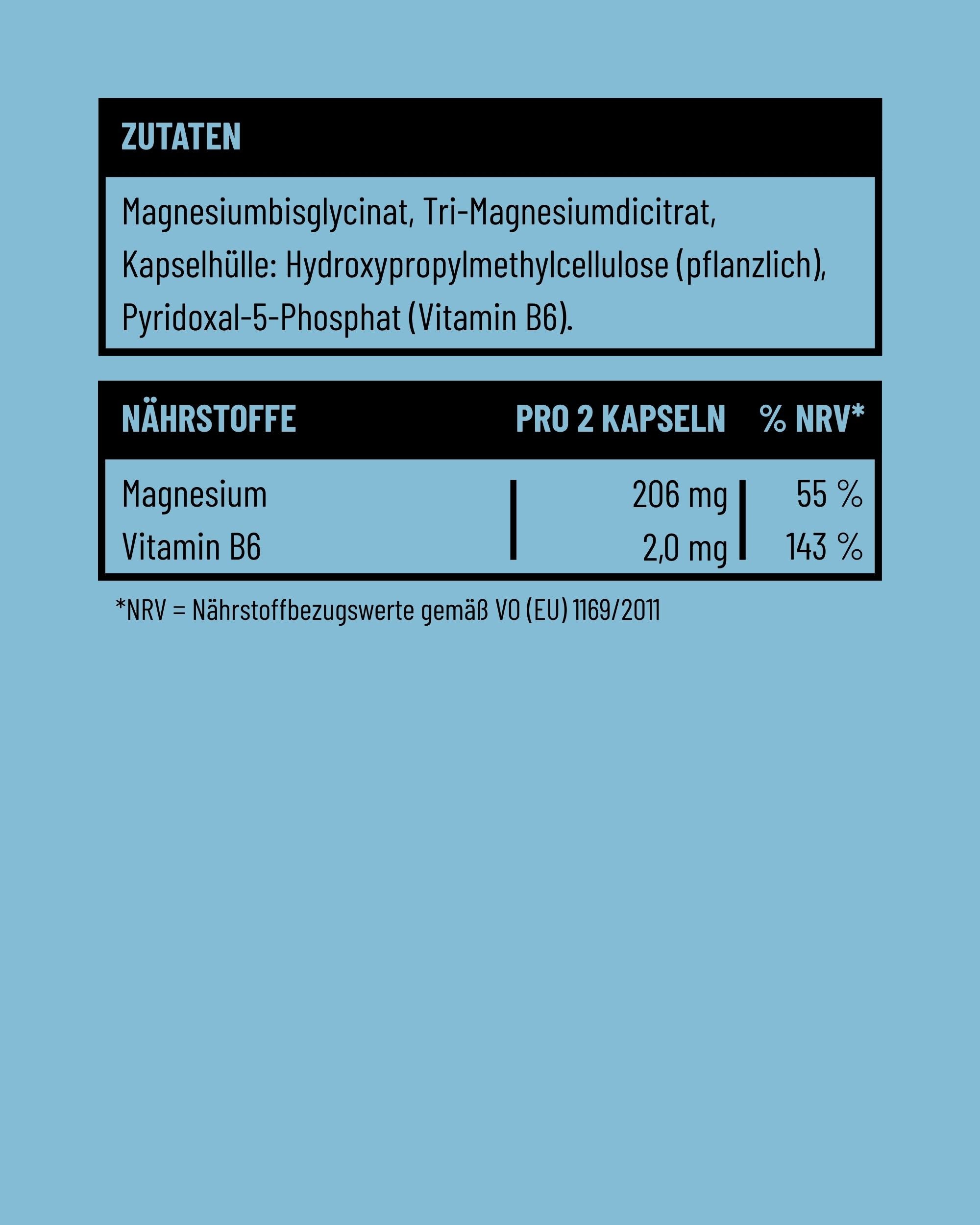
Within this nutrient-supply track, a magnesium supplement can contribute to covering general needs when intake from food becomes scarce. CALM by Fifty Five combines magnesium bisglycinate and tri-magnesium dicitrate with vitamin B6 and provides 206 mg of magnesium per daily dose, which corresponds to 55% of the reference value. Which magnesium forms are suitable for what, how well tolerated they are and how to gauge the daily requirement is explained in the Magnesium Guide. In context this means: CALM is part of a good nutrient supply during a phase in which less and more one-sided food is eaten, no more and no less.
To be explicit: CALM is not a remedy against the side effects of the weight-loss injection, nothing against nausea and no treatment. The medical assessment of complaints remains necessary and is not replaced by any food supplement. If you are interested in magnesium and its tolerability in general, for example because magnesium itself can soften the stool in higher amounts, you will find the details in the article on magnesium side effects and interactions.
The whole question of nutrient supply is part of a larger picture made up of nutrition, exercise and medical supervision. The complete overview of effect, risks, nutrition and muscle preservation is given by the complete guide to the weight-loss injection. It connects the individual topics into a consistent whole and explains where nutrition, strength training and nutrient supply each come in.
FAQ
How long do the side effects of the weight-loss injection last?
The common gastrointestinal complaints such as nausea, a feeling of fullness or diarrhoea usually appear at the start of treatment and after a dose increase and often decline over the course of treatment. For many people they ease off after the first weeks, because the body gets used to the active ingredient. A slow, gradual dose increase improves tolerability. How severe the complaints are and how long they last is individual and should be discussed medically if they are a heavy burden.
What can I do about nausea on the weight-loss injection?
Nausea belongs under medical supervision, especially when it is severe or persistent. In addition, many people report that smaller portions, eating slowly and avoiding very fatty or heavy foods make the transition phase more pleasant. These are adjustments to eating behaviour, not a treatment of the side effect. For stubborn vomiting or severe discomfort, the prescribing practice is the right place to turn.
Should I take electrolytes with diarrhoea on the weight-loss injection?
With diarrhoea or vomiting, the body loses fluid and minerals such as magnesium, potassium and sodium, which is why drinking enough is especially important. A good supply of these minerals supports normal electrolyte balance. However, this does not replace a medical assessment: persistent or severe diarrhoea and signs of dehydration should be medically assessed, since there is also a risk of dehydration-related kidney damage.
Which diet helps with side effects of the weight-loss injection?
No diet treats the side effects, but small, nutrient-dense meals suit the dampened appetite and the quicker feeling of fullness well. Because the total amount falls, the quality of each meal counts more: vegetables, high-quality protein sources, good fats and wholesome carbohydrates deliver more substance per bite. Drinking enough spread across the day provides additional support. This way you accompany the transition phase instead of treating a complaint.
Can a magnesium supplement ease the side effects of the weight-loss injection?
No, a magnesium supplement is not a remedy against the side effects and no treatment. According to EFSA, magnesium contributes to electrolyte balance, to normal muscle function and to a reduction of tiredness and fatigue, and thus belongs to the general nutrient supply that becomes more important during a demanding phase. If side effects are a burden for you, medical assessment is the right way, not a supplement.
When should I see a doctor because of side effects?
You should seek medical advice immediately with persistent, severe abdominal pain, stubborn vomiting, signs of dehydration or a clearly reduced volume of urine. Behind these can lie rarer but more serious risks such as inflammation of the pancreas, gallbladder disease or kidney damage. Since weight-loss injections are prescription-only medicines, the assessment of such complaints belongs, as a matter of principle, under medical supervision.
Disclaimer:
This article is for informational purposes only and does not replace medical advice, diagnosis, or treatment by a physician or pharmacist. The information provided here should not be used for self-diagnosis or self-treatment. Food supplements are no substitute for a balanced, varied diet and a healthy lifestyle. For any health questions or complaints, please always consult a doctor you trust. Fifty Five accepts no liability for any inconvenience or harm resulting from the use of the information presented here.
Sources
- EFSA. Scientific Opinion on Dietary Reference Values for protein. EFSA Journal 2012;10(2):2557.
- German Nutrition Society (DGE). D-A-CH reference values – protein.
- German Obesity Society (DAG). S3 Guideline on the Prevention and Treatment of Obesity. AWMF reg. 050/001.
- German Federal Institute for Risk Assessment (BfR). Maximum levels for vitamins and minerals in food supplements.
- European Commission. EU Register of nutrition and health claims.
- Robert Koch Institute (RKI). DEGS – German Health Interview and Examination Survey for Adults.
- Neeland IJ, et al. Changes in lean body mass with GLP-1-based therapies and mitigation strategies. Diabetes, Obesity and Metabolism. 2024.
- American Journal of Clinical Nutrition. Nutritional priorities to support GLP-1 therapy for obesity: a joint Advisory. 2025.









Ozempic, Wegovy, Mounjaro: what sets the weight-loss injections apart
After the weight-loss injection: keeping weight off and avoiding the yo-yo effect
Share: