


Omega-3 needs change several times over a woman's life. During pregnancy, DHA is needed directly from the maternal reserves for the child's brain and eye development. After menopause, hormonal regulatory circuits change, and EPA and DHA play a structural role in this. This life-stage specificity makes omega-3 for women an important topic that deserves more than a generic daily-dose recommendation.
Omega-3 and women's health: more than a pregnancy topic
When omega-3 and women appear in one sentence, it is almost always about pregnancy. That is justified, since for DHA in pregnancy there is one of the few clearly authorized EFSA claims. But pregnancy is only one of several life stages in which omega-3 plays a special role for women.
Skin, nervous system, cycle physiology, mental well-being, heart health in postmenopause: in all these areas, a good supply of DHA and EPA is structurally relevant. And in several of them, the risk of a suboptimal supply is particularly high in women, because many women eat no or only rarely fish, live vegetarian or vegan, or have never measured their omega-3 status.
This article gives an overview of the relevant connections, differentiated by life stage, and explains what a good supply means in practice.
The biological starting point: women and omega-3 conversion
A biological particularity relevant for women: the conversion rate of ALA (the plant omega-3 precursor) to EPA and further to DHA is somewhat higher in women than in men. Studies show that under the most favorable conditions, women can convert up to 21 percent of ALA to EPA; in men this value lies at about 8 percent.
That sounds like an advantage at first. But it is no reliable way out of the structural supply gap: the conversion to DHA, the long-chain form with the highest biological relevance for brain and eyes, remains very inefficient even in women (under 9%). And the increased conversion rate occurs only under certain hormonal conditions but is by no means a guarantee of a sufficient DHA supply.
Conclusion: even women who eat plant-based need a direct marine or algal source for a reliable EPA and DHA supply.
Skin and cell membranes: the structural contribution of omega-3
DHA and EPA are components of all cell membranes, including skin cells. Membranes with sufficient omega-3 are more fluid and can retain water better. That is the biological background for a connection repeated in the literature: suboptimal omega-3 supply and dry, flaky skin.
This connection is no EFSA-authorized health claim. It is an observed association that is biologically plausible but cannot be formulated as a treatment promise. What is true: cells that have sufficient DHA and EPA in their membranes function better, and that applies to skin cells just as to brain cells.
For women who consider skin a relevant topic, omega-3 is a structural base foundation, not a cosmetic active ingredient.
Cycle health and well-being
EPA is a precursor of prostaglandins, a group of signaling molecules involved in the regulation of smooth muscle contractions. That also concerns the uterus, whose contractions during menstruation are influenced by prostaglandins.
Prostaglandins from arachidonic acid (omega-6) have different properties than prostaglandins from EPA (omega-3). Studies have examined the connection between the omega-3/omega-6 ratio and cycle-accompanying complaints. The data is not consistent enough for a direct effect statement to be possible. But the biochemical mechanism is plausible, and several observational studies show associations between a low omega-3 index and more pronounced cycle symptoms.
What can be clearly said: a good omega-6/omega-3 ratio and a sufficient EPA supply can lay the foundation for a more balanced eicosanoid profile. That is no healing promise but a physiologically grounded assessment. More on the ratio in the article Omega-6 and omega-3: why the ratio is decisive.
Pregnancy and breastfeeding: the EFSA claim for DHA
During pregnancy, especially in the third trimester, and during breastfeeding, DHA needs are increased. The basis for this is clear: DHA is a structurally critical building block of the child's brain and eye development.
For this, the EFSA has one of the few directly authorized health claims for omega-3:
"Maternal DHA contributes to the normal brain and eye development of the fetus and breastfed infants."
The recommended amount: 200 mg of DHA daily in addition to the general EFSA recommendation of 250 mg EPA+DHA. That results in a total intake of at least 450 mg of DHA daily during pregnancy and breastfeeding.
Where does the unborn child get DHA? It actively draws it from the mother's circulation. When the maternal intake is insufficient, body stores are mobilized. That can lead to a drop in the maternal omega-3 index during pregnancy and after birth, which in turn is relevant for the mother herself.
For pregnant women who eat no fish or live vegan, algae oil is the only reliable DHA source without animal origin and without the heavy metal risk from the marine food chain.
Mental well-being and mood
DHA is a structural component of the nerve cell membranes in the brain. The research on the connection between omega-3 supply and mood is active, and the data complex.
What is known: the omega-3 index has been associated in studies with various aspects of mental health. The connections are not consistent or strong enough for a direct health claim to be made. What is plausible: a brain that has sufficient DHA in its membranes works with optimized membrane fluidity and signal transmission.
Especially in phases of hormonal change, in the peripartum period, premenstrually, or in perimenopause, in which mental well-being fluctuates more strongly, a good basic supply of DHA and EPA is a substantial contribution.
For therapeutic contexts: omega-3 does not replace medical treatment. With mood disorders, anxiety, or depression, professional support is the right path.
Perimenopause and postmenopause: heart health moves to the foreground
Estrogen has vessel-protective properties. With the decline of estrogen production in peri- and postmenopause, the female body loses a natural protective factor for the cardiovascular system. Women's cardiovascular risk approaches that of men after menopause.
In this life stage, the documented effect of EPA and DHA on heart function becomes particularly relevant.
At the same time, eye health from age 50 is a growing topic. DHA is the dominant fatty acid in the retina, and the DHA share in the retina decreases with increasing age. A continuous, good DHA supply across the whole life is the best contribution to maintaining a high DHA share. More on this in the article Omega-3 after 50.
Vegan and vegetarian women: a particular risk group
Women who live vegetarian or vegan statistically have the lowest omega-3 index values in the population. Studies show that vegan women often lie at 3 to 4 percent on the omega-3 index, far below the target range of 8 to 11 percent.
That is no criticism of a plant-based diet but a practical supply problem. EPA and DHA occur in relevant amounts only in marine or algal sources. Plant oils deliver ALA but not the directly usable DHA.
For vegan women in pregnancy, this topic is therefore particularly urgent: the EFSA claim for DHA in pregnancy applies from 200 mg additional daily. Algae oil is the only reliable, vegan way to cover this need.
PULSE: consistent for every life stage
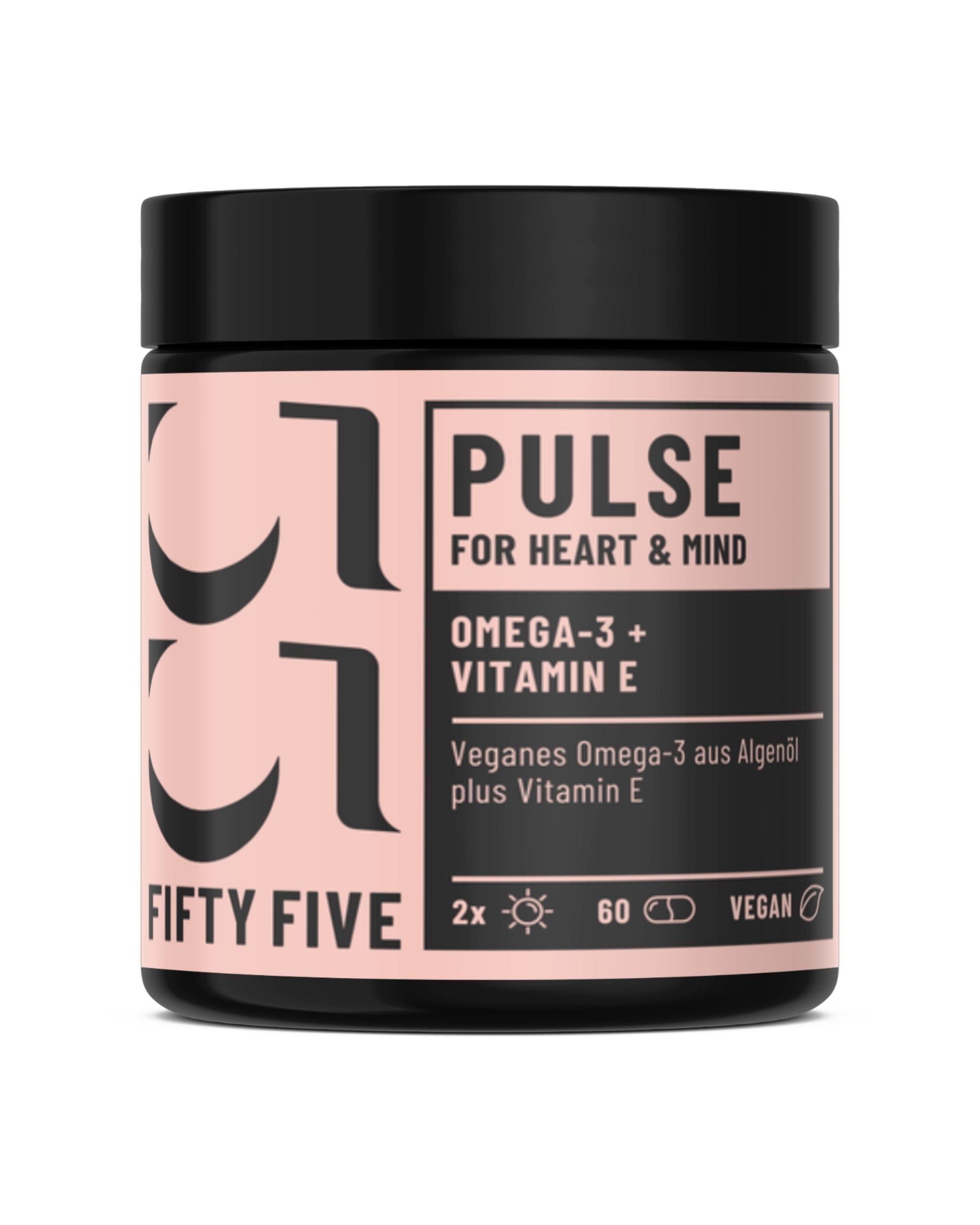
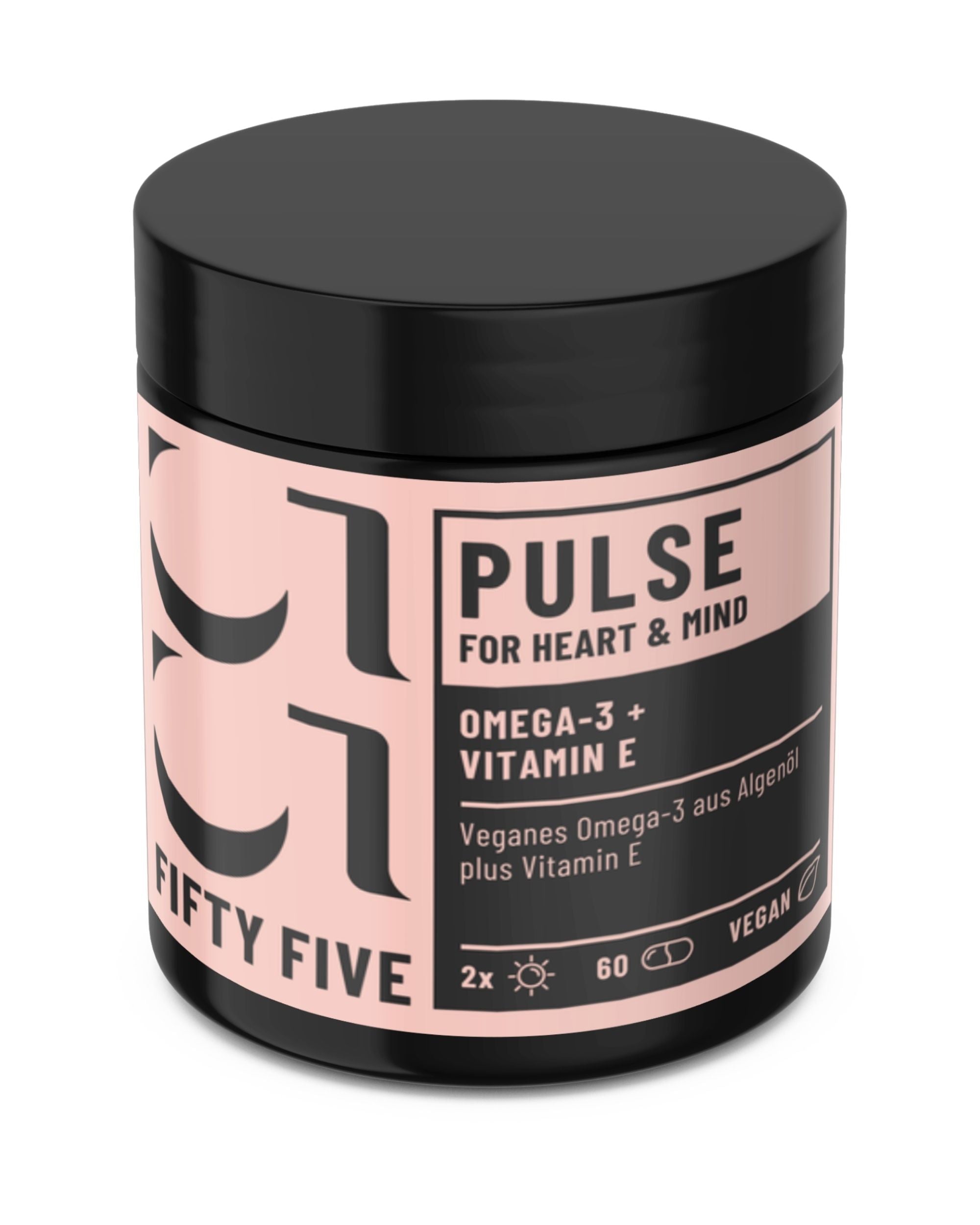
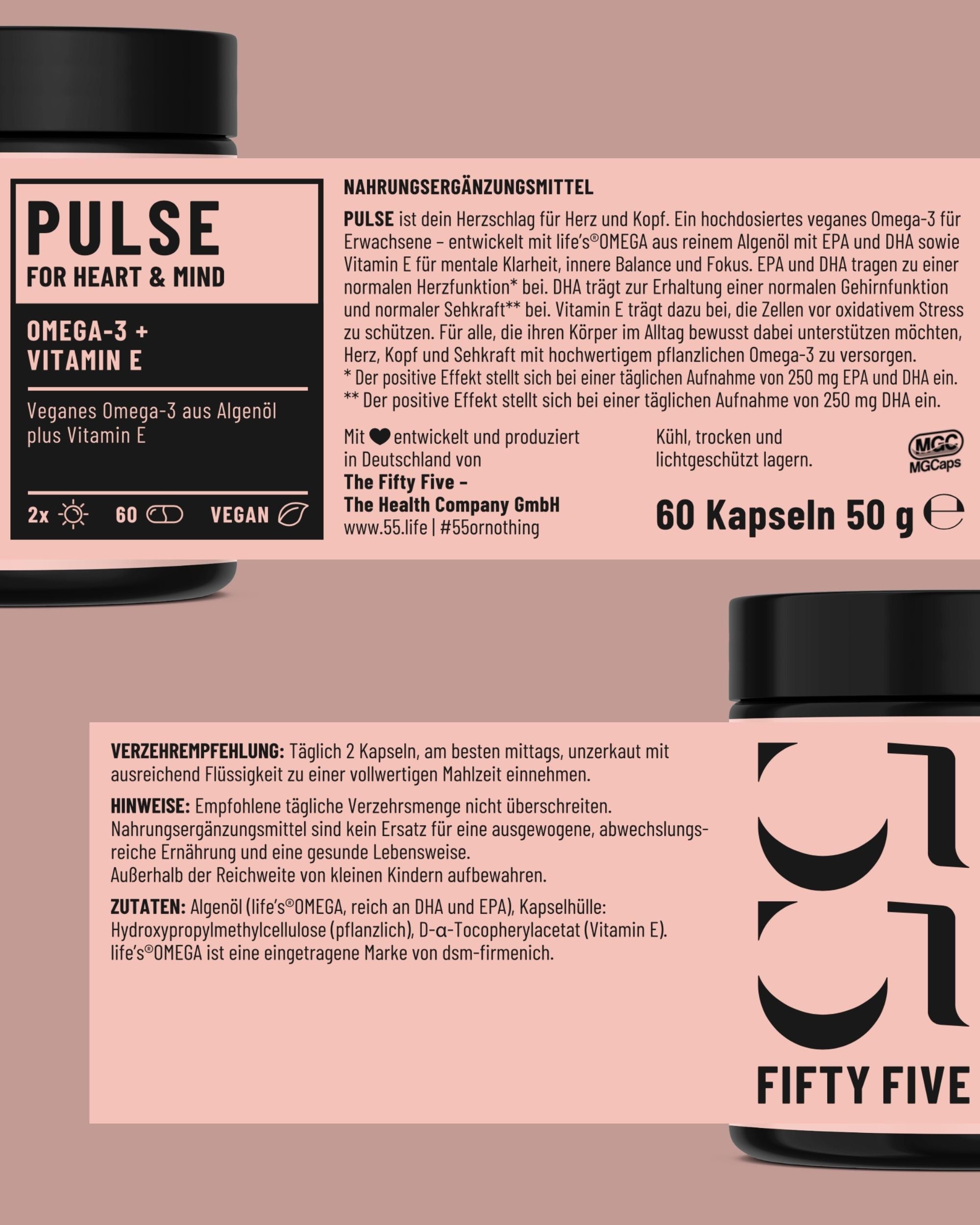
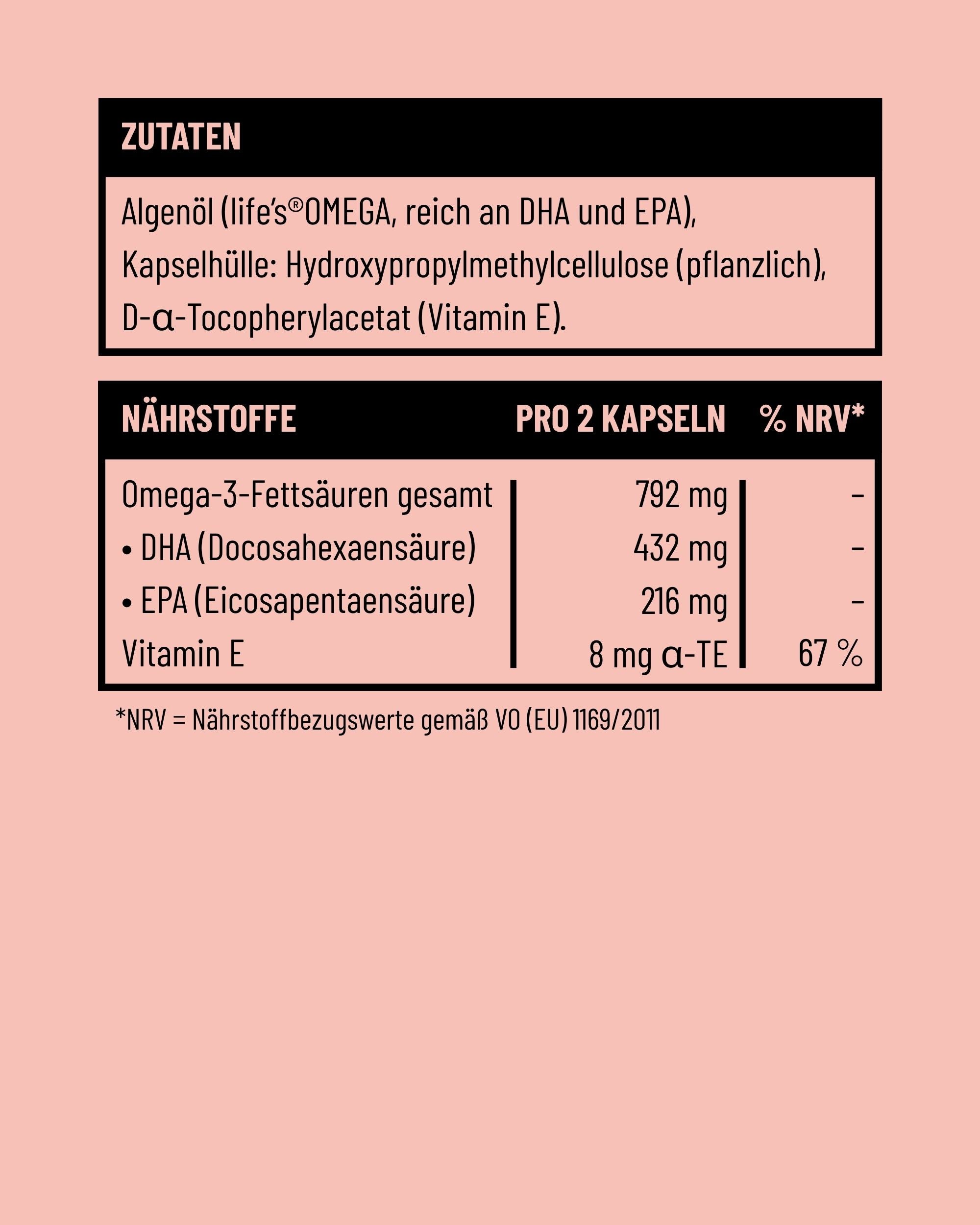
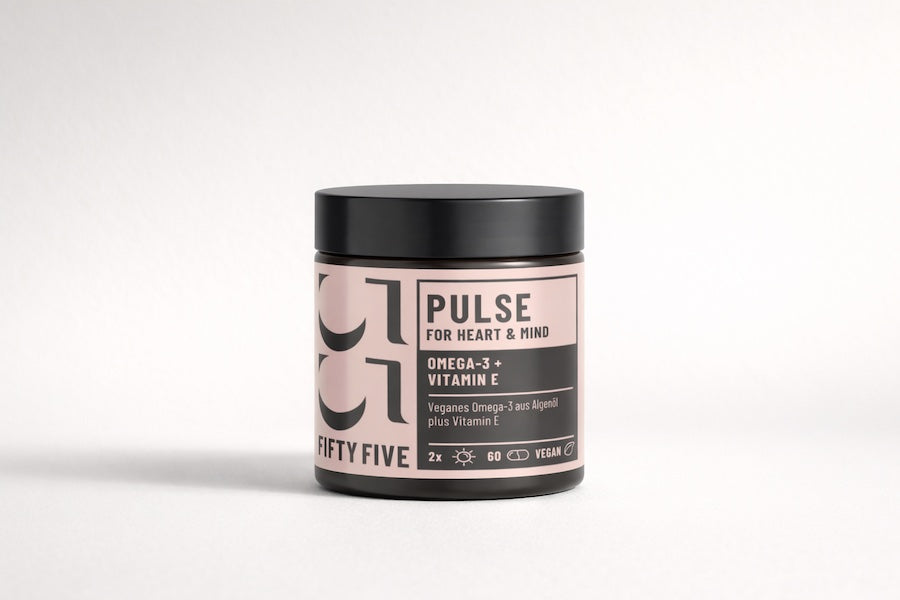
PULSE by Fifty Five delivers 432 mg of DHA and 216 mg of EPA per daily dose (2 capsules) from DSM Lifes60® algae oil. The DHA amount exceeds the EFSA recommendation for pregnant women (200 mg additional) and covers the increased need in other relevant life stages too.
PULSE is fully vegan, contains no fish oil and no animal ingredients. That makes it the only reliable omega-3 option without compromise for vegan and vegetarian women.
Additionally, PULSE contains 8 mg of vitamin E (67% NRV) as natural oxidation protection for the sensitive algae oil. Vitamin E contributes to the protection of cells from oxidative stress. This combination is found almost nowhere among omega-3 products on the market.
FAQ
Do I need a special omega-3 product during pregnancy?
An omega-3 product with sufficient DHA (at least 200 mg daily) is suitable in most cases. Anyone who wants to be sure checks whether the product clearly declares the DHA amount. Many classic fish oil products contain more EPA than DHA, which is less favorable during pregnancy.
Can omega-3 ease PMS complaints?
There are indications from studies of a connection between EPA/DHA and cycle-accompanying complaints. The data is not consistent enough for a direct statement to be possible. A sufficient omega-3 supply is fundamental for a balanced eicosanoid balance, which is physiologically plausibly connected with cycle complaints.
Do I lose a lot of DHA through breastfeeding?
Yes. DHA is actively transported into breast milk to ensure the child's supply. The maternal DHA share in the blood and in the omega-3 index drops after birth, especially with a long breastfeeding period without supplementation. After breastfeeding, a renewed measurement of the omega-3 index is recommended.
Should omega-3 be dosed differently when taking oral contraceptives?
There are no specific recommendations to adjust dosages with oral contraception. The EFSA base recommendation applies to all healthy adults.
When should I begin omega-3 supplementation during pregnancy?
Ideally already before pregnancy or at the latest at the start. The third trimester is particularly DHA-intensive for the child's brain development, but the first and second trimesters also benefit from a good supply. Fundamentally: the earlier, the better.
→ To the complete omega-3 guide
Disclaimer:
This article is for informational purposes only and does not replace medical advice, diagnosis, or treatment by a physician or pharmacist. The information provided here should not be used for self-diagnosis or self-treatment. Food supplements are no substitute for a balanced, varied diet and a healthy lifestyle. For any health questions or complaints, please always consult a doctor you trust. Fifty Five accepts no liability for any inconvenience or harm resulting from the use of the information presented here.




When to Take Vitamin D: Timing, Meals, and What Really Influences Absorption
How Ben Finds His Rhythm When the Shift Schedule Sets the Beat
Share: