


When omega-3 is discussed specifically for men, the standard statement is often simplified: good for the heart. That is true too. From 250 mg daily, EPA and DHA contribute to normal heart function, which is particularly relevant for men with their statistically higher cardiovascular risk.
But reducing omega-3 to a heart product considerably underestimates the biological breadth of these fatty acids. DHA is structurally important for the brain, cognitive function, and the nervous system. EPA is systemically involved in the regulation of signaling processes. And the average omega-3 index of men is, according to studies, often lower than that of women, which makes the relevance of a targeted supply even clearer.
This article explains what omega-3 does for men beyond heart health and why the topic deserves more attention in practice than it gets.
Heart health: the documented starting point
Cardiovascular diseases are the most common cause of death in men in Germany. Men fall ill statistically earlier than women. Cardiovascular risk rises markedly from age 40.
According to the EFSA claim, EPA and DHA contribute to normal heart function. That is no healing statement but the scientifically confirmed description of a normal physiological function. What that means biochemically: EPA and DHA are structural components of heart muscle cells and influence the eicosanoid balance, which in turn co-regulates blood vessel width and platelet activity.
For men from age 40, a reliable, continuous supply of EPA and DHA is no luxury but a logical base measure. The EFSA base recommendation of 250 mg daily is, however, the minimum value. As a good everyday dosage for healthy adults, 500 to 1,000 mg EPA+DHA daily is named in the literature.
Cognitive function and mental performance
DHA is the most common structural fat in the cerebral cortex. The brain consists of about 60 percent fat by dry weight, and DHA is particularly concentrated in the membranes of nerve cells. According to the EFSA claim, DHA contributes to the maintenance of normal brain function (from 250 mg daily).
For men in their working day, under pressure and with high cognitive demands, that is no abstract topic. Concentration, decision speed, and cognitive resilience are real everyday parameters. A suboptimal DHA supply manifests in suboptimal membrane fluidity of the nerve cells. That is not an acutely measurable effect, but a structural factor that accumulates over years.
Important: DHA is no cognitive stimulant. The EFSA statement describes the maintenance of normal function, not a cognitive boost. But that does not make the point less relevant.
Sports, cell membranes, and recovery
In the sports context, omega-3 is frequently associated with muscle recovery. There is no EFSA-authorized claim for "muscle recovery." What can instead be said factually:
EPA and DHA are structural components of all cell membranes, including muscle cells. Membranes with a high omega-3 share are more fluid and more responsive. EPA is a precursor of eicosanoids involved in the regulation of physiological reactions after physical exertion.
Research on omega-3 and physical performance is actively ongoing. Several studies show connections between EPA+DHA supplementation and aspects of muscle physiology, especially in older men and with endurance exertion. The data, however, is not yet strong enough for direct effect statements, but the biological mechanisms are well described.
What is certain: anyone who does sports regularly and places high demands on their cell physiology benefits from a good basic supply of DHA and EPA as structural base elements.
Why men are statistically worse supplied than women
Studies on the omega-3 index consistently show that men have lower values on average than women. The reasons for this are multilayered:
Lower conversion rate: The conversion of ALA (the plant omega-3 precursor) to EPA lies at about 8 percent in men, the conversion to DHA at 0 to 4 percent. In women, these rates are somewhat higher. Men are thus even more dependent on direct EPA+DHA sources.
Higher total energy needs and more omega-6 consumption: Men generally eat more, which with a dietary pattern of lots of processed food also means a higher absolute omega-6 consumption. That worsens the omega-6/omega-3 ratio.
Lower willingness to supplement: Food supplements are taken less frequently by men on average than by women. That is culturally conditioned and is changing, but the difference is statistically measurable.
Fewer doctor visits and preventive measures: Men generally make less use of preventive health measures. Omega-3 status is practically never measured in routine checkups because it is not covered by statutory health insurance. The topic remains unconscious for many men.
The omega-3 index in men: what you can do
The first step is the baseline value. The omega-3 index can be determined simply and cheaply via blood tests. Target range: 8 to 11 percent.
Anyone below 6 percent (which is frequently the case in men in Germany) can measurably improve the index within 8 to 12 weeks with daily supplementation of 500 to 1,000 mg EPA+DHA. How that works and what to watch for is explained in our article on omega-3 dosage.
PULSE: no half measures
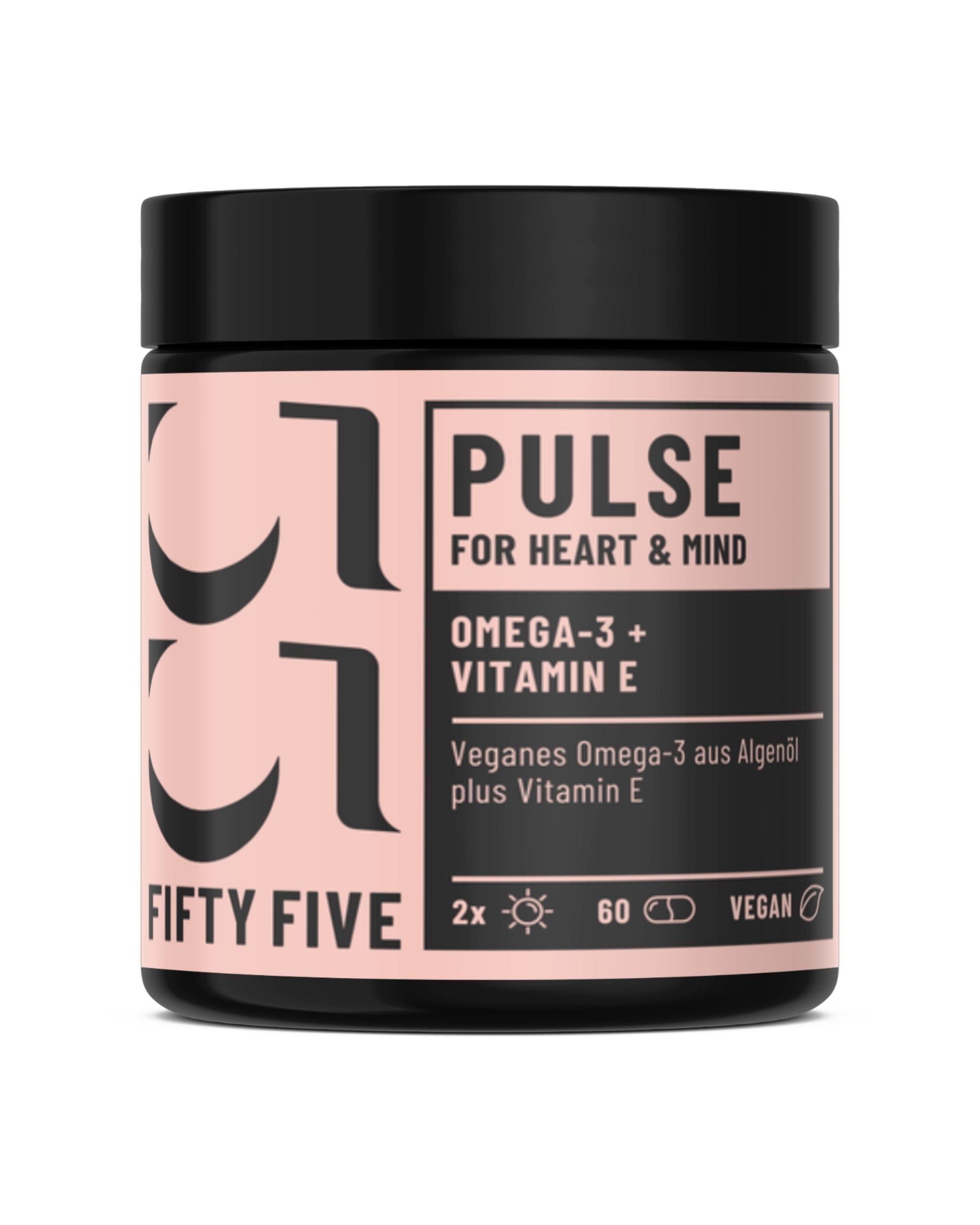
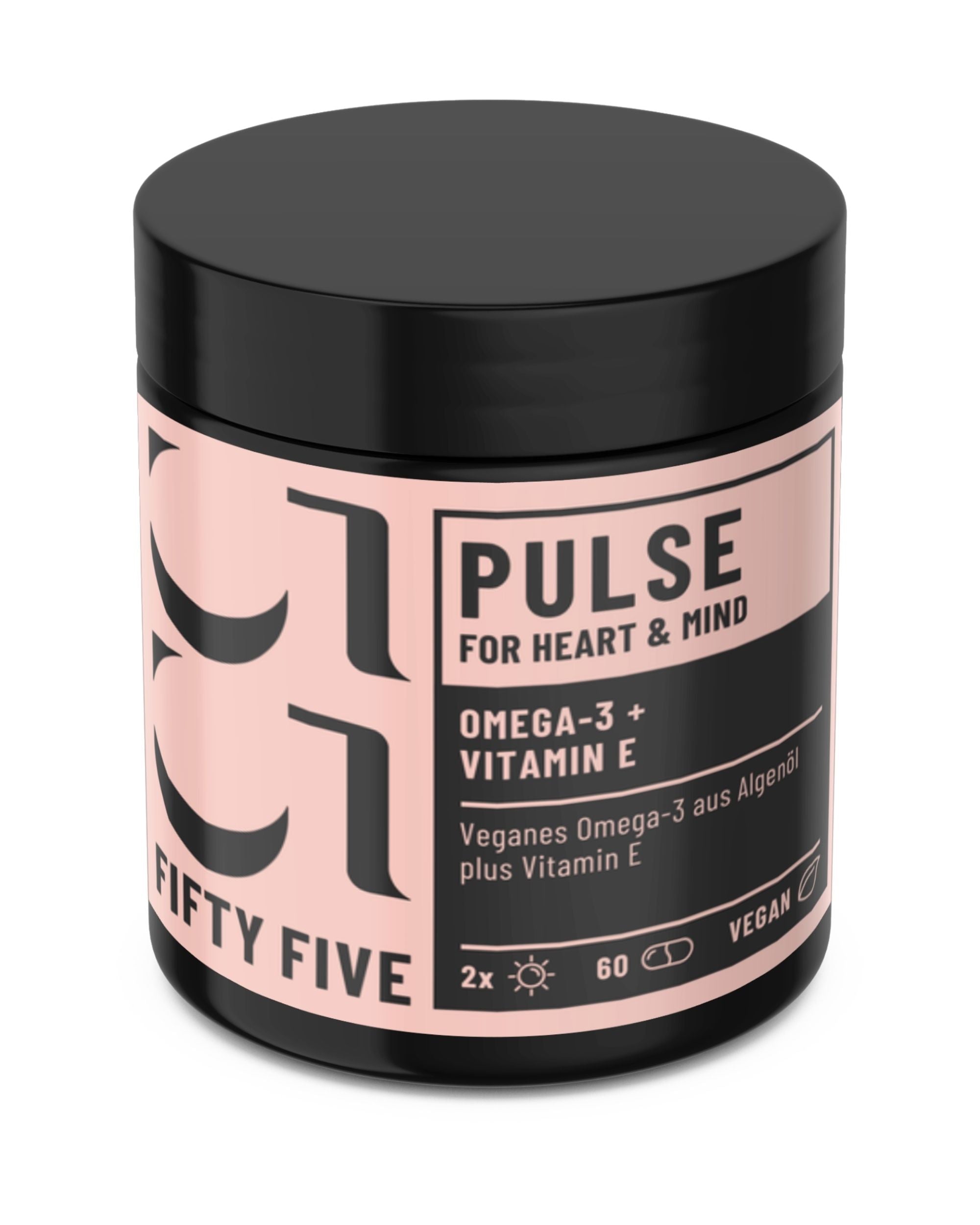
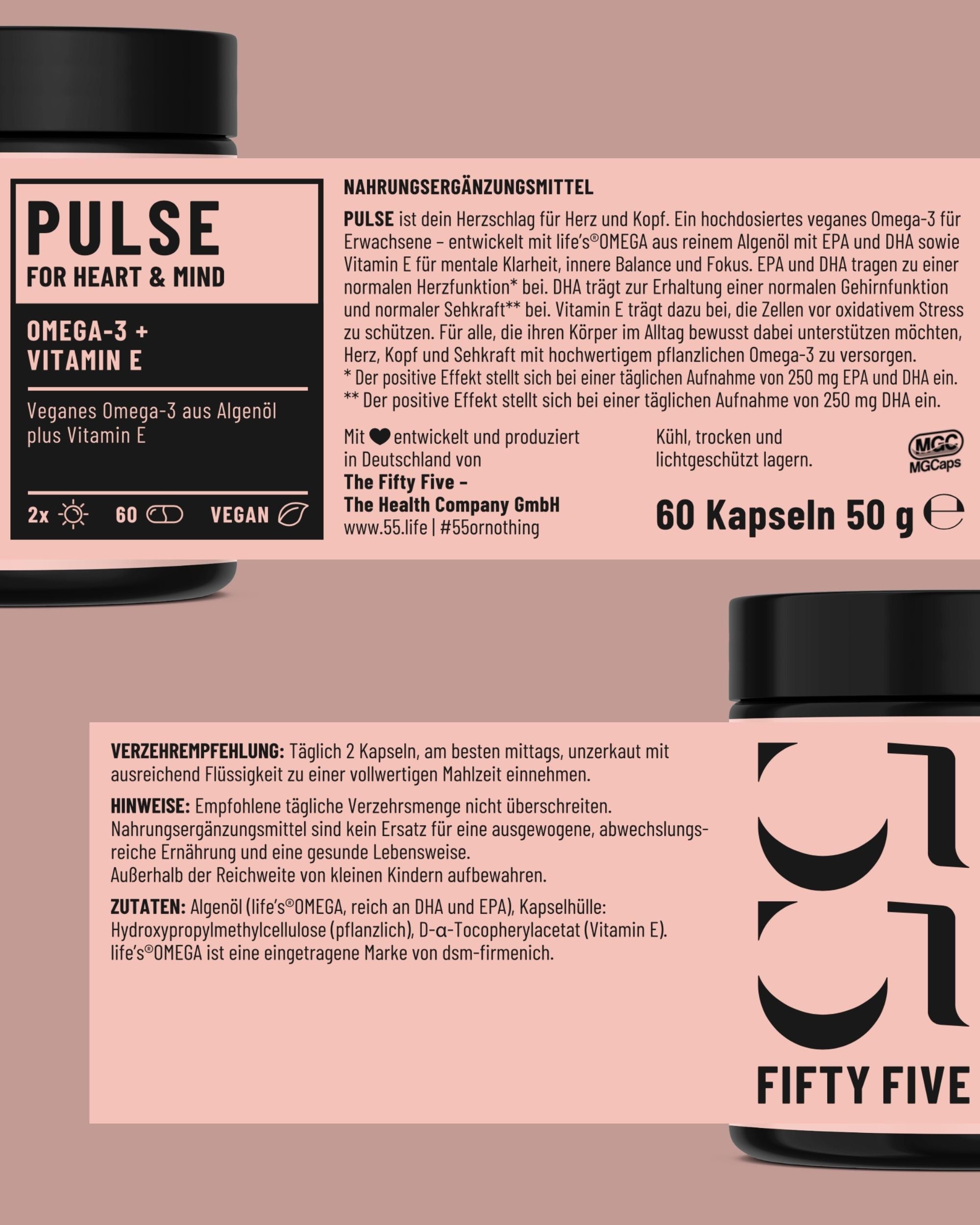
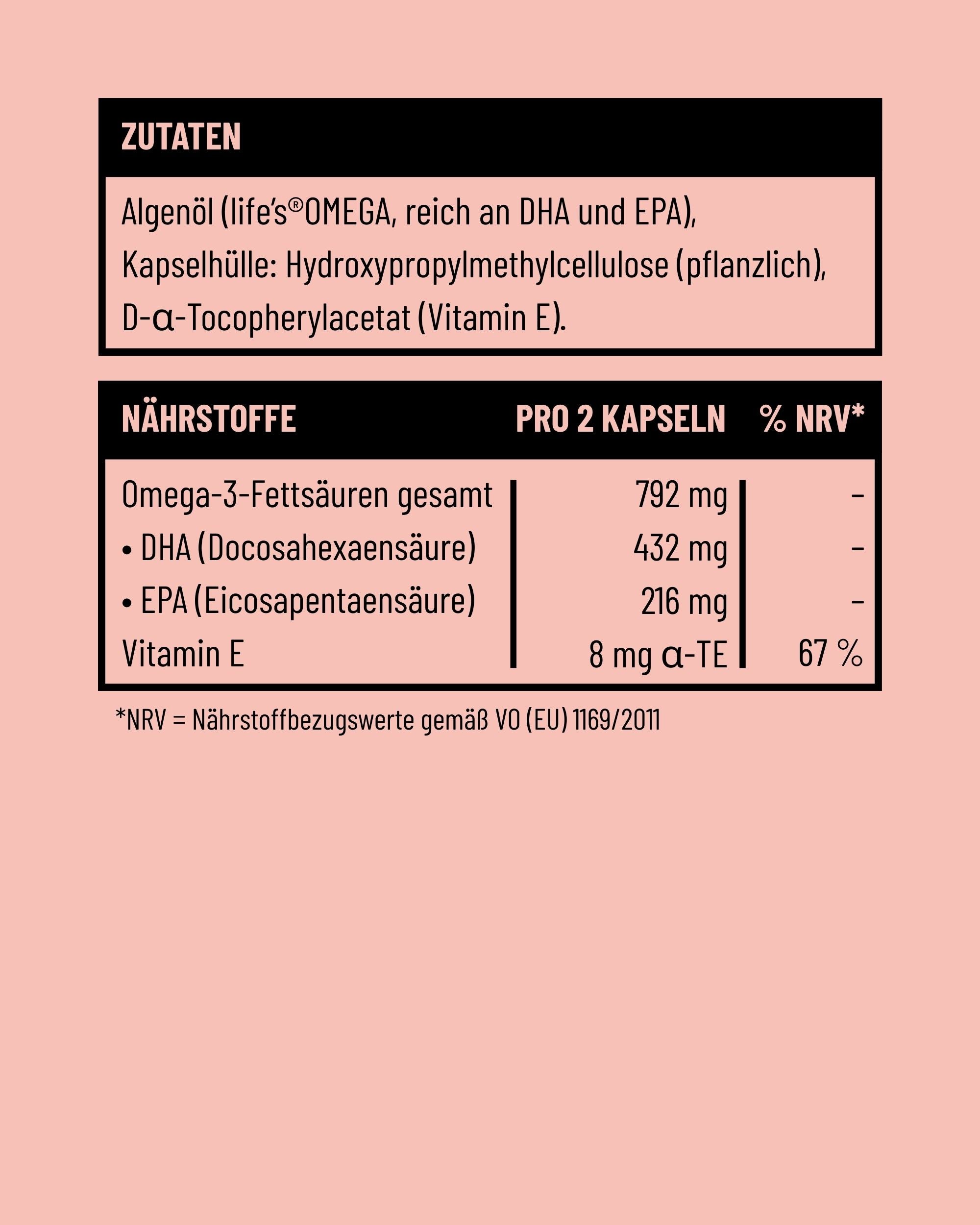
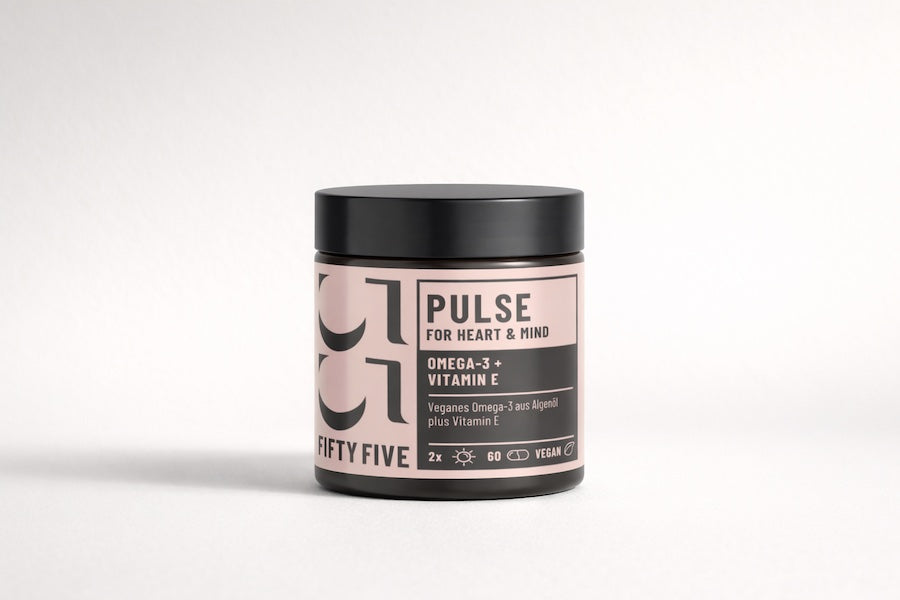
PULSE by Fifty Five delivers 792 mg of omega-3 per daily dose (2 capsules), including 432 mg of DHA and 216 mg of EPA from DSM Lifes60® algae oil. That is almost three times the EFSA base recommendation and a substantial everyday dosage that moves the omega-3 index measurably.
No fishy taste, no burping, fully vegan. Two capsules with lunch: that is the entire intake routine.
What most omega-3 products leave out, Fifty Five has consistently built into PULSE: vitamin E. 8 mg per daily dose (67% NRV), in the natural D-alpha-tocopheryl form. Omega-3 fatty acids, especially the DHA-rich algae oil, are prone to oxidation. Vitamin E actively protects the sensitive fatty acids and contributes to the protection of cells from oxidative stress. That is no addition for marketing reasons but a biochemically coherent formulation decision. This combination is barely found on the market.
FAQ
Do men need more omega-3 than women?
Not fundamentally. The EFSA base recommendation applies to all adults. Because of the lower ALA-to-DHA conversion rate and the tendentially higher omega-6 consumption, men do have a structurally higher risk of a low omega-3 index.
Does omega-3 improve testosterone levels?
There are no robust studies documenting a direct connection between omega-3 supplementation and testosterone levels. Claims of this kind have no EFSA basis. Omega-3 is no hormone product.
Can I take omega-3 together with creatine or protein shakes?
Yes. There are no known negative interactions between omega-3 and the substances mentioned. Taking omega-3 in the presence of dietary fat improves absorption.
Is omega-3 good for the eyes?
According to the EFSA claim, DHA contributes to the maintenance of normal vision. The retina of the eye is among the most DHA-rich tissues in the body. A good DHA supply supports the normal function of the retina across the entire lifespan.
When is the best time for intake?
With a fatty meal, ideally at midday or in the evening. Fasted intake reduces bioavailability. Consistency matters more than timing: every day, at the same time of day.
→ To the complete omega-3 guide
Disclaimer:
This article is for informational purposes only and does not replace medical advice, diagnosis, or treatment by a physician or pharmacist. The information provided here should not be used for self-diagnosis or self-treatment. Food supplements are no substitute for a balanced, varied diet and a healthy lifestyle. For any health questions or complaints, please always consult a doctor you trust. Fifty Five accepts no liability for any inconvenience or harm resulting from the use of the information presented here.
Sources
- EFSA. Scientific Opinion on Dietary Reference Values for fats, incl. EPA and DHA. EFSA Journal 2010;8(3):1461.
- EFSA. Scientific Opinion on the Tolerable Upper Intake Level of EPA, DHA and DPA. EFSA Journal 2012;10(7):2815.
- German Nutrition Society (DGE). D-A-CH reference values – fat and fatty acids.
- European Commission. EU Register of nutrition and health claims.






Vitamin D Overdose and Side Effects: What Really Happens When You Take Too Much
Magnesium for Women: Support for PMS & Period Cramps
Share: