


Iron deficiency shows up in exhaustion and pale skin. Magnesium deficiency partly in muscle cramps and sleep problems. With omega-3, it is more complicated: there is no single, clearly assignable symptom that reliably points to an undersupply. Still, there are patterns that can point to a suboptimal supply, a clearly defined risk group, and a blood parameter that shows where you really stand.
Why omega-3 deficiency is hard to recognize
That has biological reasons. Omega-3 fatty acids are not acutely acting substances that fail immediately when absent. They are structural components of cell membranes and precursors of signaling molecules. When the supply is low over a longer time, the membrane structure changes gradually. The body compensates, continues working with less optimal cell fluidity, and that manifests in diffuse signs easily attributed to other causes.
What does exist nonetheless: possible signs of a suboptimal supply, a defined risk group, and a meaningful blood parameter.
Possible signs of a suboptimal omega-3 supply
None of the following signs alone proves an omega-3 deficiency. Each can have many other causes. But when several of them occur at the same time and other causes are largely ruled out, a suboptimal omega-3 supply can be a relevant variable.
Dry skin and dull hair: DHA and EPA are structural components of cell membranes, including in the skin. Membranes with sufficient omega-3 are better able to retain moisture. Dry, flaky skin without another explanation can be a hint. Important: this is no authorized health claim but an observed association.
Concentration problems and cognitive sluggishness: The brain is one of the most DHA-rich organs in the body. A chronically suboptimal DHA supply can theoretically affect signal transmission. Difficulty concentrating, sluggish thinking, or the feeling of not being "fully present" can have many causes. Omega-3 status is one of them, though it is usually not investigated.
Increased tiredness and exhaustion: Similar to brain function: when cell communication across all tissues runs slower or less efficiently, that manifests as a general feeling of exhaustion. No specific marker, but relevant in the overall picture.
Joint complaints without a clear orthopedic cause: EPA and DHA are involved in the regulation of signaling processes that influence inflammatory processes. A suboptimal EPA supply can shift the balance in eicosanoid metabolism. Here too: no therapeutic promise, but a biologically plausible connection.
Mood swings and increased irritability: DHA in the brain is not only structurally relevant but also influences neurotransmitter metabolism. Studies have examined connections between a low omega-3 index and certain aspects of mental health. The data is not consistent enough to make direct statements, but the connection is an active research field.
Who has an increased risk of a suboptimal omega-3 supply
Certain groups have a structurally higher risk of permanently taking in little EPA and DHA:
Vegetarians and vegans: EPA and DHA occur in relevant amounts only in marine sources and algae oil. Plant oils deliver ALA but no directly usable EPA or DHA. Studies show that vegetarians and vegans have considerably lower omega-3 index values on average than people with an omnivorous diet.
People who rarely or never eat fish: The most reliable food source for EPA and DHA is fatty sea fish. Anyone who eats this less than twice a week or avoids it entirely has a structural supply gap without a supplement.
Older adults: With increasing age, the already low conversion efficiency from ALA to EPA and DHA drops further. At the same time, the biological relevance of a good DHA supply for cognitive function and eye health rises. More on this in the article Omega-3 after 50.
Pregnant and breastfeeding women: During pregnancy, especially in the third trimester, and during breastfeeding, DHA needs are increased. The child draws DHA from the maternal reserves for brain and eye development. When dietary intake is insufficient, body stores are drawn upon.
People with high omega-6 consumption: A Western-style diet with lots of sunflower oil, processed foods, and fast food delivers high amounts of omega-6 fatty acids. Omega-6 and omega-3 compete for the same enzymes. An omega-6/omega-3 ratio of 15:1 (Western average) instead of the more favorable 4:1 reduces the availability of EPA and DHA in the body, even when a moderate amount is taken in.
The omega-3 index: the reliable marker
Symptoms and risk groups can point to a suboptimal supply. The only reliable way to know your own status is a measurement.
The omega-3 index is a blood parameter that indicates the percentage share of EPA and DHA in the membrane of red blood cells. It differs from a serum level, which only reflects short-term intake: since red blood cells have a lifespan of about 120 days, the index shows the average of the last three to four months. That makes it a stable, meaningful marker for long-term status.
The omega-3 index was introduced in 2004 by the researchers Harris and von Schacky and has been much studied in the scientific literature since. It is not suitable for diagnosing diseases but gives a clear indication of the supply situation.
What the values mean
The value ranges of the omega-3 index are scientifically well characterized:
- Below 4%: clearly undersupplied range. Associated with increased cardiovascular risk in the scientific literature.
- 4-8%: suboptimal range. Most people in Western countries, including Germany, fall here.
- 8-11%: target range. The supply range considered optimal according to the current state of research.
- Above 11%: very high range, which does not have to be aimed for in healthy adults.
Studies show that the average omega-3 index in the German population lies at about 5 to 6 percent. That means: the majority of the population is in the suboptimal range without knowing it.
How you can measure your omega-3 index
Omega-3 index tests are available through various providers. The most common method is a simple at-home blood test: a drop of capillary blood from the fingertip is applied to a test card and sent to a specialized laboratory. The result comes by mail or digitally after a few days.
These tests usually cost between 30 and 70 euros and frequently deliver further fatty acid parameters alongside the omega-3 index.
The omega-3 index can also be ordered through some primary care practices, though it is not covered by statutory health insurance.
What you can do if your value is too low
If the omega-3 index is below 8 percent, a targeted increase in EPA+DHA intake is the direct path.
Through food: twice a week, fatty sea fish (salmon, herring, mackerel, sardines) brings the recommended base amount of EPA+DHA. For vegetarians, vegans, and people who do not like fish, that is not a practical option.
Through supplements: algae oil capsules with sufficient EPA and DHA (ideally 500 mg or more daily) are the most reliable alternative. After 8 to 12 weeks of regular intake, the index can be measured again to assess progress.
Which dosage is recommended for whom and what to watch for during intake is explained in our article on omega-3 dosage. What the differences between fish oil and algae oil mean exactly is explained in Fish oil or algae oil: where omega-3 really comes from.
PULSE: premium DHA/EPA supply
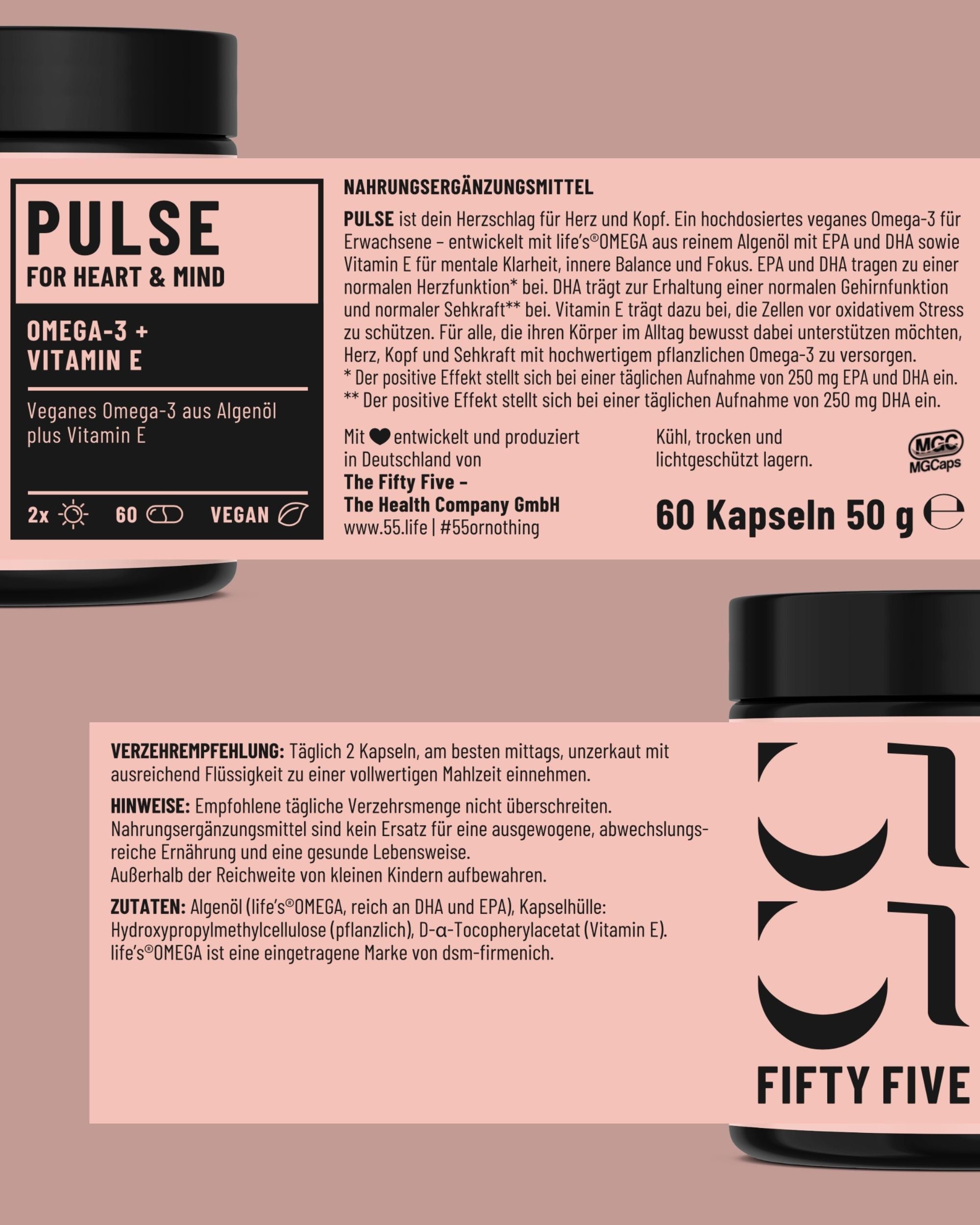
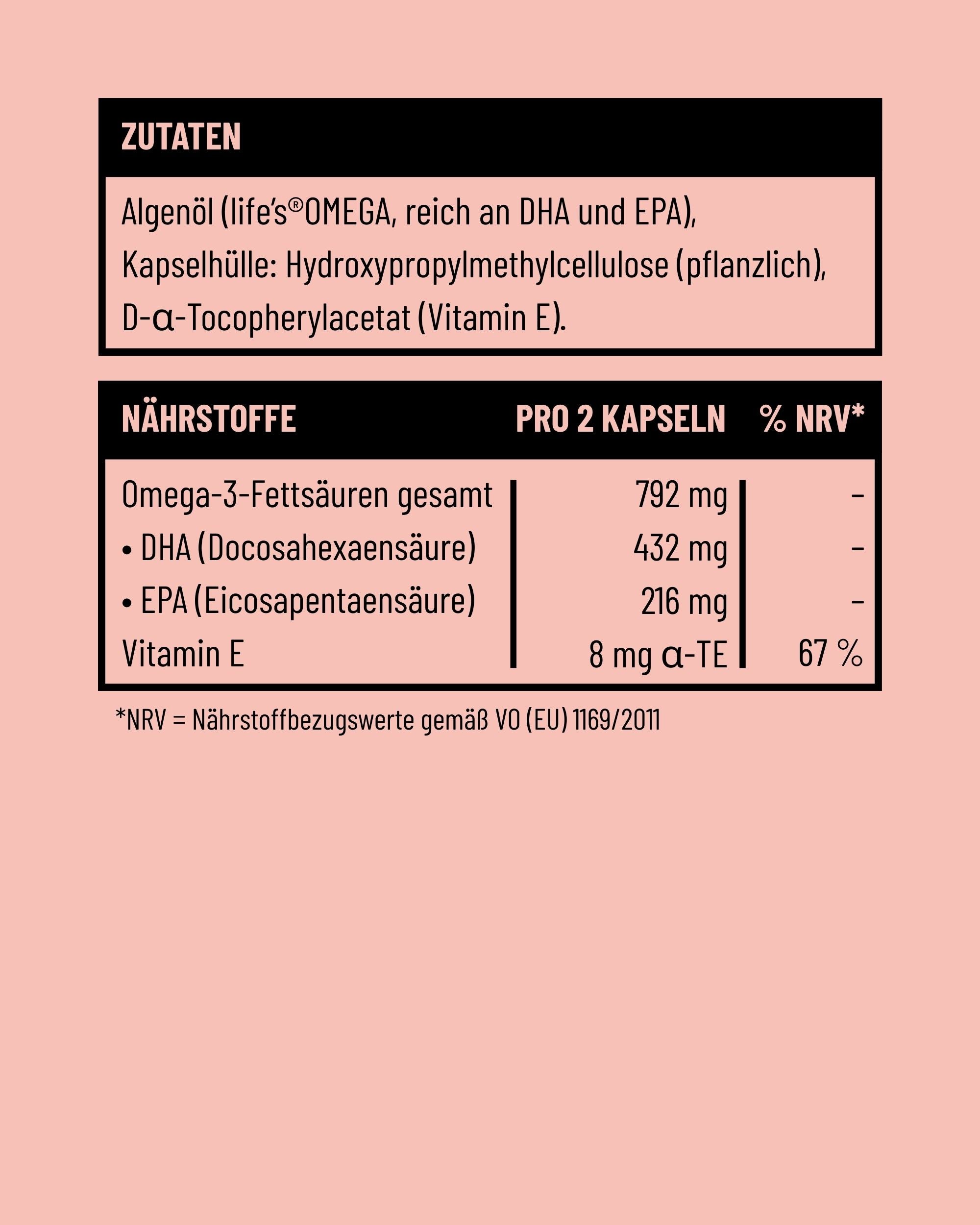
PULSE by Fifty Five delivers 792 mg of omega-3 per daily dose (2 capsules) from DSM Lifes60® algae oil, including 432 mg of DHA and 216 mg of EPA. That is almost three times the EFSA baseline recommendation and a well-documented everyday dosage to move the omega-3 index toward the target range with regular intake.
PULSE also contains 8 mg of vitamin E (67% NRV), which as an antioxidant protects the fatty acids from oxidation. Vitamin E contributes to the protection of cells from oxidative stress. This combination, rare among omega-3 products on the market, secures the quality of the oil in the capsule.
PULSE is 100% vegan, has no fishy taste, and comes in liquid caps.
FAQ
Can I determine through symptoms alone whether I have an omega-3 deficiency?
No, not reliably. The described signs like dry skin or concentration problems can have many causes. The omega-3 index is the only reliable marker for the actual supply status.
How often should I measure the omega-3 index?
Once at the start to know the baseline value. Again after 8 to 12 weeks of supplementation to assess progress. After that, an annual check is enough if intake is consistent.
Can a high omega-3 index be harmful?
Values above 11 percent are rare with normal supplementation. The EFSA has classified amounts up to 5 g EPA+DHA daily for adults as safe. Extreme values at very high dosages can influence blood clotting. For healthy adults with normal supplementation, that is not a relevant risk.
Is the omega-3 index always low in vegetarians?
Not necessarily, but statistically often. Anyone who consistently supplements algae oil can reach an omega-3 index in the target range. Without supplementation or fatty fish, a sufficient EPA+DHA supply cannot be reached through a plant-based diet alone.
Why does the omega-3 index improve so slowly?
Because it measures the incorporation into the cell membranes of red blood cells, not the current blood level. Red blood cells live about 120 days. The index therefore shows a moving average and reacts sluggishly to changes. That makes it more reliable as a long-term marker but less suitable as short-term feedback.
→ To the complete omega-3 guide
Disclaimer:
This article is for informational purposes only and does not replace medical advice, diagnosis, or treatment by a physician or pharmacist. The information provided here should not be used for self-diagnosis or self-treatment. Food supplements are no substitute for a balanced, varied diet and a healthy lifestyle. For any health questions or complaints, please always consult a doctor you trust. Fifty Five accepts no liability for any inconvenience or harm resulting from the use of the information presented here.
Sources
- EFSA. Scientific Opinion on Dietary Reference Values for fats, incl. EPA and DHA. EFSA Journal 2010;8(3):1461.
- EFSA. Scientific Opinion on the Tolerable Upper Intake Level of EPA, DHA and DPA. EFSA Journal 2012;10(7):2815.
- German Nutrition Society (DGE). D-A-CH reference values – fat and fatty acids.
- European Commission. EU Register of nutrition and health claims.









Recognizing Vitamin D Deficiency: Symptoms, Causes & What Really Helps
Out of the Supplement Jungle: How Clara Found Her Vegan Foundation
Share: