

Anyone who supplements omega-3 usually thinks in absolute amounts: how much DHA, how much EPA. What is almost always missing is the other side. Omega-6 fatty acids compete with omega-3 for the same enzymes in the body. An unfavorable ratio can mean that adequately supplemented omega-3 does not achieve in metabolism what it could. This ratio is one of the most important and most frequently overlooked factors.
The number that too rarely appears on packaging
Anyone who buys omega-3 products looks at EPA and DHA. What is missing is the context: how much omega-6 does the same person take in daily?
This question is not academic. It is practically relevant because omega-6 and omega-3 compete in the body for the same biochemical resources. When omega-6 is present in excess, omega-3 cannot fully fulfill its functions, even when the absolute amount of EPA and DHA is sufficient on paper.
The Western dietary pattern has dramatically shifted the ratio of omega-6 to omega-3 in recent decades. And that is one of the reasons omega-3 supply is such a persistently relevant topic.
What omega-6 fatty acids are
Omega-6 fatty acids, like omega-3, are polyunsaturated fatty acids the body cannot produce itself. The most common omega-6 fatty acid in human nutrition is linoleic acid (LA). It occurs in large amounts in plant oils, especially in sunflower oil, corn oil, soybean oil, safflower oil, and grapeseed oil.
Linoleic acid is not harmful. It is essential and fulfills important functions in the body. The problem is not the fatty acid itself but the amount in which it is taken in today, in relation to omega-3.
The body extends linoleic acid over several steps to arachidonic acid (AA). AA is the omega-6 fatty acid that enters direct competition with EPA: both are processed by the same enzymes (delta-5-desaturase and delta-6-desaturase). The more LA and AA available, the less enzyme capacity is available for the conversion of ALA to EPA and DHA.
That means: high omega-6 consumption actively brakes omega-3 utilization.
Why the ratio has fallen out of balance
About 100 years ago, the omega-6/omega-3 ratio in human nutrition was estimated at 4:1 to 1:1. That was the historical normal state in which human physiology developed.
Today, the ratio in the Western diet is on average about 15:1. In some heavily processed dietary patterns, even 20:1 or higher.
The main driver of this shift: plant oils, industrial food processing, and the decline of fish in the diet.
Sunflower oil and corn oil have in recent decades displaced traditionally used oils like olive oil, butter, and lard in many households and especially in the food industry. Sunflower oil contains about 60 to 70 percent linoleic acid (omega-6). Olive oil, on the other hand, contains mainly oleic acid (omega-9), no direct omega-6 problem.
Processed foods like chips, cookies, ready meals, margarine, and fast food predominantly use cheap plant oils with a high linoleic acid content. Anyone who regularly eats processed foods without deliberately taking in omega-3 shifts their ratio further.
Animal husbandry has changed: animals from industrial husbandry that eat grain instead of grass and insects have considerably less omega-3 and more omega-6 in their meat than pasture animals. That also affects the humans who consume these animal products.
What that means biochemically
In the body, omega-6 and omega-3 compete on several levels:
Enzyme competition: The enzymes delta-5- and delta-6-desaturase process both linoleic acid (omega-6) and ALA (omega-3). With an oversupply of linoleic acid, a large part of the enzyme capacity is used for omega-6 conversion. The already low ALA-to-DHA conversion rate (under 1%) drops further as a result.
Eicosanoid balance: EPA and arachidonic acid (AA, the extended form of linoleic acid) compete as precursors for the synthesis of eicosanoids: prostaglandins, thromboxanes, leukotrienes. EPA-derived eicosanoids have different properties than AA-derived ones. A predominance of AA from high omega-6 consumption shifts this balance.
Cell membrane composition: The composition of cell membranes reflects fatty acid intake over weeks and months. With too high an omega-6 share, membranes become less DHA-rich and change their biochemical properties.
Which foods concretely shift the ratio
The following food groups contribute most strongly to an unfavorable omega-6/omega-3 ratio:
Oils with a high linoleic acid content: sunflower oil (~65% LA), corn oil (~55% LA), soybean oil (~51% LA), grapeseed oil (~70% LA), safflower oil (~74% LA).
Processed snacks and convenience products: chips, cookies, crackers, breakfast cereals, fast food, industrially produced baked goods.
Conventional meat and poultry from grain feeding: considerably higher omega-6 share than with pasture animals.
Many margarines and spreads: here too, cheap omega-6-rich oils dominate.
What you can concretely do
The good news: the omega-6/omega-3 ratio can be influenced through targeted dietary changes and supplementation.
Reduce omega-6-rich oils Replace sunflower oil and corn oil with olive oil (rich in oleic acid, little omega-6) or canola oil (an acceptable omega-6 to omega-3 ratio of about 2:1). That is the most direct measure on the ratio.
Increase omega-3 intake Eat fatty sea fish twice a week or take daily algae oil capsules with sufficient EPA and DHA. Both increase the omega-3 share in the ratio. How much omega-3 is recommended daily is explained in our article on omega-3 dosage.
Reduce processed foods Not for purist reasons, but because they are the most reliable source of hidden linoleic acid.
Prefer pasture animals and products Where possible: meat and dairy products from pasture husbandry have a more favorable fatty acid profile.
Can I measure the ratio?
Yes. Detailed fatty acid analyses from blood or erythrocyte membranes can break down arachidonic acid and linoleic acid alongside the omega-3 index. Specialized providers offer such extended analyses. They give a more precise picture than the omega-3 index alone but are also more elaborate and more expensive.
For the everyday context, it is more practical to qualitatively assess the ratio through dietary habits and counteract it with targeted omega-3 supplementation.
PULSE: part of the solution
Supplementing omega-3 without simultaneously reflecting on omega-6 consumption is only half the measure. But it is a clear first step: increasing the EPA and DHA share shifts the ratio in the right direction, even if omega-6 intake does not drop at the same time.
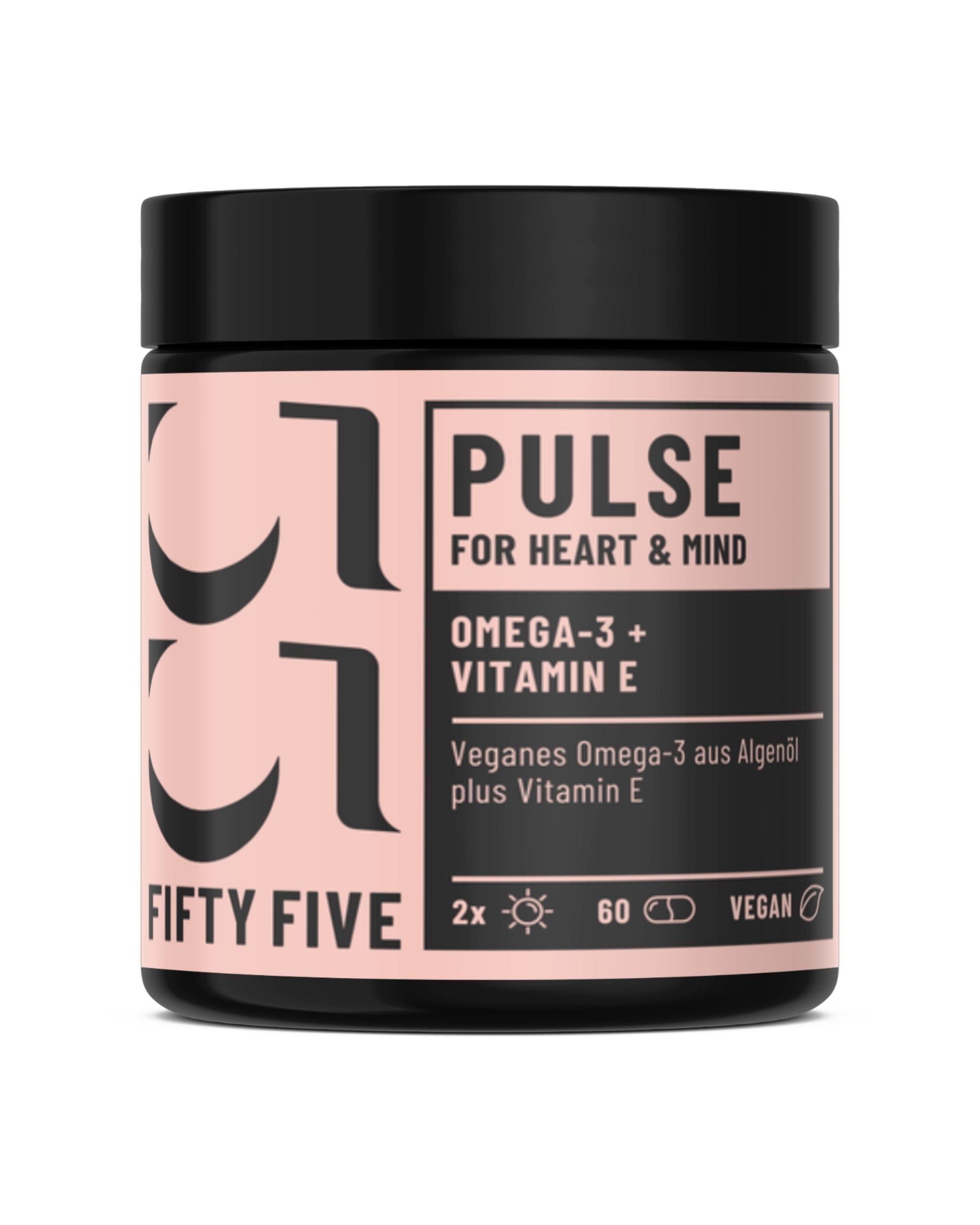
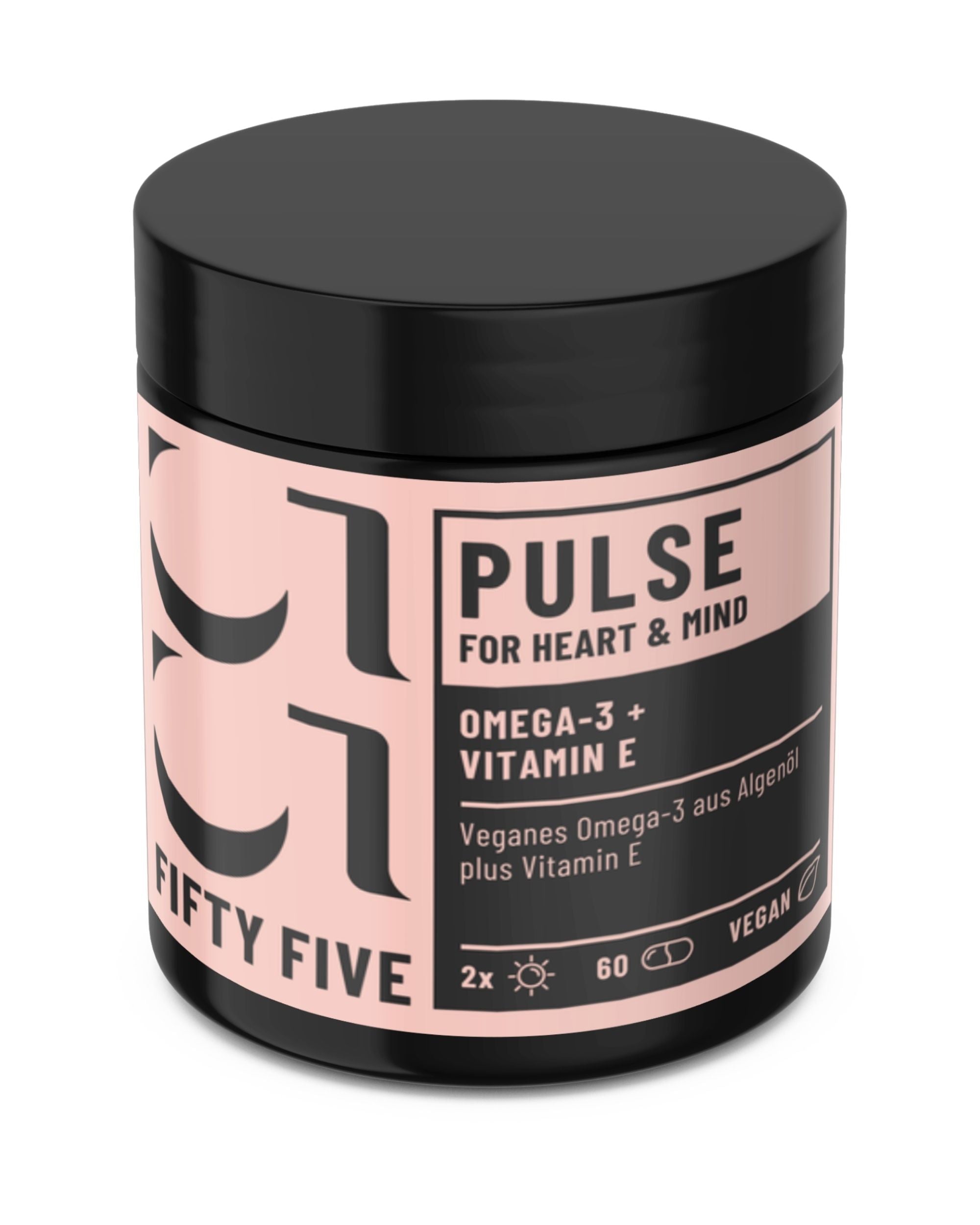
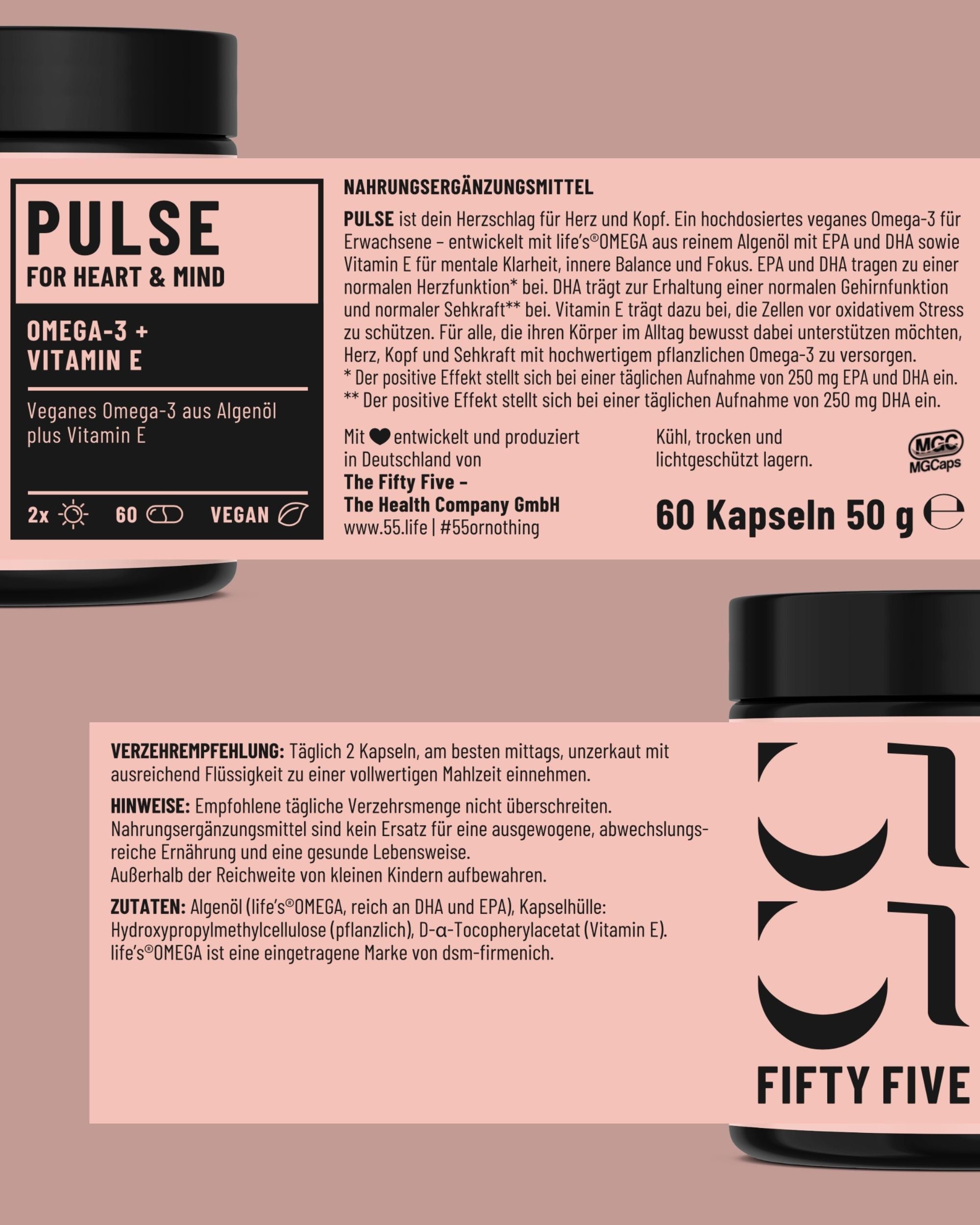
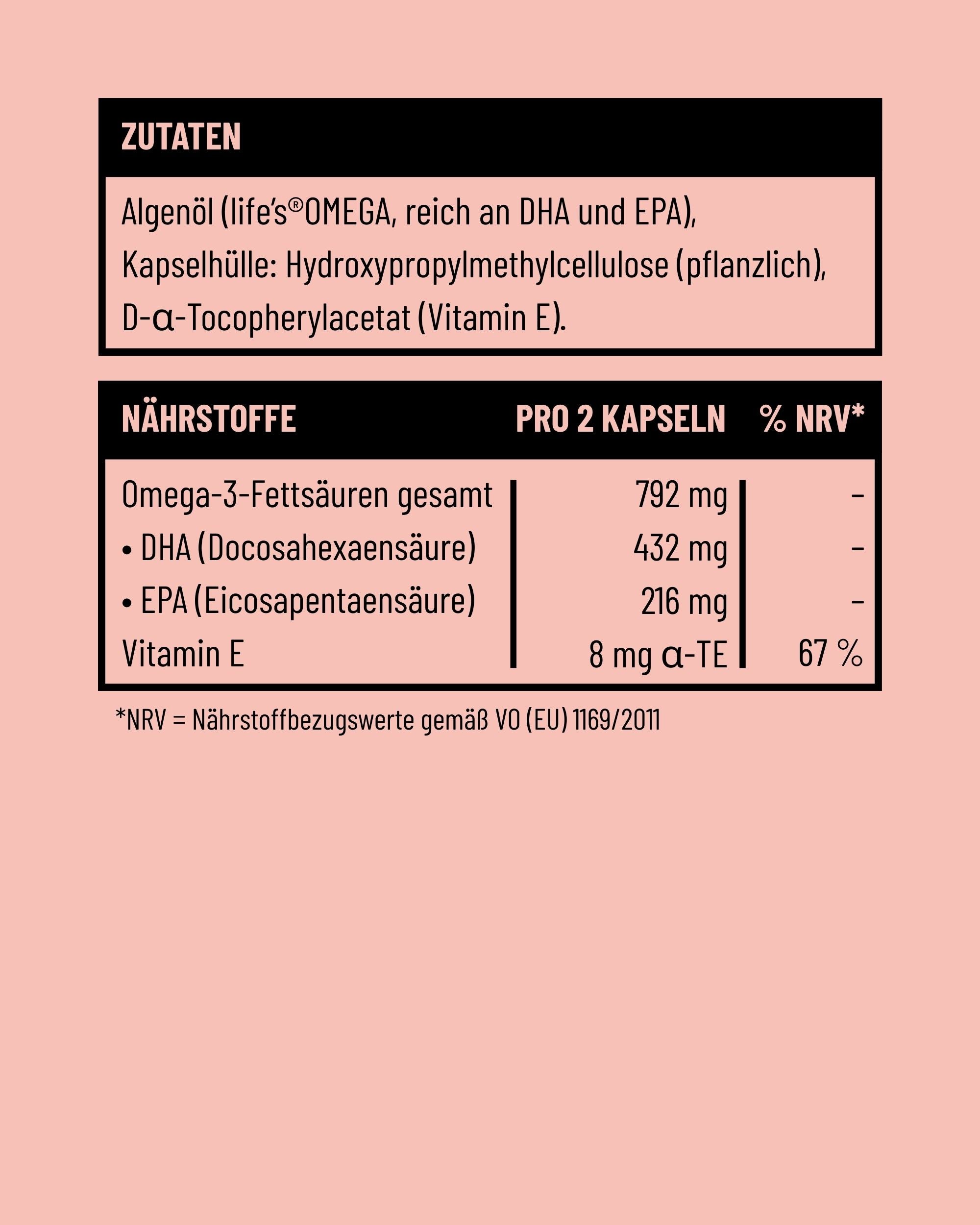
PULSE by Fifty Five delivers 792 mg of omega-3 per daily dose, including 432 mg of DHA and 216 mg of EPA from DSM Lifes60® algae oil. This amount is substantial enough to move the omega-3 index measurably and increase the share of EPA and DHA in cell membranes over weeks.
The combination with 8 mg of vitamin E (67% NRV) protects the sensitive fatty acids from oxidation and contributes to the protection of cells from oxidative stress. Vegan, no fishy taste, in liquid caps.
FAQ
Do I have to cut all omega-6 oils from my diet?
No. Linoleic acid (omega-6) is essential and is needed by the body. The goal is not zero but a better ratio. The simplest changes achieve the biggest effect: replace sunflower oil with olive oil and substantially increase omega-3.
Is omega-6 harmful per se?
No. It is about the ratio. Omega-6 in moderate amounts is normal and necessary. The problem is the chronic oversupply in the Western diet in relation to very low omega-3 amounts.
Which oil is best for cooking?
For frying and high temperatures: refined canola oil or olive oil (extra virgin for lower temperatures). Both have a more favorable fatty acid profile than sunflower oil. For salads: flaxseed oil or walnut oil additionally deliver ALA, which supports the omega-3 share from plant sources.
Does the omega-3 index improve automatically if I eat less omega-6?
Not automatically, but indirectly. Less omega-6 means less competition for enzymes, which slightly improves the conversion of ALA to EPA and improves the utilization of ingested EPA+DHA. The more direct path to a better omega-3 index is direct EPA+DHA supplementation.
How long does it take for an improved ratio to show in the body?
Cell membranes renew at different speeds depending on the cell type. In the erythrocyte (red blood cells, the basis of the omega-3 index), changes are measurable after 8 to 12 weeks. Deeper tissue changes, for example in nerve cell membranes, take longer.
Disclaimer
This article is for informational purposes only and does not replace medical advice, diagnosis, or treatment by a physician or pharmacist. The information provided here should not be used for self-diagnosis or self-treatment. Food supplements are no substitute for a balanced, varied diet and a healthy lifestyle. For any health questions or complaints, please always consult a doctor you trust. Fifty Five accepts no liability for any inconvenience or harm resulting from the use of the information presented here.
Sources
- EFSA. Scientific Opinion on Dietary Reference Values for fats, incl. EPA and DHA. EFSA Journal 2010;8(3):1461.
- EFSA. Scientific Opinion on the Tolerable Upper Intake Level of EPA, DHA and DPA. EFSA Journal 2012;10(7):2815.
- German Nutrition Society (DGE). D-A-CH reference values – fat and fatty acids.
- European Commission. EU Register of nutrition and health claims.






Vitamin K2 MK-7: What K2 Really Does in the Body, Bones, Arteries, and the Right Form
D3, K2, and Vitamin E: Why Fat-Soluble Vitamins Work as a System
Share: