

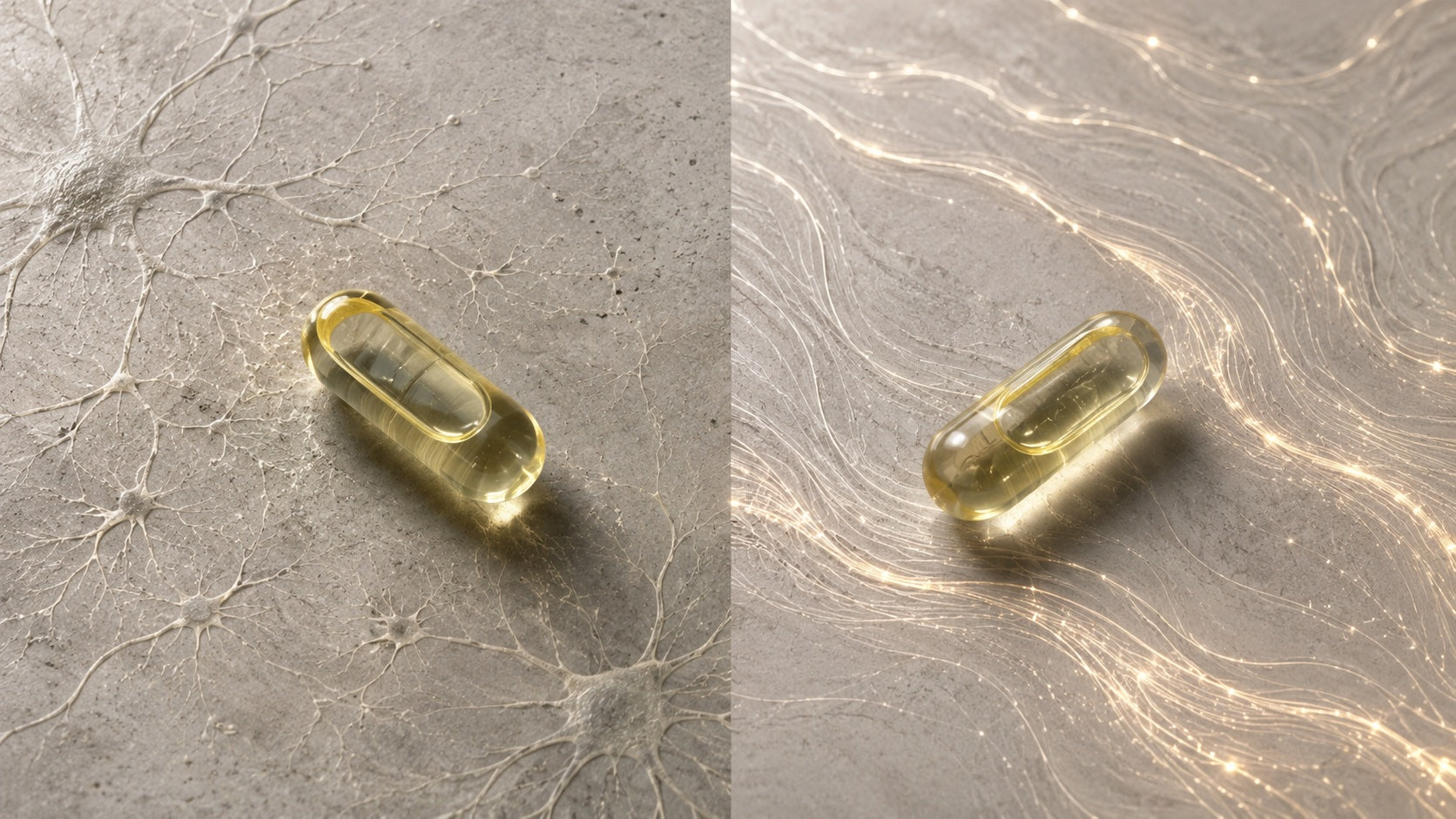
Almost every omega-3 product lists both: DHA and EPA. They always come together, are stated as a combined value, and work in the body as a team. That creates the impression they are basically the same thing. They are not, though. DHA and EPA have different focuses, and anyone who understands this makes better decisions about their supply.
What distinguishes DHA and EPA
DHA and EPA both belong to the long-chain omega-3 fatty acids. They arise from the same precursor molecules and occur in the same foods. But they have different focuses in the body, and there is a good biochemical reason why you need both.
This article explains what DHA and EPA each do, where the overlaps lie, and what that means for a substantial omega-3 supply.
What DHA is: structure and occurrence
Docosahexaenoic acid (DHA) is a long-chain omega-3 fatty acid with 22 carbon atoms and six double bonds. This combination makes it the most flexible among the nutritionally relevant fatty acids. Membranes with a high DHA content are more fluid, react faster to electrical impulses, and enable more efficient signal transmission.
That explains why DHA preferentially occurs in tissues that depend on fast signal transmission:
The brain consists of about 60 percent fat by dry weight. A considerable part of that is DHA, especially in the membranes of nerve cells. The retina of the eye is one of the most DHA-rich tissues in the entire human body: the outer segments of the rods and cones depend on a high DHA concentration to efficiently transmit and convert light signals. DHA is also found in elevated concentrations in the heart muscle and in sperm.
DHA is not produced in meaningful amounts from plant precursors. The conversion of ALA (alpha-linolenic acid, the plant omega-3 precursor) to DHA is below 1 percent. Anyone who eats no fatty fish or takes no algae oil very likely has a suboptimal DHA supply.
What the EFSA has authorized for DHA
The European Food Safety Authority (EFSA) has authorized the following health claims for DHA:
Brain function: DHA contributes to the maintenance of normal brain function. Condition: 250 mg of DHA daily (already counts as a daily-dose claim).
Vision: DHA contributes to the maintenance of normal vision. Condition: also 250 mg of DHA daily.
Development of the fetus and breastfed infants (maternal claim): maternal DHA contributes to the normal brain and eye development of the fetus and breastfed infants. Condition: 200 mg of DHA daily in addition to the general baseline recommendation of 250 mg EPA+DHA (so a total of at least 450 mg of DHA daily for pregnant and breastfeeding women).
These claims are not marketing statements but authorized scientific statements based on the available study material. They describe normal physiological functions, not therapeutic effects.
What EPA is: structure and occurrence
Eicosapentaenoic acid (EPA) is an omega-3 fatty acid with 20 carbon atoms and five double bonds. It is shorter than DHA and is used differently in the body.
EPA occurs in relevant concentration in blood plasma and in certain tissue types but is less strongly incorporated into the cell membranes of the nervous system than DHA. Its main role lies not in membrane structure but in signal metabolism.
EPA is the starting material for eicosanoids, a group of signaling molecules formed from 20-carbon fatty acids. Eicosanoids include prostaglandins, thromboxanes, leukotrienes, and lipoxins. They regulate, among other things, blood vessel width, platelet aggregation, and immune system reactions.
Decisive: arachidonic acid (AA), an omega-6 fatty acid, forms the same class of eicosanoids but with different biochemical properties. The ratio of EPA to AA in the body determines which eicosanoids dominate. A high omega-6/omega-3 ratio in the diet shifts this balance in favor of AA-derived signaling molecules.
That is the biochemical core of the often-mentioned problem with a Western diet: not only too little omega-3, but too much omega-6 in relation to it. More on this in the article Omega-6 and omega-3: why the ratio is decisive.
What the EFSA has authorized for EPA
For EPA alone, there are few separately authorized EFSA claims. The most relevant statements refer to EPA and DHA together:
Heart function (together with DHA): EPA and DHA contribute to normal heart function. That is a combined claim for EPA+DHA together, not for DHA alone. Condition: 250 mg EPA+DHA daily.
Triglyceride levels (together with DHA, high dosage): EPA and DHA contribute to the maintenance of normal blood triglyceride levels. Condition: 2 g EPA+DHA daily. High dosage, to be medically supervised.
Blood pressure (together with DHA, high dosage): EPA and DHA contribute to the maintenance of normal blood pressure. Condition: 3 g EPA+DHA daily. Also a high dosage.
The last two claims apply only at considerably higher dosages than the baseline recommendation and are clinically and medically relevant, not an everyday supplementation recommendation.
Why you need both
DHA and EPA overlap functionally but do not replace each other. They have different focuses:
DHA is structural and is preferentially incorporated into nerve cell membranes. It is the long-term relevant fatty acid for brain and eye health. Its effect is less acute but structurally deeply anchored.
EPA is functional and regulates signaling processes via eicosanoids. Its effect is more dynamic and systemically broader.
Studies comparing DHA alone or EPA alone with a combination generally show that the combination of both fatty acids unfolds the broadest effect. That also reflects the EFSA framework: most authorized claims refer to EPA and DHA together, not to individual fatty acids.
A product that contains only DHA or only EPA is therefore incomplete from a substantive standpoint.
The ratio of DHA to EPA: what studies show
In natural sources, DHA predominates over EPA. Algae oil from Schizochytrium algae typically delivers a ratio of about 2:1 to 3:1 (DHA to EPA). Fish oil has a narrower or inverted ratio depending on the fish species.
There are research fields in which higher EPA proportions are studied, for example in cardiovascular prevention. There are others in which DHA is the focus, for example in neurodegenerative questions. For the everyday context of a healthy adult: a balanced ratio with sufficient DHA and EPA together is more relevant than a precise optimization of the ratio.
In practice: which amount is sufficient?
The EFSA baseline recommendation is 250 mg EPA+DHA daily. That is the minimum value for the authorized health claims. As a good everyday dose for healthy adults, 500 to 1,000 mg EPA+DHA daily is frequently named in the literature.
For special life stages, such as pregnancy and breastfeeding, an additional 200 mg of DHA daily is recommended. For people with increased cardiovascular risk or on medical recommendation, higher dosages can be discussed.
All details on the dosing logic, intake timing, and risks of overdosing are explained in our article on omega-3 dosage.
PULSE: the DHA-EPA ratio in practice
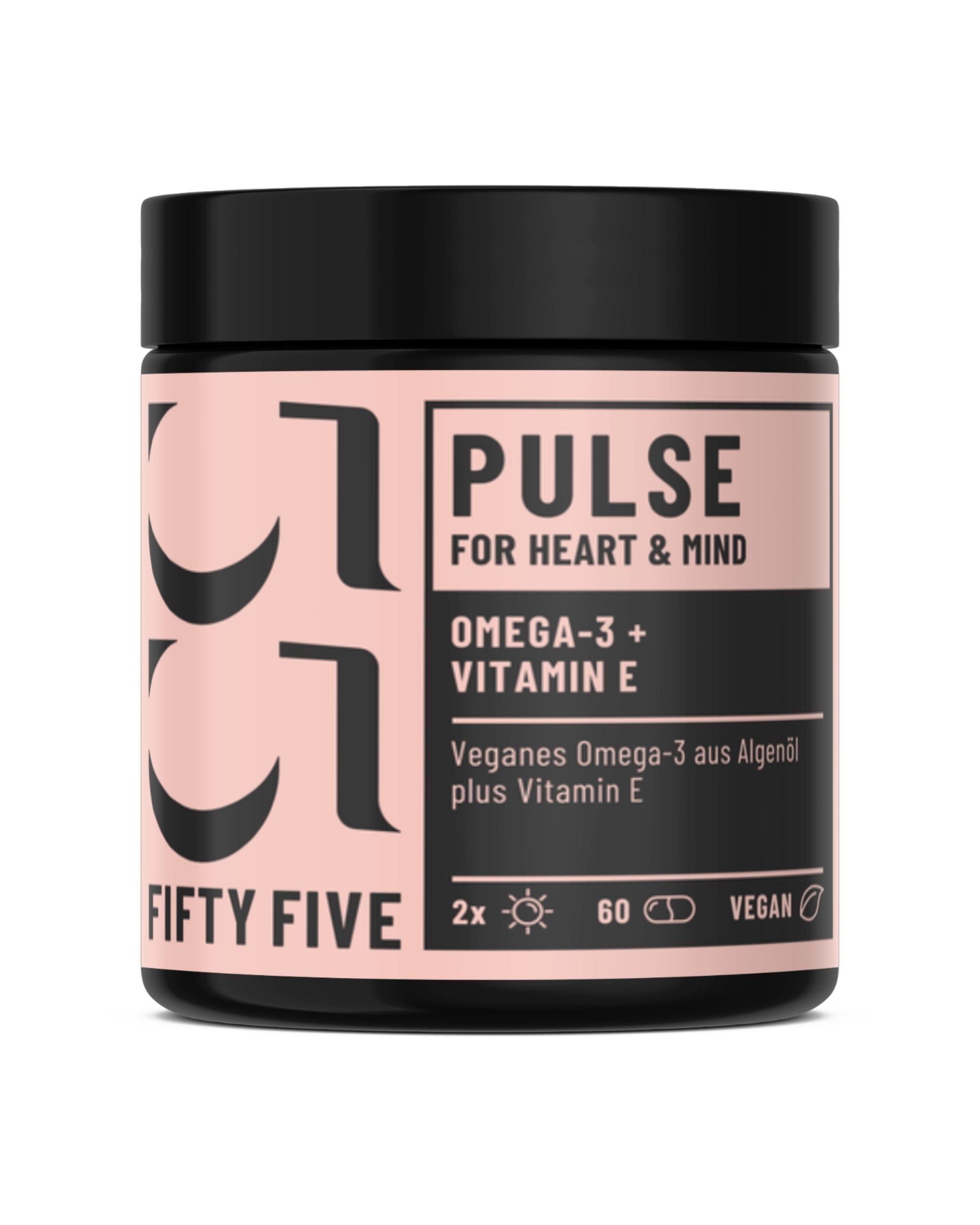
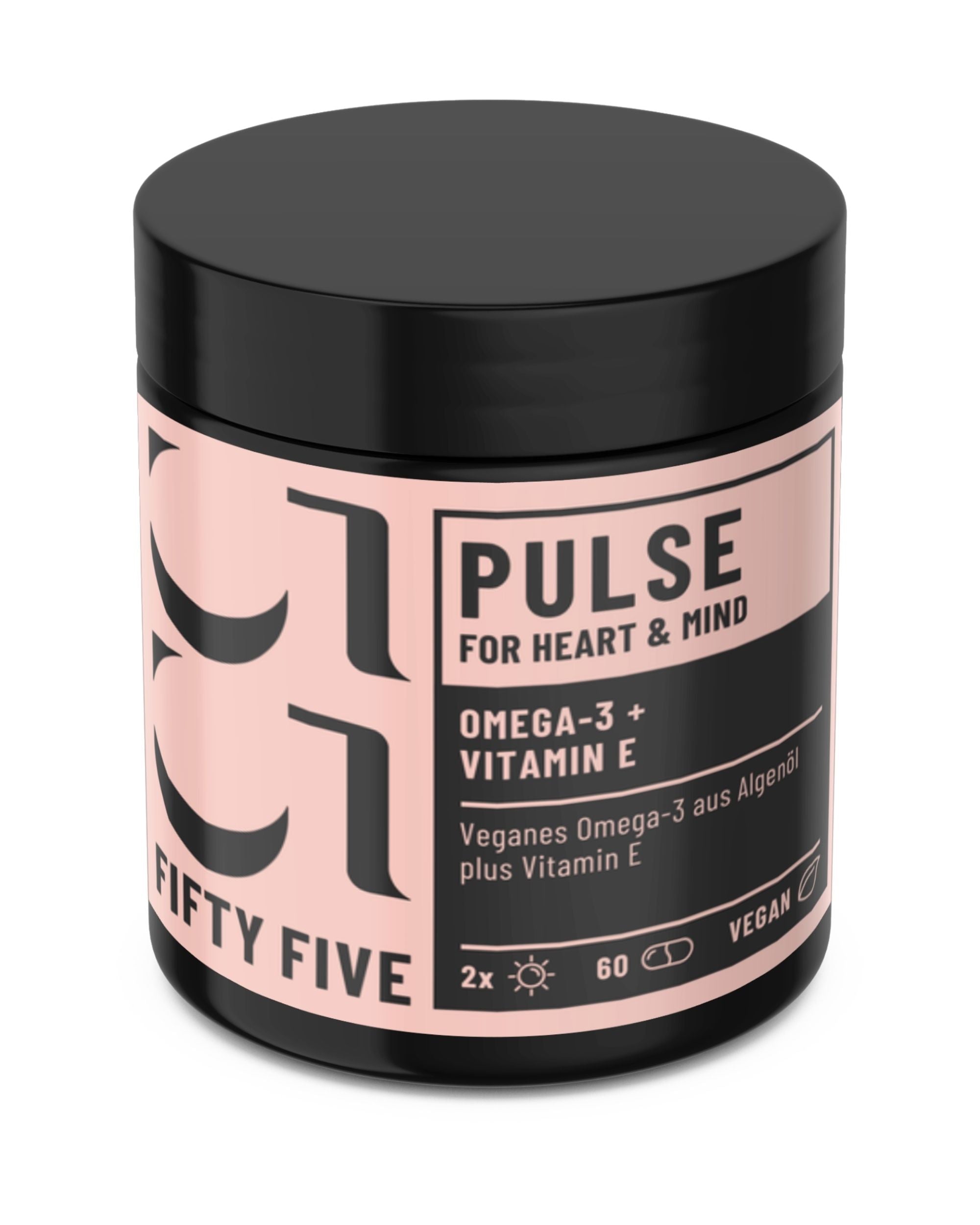
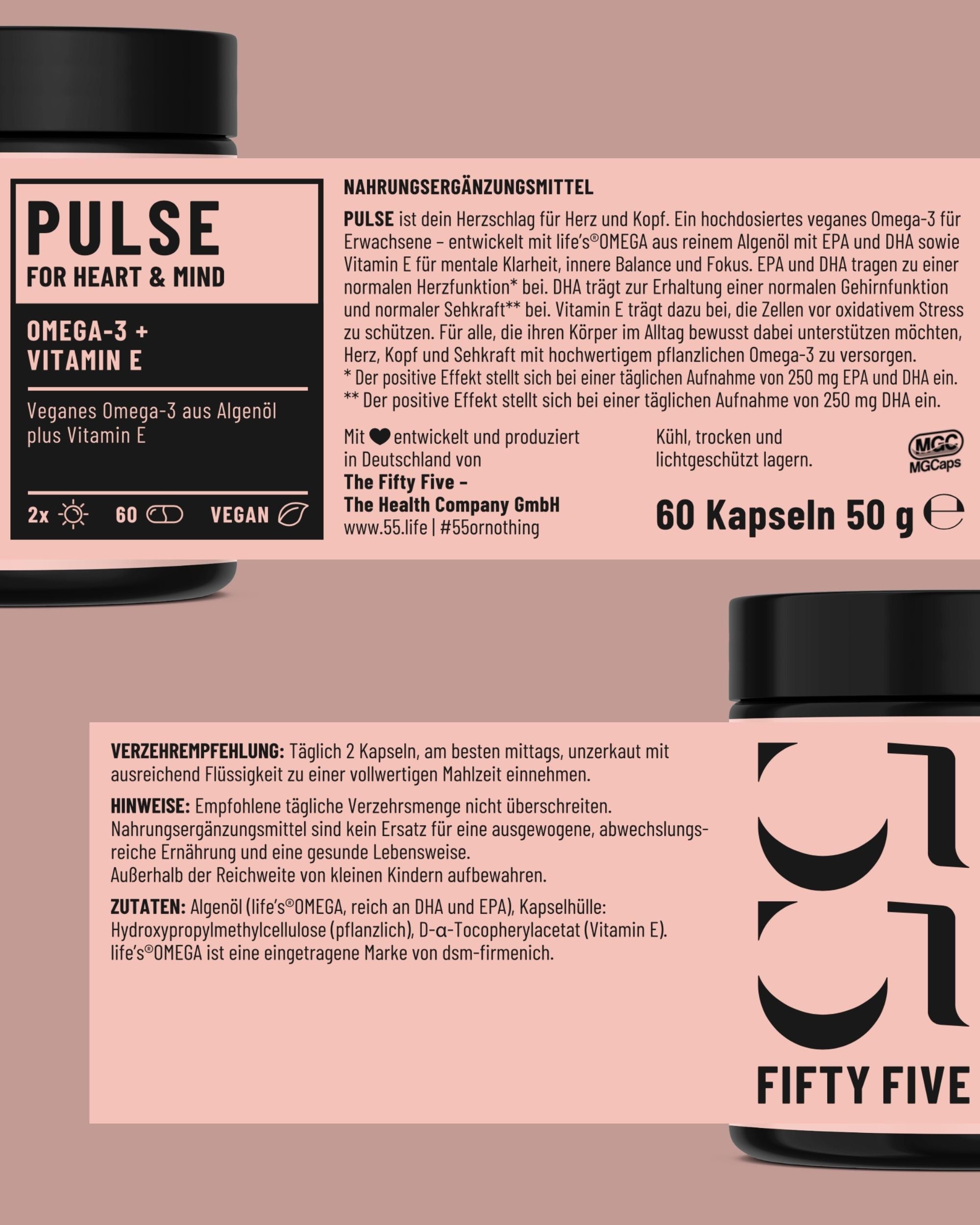
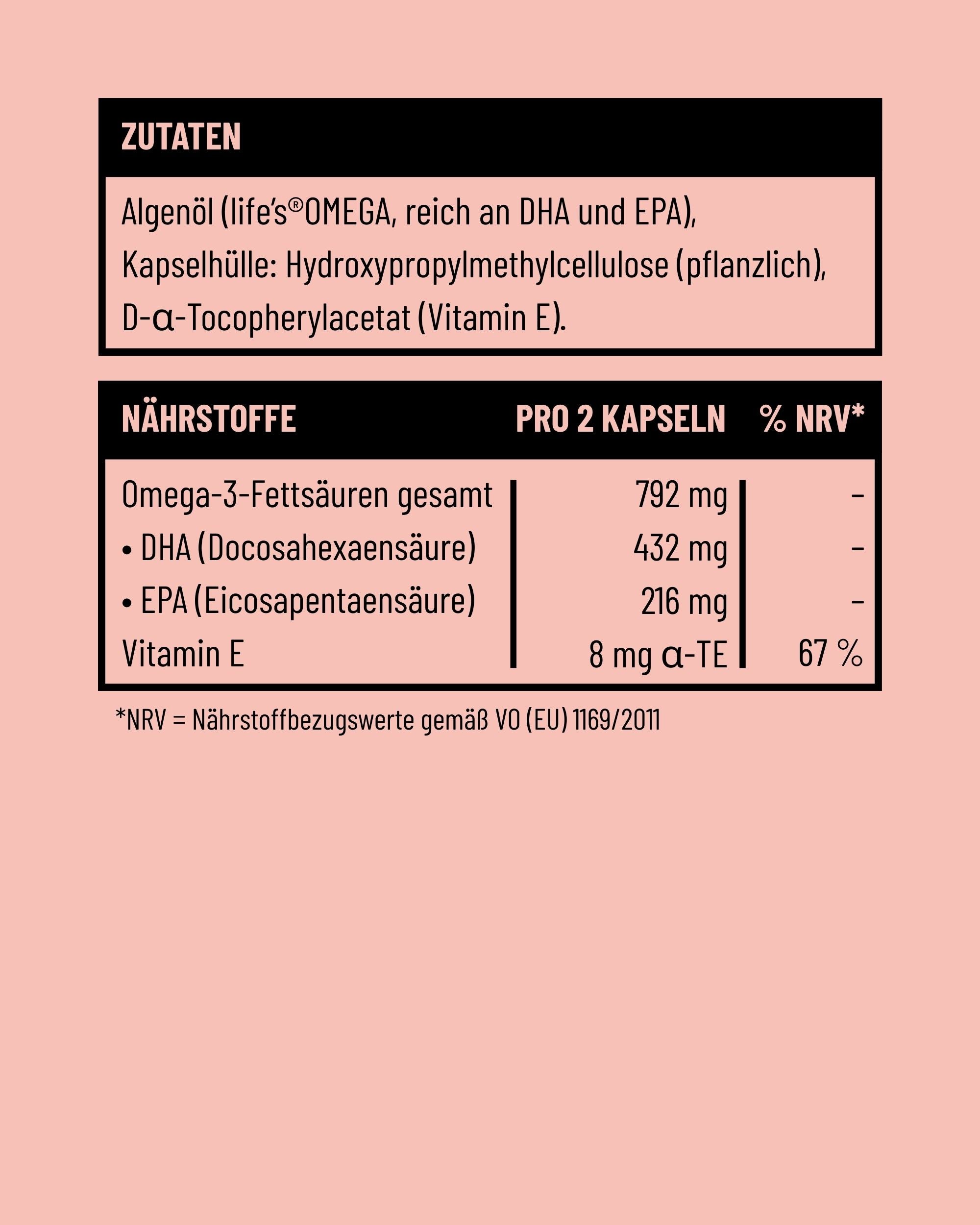
With PULSE by Fifty Five, each daily dose (2 capsules) delivers 432 mg of DHA and 216 mg of EPA, a ratio of 2:1. This ratio corresponds to the natural profile of DSM Lifes60® algae oil, the premium branded raw material we use.
Added to this is vitamin E in each daily dose: 8 mg (67% NRV) from D-alpha-tocopheryl. The combination is not random: omega-3 fatty acids, especially DHA with six double bonds, are prone to oxidation. Vitamin E as a fat-soluble antioxidant protects the fatty acids and contributes to the protection of cells from oxidative stress. This combination is rarely found among omega-3 products on the market for cost reasons but shows our quality standard.
PULSE is also 100% vegan, has no fishy aftertaste, and comes in liquid caps.
FAQ
Can I take a product that contains only DHA?
That is possible but not optimal. DHA and EPA have different functions. A product that contains only DHA does not cover the EPA need. The EFSA claims for heart function refer to EPA and DHA together, not to DHA alone.
Is a higher DHA:EPA ratio better?
For most healthy adults, the total amount is more relevant than the exact ratio. A balanced product with both fatty acids in comparable amounts covers the most important supply aspects.
Where does the DHA in algae oil come from?
DHA is produced by microalgae, especially Schizochytrium species. Algae oil from controlled cultivation is the primary source of all marine omega-3 fatty acids. Fish acquire DHA by taking up these algae directly or through the food chain.
Does it make a difference whether I take EPA and DHA in the same product or separately?
No, not biologically relevant. What counts is the total daily intake of both fatty acids. Whether they come from one source or two has no measurable influence on the supply.
Does DHA lose its effect when heated?
Omega-3 fatty acids are heat-sensitive. For intake as a supplement, that is irrelevant: capsules are not heated. When preparing fatty fish, however, gentle cooking should be preferred to preserve the DHA content.
→ To the complete omega-3 guide
Disclaimer:
This article is for informational purposes only and does not replace medical advice, diagnosis, or treatment by a physician or pharmacist. The information provided here should not be used for self-diagnosis or self-treatment. Food supplements are no substitute for a balanced, varied diet and a healthy lifestyle. For any health questions or complaints, please always consult a doctor you trust. Fifty Five accepts no liability for any inconvenience or harm resulting from the use of the information presented here.





Vitamin D in Winter: Why Sunlight Is Not Enough and When Supplementation Kicks In
Creativity Needs Calm: How Julia Protects Her Flow
Share: