


Omega-3 is relevant across all life stages. From 50, however, the context changes on several levels at once: cardiovascular risk rises, cognitive function becomes a preventive topic, the eyes undergo changes, and the body's ability to convert plant omega-3 precursors into DHA declines further. This article explains what that concretely means for your supply strategy.
Why 50 is a sensible reference point
Omega-3 is relevant across all life stages. But from 50, the context changes in several respects: cardiovascular risk rises, cognitive functions become a preventive topic, the eyes undergo changes, and the body gradually loses efficiency in processing plant omega-3 precursors.
At the same time, this is the life stage in which many people think more actively about prevention for the first time, medical checkups gain more weight, and the willingness to invest in one's own health long term rises.
So let us dive deeper and explain what omega-3 concretely does after 50, where the effect thresholds lie, and what makes a good supply strategy.
Cognitive function: what DHA does in the brain after 50
DHA makes up a considerable share of the structural fat in the brain. In the membranes of the nerve cells, DHA is co-responsible for the fluidity and thus the efficiency of signal transmission. With increasing age, DHA concentrations in certain brain areas tend to decrease. This decline runs gradually and is accelerated by a permanently suboptimal supply.
The EFSA provides the following health claim for this: "DHA contributes to the maintenance of normal brain function."
This statement is no promise and no protection guarantee. It describes that a sufficient DHA supply is a basic prerequisite for the normal function of the brain, no more and no less. A good supply lays the structural foundation. What decides beyond that about cognitive health in old age depends on many further factors.
What can be clearly said: anyone who at 50 or 55 has a low omega-3 index and does not correct it gives up this structural foundation. That makes no sense when the alternative is simple and cheap.
An important note: there is no sufficiently documented body of studies establishing omega-3 supplementation as protection against dementia or Alzheimer's. Corresponding statements would not only be inadmissible but also currently not substantively correct. Anyone who wants to discuss this topic in relation to their own health prevention is better served by a doctor than by a supplement.
Eye health: DHA in the retina
The retina of the eye is one of the most DHA-rich tissues in the entire human body. The outer segments of the photoreceptors (rods and cones) need DHA for their normal function in converting light stimuli into electrical impulses.
The EFSA has authorized the health claim "DHA contributes to the maintenance of normal vision" for DHA.
From 50, eye health grows as a preventive topic. Age-related macular degeneration (AMD) is the most common cause of severe vision loss in people over 50 in Western countries. The connection between omega-3 supply and AMD is an active topic in research.
The data on this is nuanced: observational studies show associations between regular fish consumption or a higher DHA level and a lower AMD risk. The causal evidence from randomized studies is less clear. There is no authorized EFSA claim establishing omega-3 as AMD prevention.
What remains clear: a permanently good DHA supply provides the retina with the building material it needs for normal function. That is the structural foundation that cannot be replaced by anything else.
Heart health: EPA and DHA after 50
Cardiovascular risk rises markedly in men from about 45 and in women after menopause. In this life stage, the documented EFSA claim "EPA and DHA contribute to normal heart function" becomes particularly relevant in everyday life.
EPA and DHA are structural components of the heart muscle cells and influence eicosanoid metabolism, which is involved in the regulation of vascular tone and platelet function. The EFSA claim refers to normal heart function at amounts of 250 mg daily; for effects on blood pressure (3 g daily) and triglyceride levels (2 g daily), there are separate authorized claims at higher dosages that should be medically supervised.
For healthy adults over 50 without a specific cardiovascular diagnosis: 500 to 1,000 mg EPA+DHA daily from a good algae oil product is a well-justified everyday dosage.
The declining conversion efficiency after 50
With increasing age, the efficiency with which the body extends ALA (alpha-linolenic acid, the plant omega-3 precursor) to EPA and DHA declines. This conversion rate is already low in young adults (under 10% to EPA, under 1% to DHA). With increasing age, the responsible enzymes become less active.
That has a clear practical consequence: anyone who in middle age still relied partly on plant omega-3 sources has to rely more on direct EPA+DHA sources from 50. ALA from flaxseed oil, walnuts, or chia seeds delivers a useful supplement but does not replace a sufficient EPA+DHA supply.
Algae oil bridges this gap reliably because it delivers EPA and DHA directly, without conversion losses.
Joints and mobility: what can be said responsibly
Omega-3 is frequently discussed in connection with joint complaints. There is currently no EFSA-authorized health claim for omega-3 and joints. The research is active, but the results are not consistent enough for a direct effect statement to be possible.
What is biochemically plausible: EPA is a precursor of eicosanoids involved in the regulation of joint inflammatory processes. The balance between omega-3- and omega-6-derived eicosanoids influences which kind of signaling molecules dominate in joint capsules.
For people over 50, in whom joint complaints increase, that is no cure-all. But viewing a good omega-3 supply as part of a comprehensive prevention strategy is biochemically justified.
Sleep and nervous system
With increasing age, sleep architecture and quality change. DHA is structurally present in the nervous system and contributes to normal brain function. Whether and how omega-3 supply directly influences sleep quality is a research field in which interesting observations exist, but the evidence for direct effect statements is insufficient.
What is known: a brain with good membrane equipment works more efficiently, and that includes all functions, including sleep regulation. That is no specific anti-insomnia claim but a general structural foundation.
A supply strategy after 50: concrete
The first step is the omega-3 index. Knowing your own baseline value makes everything else more targeted. Tests are available for 30 to 70 euros through specialized providers. Target range: 8 to 11 percent.
If the index is below 6 percent (which is the case for many people over 50 without supplementation), a daily intake of at least 500 mg EPA+DHA is needed. After 8 to 12 weeks, a renewed measurement gives a clear picture of the progress.
Anyone who eats fish regularly (twice a week, fatty sea fish) can reach the base recommendation through food. For everyone else, a good algae oil product is the most reliable way.
The dosing details and notes on interactions are explained in the article Omega-3 dosage: how much DHA and EPA you need daily.
PULSE: the standard that fits the life stage
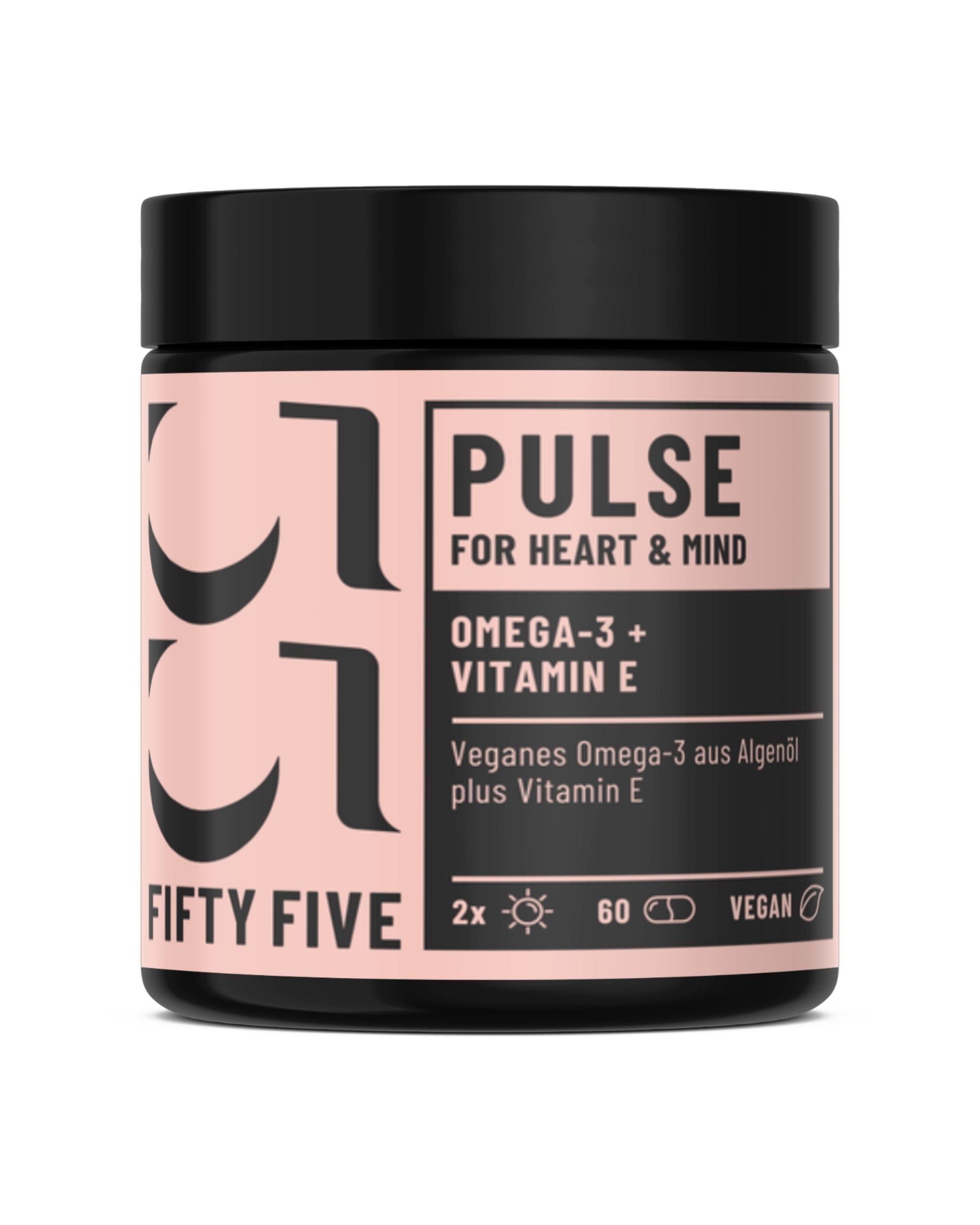
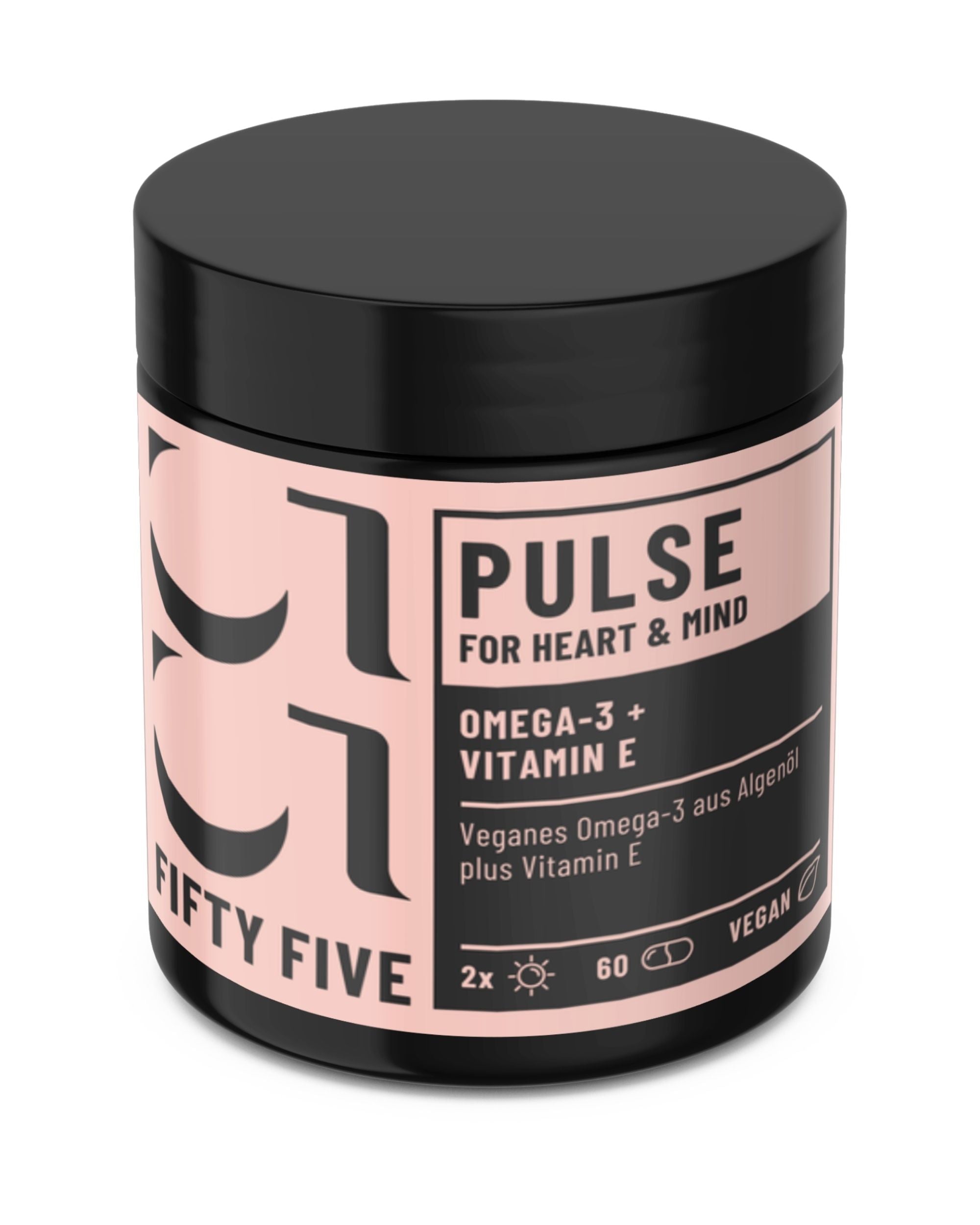
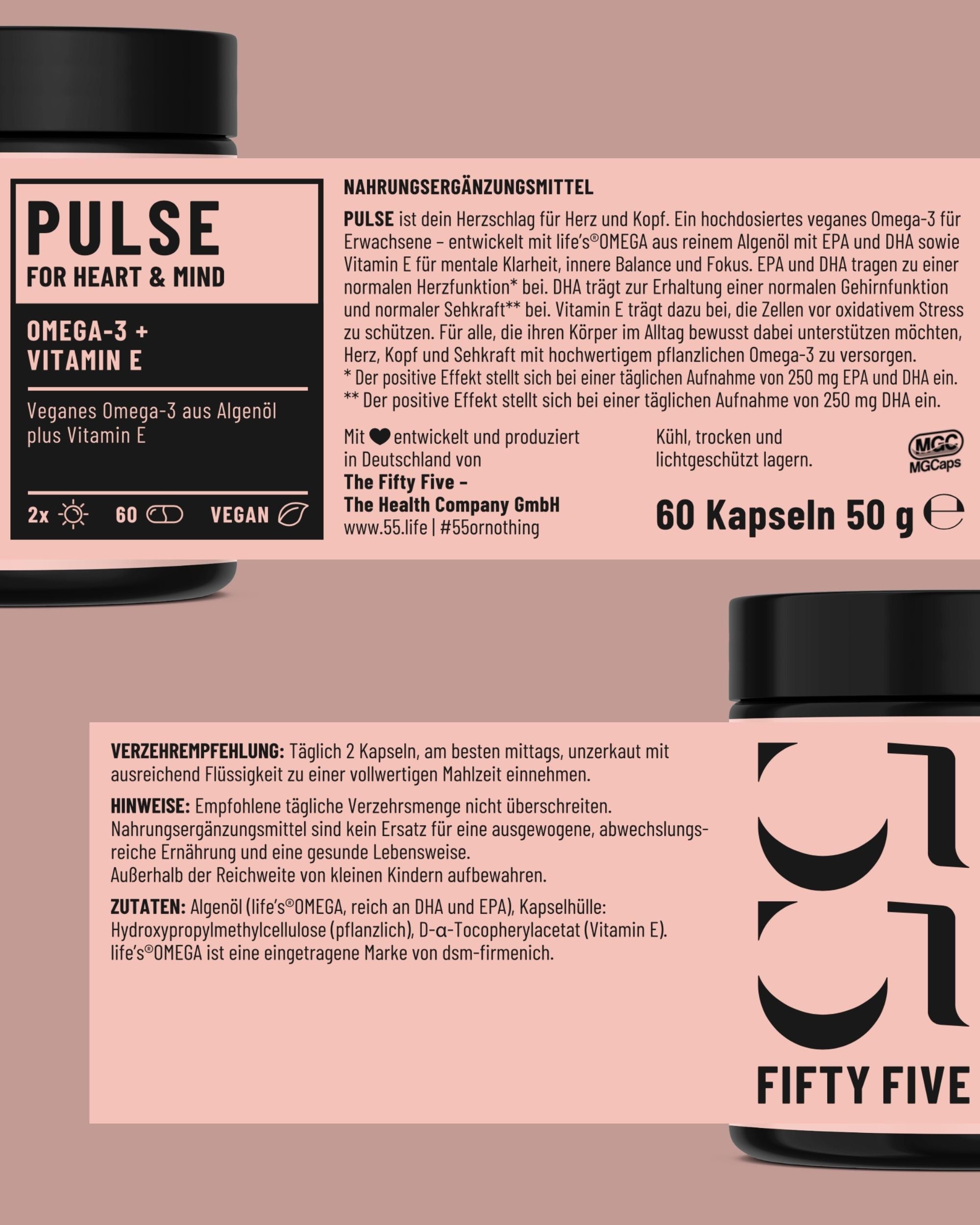
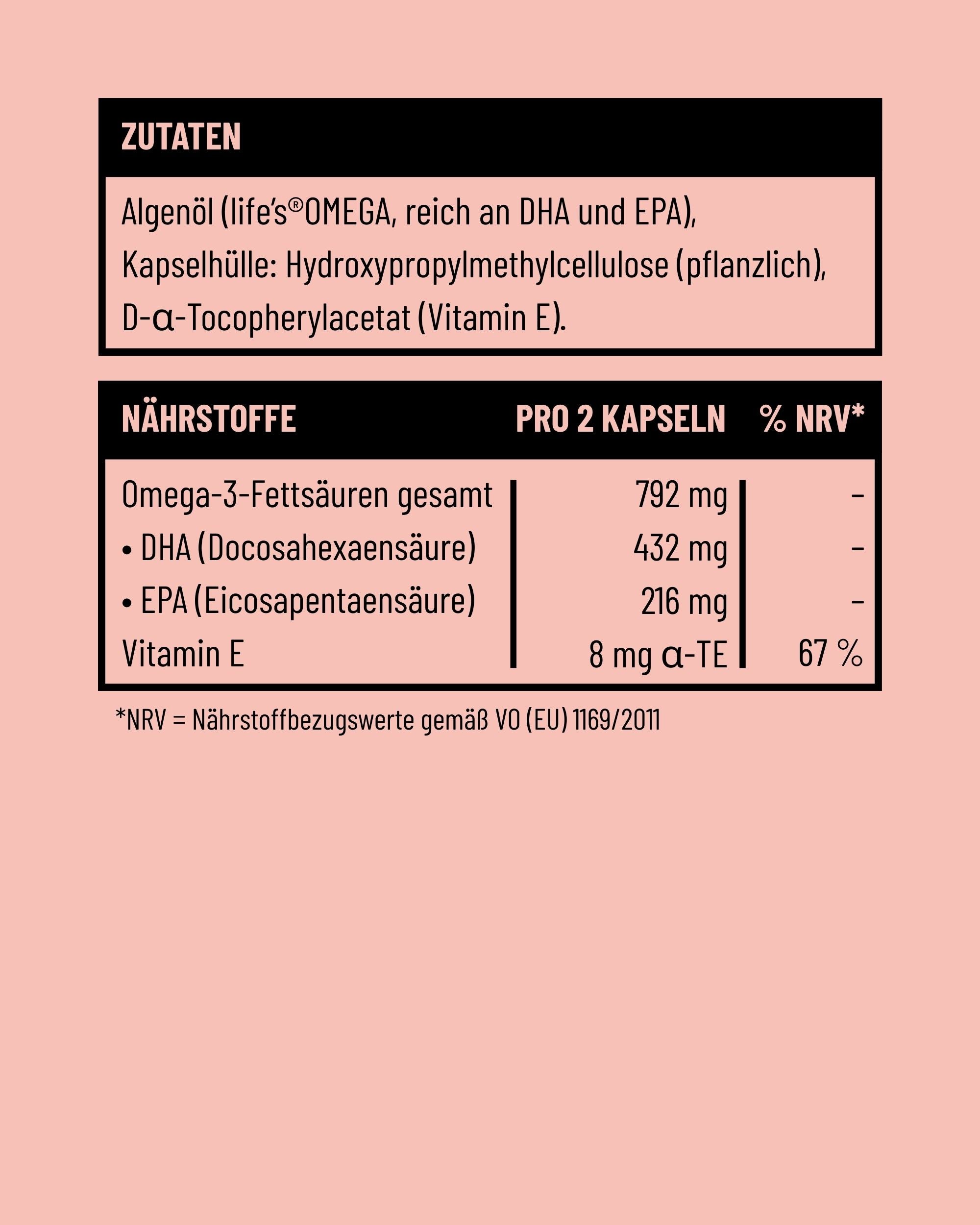
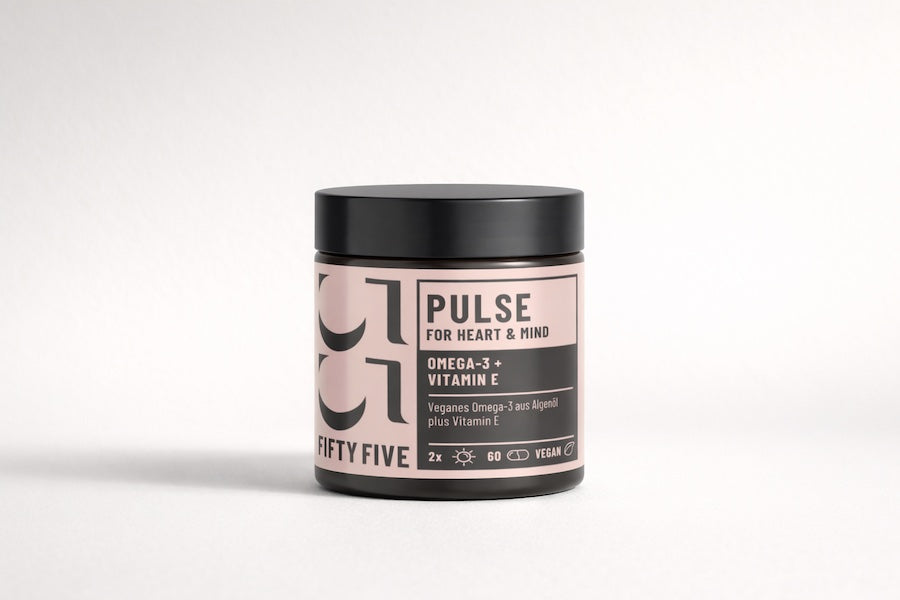
PULSE delivers 792 mg of omega-3 per daily dose from DSM Lifes60® algae oil, including 432 mg of DHA and 216 mg of EPA. A substantial everyday dose that reliably moves the omega-3 index toward the target range and supplies both heart function and brain and vision function with sufficient DHA and EPA.
What is particularly relevant after 50: oxidation protection. Omega-3 fatty acids, especially the highly unsaturated DHA, are prone to oxidation. PULSE combines the algae oil with 8 mg of vitamin E (67% NRV) in the natural D-alpha-tocopheryl form. Vitamin E protects the sensitive fatty acids from oxidation and contributes to the protection of cells from oxidative stress. This combination is found almost nowhere among omega-3 products on the market.
Vegan, no fishy taste, in liquid caps, and produced in Germany: PULSE by Fifty Five
FAQ
Do I have to take more omega-3 after 50 than before?
There is no concrete recommendation that grades the dosage by age. The base recommendation is 250 mg EPA+DHA daily for adults. What changes from 50: the conversion efficiency from ALA to EPA and DHA declines further, cardiovascular risk rises, and the relevance of a good DHA supply for brain and eyes grows. That argues for a more generous everyday dosage of 500 to 1,000 mg EPA+DHA daily.
Can omega-3 prevent dementia?
No, omega-3 cannot guarantee that. There is no EFSA-authorized claim for it, and the body of studies is not enough for such a statement. DHA contributes to normal brain function, and a sufficient supply lays the structural foundation. Dementia prevention is a complex, multifactorial topic.
Should I discuss my omega-3 index with my doctor?
Yes, that is obvious, especially when cardiovascular risk factors are known. Your primary care doctor can classify the test and place it in the overall context. It is generally not reimbursed by statutory health insurance but is easily accessible through self-pay at-home tests.
Does omega-3 work better if I take it together with vitamin D?
RISE (our vitamin D3/K2 product) and PULSE can be combined. There is no known negative interaction. Vitamin D3 and omega-3 are both fat-soluble substances that are well absorbed in the presence of dietary fat. They can be taken with the same meal.
Can you still benefit from omega-3 supplementation at 60 or 70?
Yes. The omega-3 index can be raised into the target range through supplementation even in later years of life. Cell membranes renew, and the incorporation of EPA and DHA into membranes takes place at an older age too. It is never too late to correct a structurally poor omega-3 status.
→ To the complete omega-3 guide
Disclaimer:
This article is for informational purposes only and does not replace medical advice, diagnosis, or treatment by a physician or pharmacist. The information provided here should not be used for self-diagnosis or self-treatment. Food supplements are no substitute for a balanced, varied diet and a healthy lifestyle. For any health questions or complaints, please always consult a doctor you trust. Fifty Five accepts no liability for any inconvenience or harm resulting from the use of the information presented here.
Sources
- EFSA. Scientific Opinion on Dietary Reference Values for fats, incl. EPA and DHA. EFSA Journal 2010;8(3):1461.
- EFSA. Scientific Opinion on the Tolerable Upper Intake Level of EPA, DHA and DPA. EFSA Journal 2012;10(7):2815.
- German Nutrition Society (DGE). D-A-CH reference values – fat and fatty acids.
- European Commission. EU Register of nutrition and health claims.






Vitamin D for Women: What the Body Really Needs in Different Life Stages
Magnesium in Sports: Supporting Recovery & Avoiding Cramps
Share: