


"I track everything. What I eat, how much protein, how much I sleep. I know what I take in every day down to ten grams. But at some point I realized that while I go into my workouts well prepared, I was leaving the recovery afterwards completely to chance. That was the blind spot."
Markus is 31, lives in Frankfurt, and works as a project coordinator at a mid-sized company. He has a structured office job, but not an easy one: coordination, deadlines, many stakeholders, little room for error. What sets him apart from many colleagues is what comes after work. Markus's story is about how someone who leaves nothing to chance in his diet learned that recovery is not a byproduct of training, but its own factor that can be managed just as deliberately.
From the couch to the gym, and back
Until his mid-twenties, Markus barely exercised. "I was clearly overweight." He says it without drama; it is simply a fact. He weighed far more than today, was not active, had no routine. Then he started working out, irregularly at first, then with a system. He learned how nutrition really works, not at the level of "eat a bit more vegetables," but concretely: How much protein do my muscles need to grow? What is the difference between fast and slow carbohydrates before training? Today he spreads 180 grams of protein across four meals a day. He is no competitive athlete, but someone who understands his body as a system that can be supplied with the right inputs.
"I used to be someone who ate whatever was around. Today I eat with a goal. That may sound nerdy, but the difference is real. My body responded when I started supplying it consistently."
What training costs
Markus works full-time and trains after work, usually around half past six. That is his compromise with everyday life: the day has its obligations, the evening belongs to him. What he noticed over the months is that the training itself is not the problem. The problem starts afterwards.
"I'd come home from the gym and be done. But not in a relaxed way, I was just flat. The sore muscles are one thing, but mentally too. I'd lie on the couch feeling drained."
If you train after a long office day, you bring an already exhausted nervous system to the gym. The physical strain comes on top. What is needed afterwards is not simply sleep, but active support for the system that has just delivered its maximum output.
Everything optimized, except recovery
Markus is a detail-oriented person. He cleaned up his diet, structured his training, optimized his entire daily routine. But at some point came the realization that when it came to recovery, he had not done the same thing: think systematically.
"I realized that after training I wasn't actually doing anything to actively support recovery. I eat something, drink something, lie down. But that leaves the recovery completely to chance. At some point that bothered me, because that's not how anything else I do works."
He then reached for magnesium, an inexpensive option from the drugstore. As he puts it, he felt nothing. What he did not know at the time: the magnesium product he chose, like most budget products on the shelf, was pure magnesium oxide, a form the body absorbs poorly. And what does not arrive cannot do anything.
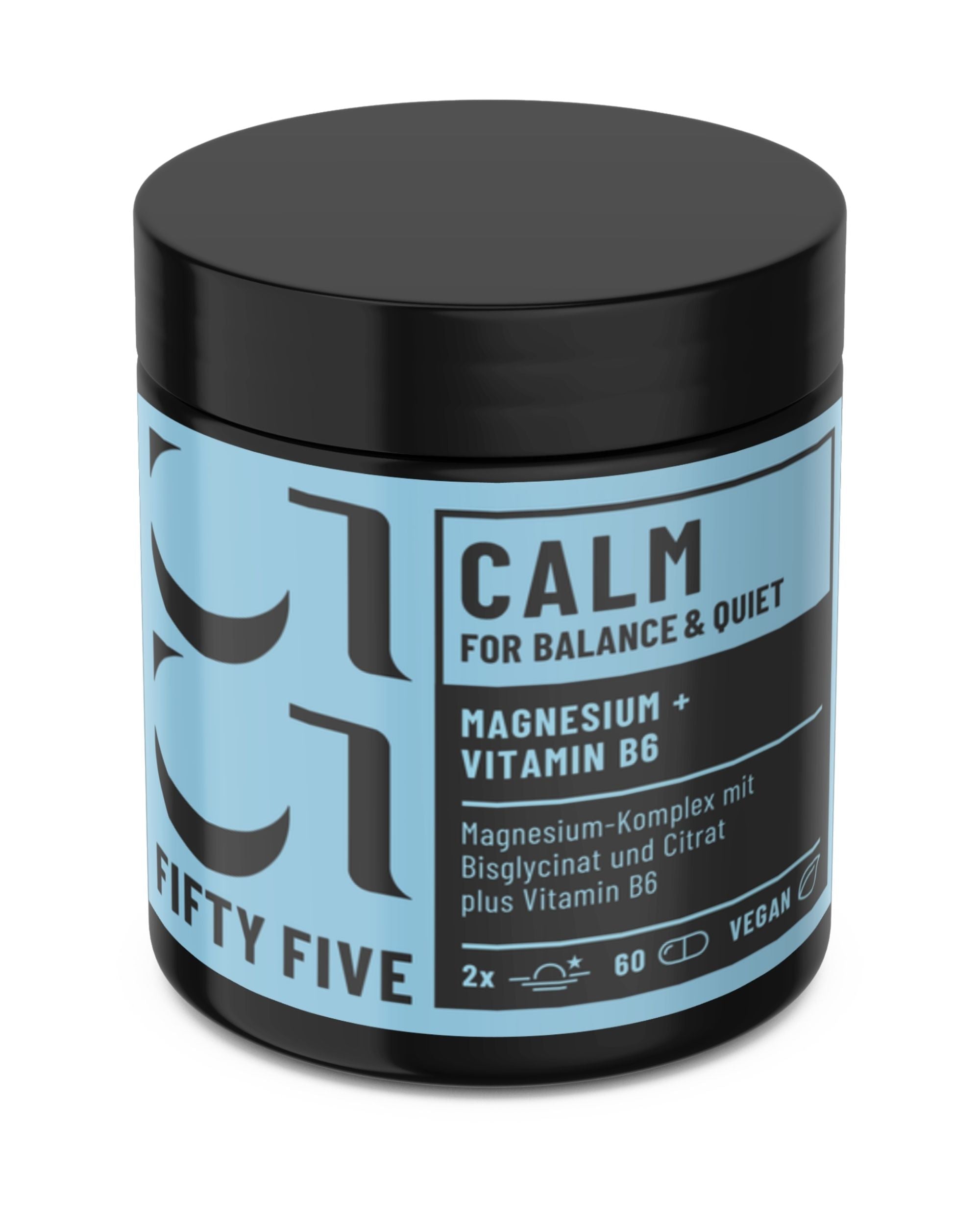
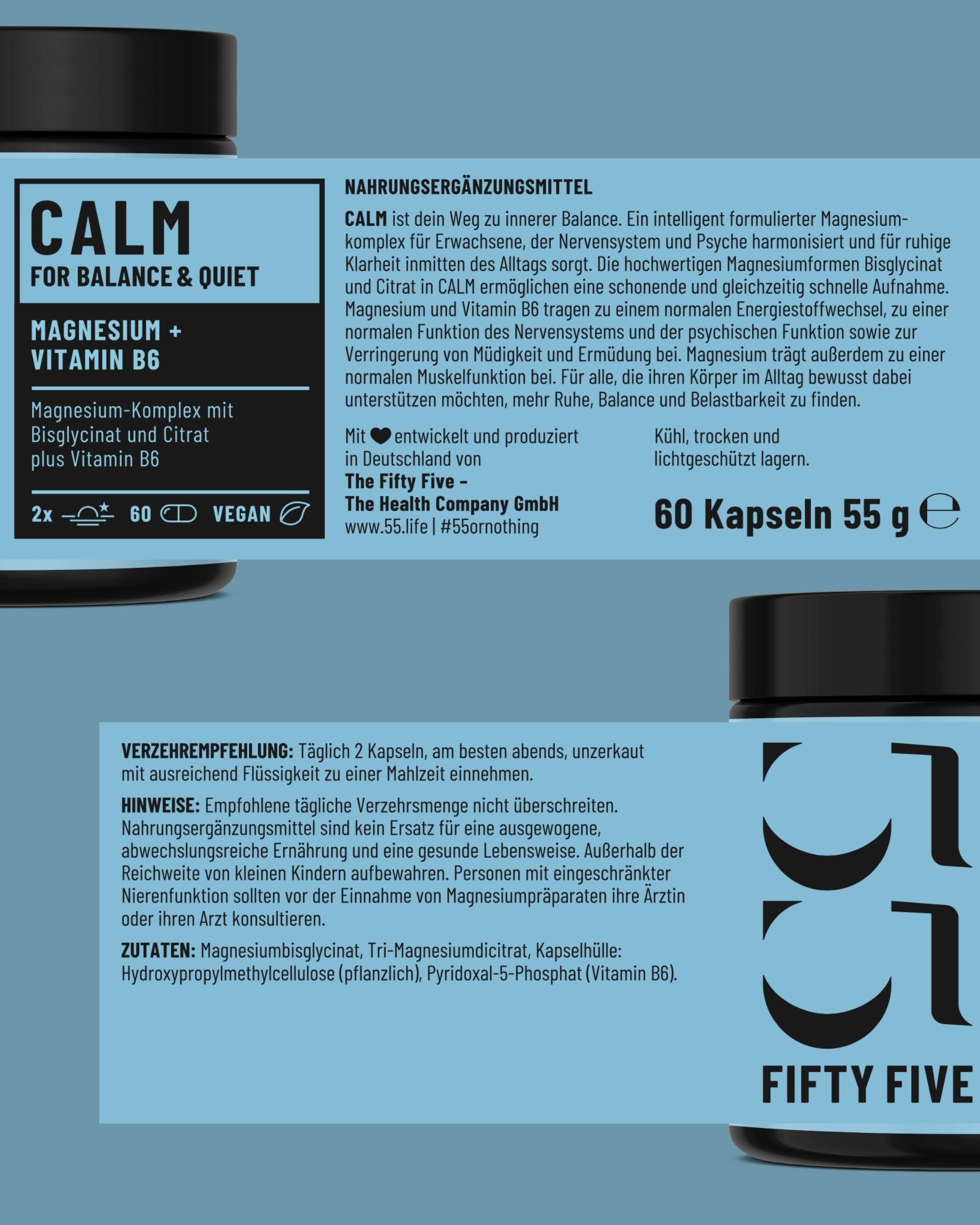
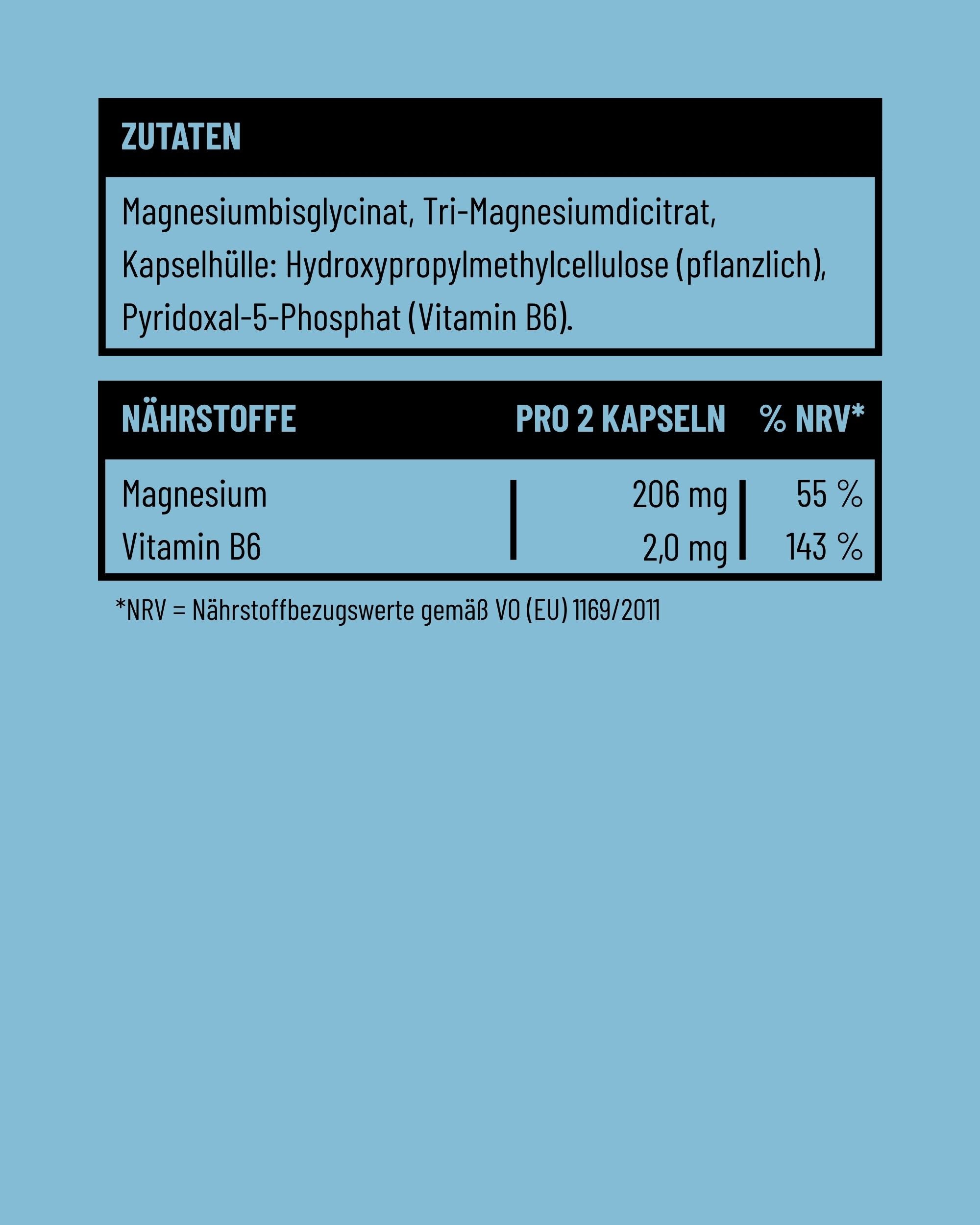
Fifty Five Insight: Markus's first experience with magnesium is one many people share. Magnesium oxide has weak bioavailability, and even though its share of elemental magnesium is high, hardly any of it arrives where it is needed: in the muscles and the nervous system. CALM deliberately uses two forms with different profiles. Magnesium citrate is absorbed quickly and becomes available to the body promptly. Magnesium bisglycinate is chelated, well tolerated, and the bound glycine brings its own relevance for systemic recovery and sleep quality. Added to that is vitamin B6 as P5P, which supports the utilization of magnesium at the cellular level. For someone who scrutinizes source and composition in his diet, this is a formulation logic that makes sense.
Same logic, different product
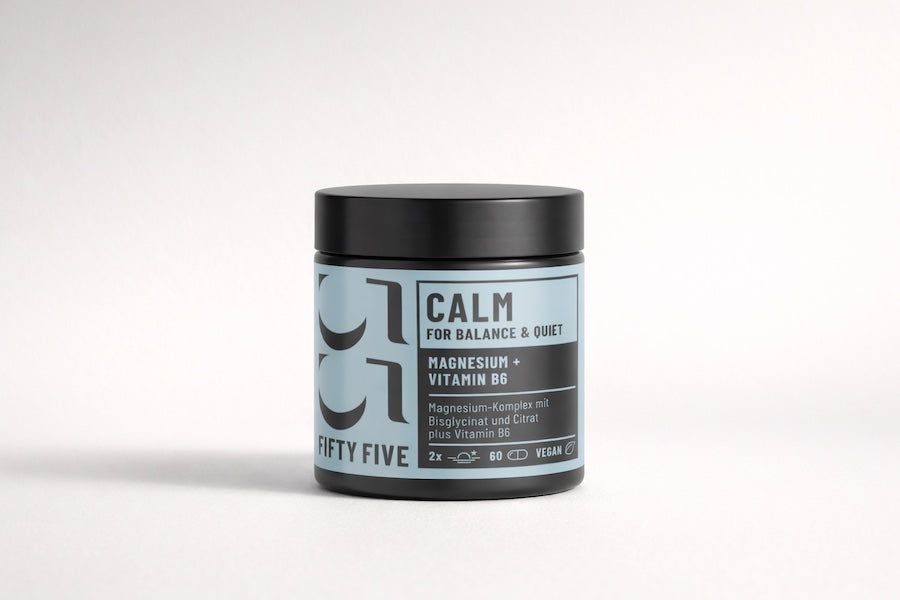
When Markus came across CALM by Fifty Five, it was not the design that hooked him, but the formulation logic. Two highly bioavailable magnesium forms with different profiles, plus B6 as an active cofactor. That was a language he knew and understood.
"That made sense to me. I don't just take my protein any old way either, I look meticulously at the source and the daily amount. Why would I handle magnesium any differently?"
He now takes CALM in the evening, after training. What he describes is not a dramatic difference, but a noticeable one. "I feel like my muscles don't pull as hard the next morning. And I sleep through the night, which I didn't always do before."
Markus's takeaway: recovery is not a product of chance
Markus keeps his evening setup simple today. Training. Shower. CALM. Dinner. He has not stopped tracking everything. On the contrary, he has added a factor he long overlooked.
"I'm no professional athlete. I train after work because it does me good. But if I go to the trouble of hitting the gym every day, I also want my body to truly recover afterwards. That's not excessive, that's consistency."
→ To the complete magnesium guide
Disclaimer:
This article is for informational purposes only and does not replace medical advice, diagnosis, or treatment by a physician or pharmacist. The information provided here should not be used for self-diagnosis or self-treatment. Food supplements are no substitute for a balanced, varied diet and a healthy lifestyle. For any health questions or complaints, please always consult a doctor you trust. Fifty Five accepts no liability for any inconvenience or harm resulting from the use of the information presented here.






Which Vitamins and Minerals Does Your Body Really Need?
Multivitamins in Sports: What Athletes Really Need, and What a Multivitamin Can Do
Share: