


The weight-loss injection works, the weight falls, and at some point the question arises: what happens when I stop the medication again? This is exactly where the uncomfortable part of the truth lies, which hardly anyone talks about in the first month of treatment. GLP-1-based weight-loss injections are designed as a long-term therapy, not as a short course. If you stop them without having changed anything about your lifestyle in the meantime, appetite and weight return for most people. This article shows you why that is so and what the real insurance against the yo-yo effect is.
First, the most important context: weight-loss injections are prescription-only medications and belong in the hands of a doctor. That applies to the treatment itself, to increasing the dose and, most of all, to stopping. Nothing in this article replaces the conversation with your doctor. What we provide here is the second track that runs parallel to the therapy: nutrition, exercise and nutrient supply. You can find the complete overview of effects, risks and the three pillars in the big weight-loss injection guide.
Why does the weight often come back after stopping?
GLP-1 receptor agonists mimic one of the body's own gut hormones. They enhance the feeling of satiety, slow gastric emptying and reduce appetite; in studies, energy intake drops by up to 40 %. As long as the active ingredient is in the body, you almost automatically eat less. That is exactly the point: the injection changes your feeling of hunger, not your behaviour. If the active ingredient falls away, the old appetite returns.
This is not a character weakness and not a failure, but biology. After weight loss, the body regulates back towards the old weight anyway. If the appetite-suppressing effect of the medication then also falls away, two effects come together. That is why the therapy is designed for the long term, and that is medically intended. Stopping without a plan is the most common route into the yo-yo effect.
That does not mean everyone needs the injection forever. It means that the time under the therapy is the window in which you have to build something that also holds without the medication. Anyone who uses this window has a real chance of maintaining the weight after stopping. Anyone who lets it pass starts again from zero the next time.
What is the real insurance against the yo-yo effect?
The answer lies in three pillars that you work out for yourself during the therapy: preserved muscle, a learned way of eating and a stable nutrient supply. None of them replaces the others, and none of them comes on its own. They are what keeps running after stopping, when the active ingredient has long left the body.
The first pillar is your muscle. Under the weight-loss injection, in registration trials (STEP-1, SURMOUNT-1), summarised in a review (Neeland et al. 2024), roughly 25 to 40 % of the lost weight comes from fat-free mass (including muscle). In the STEP-1 trial on semaglutide, fat-free mass fell by roughly 13 %. This is dangerous because muscle is your metabolically active tissue. Anyone who comes out of the therapy with less muscle burns less energy at rest and puts weight back on faster after stopping. More on this in the article on muscle loss under the weight-loss injection.
The second pillar is the way of eating that you have got used to during the months under the medication. If in this phase you have learned to prioritise protein, to eat in a fixed meal structure and to focus on nutrient density rather than sheer quantity, this knowledge remains. This is exactly where it helps to understand the injection as a learning phase rather than a mere tool, as the article on tracking meals shows.
The third pillar is a stable nutrient supply. Under a reduced food intake, several micronutrients can become scarce; among those observed in studies were vitamin D, magnesium, vitamin B12 and thiamin. This supply does not directly secure your weight, but it supports the functions you depend on for maintaining it: muscle, energy metabolism and the nervous system.
How do I counteract muscle loss already during the therapy?
Muscle cannot be built up so easily in a deficit, but it can largely be preserved. The decisive lever is strength training, two to four times per week, combined with sufficient protein. The two have to come together, because protein alone without a training stimulus is not enough to preserve the muscle. The training provides the stimulus, the protein supplies the building material.
For protein, the recommendation for muscle preservation in a deficit is 1.2 to 2.0 g per kilogram of body weight per day, in practice often in the range of 1.2 to 1.6 g/kg. Per meal, about 20 to 30 g of high-quality protein is a good guideline, and for older people rather 30 to 40 g. The difficulty under the injection: appetite is suppressed, and many under the therapy do not even reach the lower protein value. Here it pays to plan protein consciously and early in the day.
It is important that you build these habits while the medication makes the discipline easier for you. When appetite is suppressed, it is easier to structure your meals and to integrate training into everyday life. It is precisely these routines that hold after stopping. They are the bridge from medication-supported weight loss to maintaining the weight on your own.
How does the transition when stopping succeed?
Stopping a weight-loss injection is not a switch that you flip yourself. It belongs under medical supervision, and as a rule the dose is reduced step by step rather than ended abruptly. Your doctor decides whether, when and how this happens. Do not plan this step on your own and not out of an impulse, for example because you have reached your target weight.
In parallel with the medically supervised tapering, the opposite of stopping applies to your lifestyle: keep going. Keep up the strength training, keep the protein intake stable and don't let the meal structure fall asleep. Appetite will noticeably return in this phase, and that is exactly when it shows whether the learned routines are solid. Anyone who drops the training and the eating structure in the transition phase loses the most important protection.
Be realistic about it. Not everything stays easy just because you lost weight beforehand. Without the appetite-suppressing effect, you have to actively steer what the medication took over before. That is work, but it is doable when the three pillars are in place. The difference between maintaining and yo-yo lies not in luck but in what you built up during the therapy.
What role does nutrient supply play in maintaining weight?
A stable basic supply does not replace a change in behaviour. It replaces neither the strength training nor the protein intake nor the structured way of eating. What it does achieve is securing the functions that these behaviour changes depend on. If micronutrient gaps arise under a reduced food intake, exactly those systems suffer that are supposed to maintain your weight.
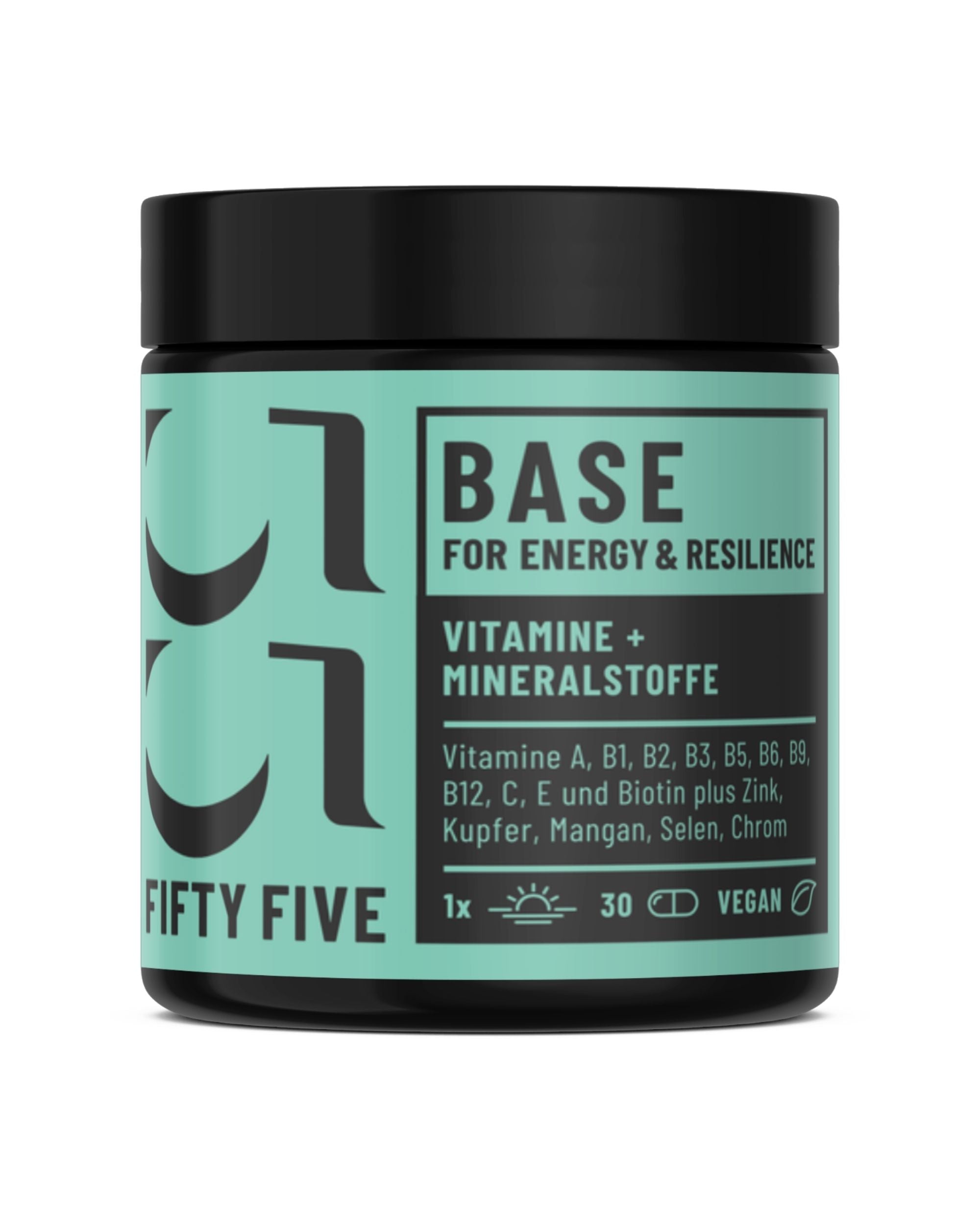
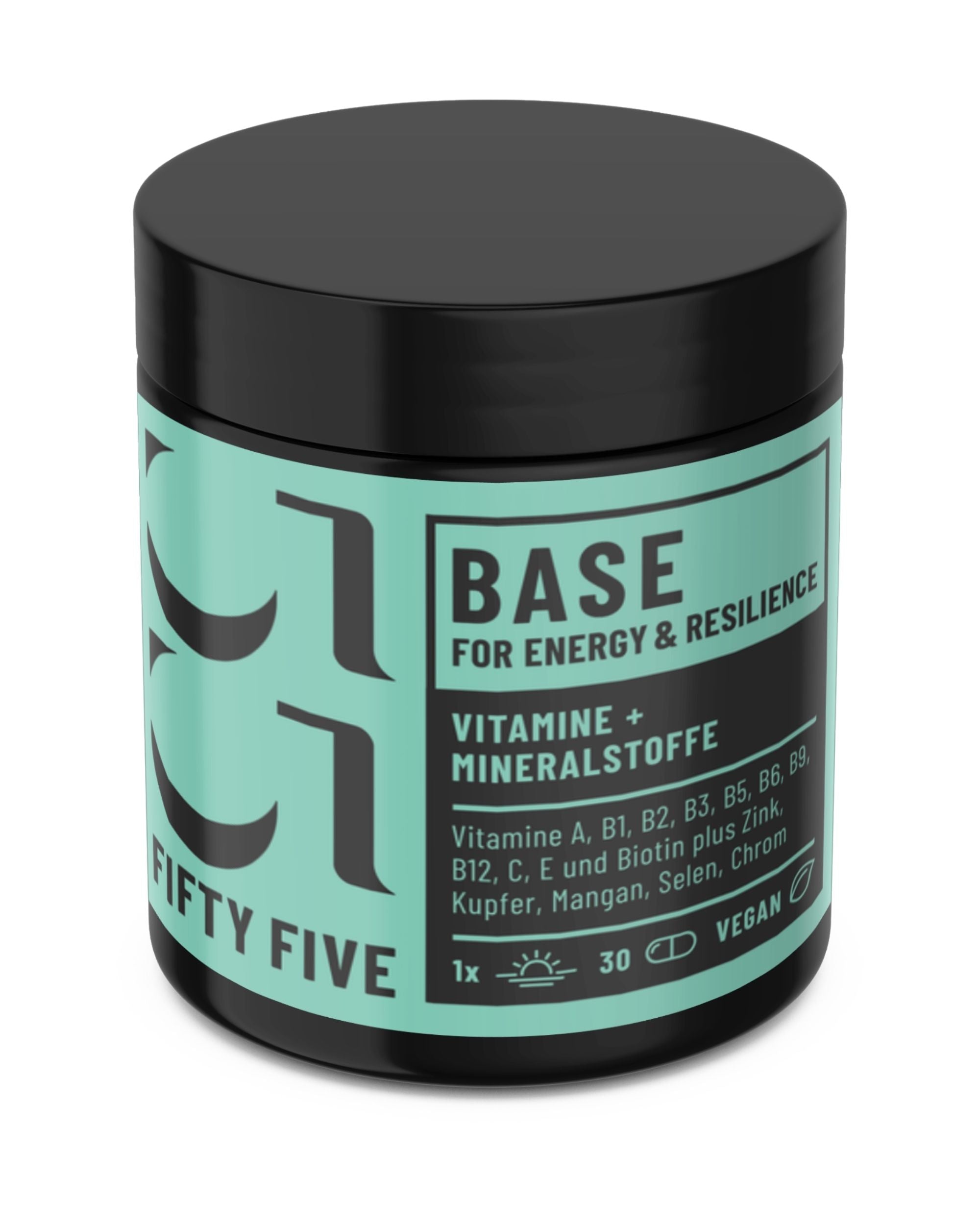
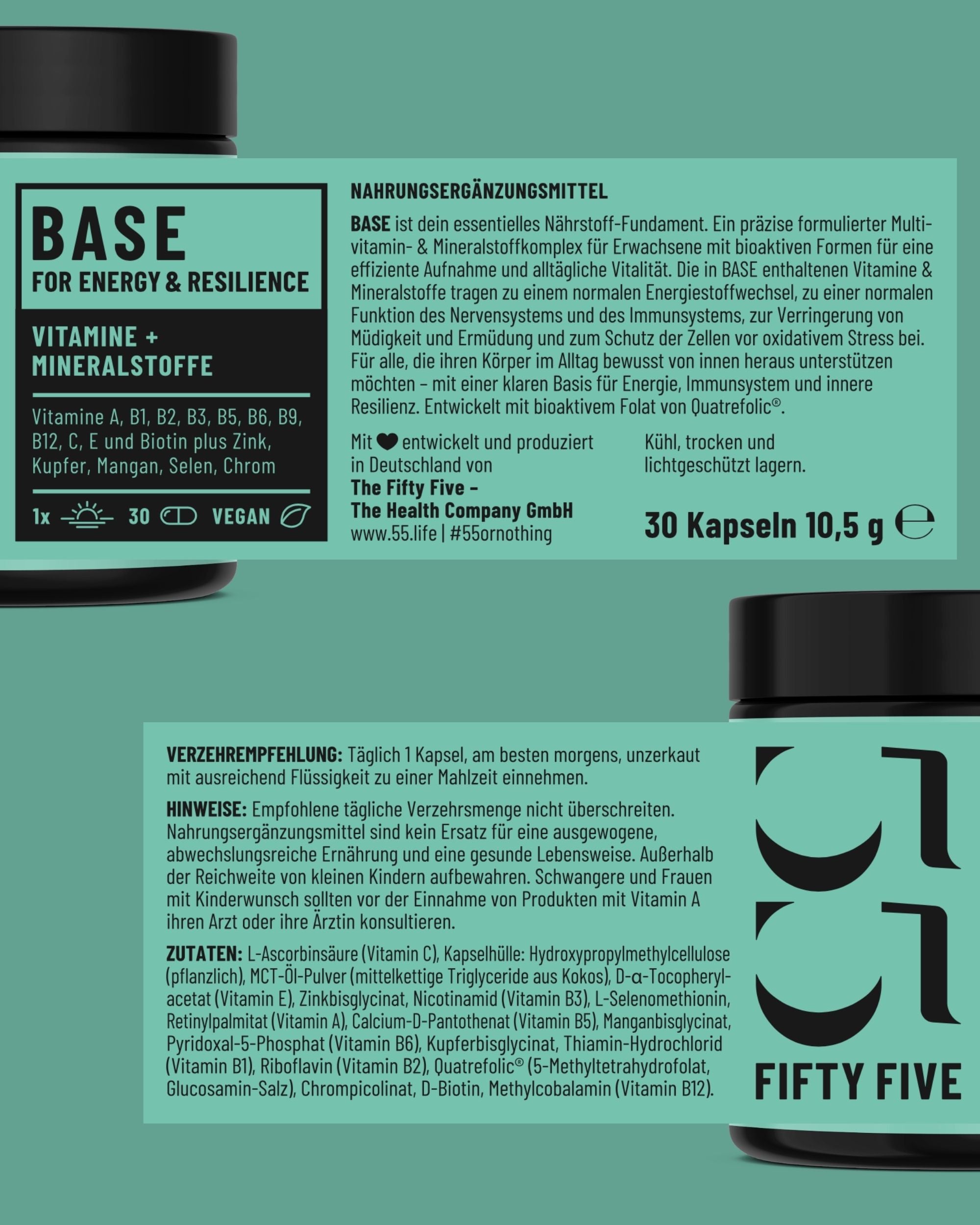
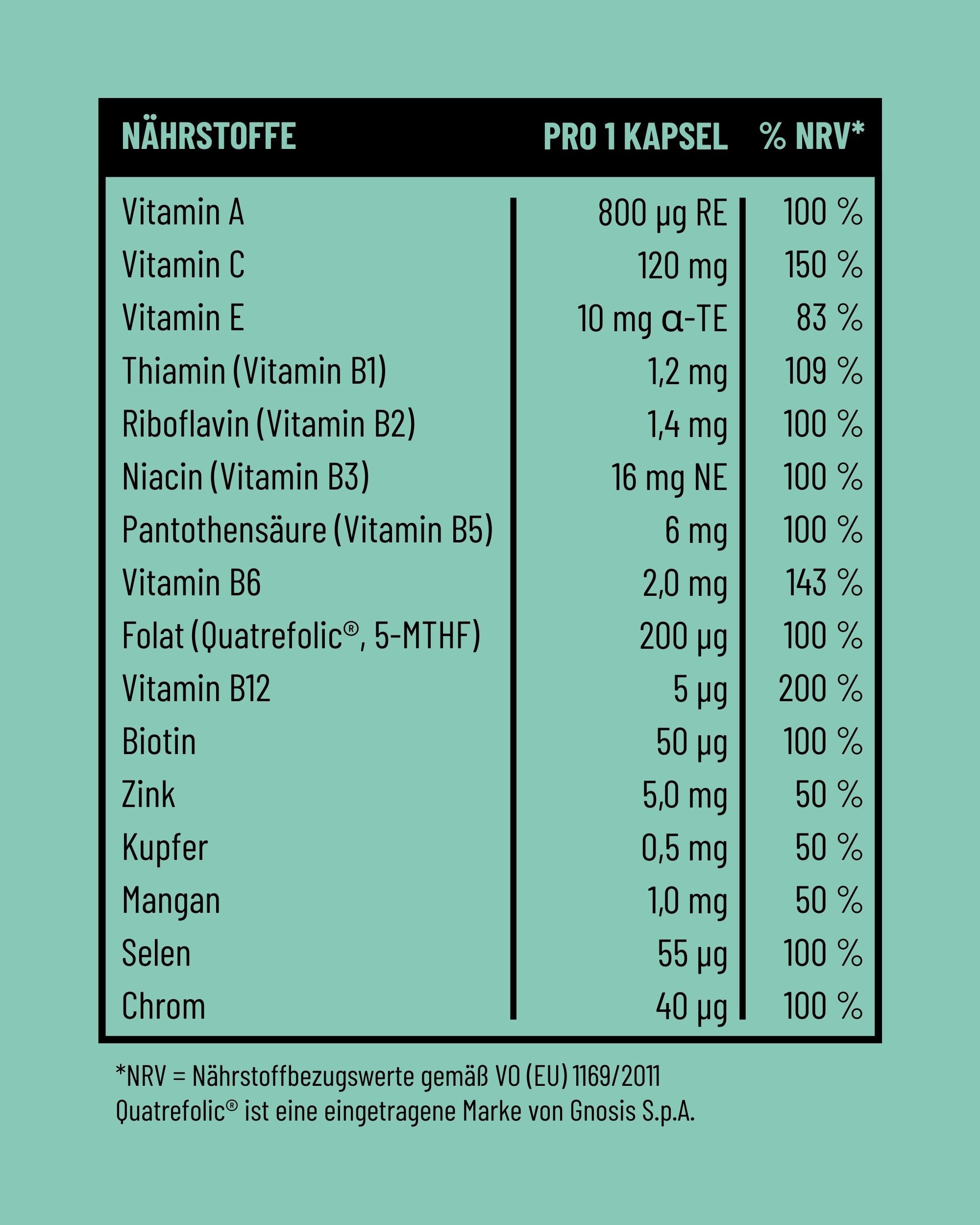
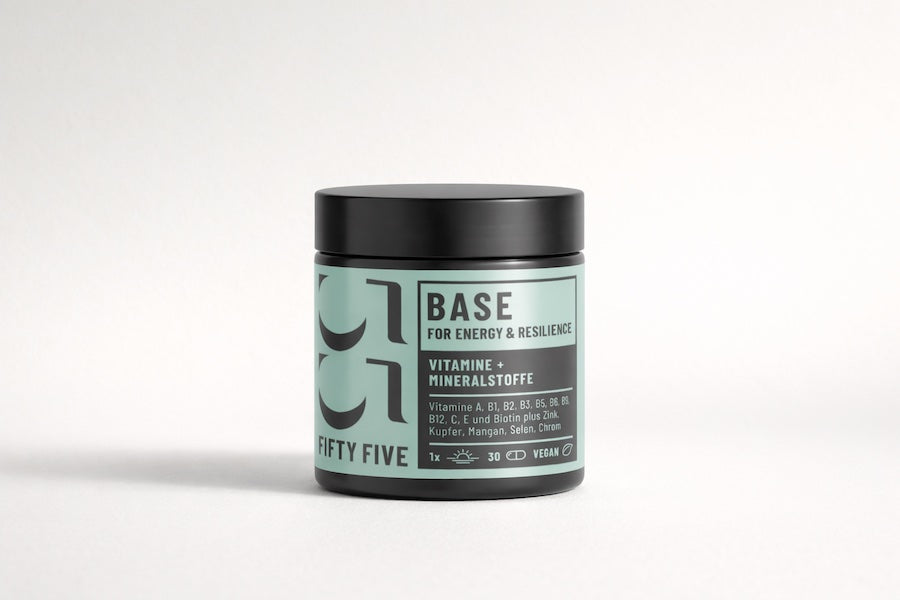
For the broad basic supply, BASE by Fifty Five can form a reliable foundation. BASE provides, among other things, vitamin B12 and thiamin (vitamin B1), two nutrients that can become scarce under GLP-1 therapy. Vitamin B12 contributes to normal energy-yielding metabolism and to the normal functioning of the nervous system; thiamin, according to the requirements of the European Food Safety Authority (EFSA), likewise contributes to normal energy-yielding metabolism. This is relevant because in the transition phase you depend on a functioning metabolism.
In addition, vitamin D is a topic that BASE deliberately does not cover. Vitamin D is among the nutrients that can become scarce particularly often under GLP-1 therapy, and it is especially relevant for the muscle topic. RISE by Fifty Five provides 2,000 international units (IU) of vitamin D3 per capsule. Vitamin D contributes to the maintenance of normal muscle function and to the maintenance of normal bones. A stable vitamin D supply is thus a sensible building block, especially in the transition phase.
What remains clear: this supply is the third pillar, not the first. It works only in combination with preserved muscle and a learned way of eating. No supplement maintains your weight if training and eating structure are missing. Medical or nutritional-therapy support, ideally with a determination of your status, is the gold standard here.
FAQ
Do you always put weight back on after stopping the weight-loss injection?
Not necessarily, but for many people appetite and weight return after stopping, because the therapy is designed for the long term. What is decisive is what you built up during the treatment. Anyone who has preserved muscle, learned a sustainable way of eating and stabilised their nutrient supply has a realistic chance of maintaining the weight. Without these changes, the yo-yo effect is likely. Stopping itself belongs, in any case, under medical supervision.
How do you stop the weight-loss injection correctly?
Stopping should always be medically supervised, as a rule by gradually reducing the dose rather than an abrupt stop. The decision about timing and approach is made by your doctor, not by you alone. In parallel, you should keep up strength training, protein intake and eating structure, since appetite returns in this phase. You discuss the exact procedure individually in your treatment.
How much protein do I need to maintain weight after the injection?
For preserving muscle in a deficit, 1.2 to 2.0 g of protein per kilogram of body weight per day serve as a guide, in practice often 1.2 to 1.6 g/kg. Per meal, about 20 to 30 g of high-quality protein is a good guideline, and for older people rather 30 to 40 g. But protein alone is not enough: without strength training, the stimulus that preserves the muscle is missing. The two belong together.
Why is muscle preservation so important for maintaining weight?
Muscle is metabolically active tissue and influences how much energy your body uses at rest. Under the weight-loss injection, depending on the study, 25 to 40 % of the lost weight comes from fat-free mass (including muscle). Anyone who comes out of the therapy with less muscle tends to put weight back on faster after stopping. That is why preserved muscle is one of the three pillars against the yo-yo effect.
Can a multivitamin prevent the yo-yo effect?
No. A multivitamin or other food supplement cannot prevent the yo-yo effect and does not replace a change in behaviour. The nutrient supply supports functions such as muscle, energy metabolism and the nervous system, but it does not maintain your weight on its own. The difference is made by strength training and a sustainable way of eating. The supply is a complementary pillar, not a substitute.
Disclaimer:
This article is for informational purposes only and does not replace medical advice, diagnosis, or treatment by a physician or pharmacist. The information provided here should not be used for self-diagnosis or self-treatment. Food supplements are no substitute for a balanced, varied diet and a healthy lifestyle. For any health questions or complaints, please always consult a doctor you trust. Fifty Five accepts no liability for any inconvenience or harm resulting from the use of the information presented here.
Sources
- EFSA. Scientific Opinion on Dietary Reference Values for protein. EFSA Journal 2012;10(2):2557.
- German Nutrition Society (DGE). D-A-CH reference values – protein.
- German Obesity Society (DAG). S3 Guideline on the Prevention and Treatment of Obesity. AWMF reg. 050/001.
- German Federal Institute for Risk Assessment (BfR). Maximum levels for vitamins and minerals in food supplements.
- European Commission. EU Register of nutrition and health claims.
- Robert Koch Institute (RKI). DEGS – German Health Interview and Examination Survey for Adults.
- Neeland IJ, et al. Changes in lean body mass with GLP-1-based therapies and mitigation strategies. Diabetes, Obesity and Metabolism. 2024.
- American Journal of Clinical Nutrition. Nutritional priorities to support GLP-1 therapy for obesity: a joint Advisory. 2025.






Side effects of the weight-loss injection: how nutrition and nutrients make the transition easier
Strength training under the weight-loss injection: why exercise is not an extra
Share: