


"I've always considered omega-3 important. And for years I took it far too irregularly. Not because I didn't want to, but because the mix of fish oil capsules and coffee is a combination I really can't recommend to anyone."
Precise in everything. Just not here.
Sophia is 52 and has run her own tax advisory firm in Freiburg for almost 10 years. Her work is cognitively demanding: deadlines, complex structures, client meetings in which she has to assess and explain in real time what others do not see at first glance. Or understand.
Sophia is different. She likes to understand things, to examine them, to question them. In depth and with absolute precision. That is not a professional persona; that is simply who Sophia is. Which makes it all the more irritating to her when she notices that her own consistency has not kept up with her own standards.
By her mid-forties, she had already begun to look more closely at what she takes in every day. Not out of fear of aging, but from the same impulse that drives her professionally: understand what works, and why. Pilates twice a week. Hikes on weekends when the weather in the Black Forest allows. Early to bed. She does not turn it into a science, but she does it consistently.
Omega-3 has therefore been on her radar for a long time. She had read about what DHA and EPA do and that they can have positive effects on brain and heart function. That convinced her. So she bought fish oil capsules.
The real problem had a name
And those quickly became a long-lasting problem. She had built her routine around breakfast, except that the fishy smell, and above all the aftertaste, did not get along at all with her other passion. Her morning coffee.
"Without my morning coffee, I am genuinely insufferable," she says. "I need to get going in the morning. But that fishy taste with my coffee? No. Really not."
Fish oil and coffee produce the same result for many people: an aftertaste that lingers. Sophia moved her intake to after lunch. But the lingering fishy burps before afternoon client meetings were no alternative either.
What followed was a pattern she knows well from another context: when something is unpleasant enough, you find reasons to postpone it. First one day, then three, then you buy new capsules and start over. On paper, Sophia had supplemented omega-3 for years. In reality, her supply was patchwork.
"I didn't admit it to myself for a long time. I thought, I've got this. But when I honestly count back how regularly I actually took the capsules, it wasn't all that often."
A question of the source
The turning point came with an article explaining where fish actually get their omega-3. The answer was soberingly simple: from algae. Fish eat algae, or smaller marine creatures that eat algae, and accumulate DHA and EPA in their tissue along the way. The fish oil Sophia was swallowing was a detour. A direct route to the same thing already existed.
For Sophia, this was not a philosophical question. It was a practical one. If algae oil delivers the same fatty acids as fish oil, but without the fishy smell, without the burps, and without the oxidation-related quality problems that often occur with cheap fish oil capsules, then her previous choice was simply not the right one.
Fifty Five Insight: DHA and EPA originate in microalgae. Fish accumulate these fatty acids in their tissue through the food chain, which is why fish oil was long considered the only relevant source. Algae oil skips this detour and delivers DHA and EPA straight from the source, without fishy smell, without a fishy aftertaste, and without the oxidation risks that poorly stored fish oil capsules can carry. More on the comparison of both sources: Fish oil or algae oil: where omega-3 really comes from.
"That made sense immediately. If the fish itself is just an intermediate storage site, why am I taking the detour? I wondered why nobody had ever explained it to me that way before."
PULSE: the decision that doesn't feel like a big one
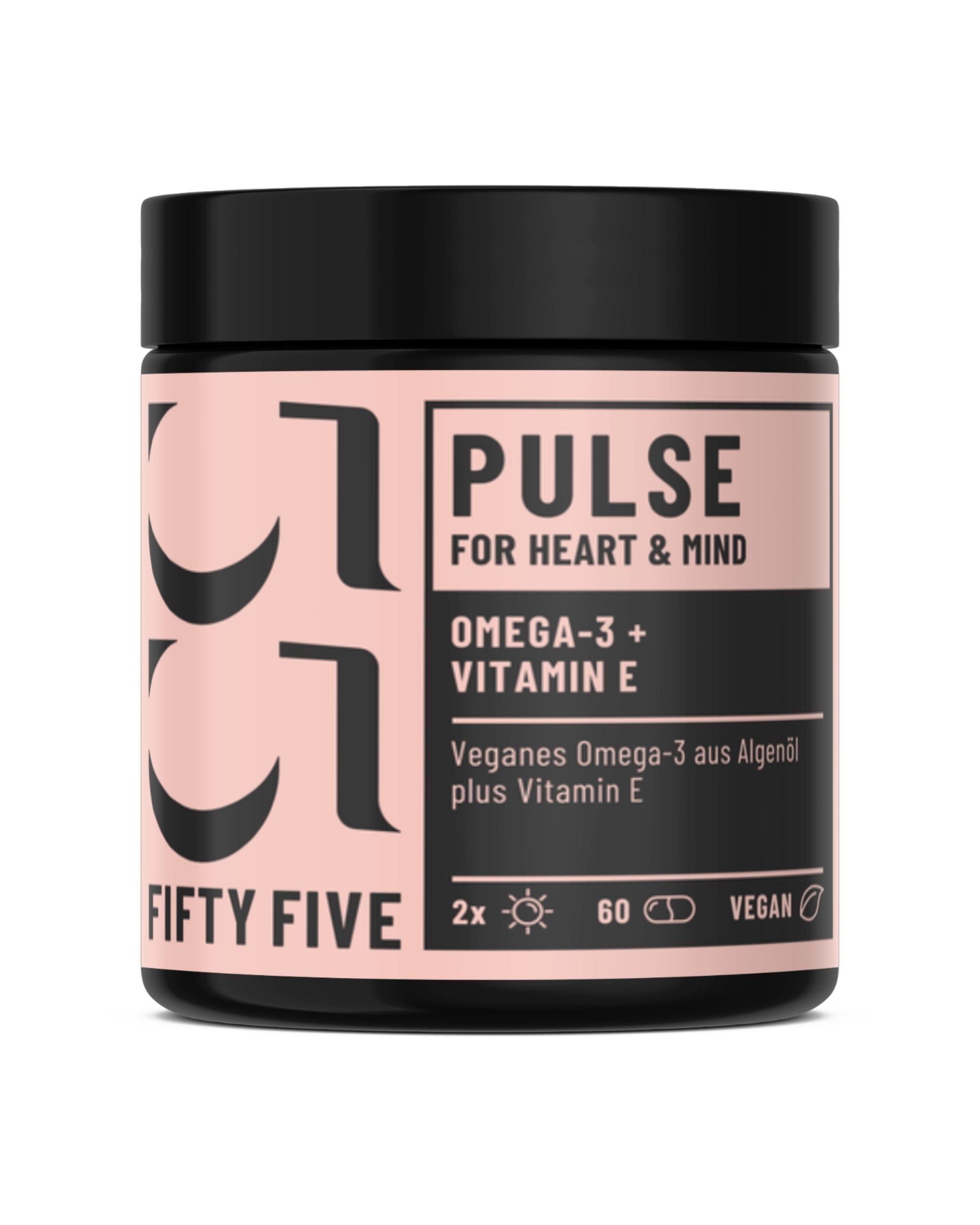
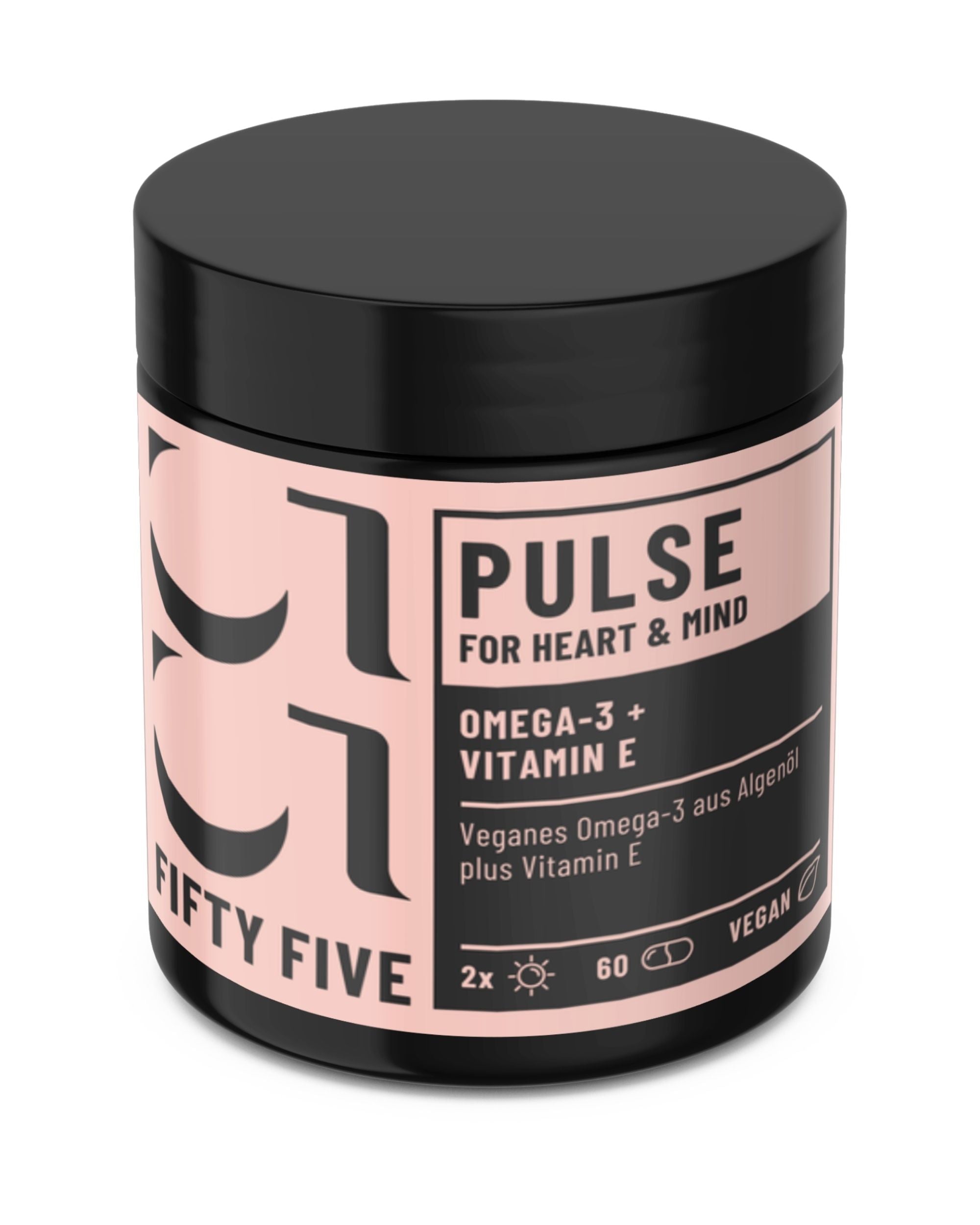
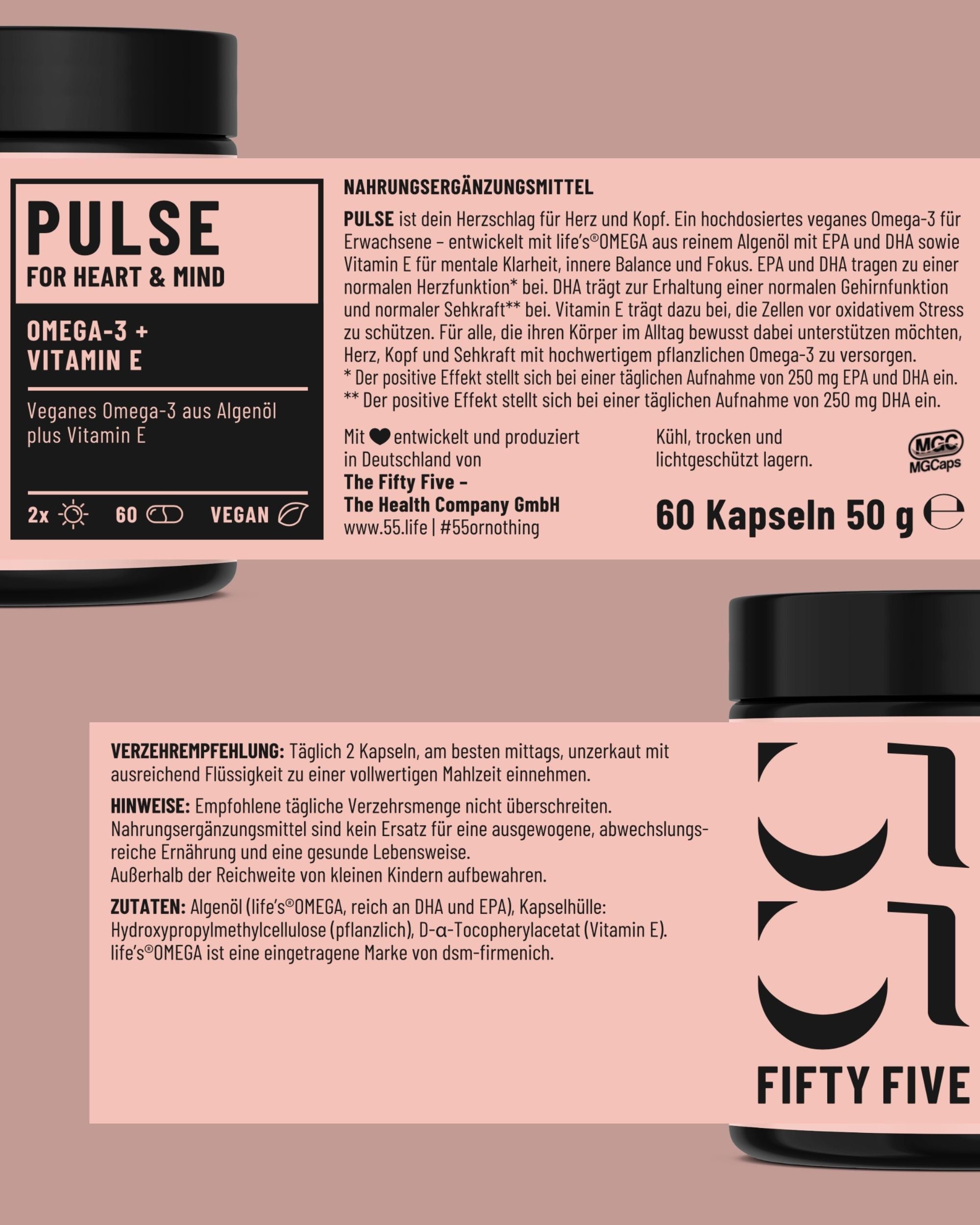
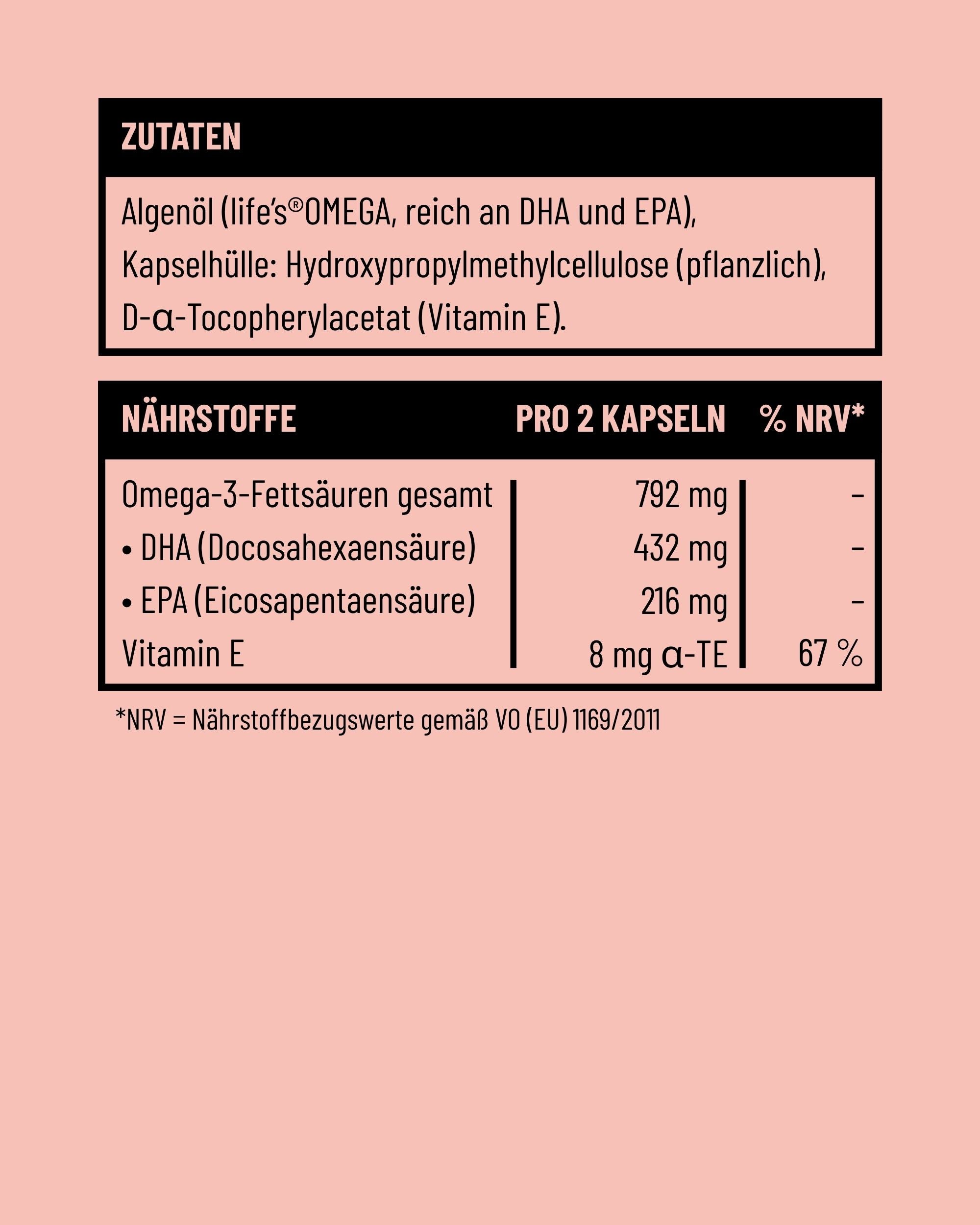
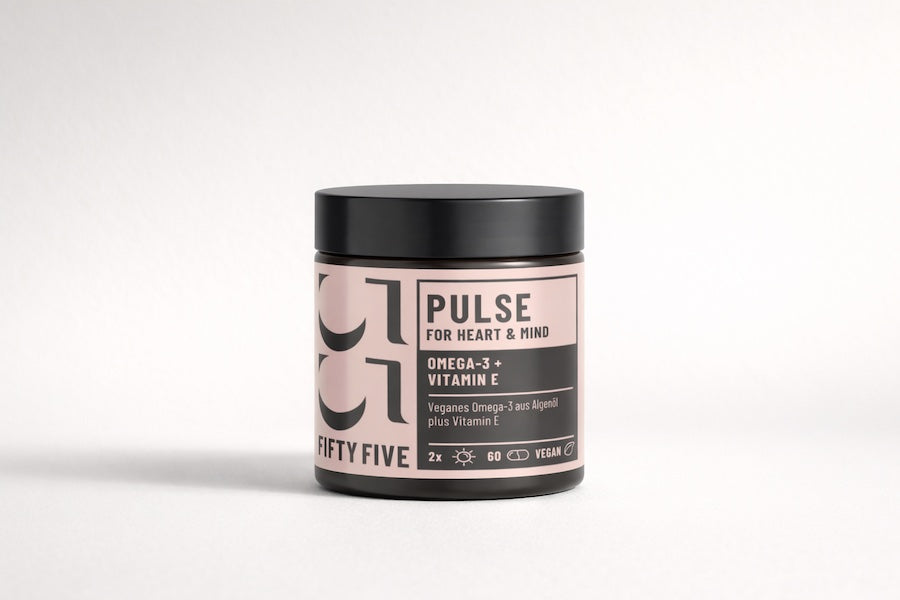
Sophia chose PULSE by Fifty Five. What convinced her was the combination of three things: algae oil as the raw material, a formulation with concrete amounts (432 mg of DHA and 216 mg of EPA per daily dose), and a delivery form that contains no fish oil and does not smell like it. PULSE uses DSM Lifes60® algae oil, one of the few certified raw materials in this segment, in plant-based HPMC liquid capsules.
Today she takes the two capsules at lunchtime, with her meal. No burps. No aftertaste. No reason to skip them. For someone who leaves nothing else to chance, it is an unspectacular realization that makes a real difference.
If you are wondering which amounts of DHA and EPA become relevant at which stages of life, the journal has an overview: Omega-3 from 50: why needs increase.
"I've been taking the capsules daily for months now. Not because I force myself to. Simply because there is no reason to leave them out. That sounds banal. For me, it's the difference."
Sophia's takeaway: fewer hurdles, more consistency
Sophia has not dramatically rebuilt her routine. She still does Pilates, drinks two coffees in the morning, and advises clients on complex tax matters most others do not grasp at first glance. What has changed is a small thing: she reaches for the right capsule every day without thinking about it.
The question of why omega-3 matters she had answered long ago. The question of how to actually implement it took a little longer. Sometimes the difference between a good intention and a real routine comes down to nothing but the form.
"I used to think I was consistent in everything. With fish oil, I wasn't. Not because I lack discipline. But because the product simply wasn't good. That's different now."
Disclaimer:
This article is for informational purposes only and does not replace medical advice, diagnosis, or treatment by a physician or pharmacist. The information provided here should not be used for self-diagnosis or self-treatment. Food supplements are no substitute for a balanced, varied diet and a healthy lifestyle. For any health questions or complaints, please always consult a doctor you trust. Fifty Five accepts no liability for any inconvenience or harm resulting from the use of the information presented here.






Multivitamins in Sports: What Athletes Really Need, and What a Multivitamin Can Do
Weight-loss injection: the complete guide to effects, risks, nutrition and muscle preservation
Share: