


Anyone who does sports regularly has different nutrient needs than someone who hardly exerts themselves physically. That is not a marketing statement but physiology: energy metabolism, sweat, muscle work, and recovery run at an elevated level. This article clarifies which nutrients are really relevant here, what a multivitamin can do, and what it does not have to do.
Why physical exertion changes nutrient needs
Sport is not a uniform concept. Someone who runs 45 minutes three times a week has different requirements than someone who trains intensely every day. Still, a few overarching principles apply to everyone who is regularly active:
More energy means more B vitamin needs. The B vitamins are involved in energy metabolism: B1, B2, and B3 contribute to normal energy-yielding metabolism. B5 supports energy production, B6 protein metabolism. Anyone who uses more energy needs more of the enzyme systems that regulate this process.
Sweat contains minerals. When you sweat, you lose not only water but also electrolytes and trace elements, including zinc, for example. Zinc contributes to normal protein synthesis. That is relevant for anyone who wants to build or maintain muscle.
Oxidative stress rises under exertion. Sports briefly increase the production of free radicals. Antioxidant nutrients like vitamin C and vitamin E can play a role here. A certain amount of oxidative stress is necessary for training adaptation; the point is a sufficient baseline supply, not suppressing it completely.
The immune system under pressure. Intense training can put short-term strain on immune function. Vitamin C contributes to the normal function of the immune system.
What a multivitamin does for athletes
A multivitamin is no performance booster and no substitute for a balanced diet. What it can do: secure the base. Especially for people who train a lot and do not always eat perfectly while doing so, which quite accurately reflects the reality of most athletes, a well-formulated multivitamin closes the gaps that arise in everyday life.
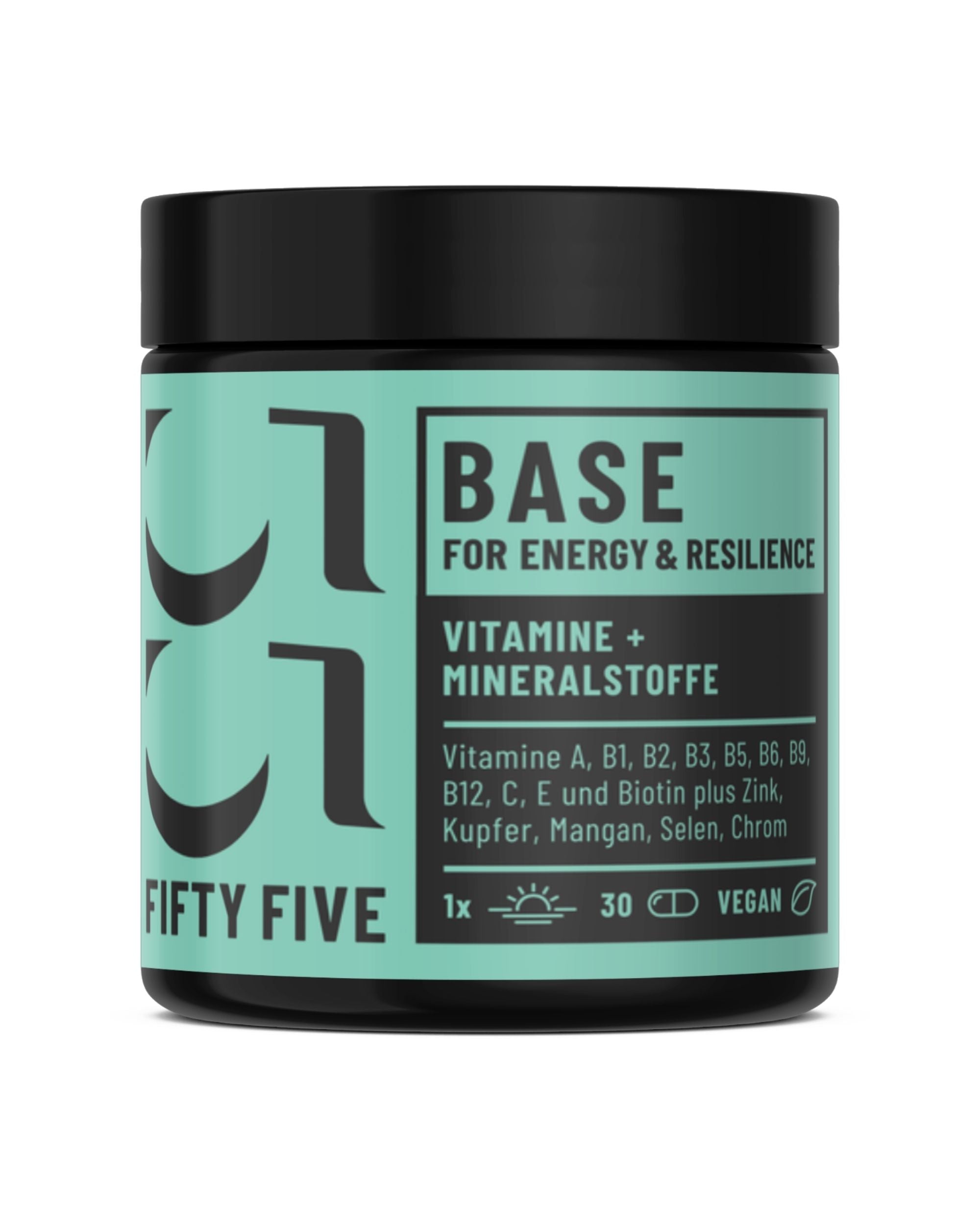
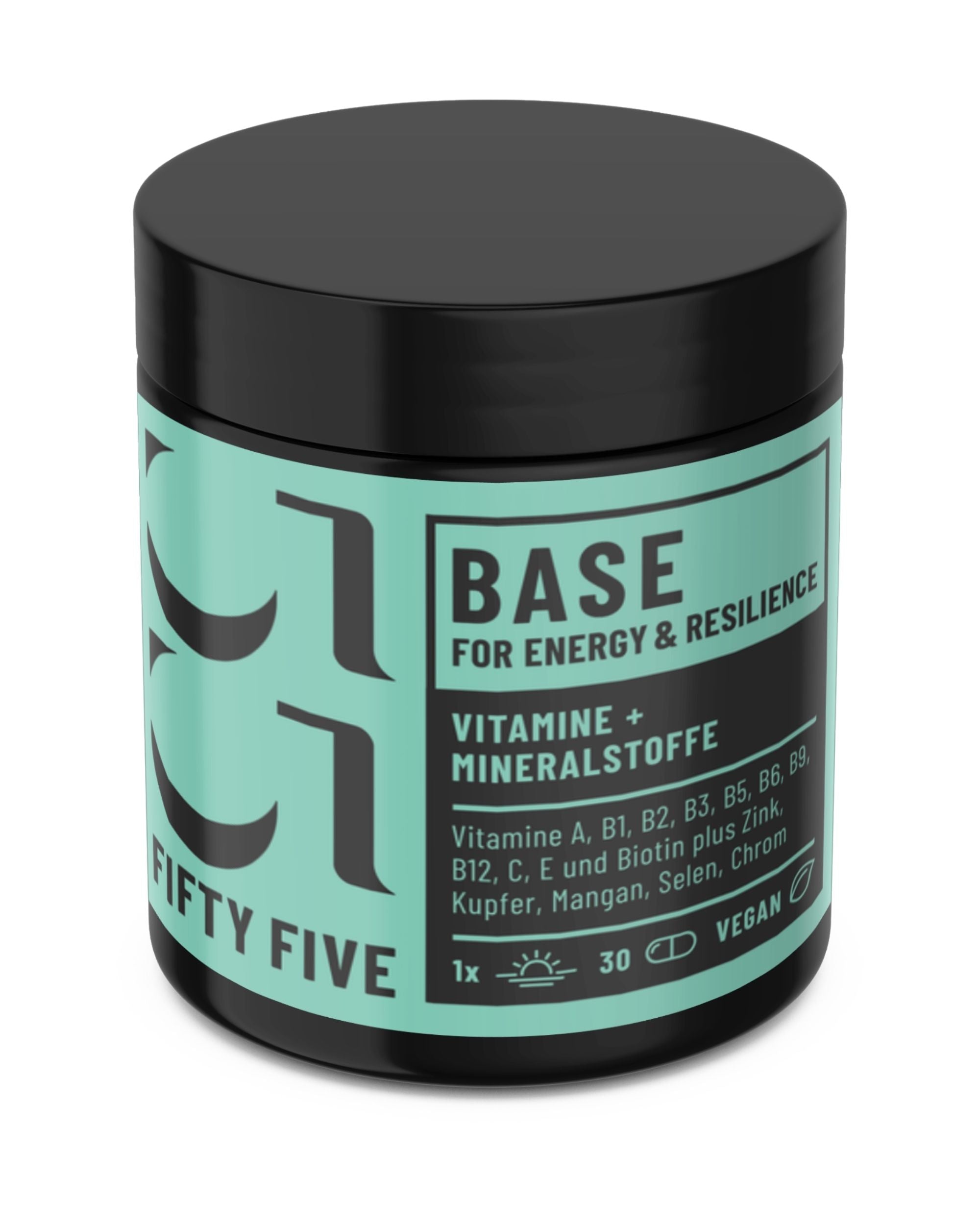
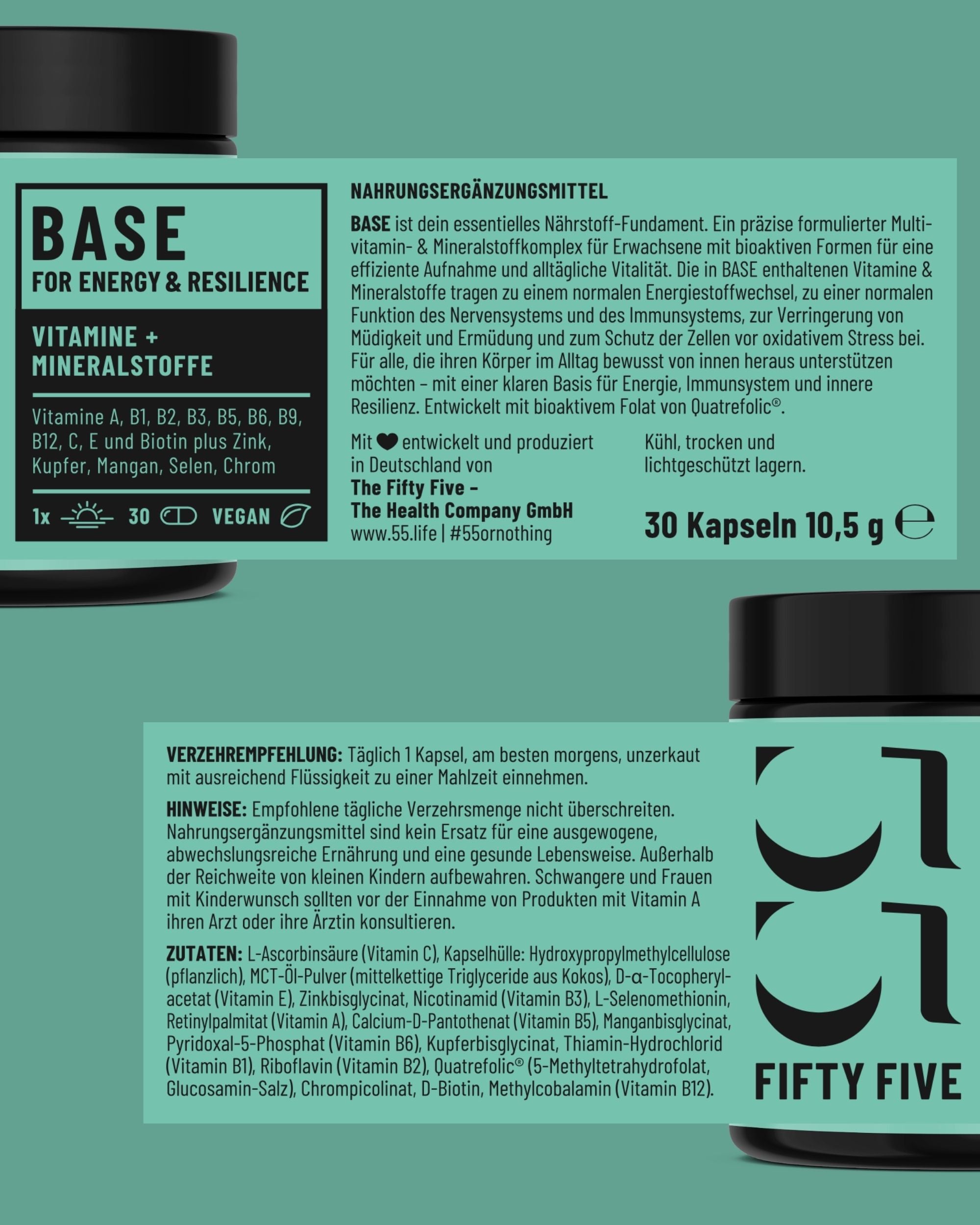
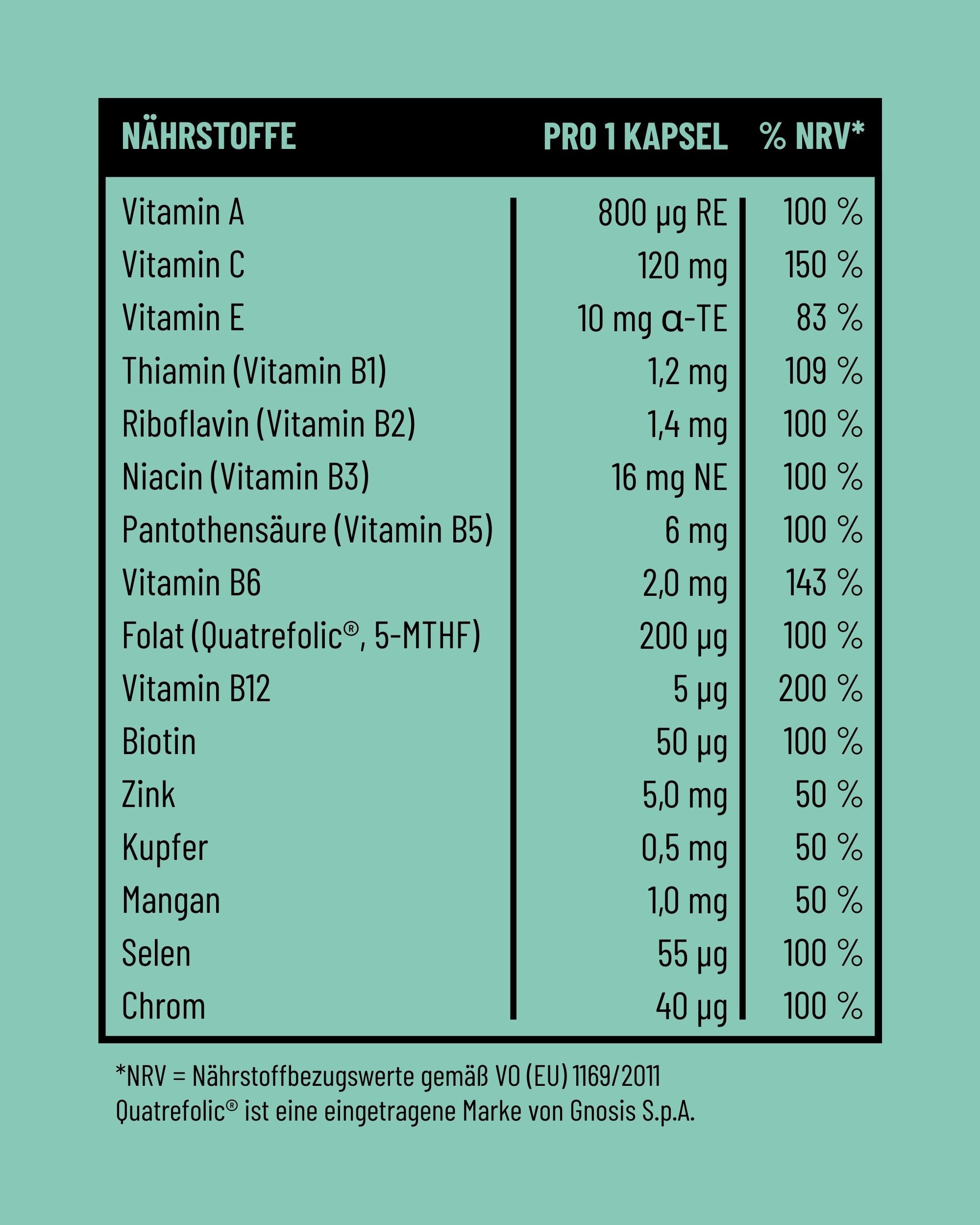
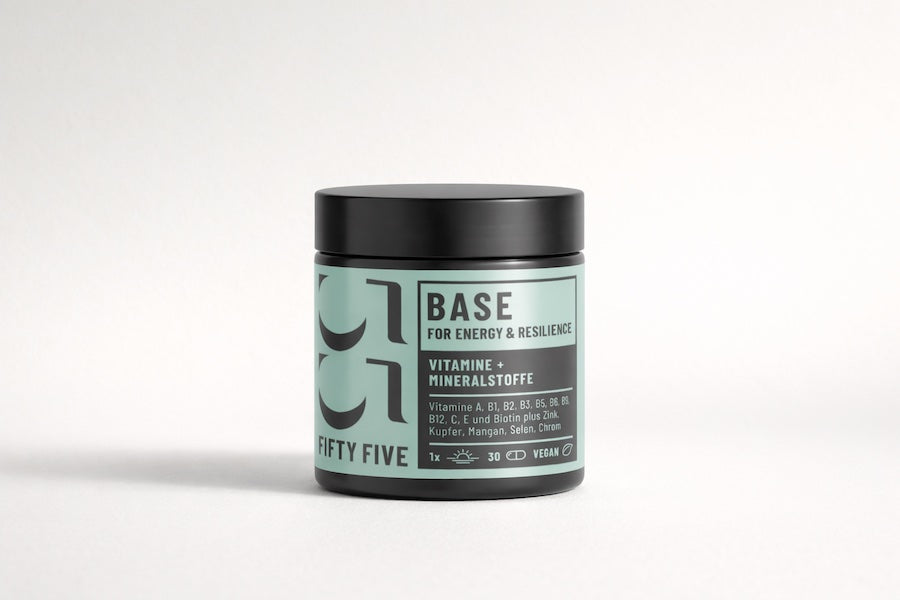
BASE by Fifty Five contains the complete B vitamin spectrum in bioactive forms, vitamins C and E, plus zinc as zinc bisglycinate, selenium, and manganese.
When a multivitamin is not enough
Magnesium is not included in BASE. For muscle function and recovery, magnesium is one of the most relevant nutrients. CALM by Fifty Five contains 206 mg of magnesium per daily dose in a combination of bisglycinate and citrate. Anyone training intensely benefits from it as a complement to BASE. More on this in the article Magnesium in sports: supporting recovery & avoiding cramps.
Vitamin D3 is also deliberately missing from BASE. Anyone who trains mostly indoors or has little sun exposure should consider D3 separately. RISE covers this area separately.
Iron is not in BASE. Female endurance athletes in particular frequently have increased iron needs. Here a blood panel is worthwhile before starting to supplement.
Intake timing for athletes
BASE is taken once daily in the morning, ideally with breakfast. There is no need to take the multivitamin around your training; the contained nutrients do not act acutely like caffeine or creatine, for example. If you combine BASE and CALM: BASE in the morning, CALM in the evening. That fits perfectly with a training routine in which recovery happens overnight.
If you want to add omega-3 to the stack: PULSE delivers DHA and EPA from vegan algae oil, ideally taken at midday.
More on the formulation is available in the detailed multivitamin guide.
FAQ
Do athletes need a special sports multivitamin?
Not necessarily. Many "sports" multivitamins are primarily marketed differently, not fundamentally formulated differently. More relevant is whether the nutrients are present in effective, bioactive forms, as in BASE.
Should I take a multivitamin before or after training?
The timing relative to training plays no relevant role. Multivitamins do not act acutely. Daily consistency matters most. With breakfast is a practical anchor point.
Does vitamin C help with recovery after sports?
Vitamin C contributes to normal collagen formation for the normal function of cartilage and bones and contributes to the normal function of the immune system. For direct muscle recovery, the data is stronger for magnesium than for vitamin C.
Am I combining BASE and CALM correctly as an athlete?
Yes. BASE in the morning (micronutrient base) and CALM in the evening (magnesium for the nervous system and muscle function) is an obvious stack for active people. If you also want to supplement omega-3, you can add PULSE at midday.
Zinc and sports: how much do I need?
Intense sports and heavy sweating increase zinc loss. BASE contains zinc as zinc bisglycinate in an amount that secures the daily baseline supply.
Disclaimer:
This article is for informational purposes only and does not replace medical advice, diagnosis, or treatment by a physician or pharmacist. The information provided here should not be used for self-diagnosis or self-treatment. Food supplements are no substitute for a balanced, varied diet and a healthy lifestyle. For any health questions or complaints, please always consult a doctor you trust. Fifty Five accepts no liability for any inconvenience or harm resulting from the use of the information presented here.
Sources
- German Nutrition Society (DGE). D-A-CH reference values for nutrient intake.
- EFSA. Dietary reference values (overview).
- German Federal Institute for Risk Assessment (BfR). Maximum levels for vitamins and minerals in food supplements.
- European Commission. EU Register of nutrition and health claims.
- Robert Koch Institute (RKI). DEGS – German Health Interview and Examination Survey for Adults.






Recovery Without Blind Spots: How Markus Actively Shapes His Recuperation
Sophia's Path to an Omega-3 Routine That Actually Sticks
Share: