


In the morning with breakfast, at midday with your meal, or in the evening with your main course? Anyone supplementing fat-soluble vitamins encounters this question sooner or later. The answer is not complicated, but it depends on a few factors worth understanding.
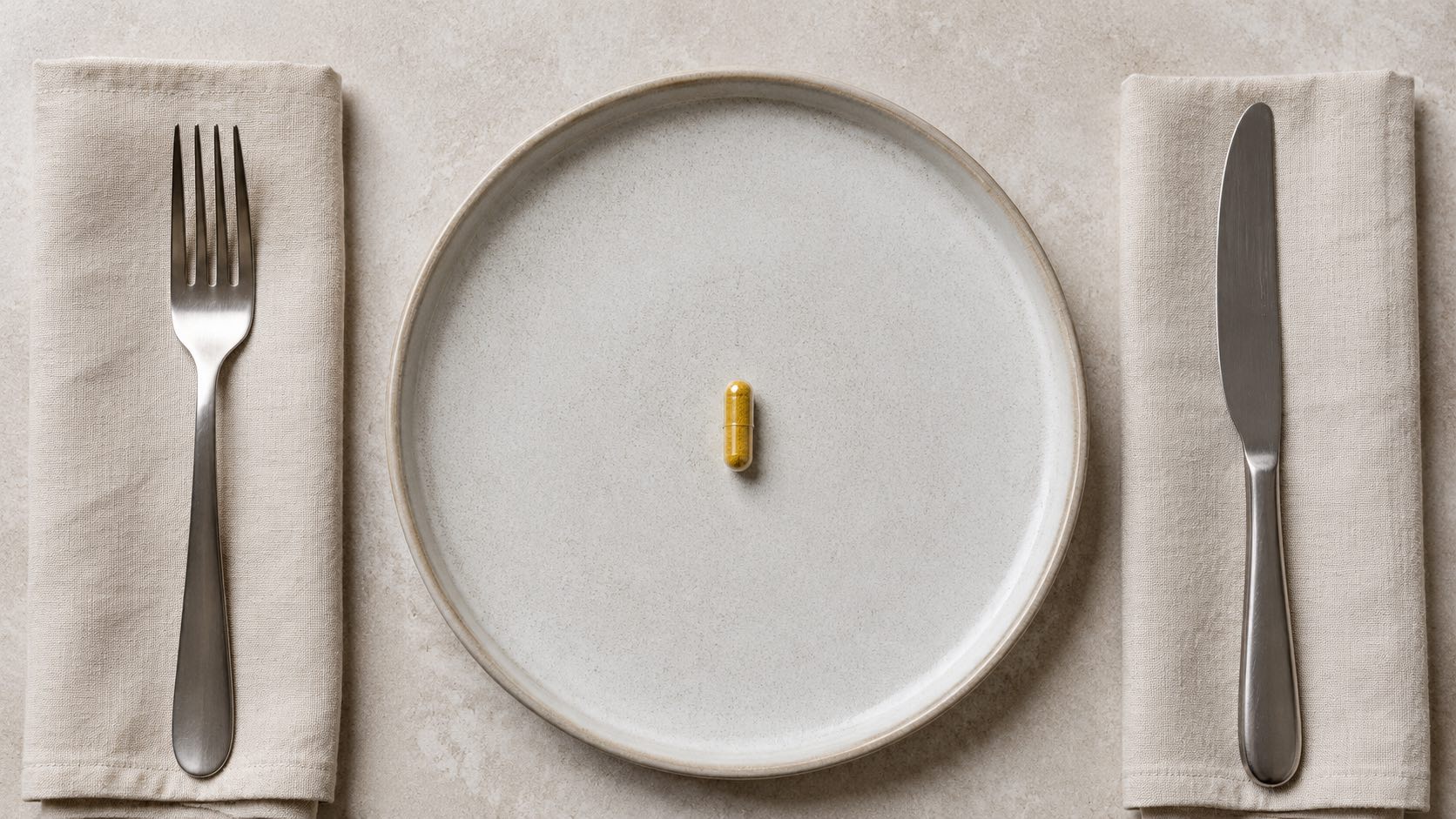
Vitamin D is fat-soluble. That means it is absorbed in the small intestine in combination with fat from food, packaged into micelles, and transported via the lymphatic system. Without fat in the meal, the absorption rate drops considerably.
What studies say about the intake time
An often-cited study from 2010 examined whether taking vitamin D3 simultaneously with a high-fat meal influences absorption. The result was clear: vitamin D3 taken together with a high-fat meal increased the blood level around 50 percent more than taking it on an empty stomach.
More recent studies confirm the basic mechanism but also show that the fat content of the meal does not have to be extremely high. Even a normal meal with olive oil, butter, nuts, or avocado is enough to noticeably improve absorption.
Morning, midday, or evening?
There is no biologically compelling reason to take vitamin D at a particular time of day, as long as fat is involved. Still, there are practical arguments for midday:
Breakfasts are frequently carbohydrate-heavy and low in fat. Anyone who eats cereal, bread, or fruit for breakfast may not have enough fat for optimal absorption. Lunch generally contains considerably more fat.
Evening intake is also possible and effective, provided dinner contains fat. Some older data suggested possible influences on sleep with evening intake, but this connection is not consistently documented and not relevant for most people.
The most practical rule: take vitamin D with the meal that most reliably contains fat.
What if no fatty meal is available?
This is a common problem in supplementation practice. Anyone who supplements on an empty stomach in the morning (which many do because the morning is the ritualized intake time) may lose a considerable part of the effectiveness.
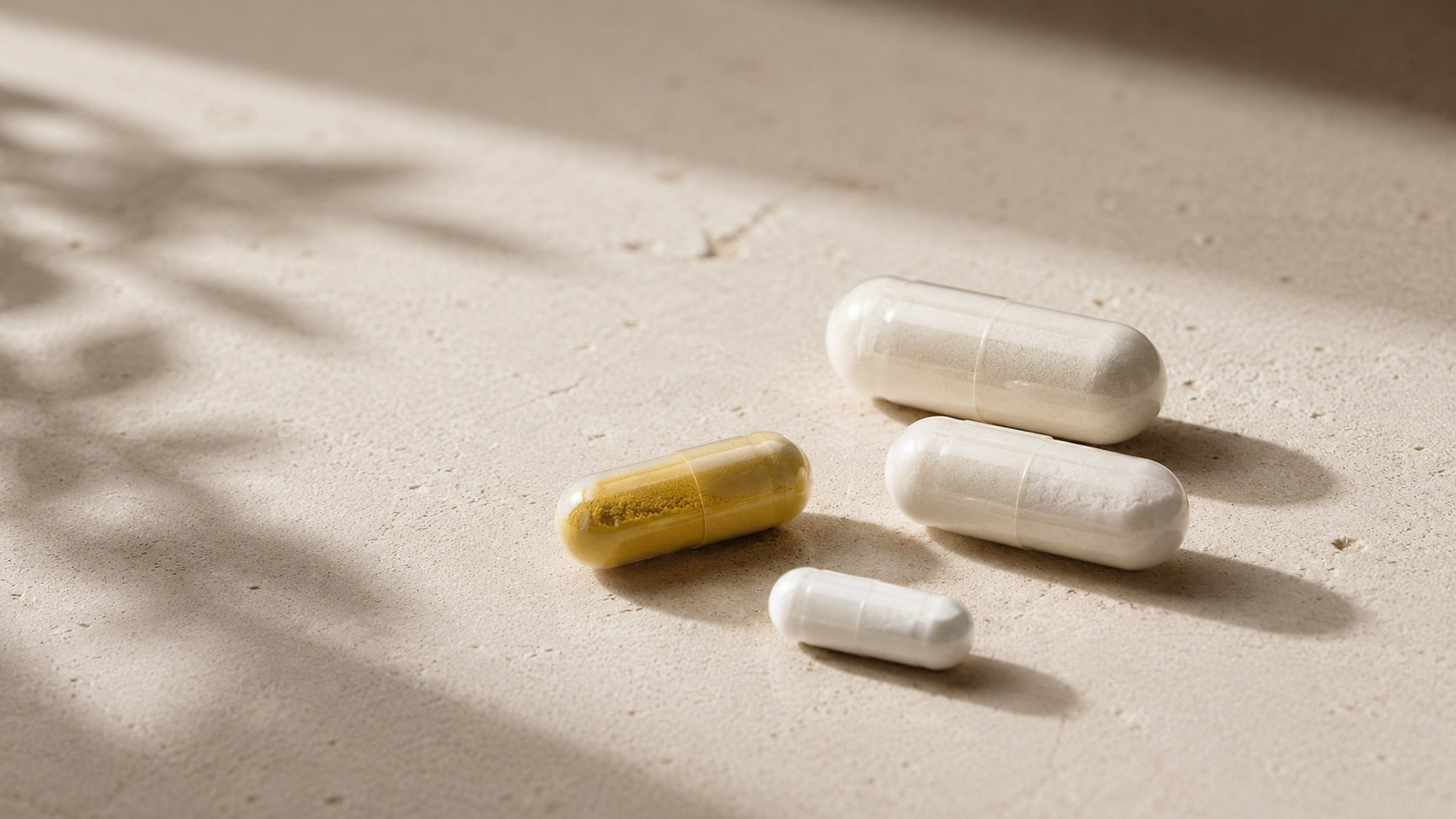
The solution lies either in a consistently fatty meal at intake or in a product that brings a lipid-based carrier in the capsule. This carrier simulates the food environment necessary for absorption and makes the intake more independent of the meal's fat content.
Regularity beats perfection
A common mistake: vitamin D is not taken when you have forgotten to take it at the right time or did not have a suitable meal. That leads to irregular intake, which reduces the supply effect more than a suboptimal intake with little fat.
Taking vitamin D daily at the same time, even if the meal is not ideal, leads to better results than sporadically perfect intake. Consistency is the most important factor for building a stable level.
RISE: timing and absorption
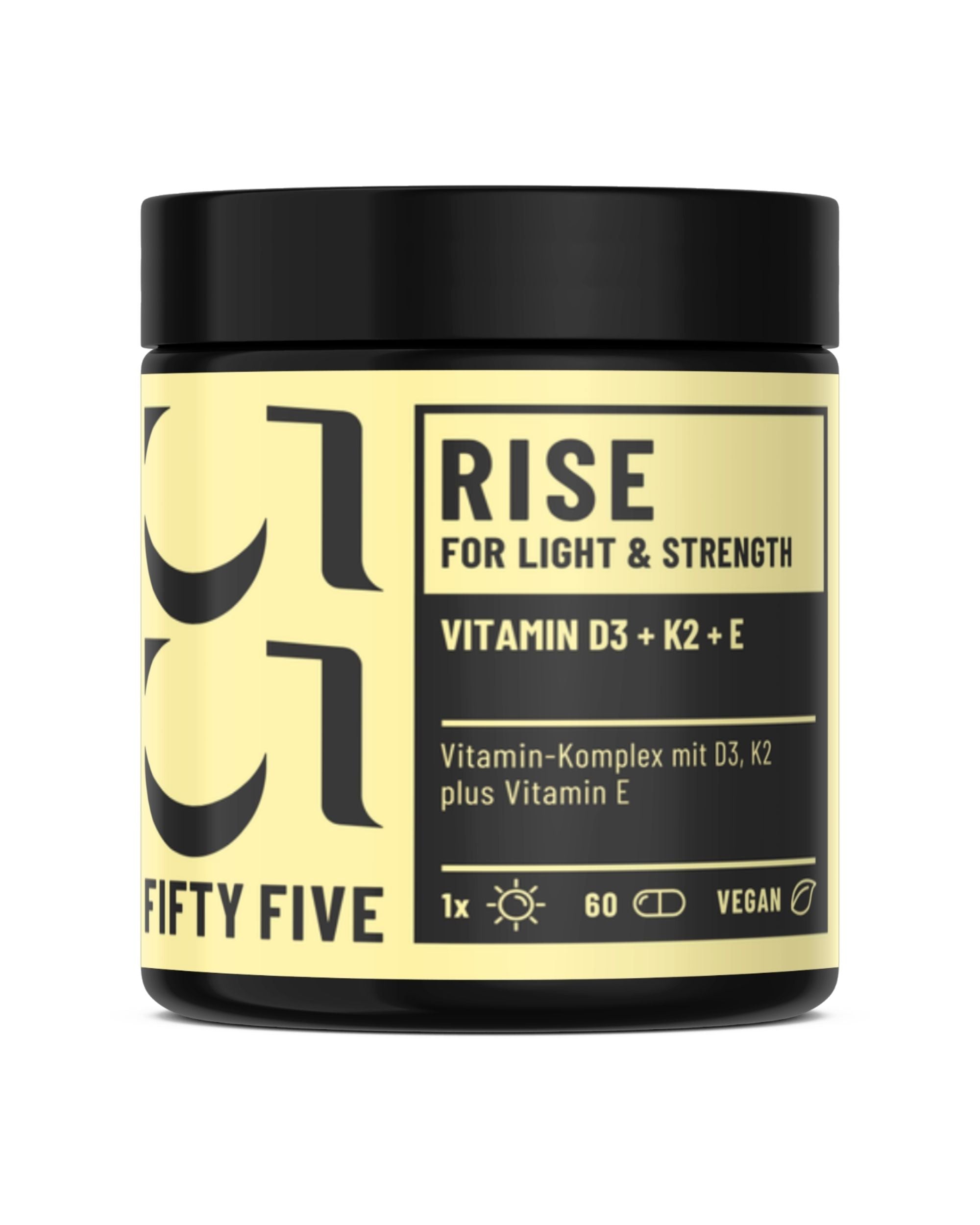
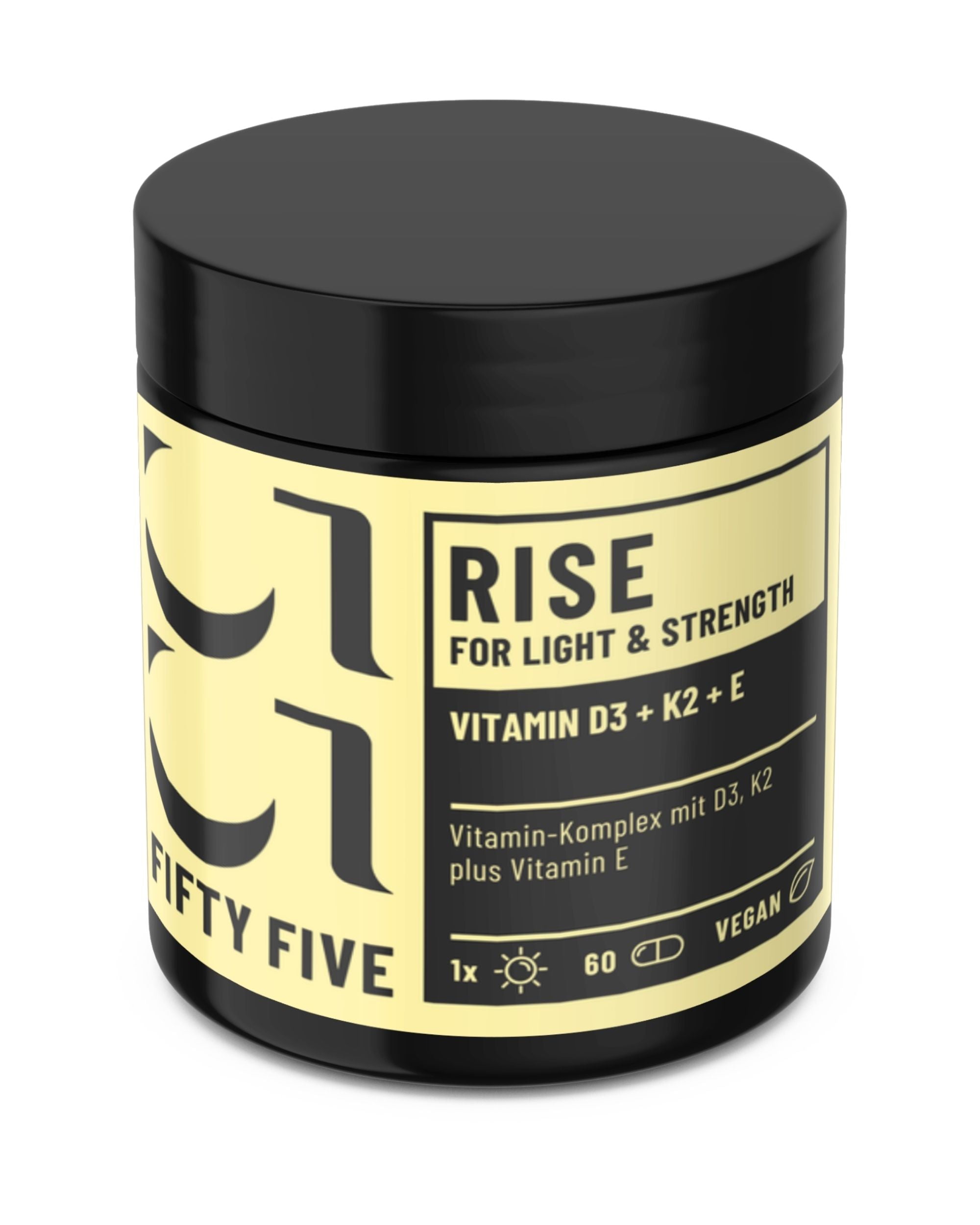
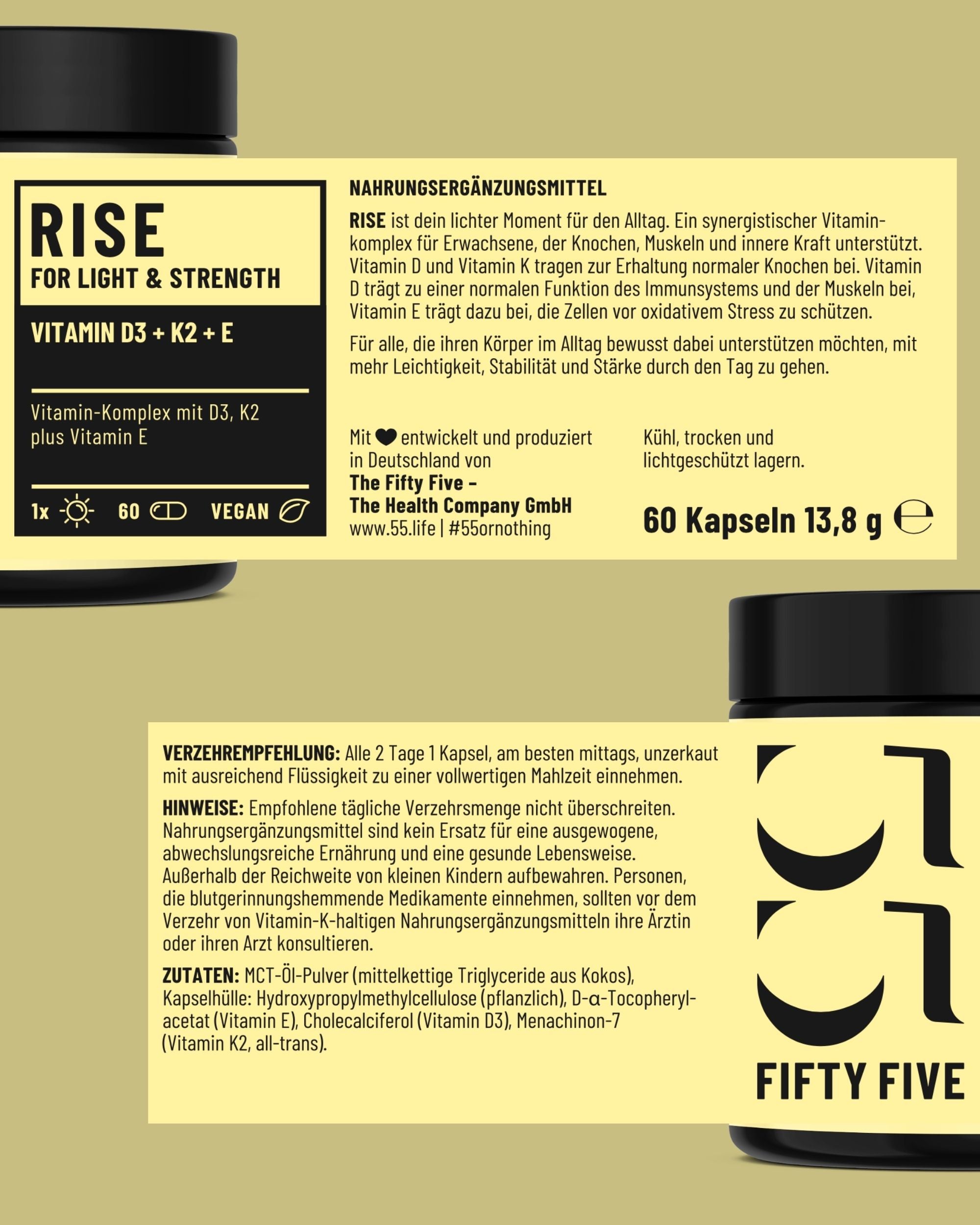
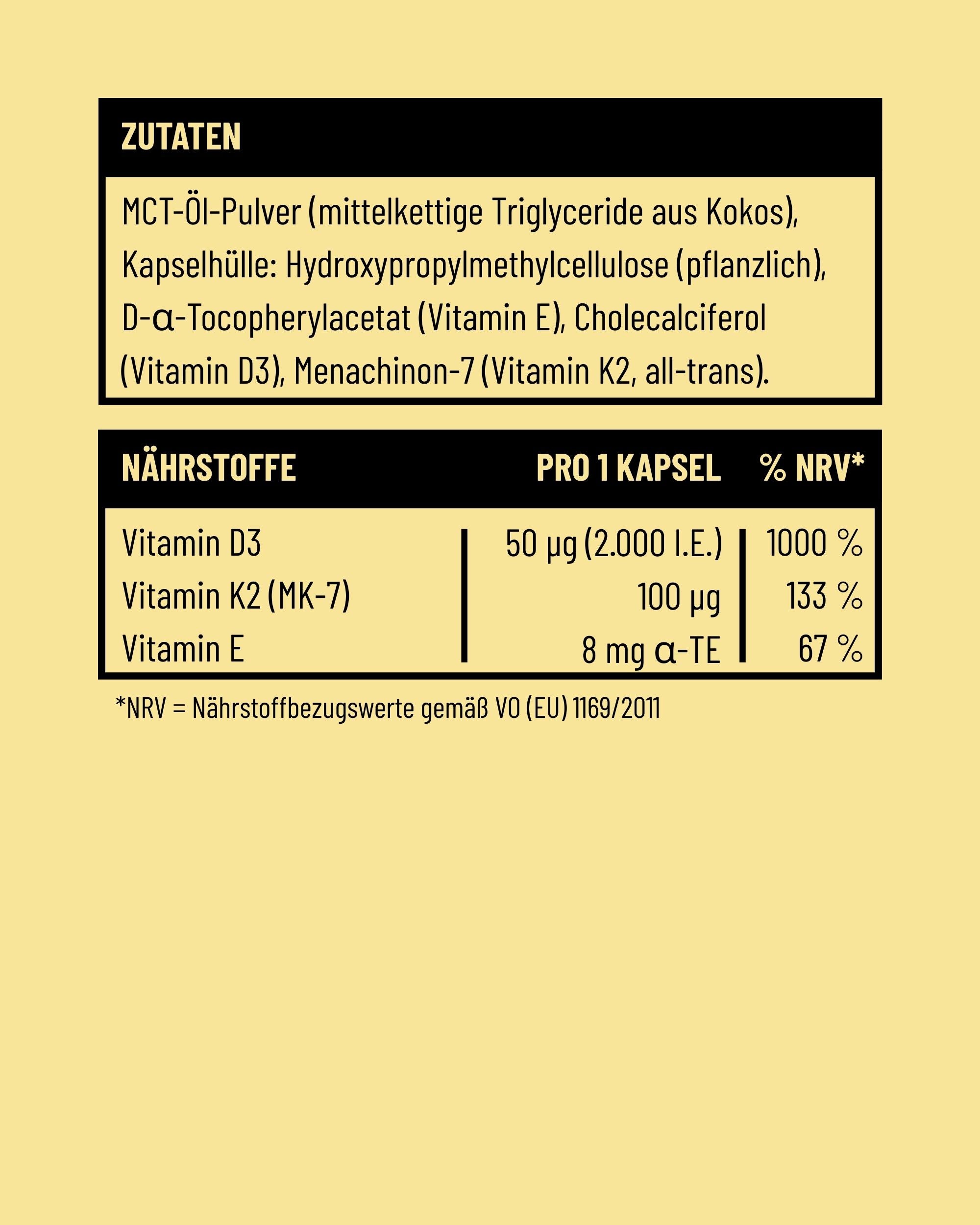
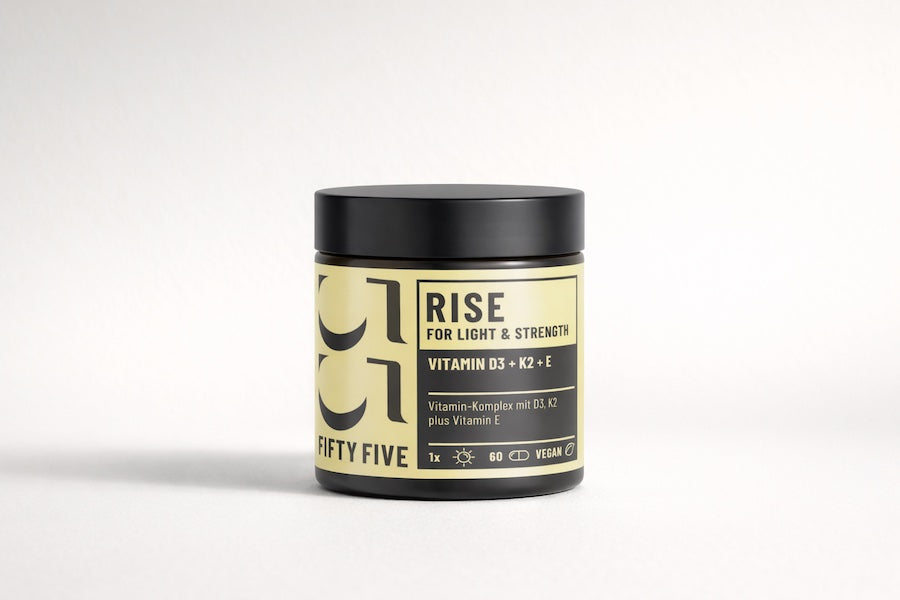
RISE by Fifty Five contains MCT oil (medium-chain triglycerides) as a carrier in the capsule. MCT oil is a lipid-based carrier that supports the absorption of the fat-soluble vitamins D3, K2, and E directly in the capsule. That makes RISE considerably more flexible in intake timing than a plain D3 powder in an HPMC capsule without a carrier.
The recommendation for RISE: at midday, with or without a meal. The combination of the MCT carrier and a normal midday meal (if available) creates optimal absorption conditions. Fasted is possible, since the MCT carrier is present. More on the product logic in the complete RISE guide.
FAQ
Can I take RISE in the morning?
Yes. The MCT oil carrier in the capsule supports absorption even without a meal. For people whose morning routine is the most reliable intake time, that is a practical option, even though midday with a high-fat lunch creates the theoretically optimal conditions.
What happens if I regularly take vitamin D on an empty stomach?
Without fat and without a lipid carrier, absorption demonstrably drops. Part of the dose is not absorbed. Over a longer time, that can slow the build-up of a sufficient level. Products like RISE, with a lipid carrier (MCT oil in the capsule), reduce this problem considerably.
Should I set the intake day for RISE to a fixed day?
That is a good idea. Taking it every other day is more intuitive for some people when it is linked to a fixed weekday pattern (e.g. Monday, Wednesday, Friday) or to a smartphone calendar. The more ritualized, the fewer lapses.
Can I take RISE together with BASE?
BASE is designed for the morning, RISE for midday. This time separation is not strictly biologically necessary but makes practical sense, since BASE contains no fat-soluble vitamins in critical amounts (vitamins A and E are included in BASE, but in different amounts than RISE). Separate intake is easy to remember and well integrated into the daily routine.
Does coffee or tea affect vitamin D absorption?
Caffeine has no proven direct influence on vitamin D absorption. The decisive criterion is the fat content of the meal, not the drink with it. Black coffee or tea without any fat is no problem.
Disclaimer:
This article is for informational purposes only and does not replace medical advice, diagnosis, or treatment by a physician or pharmacist. The information provided here should not be used for self-diagnosis or self-treatment. Food supplements are no substitute for a balanced, varied diet and a healthy lifestyle. For any health questions or complaints, please always consult a doctor you trust. Fifty Five accepts no liability for any inconvenience or harm resulting from the use of the information presented here.
Sources
- EFSA. Dietary reference values for vitamin D. EFSA Journal 2016;14(10):4547.
- EFSA. Scientific Opinion on the Tolerable Upper Intake Level of vitamin D. EFSA Journal 2012;10(7):2813.
- EFSA. Dietary reference values for vitamin K. EFSA Journal 2017;15(5):4780.
- German Nutrition Society (DGE). D-A-CH reference values – vitamin D.
- Robert Koch Institute (RKI). DEGS – German Health Interview and Examination Survey for Adults (vitamin D status).




Multivitamin for Women: What the Body Really Needs, and When a Standard Product Falls Short
Omega-3 for Women: What DHA and EPA Do in Every Life Stage
Share: