


Mid-October to the end of March: during this time, the sunlight in Germany and similar northern latitudes is not sufficient for the body to produce meaningful amounts of vitamin D. That applies to northern Germany just as much as to Bavaria. It is not a question of how much time someone spends outside.
According to current studies, more than 50 percent of the population in Germany shows a vitamin D level that is too low in winter. That is no fringe phenomenon and no personal weakness; it is a direct consequence of the latitude we live at.
Why sunlight does not work in winter
Vitamin D is created in the skin when UV-B radiation hits it. This reaction requires a certain UV-B share in the sunlight, which depends on the angle of the sun. The lower the sun sits, the more UV-B is filtered out by the atmosphere.
From a latitude of about 50 degrees north (roughly Frankfurt am Main), the sun sits so low from October through March that practically no UV-B radiation reaches the ground anymore. In Hamburg or Berlin, at 53 to 55 degrees north, this window starts even earlier.
What does that mean concretely? Even someone who walks outside for two hours every day produces no vitamin D in December at these latitudes. The intensity is missing, not the exposure time.
The "sun account": what builds up in summer and how quickly it is used up
In summer, the body can store vitamin D in fat tissue and the liver; these reserves are slowly used up over the winter. That sounds like a buffer, and it is one, but in most cases it is not enough to bridge the entire winter.
How quickly the level drops depends on the starting position in the fall. People who spend the summer mostly indoors or consistently use sunscreen start the winter with a lower reserve. People with excess weight have a larger share of fat tissue in which vitamin D is bound and less available for active metabolism.
A measurement in October, before the winter decline begins, gives the most realistic overview of your actual status.
Who is particularly at risk in winter
Fundamentally, the entire share of the population that gets hardly any sun exposure in winter is affected. Some groups are structurally more at risk:
Working people who are in the office from early to late and rarely experience daylight. Older people who spend less time outside and whose skin produces vitamin D less efficiently anyway. People with darker skin, whose melanin acts as a UV filter even in summer. Infants and small children, for whom the German Nutrition Society (DGE) explicitly recommends supplementation. People with conditions of the gastrointestinal tract that influence fat absorption and thus also vitamin D absorption.
Tanning beds: no sensible way out
An obvious question: can tanning beds or a solarium replace winter vitamin D production? The answer is nuanced.
Many commercially available tanning beds emit mostly UV-A, not UV-B. UV-A is responsible for skin tanning but contributes hardly anything to vitamin D production. Only tanning beds with a relevant UV-B share would theoretically have this effect. At the same time, the skin cancer risk rises with regular UV exposure. As a strategy for vitamin D supply, this is not a recommendable path.
Supplementation in winter: when and how much
For most adults in northern latitudes, vitamin D supplementation from October through March makes sense, and for many even year-round. The question is not whether, but how.
1,000 to 2,000 IU daily is the range in which most people without specific risk factors build and maintain a sufficient level. Anyone who knows their current level (blood test) can dose more precisely. Anyone without a value is on the safe side with 1,000 IU daily or 2,000 IU every two days.
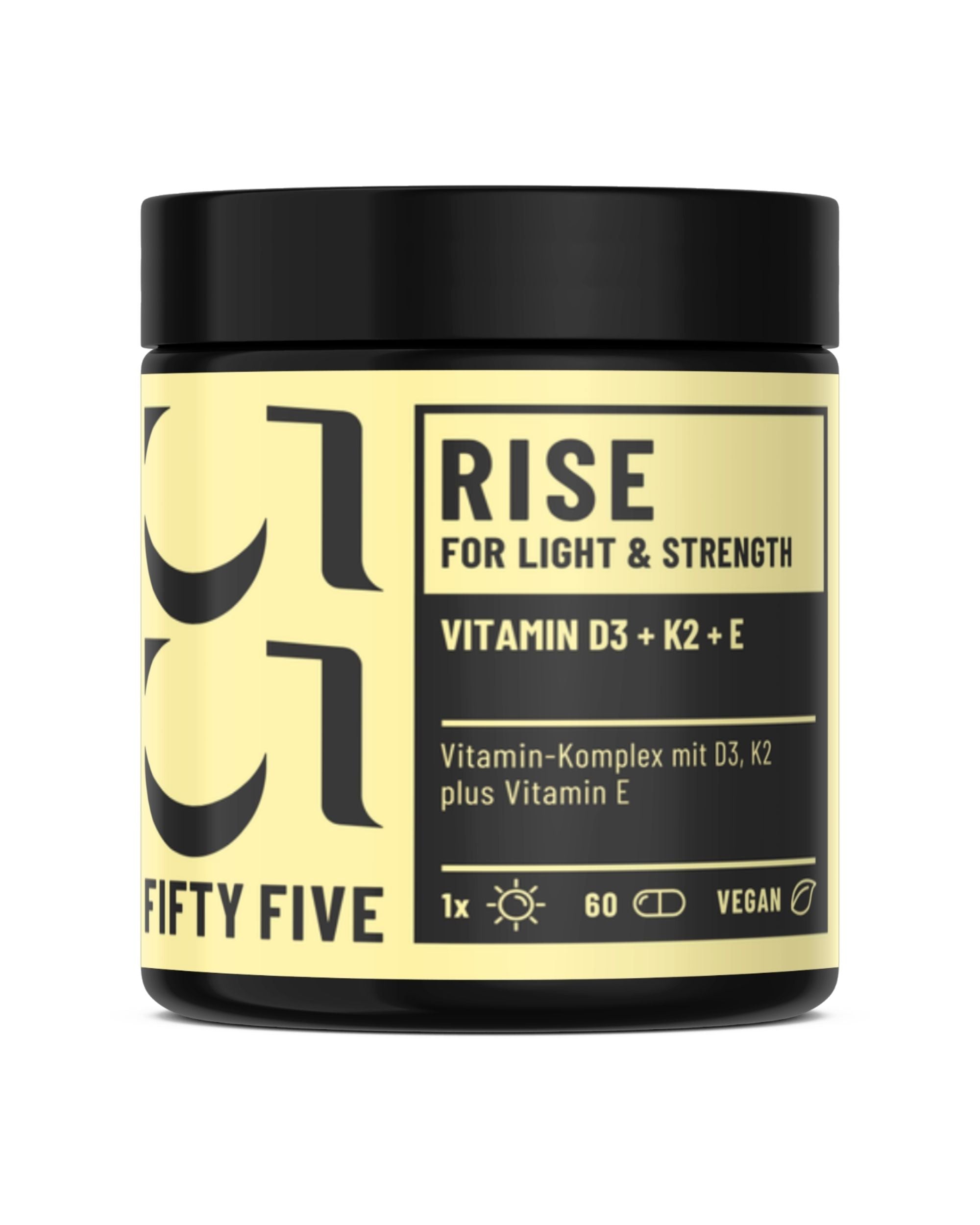
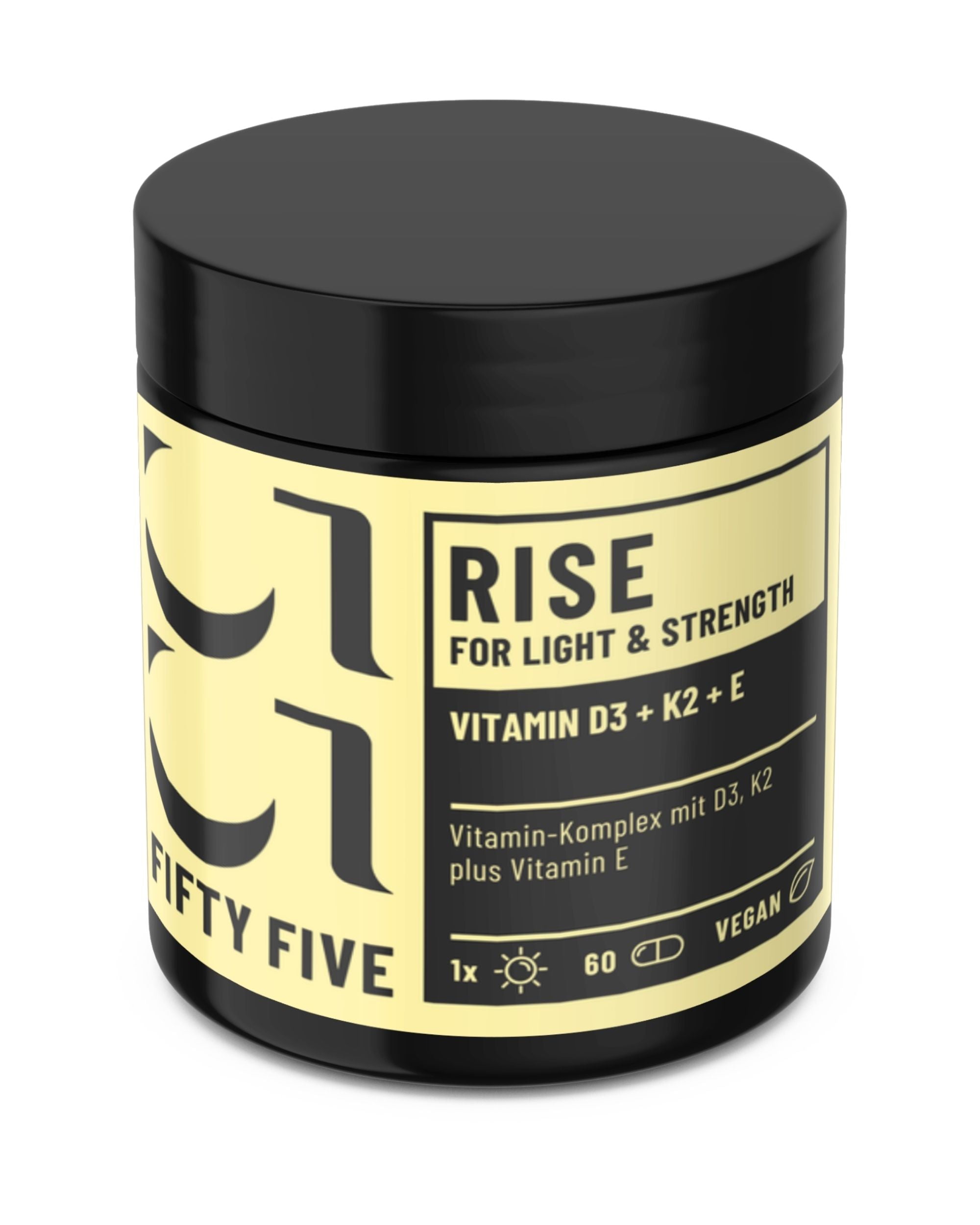
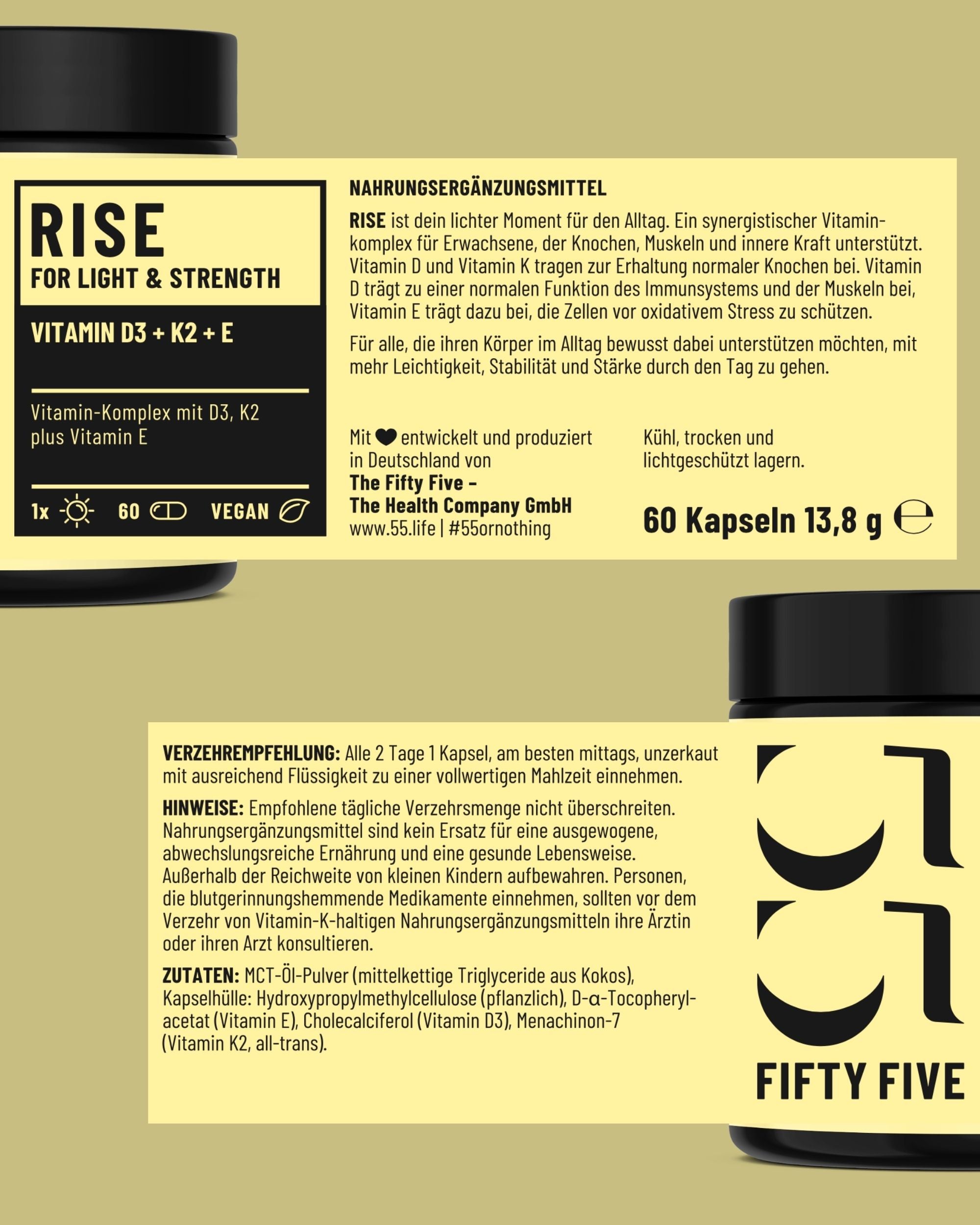
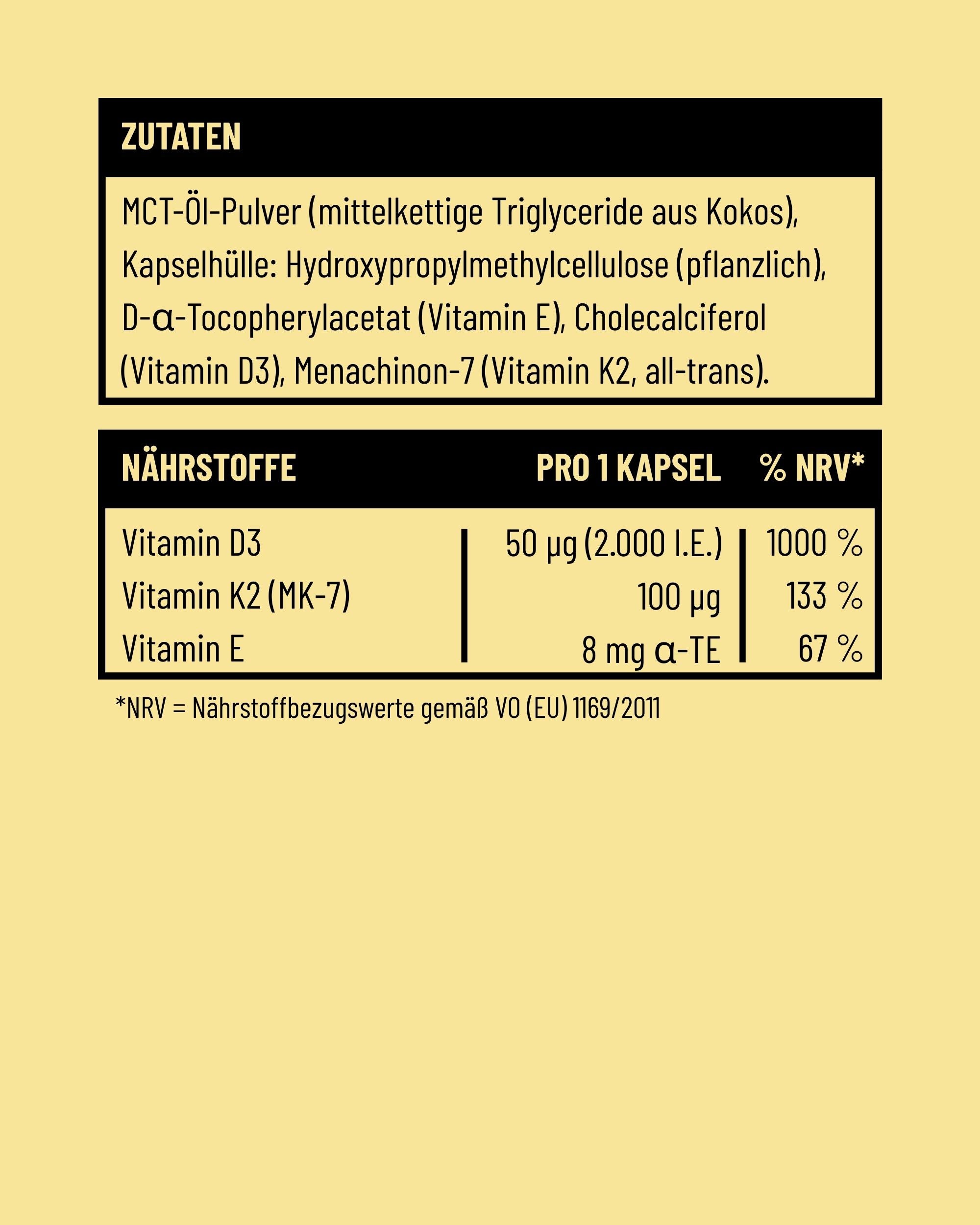
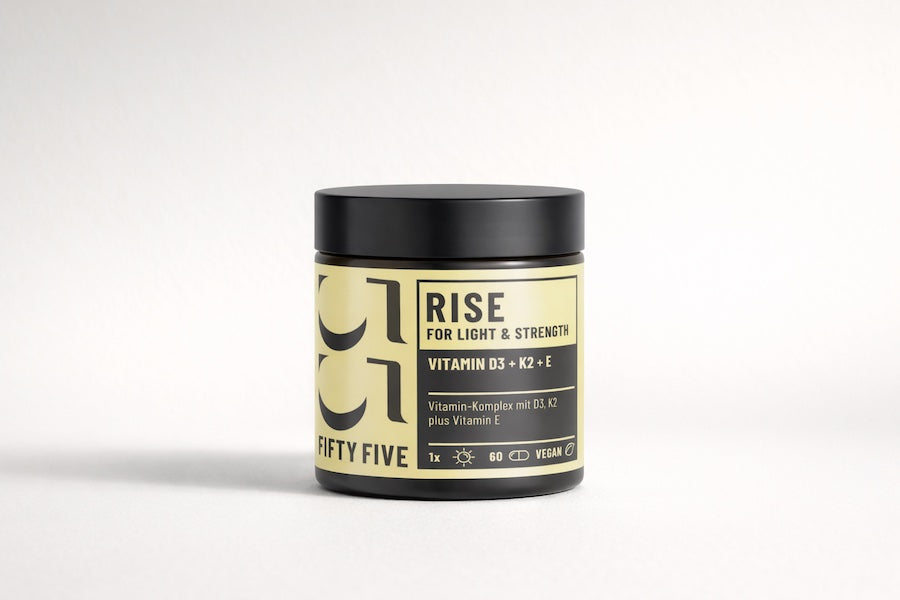
RISE by Fifty Five is designed for exactly this use case: 50 µg of vitamin D3 per capsule, combined with 100 µg of vitamin K2 MK-7 all-trans and vitamin E for the system effect. MCT oil as a carrier ensures good absorption even without a high-fat meal. More on the product logic in the complete RISE guide.
FAQ
Is it enough to soak up sun in summer and take nothing in winter?
For some people, the summer reserve lasts into a mild winter; for many, it does not. Anyone who spends a lot of time outside in summer, has light skin, and does not belong to the risk groups mentioned starts with a good buffer. Whether it lasts the whole winter is most reliably clarified by a measurement in October.
Do I need vitamin D in summer too?
With regular time outdoors, your skin usually produces enough vitamin D from roughly April through September, and supplementation is often unnecessary then. Anyone who spends the summer mostly indoors, uses sunscreen consistently, or belongs to one of the risk groups mentioned benefits from year-round intake.
Does daylight in winter at least help a little?
Daylight stimulates the day-night rhythm and has positive effects on mood and sleep quality. But it does not produce vitamin D in winter at these latitudes. The UV-B share is missing. So being outside in winter has value, just not for vitamin D supply.
When should I start supplementing in the fall?
By October at the latest. Many nutrition experts recommend starting as early as September, since levels begin dropping again from August. Anyone who knows their starting value and it is already low in the fall should not wait.
Are there foods that deliver vitamin D in winter?
Fatty sea fish (salmon, mackerel, herring) and egg yolk contain vitamin D, but at realistic consumption amounts far too little to cover winter needs. Vitamin D fortified foods (less widespread in Europe than in North America) can make a small contribution.
Can I take vitamin D and magnesium at the same time?
Yes. Magnesium and vitamin D even interact positively: magnesium is involved in the activation of vitamin D in the body. A sufficient magnesium supply thus supports vitamin D function. Anyone combining BASE (mornings), RISE (midday, every two days), and CALM (evenings) has both covered.
Disclaimer:
This article is for informational purposes only and does not replace medical advice, diagnosis, or treatment by a physician or pharmacist. The information provided here should not be used for self-diagnosis or self-treatment. Food supplements are no substitute for a balanced, varied diet and a healthy lifestyle. For any health questions or complaints, please always consult a doctor you trust. Fifty Five accepts no liability for any inconvenience or harm resulting from the use of the information presented here.
Sources
- EFSA. Dietary reference values for vitamin D. EFSA Journal 2016;14(10):4547.
- EFSA. Scientific Opinion on the Tolerable Upper Intake Level of vitamin D. EFSA Journal 2012;10(7):2813.
- EFSA. Dietary reference values for vitamin K. EFSA Journal 2017;15(5):4780.
- German Nutrition Society (DGE). D-A-CH reference values – vitamin D.
- Robert Koch Institute (RKI). DEGS – German Health Interview and Examination Survey for Adults (vitamin D status).






What Belongs in a Good Multivitamin, and Why the Best One Deliberately Leaves Out Three Nutrients
DHA or EPA: What Does What in Your Body?
Share: