


"As a freelancer, you sell your energy and your focus. When the creative pressure rises and deadlines close in, you instinctively reach for the next coffee. But at some point you realize: more caffeine doesn't make you more creative, just jumpier."
Julia is 47, a freelance graphic designer, and loves the freedom of self-employment. But freedom also means there is no one to turn off the lights in the evening. In her Hamburg studio, she creates complex branding concepts that demand an eye for the smallest details. Julia's story is about how she learned that true creativity does not emerge under high pressure, but in a state she now calls "clear calm."
When the filter in your head clogs up
"My day often has no clear boundary between work and private life," Julia says. "When a project is in its final phase, there is no end. I used to sit at the screen deep into the night, comparing typefaces and correcting details."
For her, the problem was never a lack of ideas, but the feeling that her perception was becoming "pixelated." "I was awake, but my focus was completely scattered. I lost myself in unimportant details instead of seeing the big picture. My head felt like a noisy photo. You can still make something out, but the brilliance is gone."
The end of the espresso strategy
Like many in the creative industry, Julia looked for salvation in caffeine. "My answer to creative blocks used to be the third or fourth espresso. That worked for half an hour, but then came that nervous jitter. I was wide awake but so restless inside that I couldn't draw a clear line anymore. Neither on paper nor in my head."
That "jittery energy" is poison for any creative process that depends on intuition. Julia realized: she did not need a stimulant that made her even more nervous, but something that turns down the background "noise."
Searching for the right wavelength
Looking for a solution that would not leave her completely overwired, she came across the principle of foundational supply. "I didn't want any 'brain doping' stuff. I just wanted to make sure my system has the basic building blocks to absorb the daily stress."
She started with BASE. "What appealed to me was this understated logic: B vitamins and zinc for the head, but without any artificial kick. After a few weeks, I noticed my energy level becoming more stable. It was no longer that constant up and down, but an even, calm working energy."
Sharpening focus and starting the evening
A decisive turning point for Julia was the realization that she also has to end her workday mentally. "When you spend the whole day creating, your head keeps glowing in the evening. It's like never switching off the camera and letting the sensor overheat."
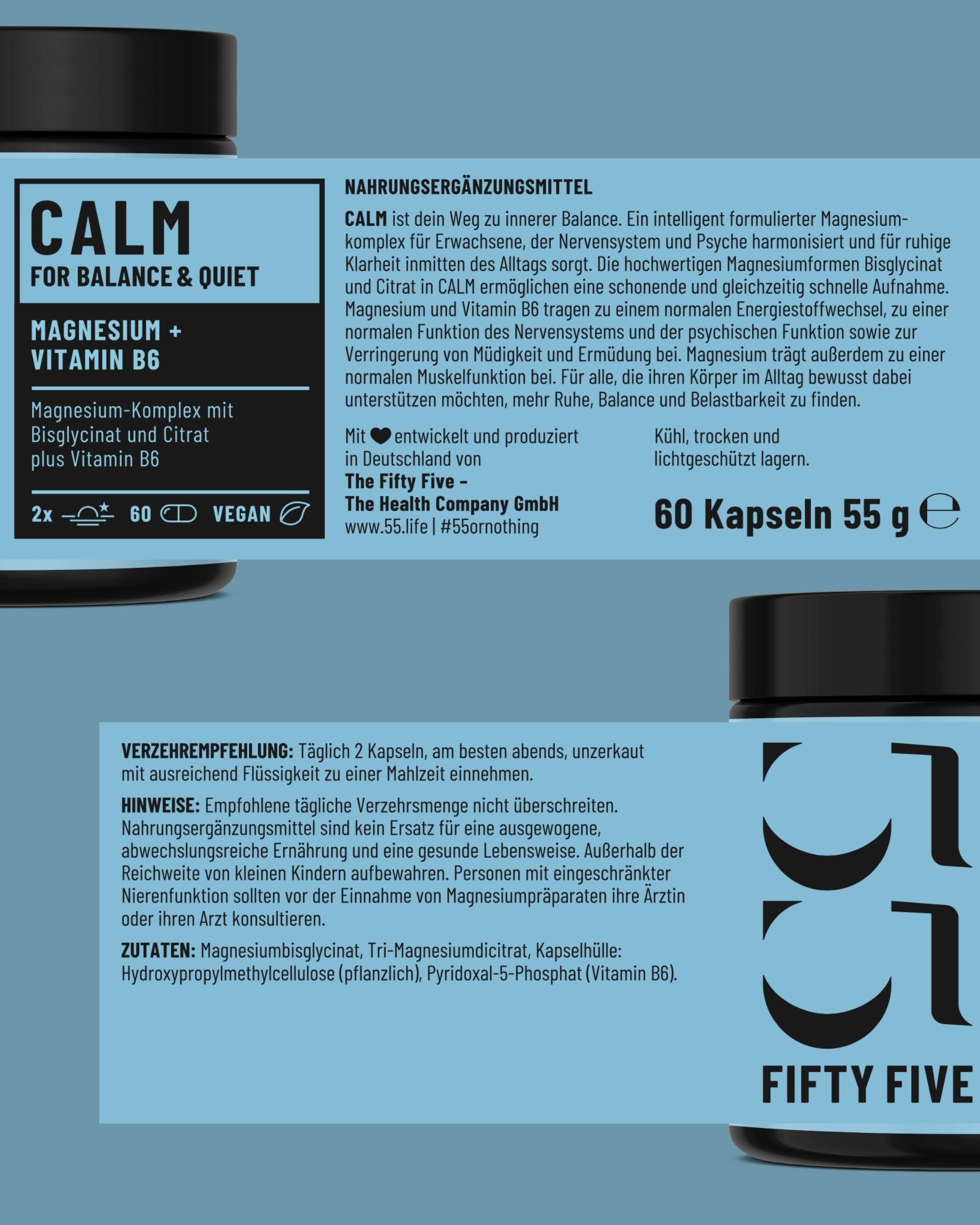
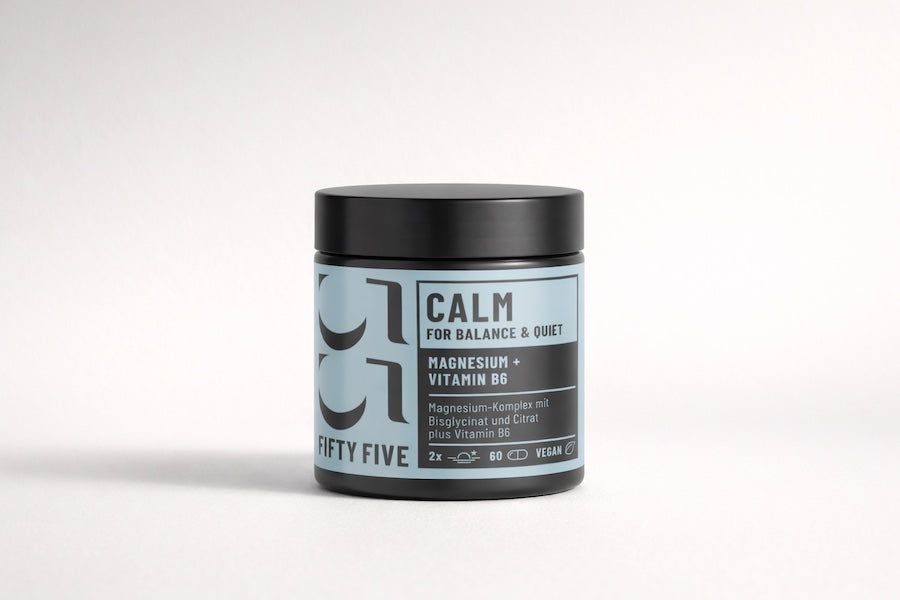
This is where CALM became her most important tool. "I usually take it in the late afternoon now. It helps me release that inner pressure. It feels like sliding the contrast dial in your head back to a normal level. I can leave the work in the studio and no longer carry the projects onto the couch in my mind."
The new creative flow
Today, Julia's routine is a fixed part of her workday. "Good design needs space. You can't develop good concepts when you constantly feel rushed."
She has learned that she works more efficiently when she does not needlessly whip her nerves. "Since I started using BASE in the morning for everyday structure and CALM for winding down in the afternoon, my workflow feels much more natural. I'm focused but relaxed. My creative flow is no longer the exception, it's the standard."
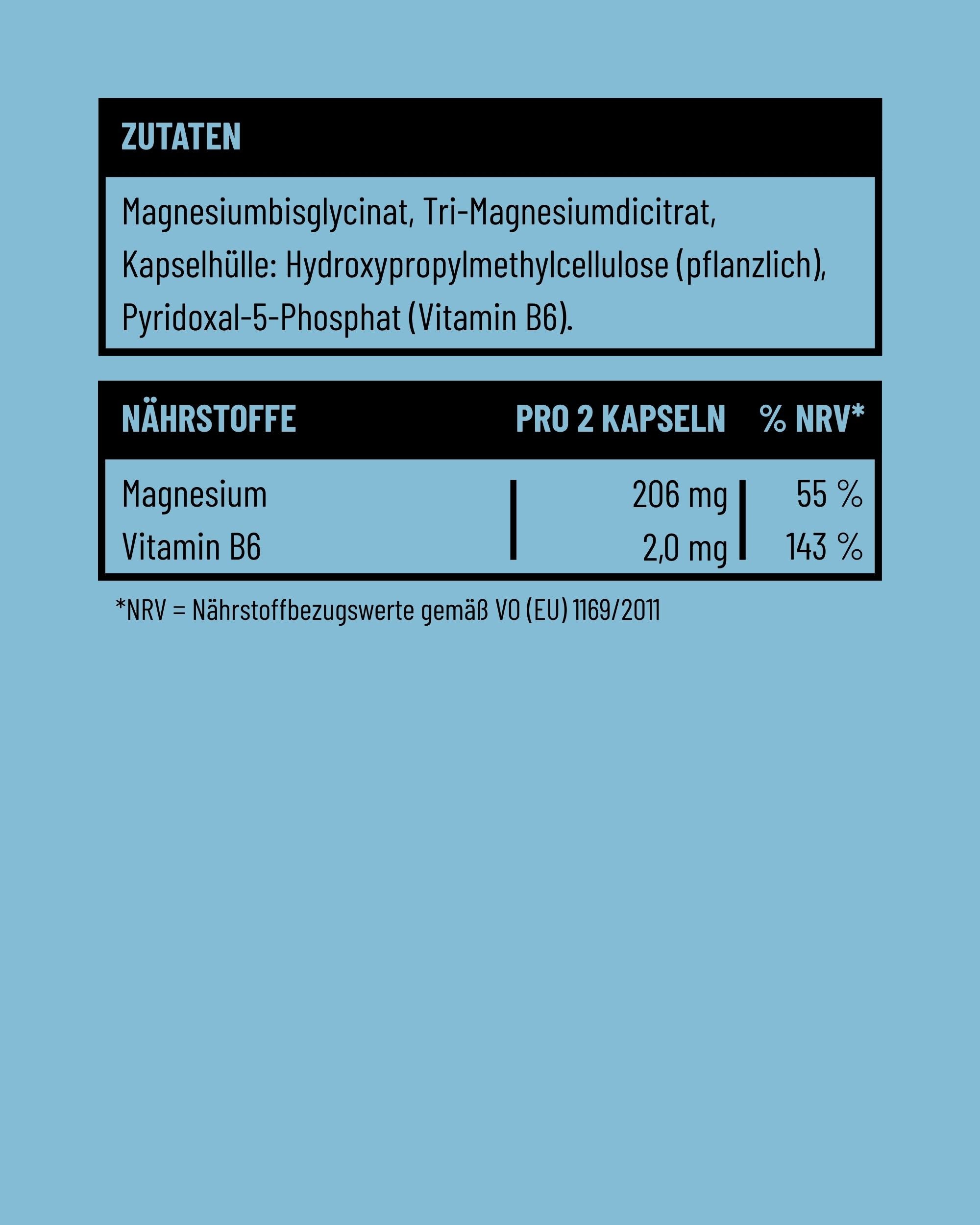
Fifty Five Insight: Creative work is high-performance sport for the mind. The constant switching between detail work and big concepts consumes massive resources. Julia uses a smart synergy here: while the B vitamins in BASE support normal psychological function and energy metabolism, the magnesium bisglycinate in CALM helps dampen the "background noise" of the nerves. That enables exactly what Julia describes as "clear calm": focus without nervous tension.
Julia's takeaway: "Protect your most important tool"
"My advice to everyone who works creatively: your mind is your most important tool. Far more important than the latest software or the fastest hardware. Treat it that way. Don't invest in the next energy shot, invest in your own foundation. A stable base of micronutrients is, for me, the key to delivering with joy and a clear eye every single day."
→ To the complete multivitamin guide
→ To the complete magnesium guide
Disclaimer:
This article is for informational purposes only and does not replace medical advice, diagnosis, or treatment by a physician or pharmacist. The information provided here should not be used for self-diagnosis or self-treatment. Food supplements are no substitute for a balanced, varied diet and a healthy lifestyle. For any health questions or complaints, please always consult a doctor you trust. Fifty Five accepts no liability for any inconvenience or harm resulting from the use of the information presented here.








DHA or EPA: What Does What in Your Body?
Magnesium Side Effects: Avoiding Diarrhea & Interactions
Share: