


Vitamin D is fat-soluble. That has an advantage: the body can store it in fat tissue and the liver and draw on these reserves even in sun-poor times. But it also has a downside: excess vitamin D is not simply excreted like water-soluble vitamins. It accumulates.
The good news first: a vitamin D overdose from usual supplementation amounts (800 to 2,000 IU daily) is rare in practice for healthy adults. An overdose from sun exposure is not possible. It becomes problematic with permanently very high dosages that lie well above what is recommended in normal baseline supply.
What triggers a vitamin D overdose
The mechanism of vitamin D toxicity runs via calcium. Excessive vitamin D increases calcium absorption in the gut so strongly that the calcium level in the blood rises above the normal range. This condition is called hypercalcemia, and it is the actual problem, not vitamin D itself.
Symptoms of hypercalcemia from a vitamin D overdose are:
Nausea, vomiting, and loss of appetite in early phases. Frequent urination and strong thirst (the body tries to excrete calcium via the kidneys). Muscle weakness and exhaustion. Confusion and concentration problems in advanced cases. With persistent hypercalcemia: kidney stones and, in the worst case, kidney damage from calcium deposits.
At what dose does it become problematic?
The EFSA has set a tolerable upper level (UL) of 100 µg (4,000 IU) daily for adults. This value lies well above common supplementation amounts of 800 to 2,000 IU daily.
Problematic overdoses arise in practice almost exclusively through:
Very high self-dosing over very long periods (permanently 10,000 IU daily or more without medical supervision). Errors with high-dose medical products (e.g. confusion over drop concentration). Very rare individual hypersensitivities.
At 2,000 IU daily over months or years, no toxicity usually arises in healthy adults without specific risk factors. This is documented by numerous studies.
Risk groups for overdose
Certain people are more sensitive to higher vitamin D dosages:
People with hypercalcemia or a history of kidney stones should not high-dose vitamin D without medical supervision, since calcium metabolism is already impaired.
People with kidney disease, since the kidneys play a central role in the activation of vitamin D and the excretion of calcium.
People with sarcoidosis-like granulomatous conditions, in which vitamin D can be activated in the tissue itself, without the usual regulation by the kidneys.
Interactions with medications
Vitamin D interacts with some medications in a relevant way:
Thiazide diuretics (a group of blood-pressure-lowering agents) reduce calcium excretion via the kidneys. In combination with high-dose vitamin D, the risk of hypercalcemia rises.
Corticosteroids can influence vitamin D activation and effect. With long-term corticosteroid therapy, vitamin D supply is particularly relevant, and at the same time the dosage should be adjusted.
Orlistat (a fat blocker) and cholestyramine (a bile acid binder) influence the absorption of fat-soluble vitamins, including vitamin D.
Anyone permanently taking one of these medications should coordinate vitamin D supplementation with their treating physician or pharmacy.
How to supplement safely
The most obvious safety measure is not to go significantly above 2,000 IU daily without knowing your own level. Anyone who knows their 25-OH vitamin D blood value can dose more precisely and know whether they even need to top up.
Anyone dosing higher (4,000 IU daily or more) should have the value checked every 3 to 6 months.
The combined intake with vitamin K2 is a further argument from a safety perspective: K2 activates matrix Gla protein, which inhibits calcium deposits in vessels. With higher D3 supplementation, K2 is not optional.
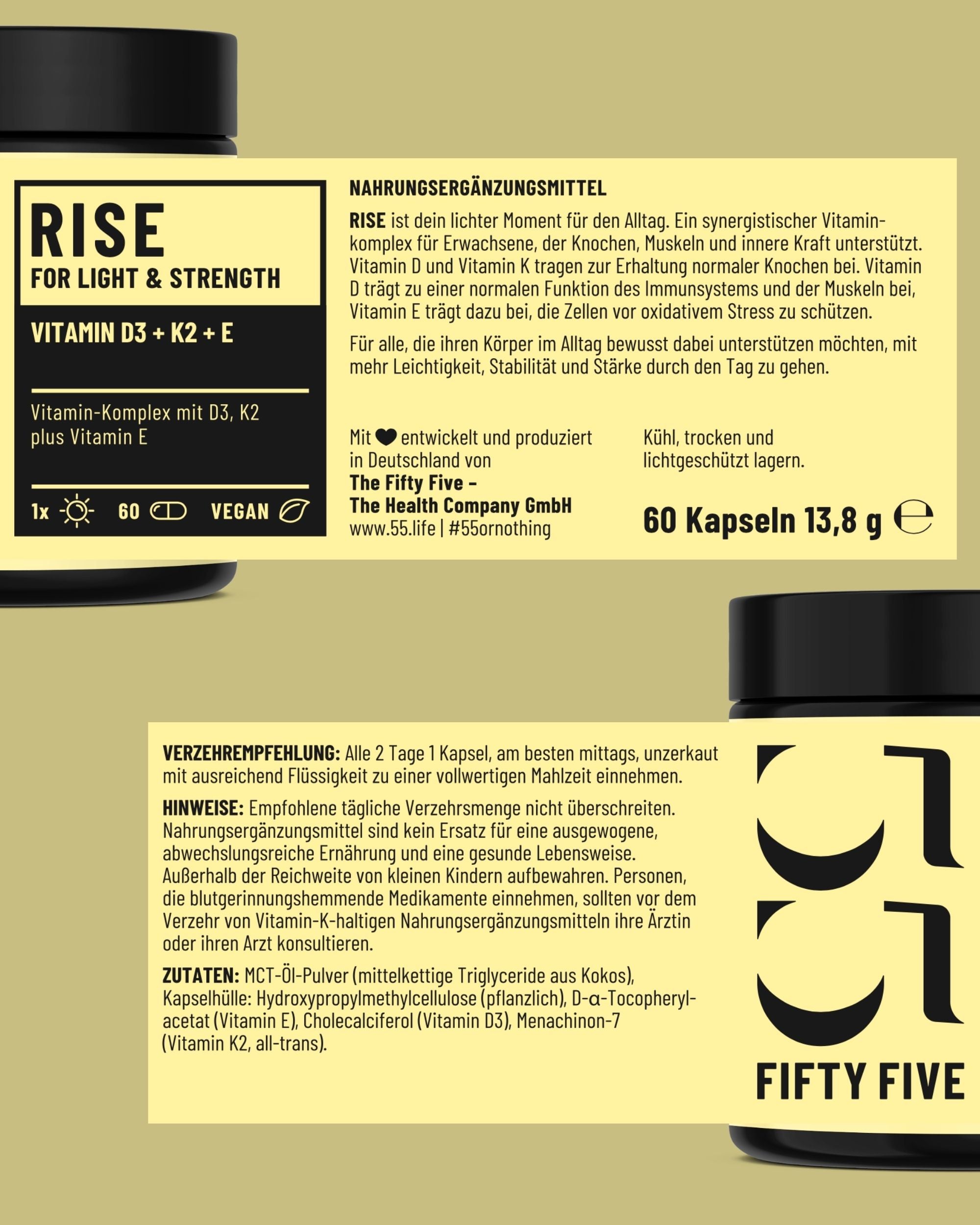
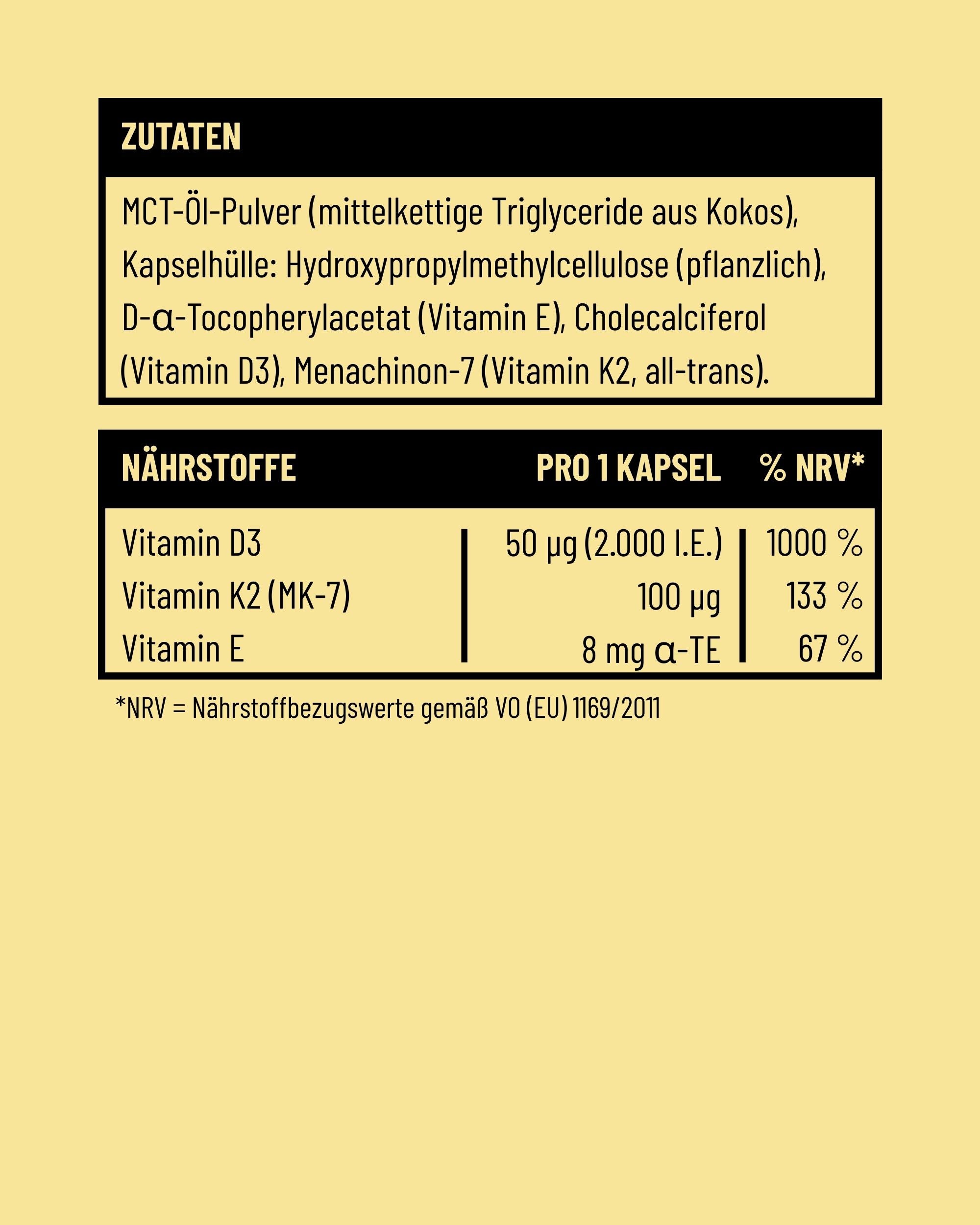
RISE by Fifty Five, with 50 µg of vitamin D3 every two days (equivalent to 25 µg daily, 1,000 IU), is deliberately formulated below the BfR recommendation framework of 20 µg daily. That makes RISE suitable for general baseline supply without going into problematic dosage ranges. More on the dosing logic in the complete RISE guide.
FAQ
Can you get a vitamin D overdose from sun exposure?
No. The body regulates vitamin D synthesis via the skin itself. The excess vitamin D precursor molecule is converted into inactive breakdown products under strong sun exposure. An overdose from sunlight is not possible.
How long does it take for an overdose to break down?
Vitamin D is fat-soluble and breaks down slowly. With an overdose with mild symptoms, it can take several weeks until the level is back in the normal range. With severe toxicity and pronounced hypercalcemia, medical treatment is necessary.
Should I pause vitamin D when I travel to a sunny vacation?
For a vacation break of 1 to 2 weeks, that is not strictly necessary, especially if the dosage is in the normal range. For longer stays with intense sun exposure, it can make sense to reduce the dosage. Anyone who knows their level can judge that more precisely.
Do you notice a mild overdose yourself?
Mild hypercalcemia often remains symptom-free and only shows up in the blood test. More distinct symptoms like nausea, strong thirst, or muscle weakness are signs that something is wrong. Anyone who notices these symptoms while taking high-dose vitamin D should have it evaluated.
Are children more susceptible to vitamin D toxicity?
Yes. For children and infants, considerably lower dosage recommendations apply. High-dose vitamin D products for adults are not suitable for children. For infants, vitamin D is recommended in specific children's dosages (e.g. vitamin D drops per pediatric recommendation).
Disclaimer:
This article is for informational purposes only and does not replace medical advice, diagnosis, or treatment by a physician or pharmacist. The information provided here should not be used for self-diagnosis or self-treatment. Food supplements are no substitute for a balanced, varied diet and a healthy lifestyle. For any health questions or complaints, please always consult a doctor you trust. Fifty Five accepts no liability for any inconvenience or harm resulting from the use of the information presented here.
Sources
- EFSA. Dietary reference values for vitamin D. EFSA Journal 2016;14(10):4547.
- EFSA. Scientific Opinion on the Tolerable Upper Intake Level of vitamin D. EFSA Journal 2012;10(7):2813.
- EFSA. Dietary reference values for vitamin K. EFSA Journal 2017;15(5):4780.
- German Nutrition Society (DGE). D-A-CH reference values – vitamin D.
- Robert Koch Institute (RKI). DEGS – German Health Interview and Examination Survey for Adults (vitamin D status).









Taking a Multivitamin Daily: Sensible or Too Much?
Omega-3 for Men: The Underestimated Factor for Heart, Mind, and Performance
Share: