

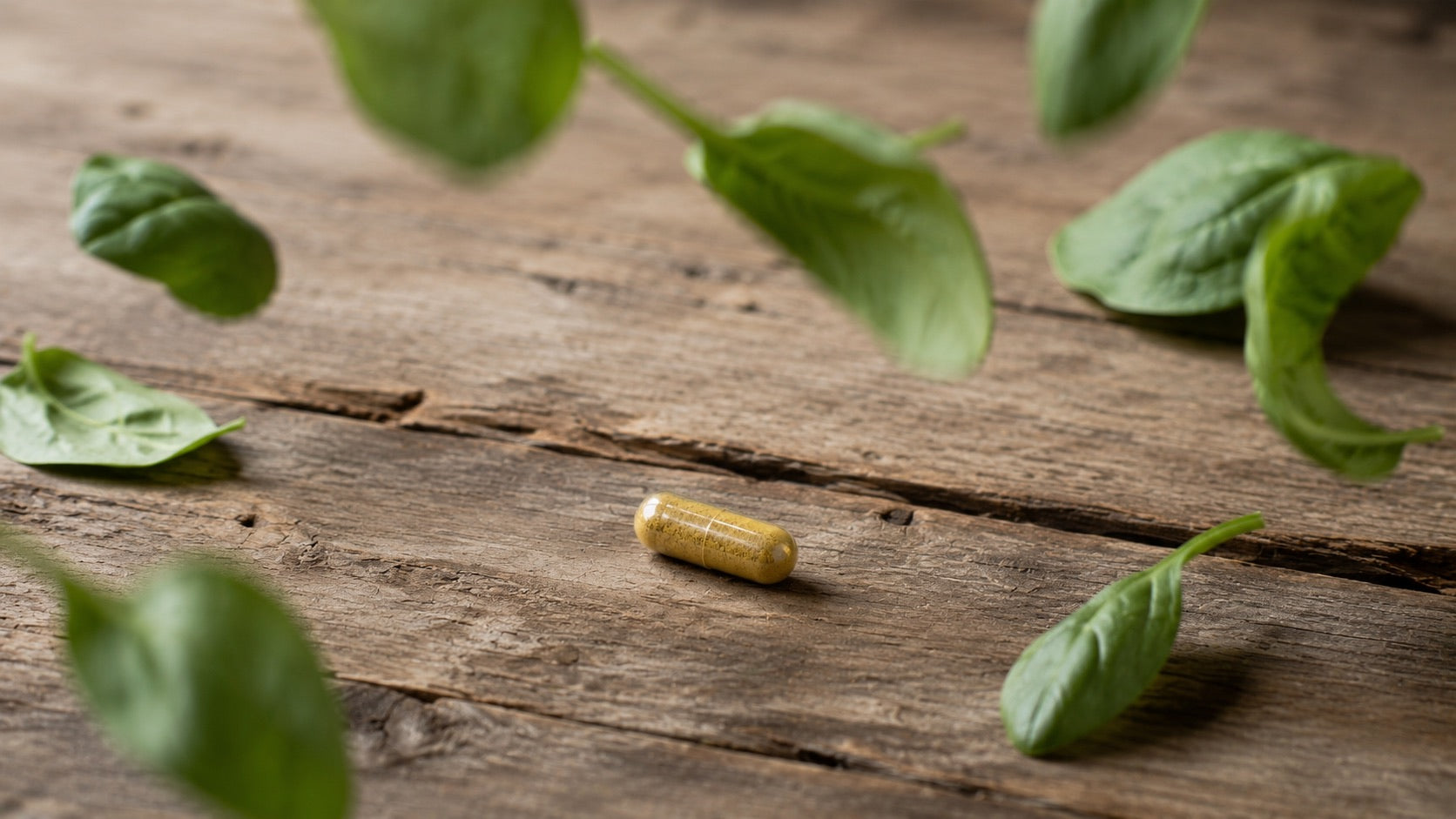
Anyone who lives vegan eats more consciously than most and often considerably more balanced than the average meat eater. Still, there are nutrients that are structurally hard to cover in a fully plant-based diet: not because a vegan diet is incomplete, but because certain nutrients occur concentrated in animal foods or are present there in forms the body can use directly.
Vitamin B12: the only non-negotiable
Vitamin B12 occurs in meaningful amounts exclusively in animal foods. Anyone who eats no animal protein and does not supplement will sooner or later develop a deficiency. B12 deficiency has serious consequences: it can cause irreversible nerve damage and affects blood formation.
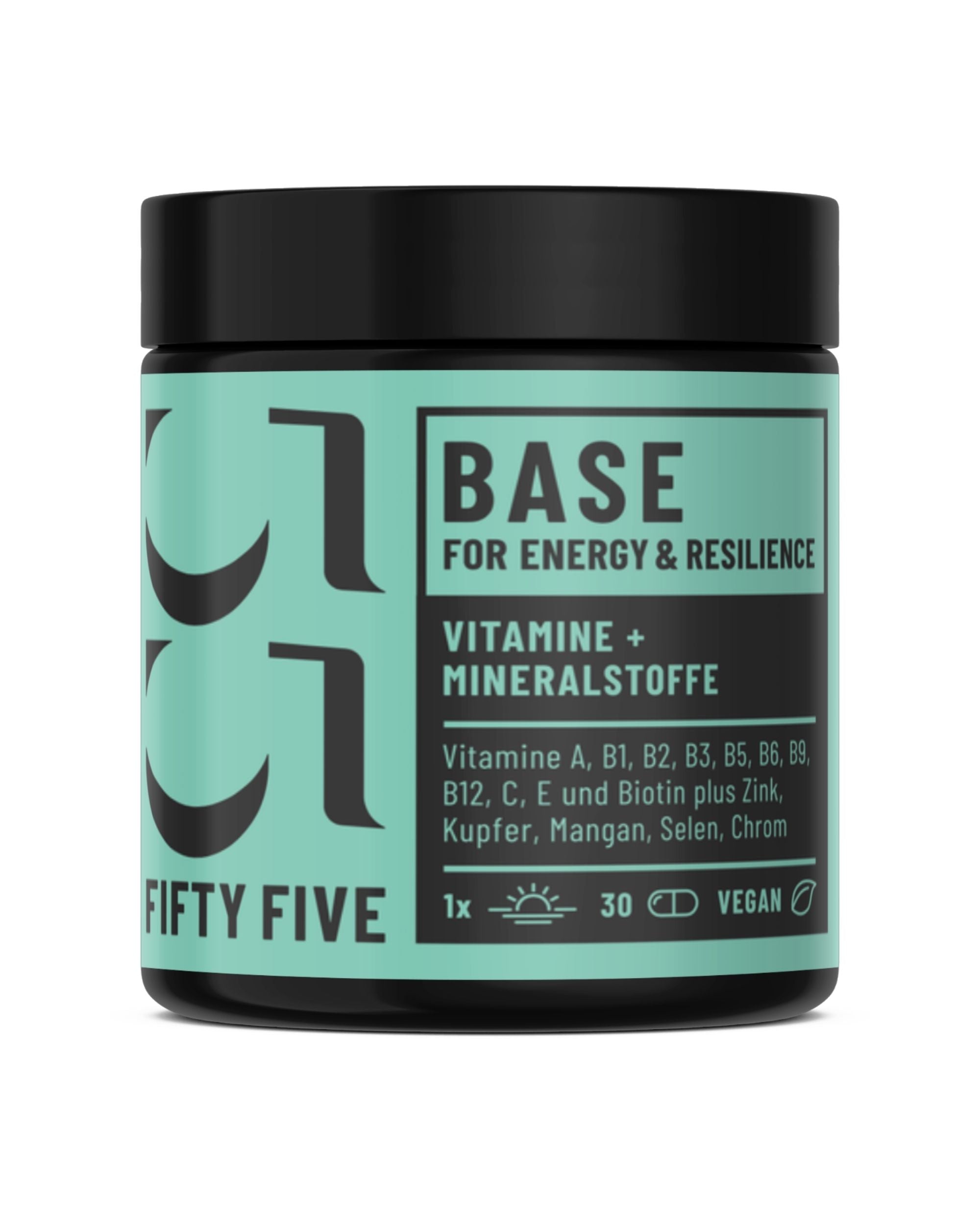
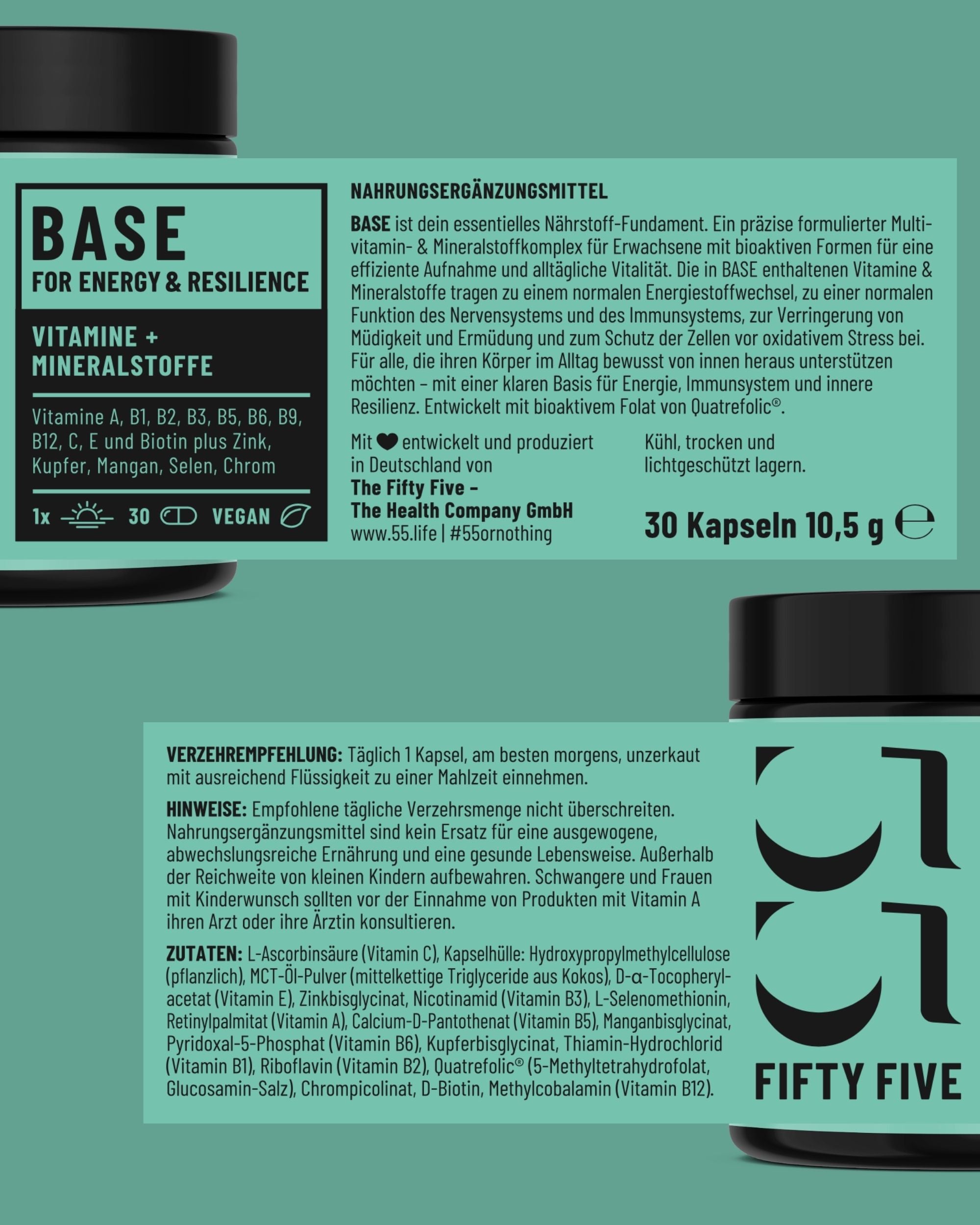
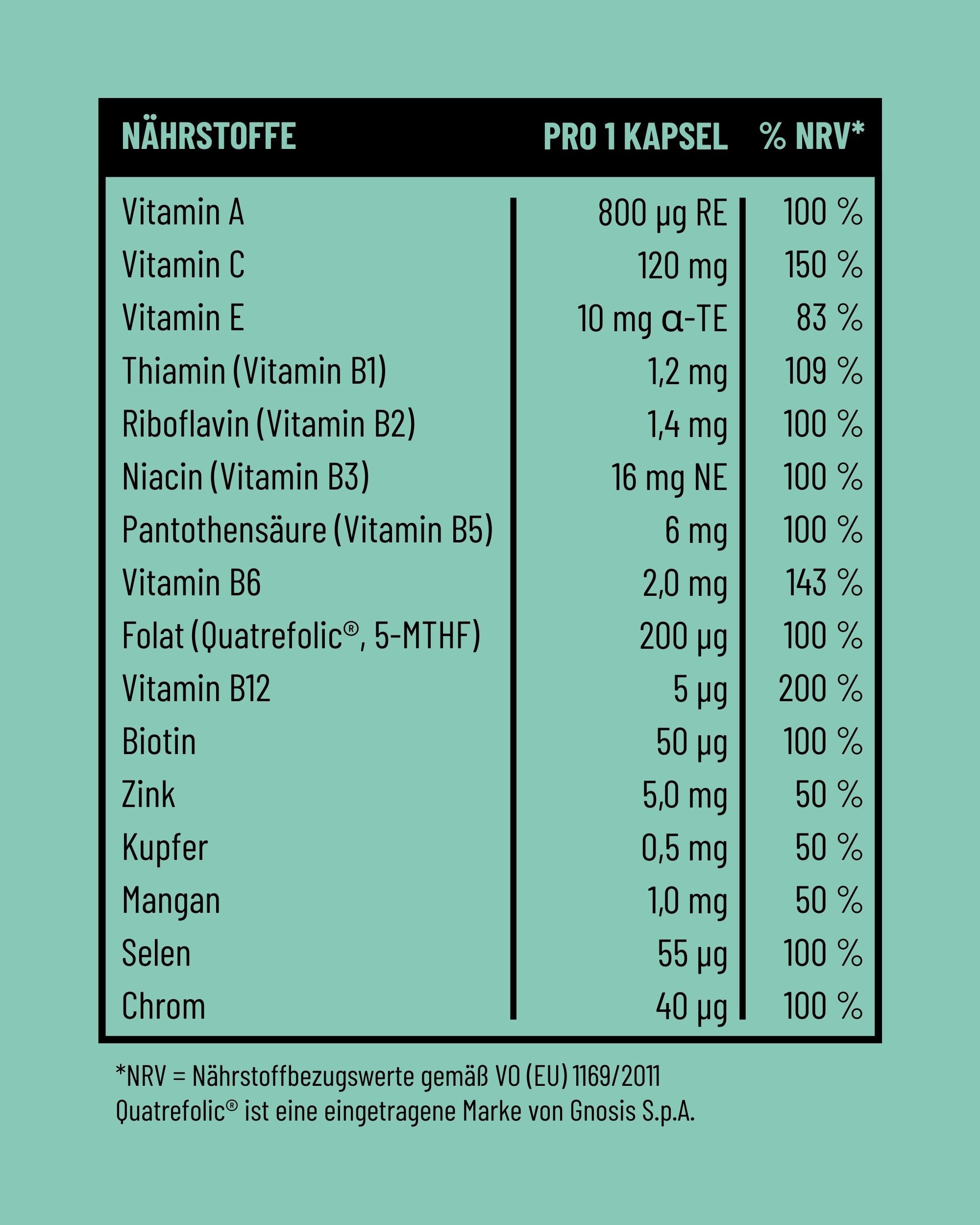
BASE by Fifty Five contains vitamin B12 in the form of methylcobalamin, the bioactive, directly usable form. Cyanocobalamin, the cheaper variant, has to be converted by the body first. With methylcobalamin, this step is unnecessary.
Vitamin D3: not in the multivitamin, but important
Vitamin D is a prohormone that the body can synthesize itself through sunlight exposure. In the reality of northern latitudes, little sun, lots of time indoors, winter months from October through April with hardly any UV-B radiation, that is not enough for most people. This applies entirely independently of diet. BASE deliberately contains no vitamin D3. RISE by Fifty Five covers D3 and K2 as a standalone supplement. Fully vegan formulated.
Omega-3 / DHA and EPA: from algae, not from fish
Plant omega-3 sources like flaxseed or walnuts deliver ALA, a short-chain omega-3 fatty acid that the body converts only inefficiently into DHA and EPA. DHA and EPA are the forms that are immensely relevant for brain and heart function. BASE contains no omega-3. PULSE by Fifty Five covers that, with premium algae oil (DSM Lifes60®), 100% vegan. That is the direct source from which fish also get their omega-3.
Iron: important, but not a case for a standard multivitamin
Iron from plant sources is absorbed less well than iron from animal sources. Vegans more frequently have lower iron levels, especially menstruating women. BASE contains no iron. That is a deliberate decision: iron has a real overdose risk and should only be supplemented in a targeted way once a deficiency has been determined.
Iodine: frequently forgotten
In a vegan diet, iodine comes mainly from iodized salt and algae. Anyone who eats few processed foods and consumes no iodine-containing algae can develop gaps. BASE contains no iodine, a blind spot that vegan users should definitely keep in mind.
Zinc: keeping bioavailability in view
Zinc from plant sources is inhibited in absorption by phytates in legumes and grains. Vegans therefore sometimes have higher zinc needs. BASE contains zinc bisglycinate, a chelated form that is well absorbed independently of simultaneous phytate intake.
What BASE covers for vegans
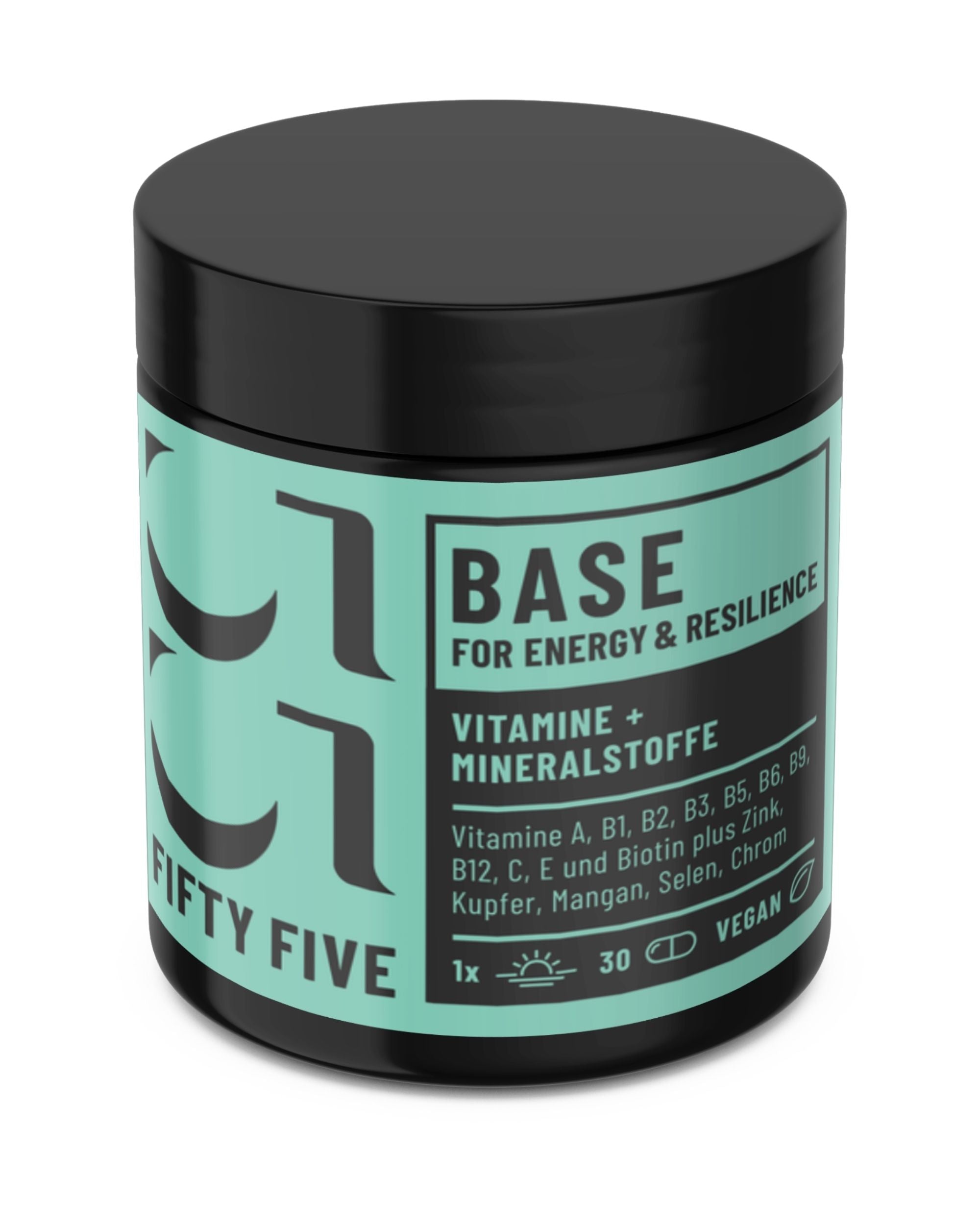
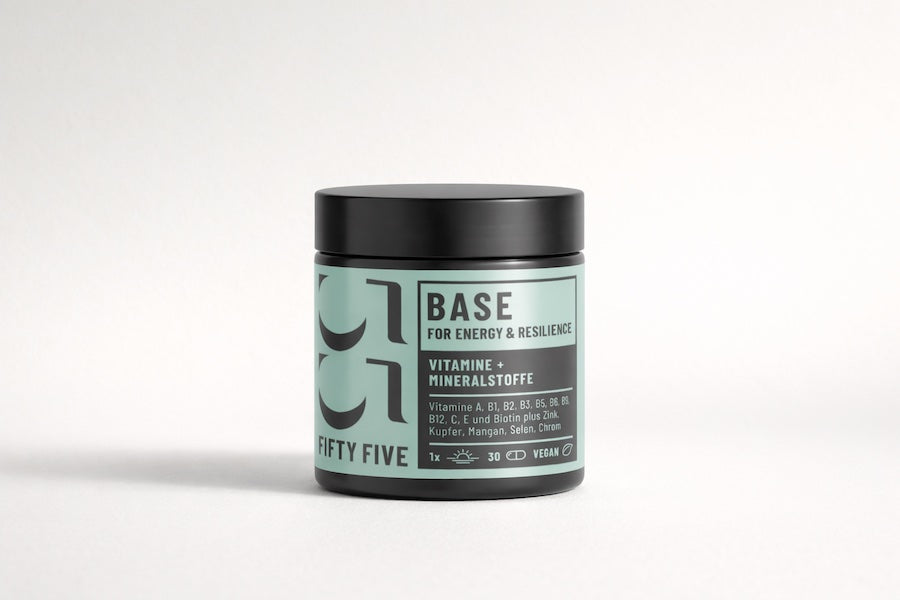
BASE is fully vegan and delivers: B12 as methylcobalamin, the complete B vitamin spectrum in bioactive forms, folate as 5-MTHF, zinc as zinc bisglycinate, selenium, plus vitamins C and E as an antioxidant base.
What BASE does not cover and what vegans should keep in view separately: vitamin D3 (RISE), omega-3/DHA/EPA (PULSE), iodine, and iron (targeted supplementation in case of deficiency).
You can learn more about the multivitamin formulation in the multivitamin guide.
FAQ
Is a multivitamin enough for vegans?
As a baseline supply for most micronutrients, yes. But it does not cover all specific supply gaps; in particular, D3, omega-3, and iodine should be considered separately.
Is the B12 in a multivitamin sufficient for vegans?
For ongoing supply, generally yes, provided your B12 level has not already dropped considerably. Anyone who does not know their status should do a one-time blood test.
What is the difference between methylcobalamin and cyanocobalamin?
Methylcobalamin is the bioactive form of B12 that the body can use directly. Cyanocobalamin has to be converted first. Both are considered effective, but methylcobalamin is the more directly usable form.
Are all nutrients in BASE vegan?
Yes. BASE contains no animal ingredients. The capsule too is made of HPMC (hydroxypropyl methylcellulose), a plant-based capsule material.
Which supplements do I need as a vegan in addition to BASE?
The most common additions: vitamin D3/K2 (especially in winter, via RISE), omega-3/DHA+EPA (via PULSE), iodine (via iodized salt or a supplement), iron (only with a determined deficiency). A blood panel gives the clearest answer.
Disclaimer:
This article is for informational purposes only and does not replace medical advice, diagnosis, or treatment by a physician or pharmacist. The information provided here should not be used for self-diagnosis or self-treatment. Food supplements are no substitute for a balanced, varied diet and a healthy lifestyle. For any health questions or complaints, please always consult a doctor you trust. Fifty Five accepts no liability for any inconvenience or harm resulting from the use of the information presented here.
Sources
- German Nutrition Society (DGE). D-A-CH reference values for nutrient intake.
- EFSA. Dietary reference values (overview).
- German Federal Institute for Risk Assessment (BfR). Maximum levels for vitamins and minerals in food supplements.
- European Commission. EU Register of nutrition and health claims.
- Robert Koch Institute (RKI). DEGS – German Health Interview and Examination Survey for Adults.


Magnesium Forms Compared: Which One Is Best for You?
Vitamin K2 MK-7: What K2 Really Does in the Body, Bones, Arteries, and the Right Form
Share: