


"During exam weeks I felt like a computer with 50 tabs open at once. I was constantly stressed but completely unproductive. I had to power my system down without losing focus."
Leo is 22, studies business informatics, and knows the "study marathon" of crunch time all too well. In theory, he knows everything about efficient algorithms, but his own biological system regularly overheated during exam season. Leo is not the type to read self-help books for hours. He wants solutions that work, and he uses the tools of his generation to find them.
Tunnel vision with no exit
"During exams, there is only the material and me," Leo says. "I sometimes studied 12 hours straight. The problem wasn't motivation, it was sensory overload." In the evening he lay in bed, physically wiped out, but his head kept writing code. "I couldn't switch off. I was in the zone, but the quality of my work dropped hour by hour."
"Hey ChatGPT, what helps with exam stress?"
Instead of poring over textbooks here too, Leo did what he always does: he asked the AI. "I simply described my symptoms and stress level to ChatGPT and asked what actually helps according to studies. The answer sounded valid to me: magnesium for the nerves, B vitamins for the brain's energy metabolism, and ashwagandha." That was the starting signal to stop keeping himself afloat on energy drinks alone.
The foundation for the study marathon
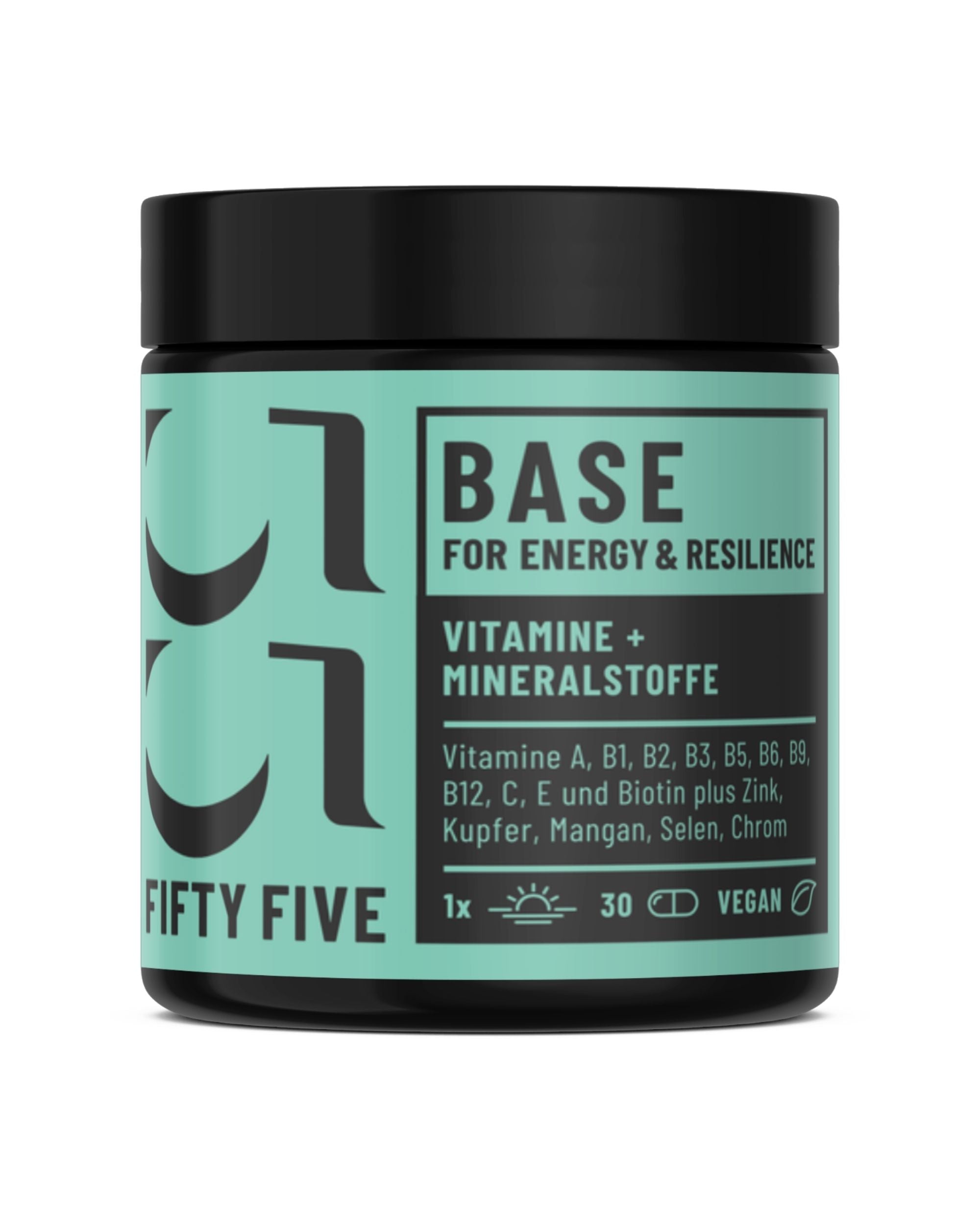
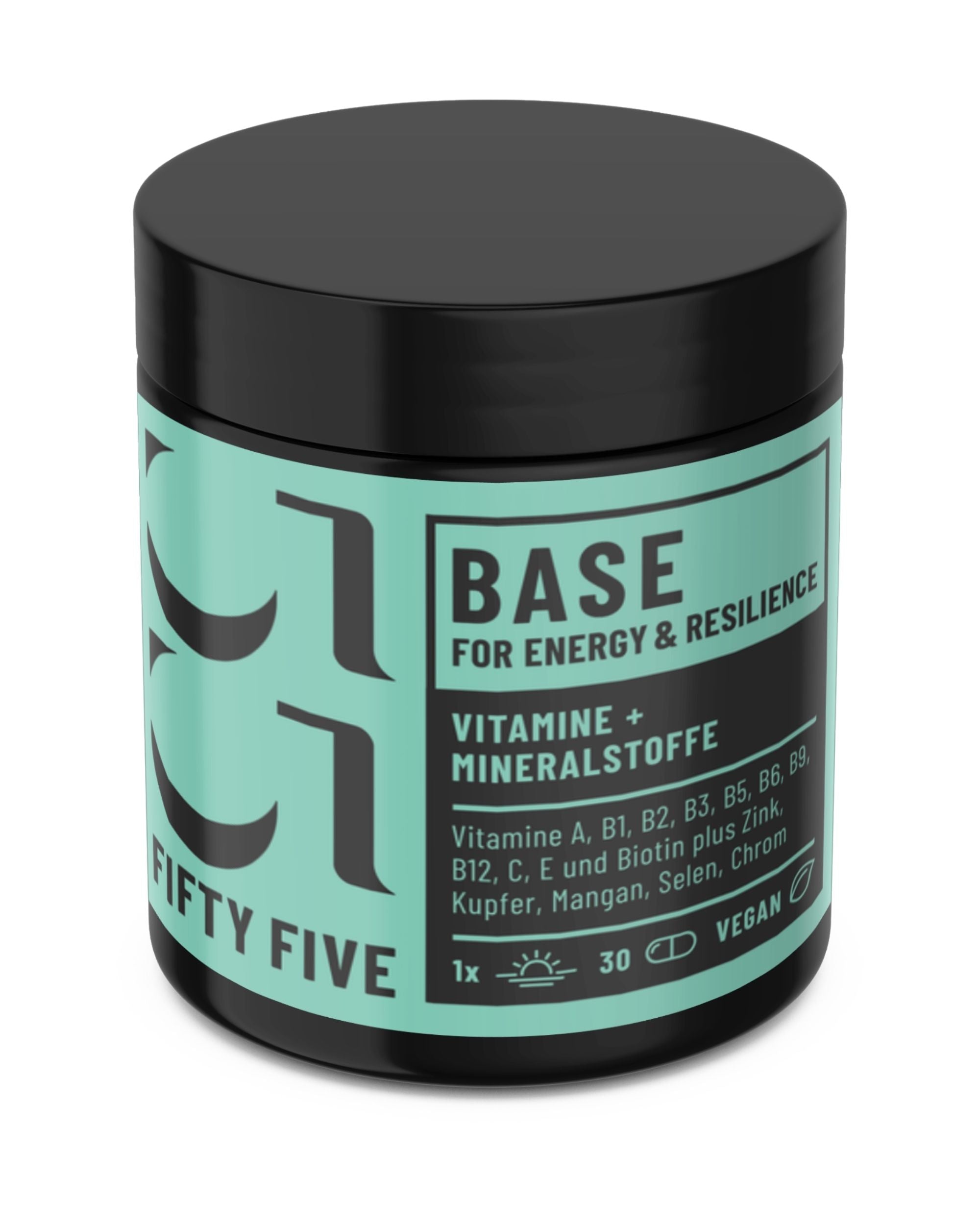
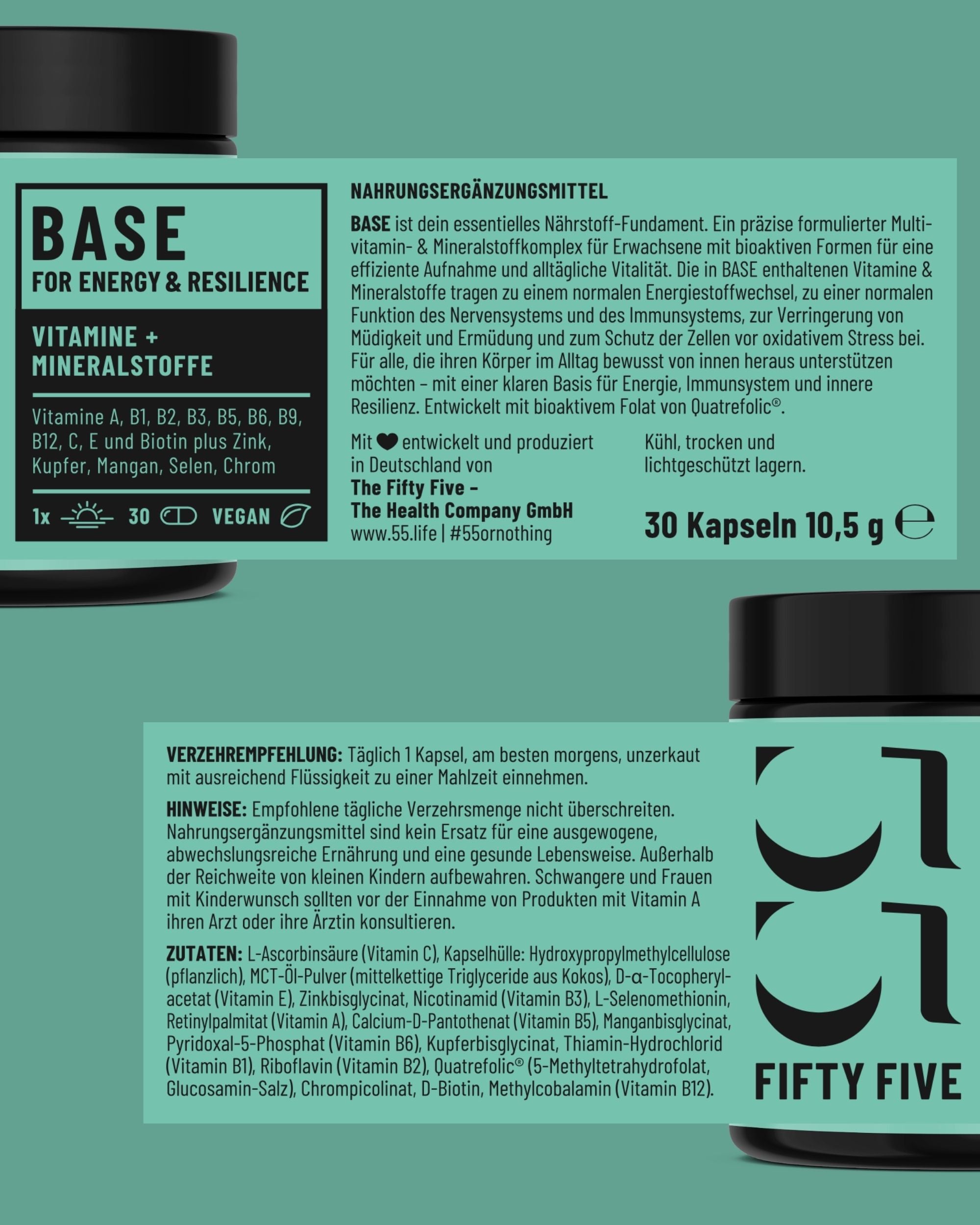
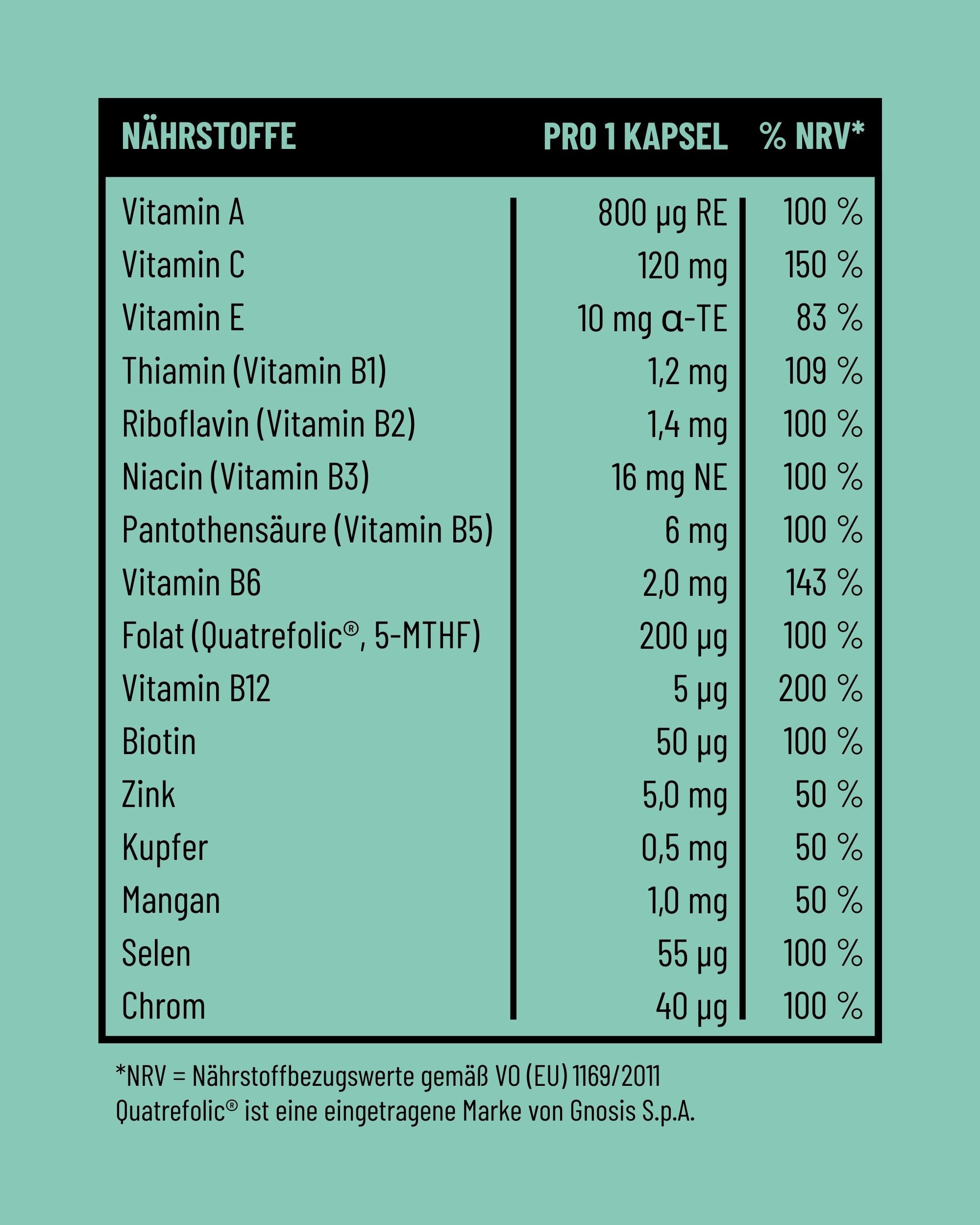
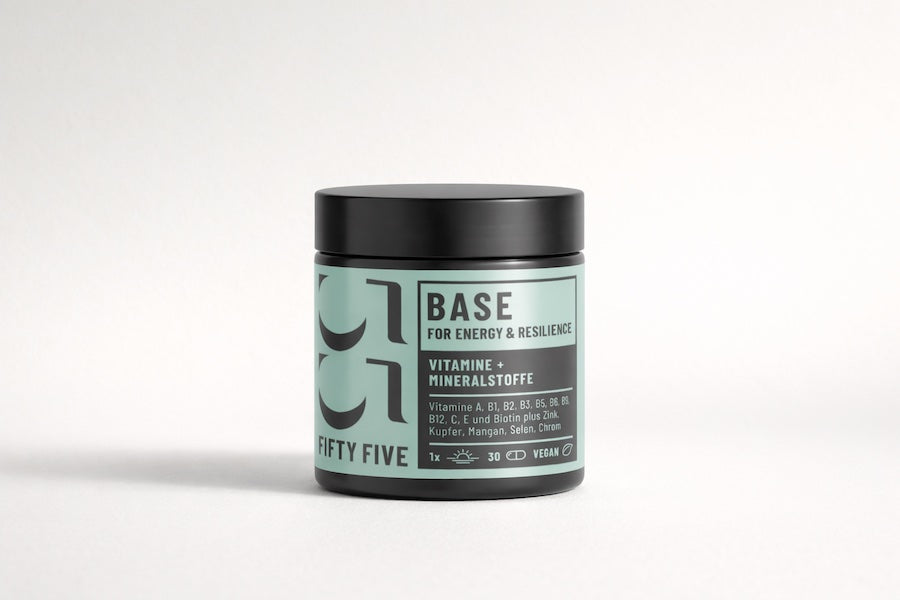
Leo looked for a system that covers exactly these points without having to order five different jars. "I had no interest in turning it into a science of its own. I wanted a setup that holds up." He started with BASE by Fifty Five to keep his cognitive functions and nervous system steady through the B vitamins and zinc. "It was my attempt to give my brain the fuel it needs for 900 pages of lecture notes without constantly overheating."
Discovering the logic of calm
In addition to his foundational supply, Leo integrated CALM into his evening ritual. "ChatGPT had pointed me to magnesium bisglycinate because it's supposed to be better for the head than the stuff from the supermarket. Fifty Five had exactly that in the formula." For Leo, it became the anchor: "It helped me get out of that permanent fight-or-flight mode. I could switch off well before sleep and woke up in the morning without that brain fog."
Fifty Five Insight: Leo's approach was intuitively right. In phases of massive mental strain, the brain consumes a disproportionate amount of magnesium and B vitamins. Without this foundation, adaptogens like ashwagandha often cannot unfold their full potential, because the system is already short on the basic biochemical building blocks.
Focus is not a coincidence
Today, Leo treats exam season like an athletic challenge. He combines BASE for focus at the desk with targeted recovery phases supported by CALM. "I've learned that concentration is not a permanent state you can force. You have to give your system the chance to recover. The combination of the right base and targeted relaxation has massively increased my output."
Leo's takeaway: "Invest in your system before it overheats"
"My tip for everyone at university: don't wait until your head is smoking. The study marathon isn't won with even more coffee, but with a stable nervous system. For me, switching from aimless stress to a clear nutrient logic was the key to not just surviving my thesis, but finishing it with a clear head."
→ To the complete multivitamin guide
→ To the complete magnesium guide
Disclaimer:
This article is for informational purposes only and does not replace medical advice, diagnosis, or treatment by a physician or pharmacist. The information provided here should not be used for self-diagnosis or self-treatment. Food supplements are no substitute for a balanced, varied diet and a healthy lifestyle. For any health questions or complaints, please always consult a doctor you trust. Fifty Five accepts no liability for any inconvenience or harm resulting from the use of the information presented here.




Omega-3 Dosage: How Much DHA and EPA You Need Daily
Magnesium Forms Compared: Which One Is Best for You?
Share: