


When women look for a multivitamin, they encounter two extremes in the market: the generic "all-in-one" product without any specificity, and the overpriced "for women" product that sells the same contents in different packaging with a few marketing terms. This article explains what is actually relevant: which nutrients play a special role for women, why that is, and where a multivitamin reaches natural limits.
Why women have different priorities
Nutrient needs are biologically not completely identical between the sexes. That is mainly due to two factors: the menstrual cycle and its hormonal shifts, and specific life stages like pregnancy and breastfeeding that can strongly change the need for individual nutrients.
In addition, women in Western countries statistically suffer more often than men from supply gaps in iron, folate, and vitamin D. Partly diet-related, partly hormonal.
Folate: indispensable, but not only in pregnancy
Folate is known above all as a pregnancy nutrient, and rightly so: folate contributes to normal maternal tissue growth during pregnancy. Women planning a pregnancy should take in sufficient folate, ideally already before conception.
But folate is also relevant outside pregnancy: it contributes to normal homocysteine metabolism, supports blood formation, and matters for normal psychological function. Women using hormonal contraception sometimes have an increased need, since oral contraceptives can influence folate levels.
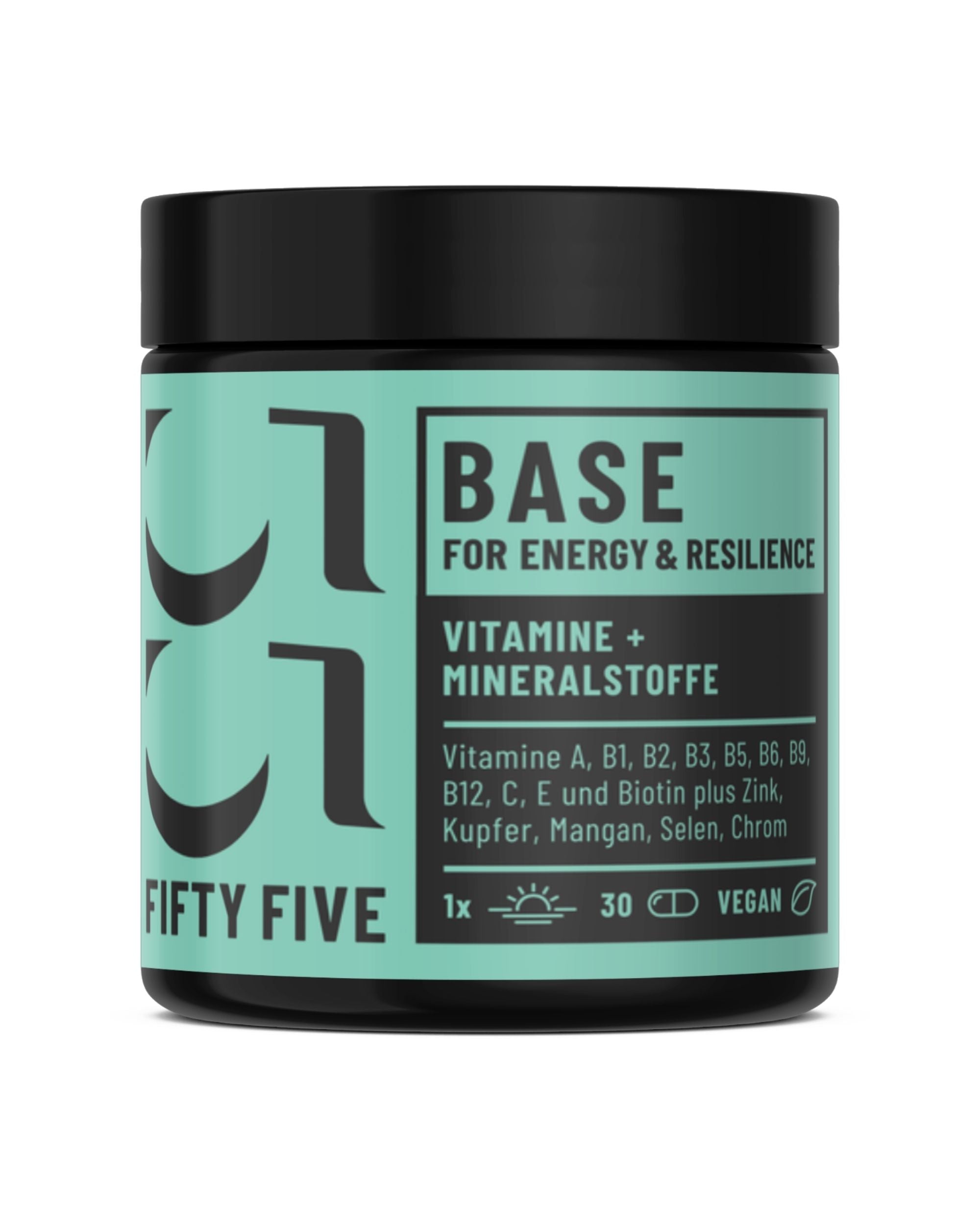
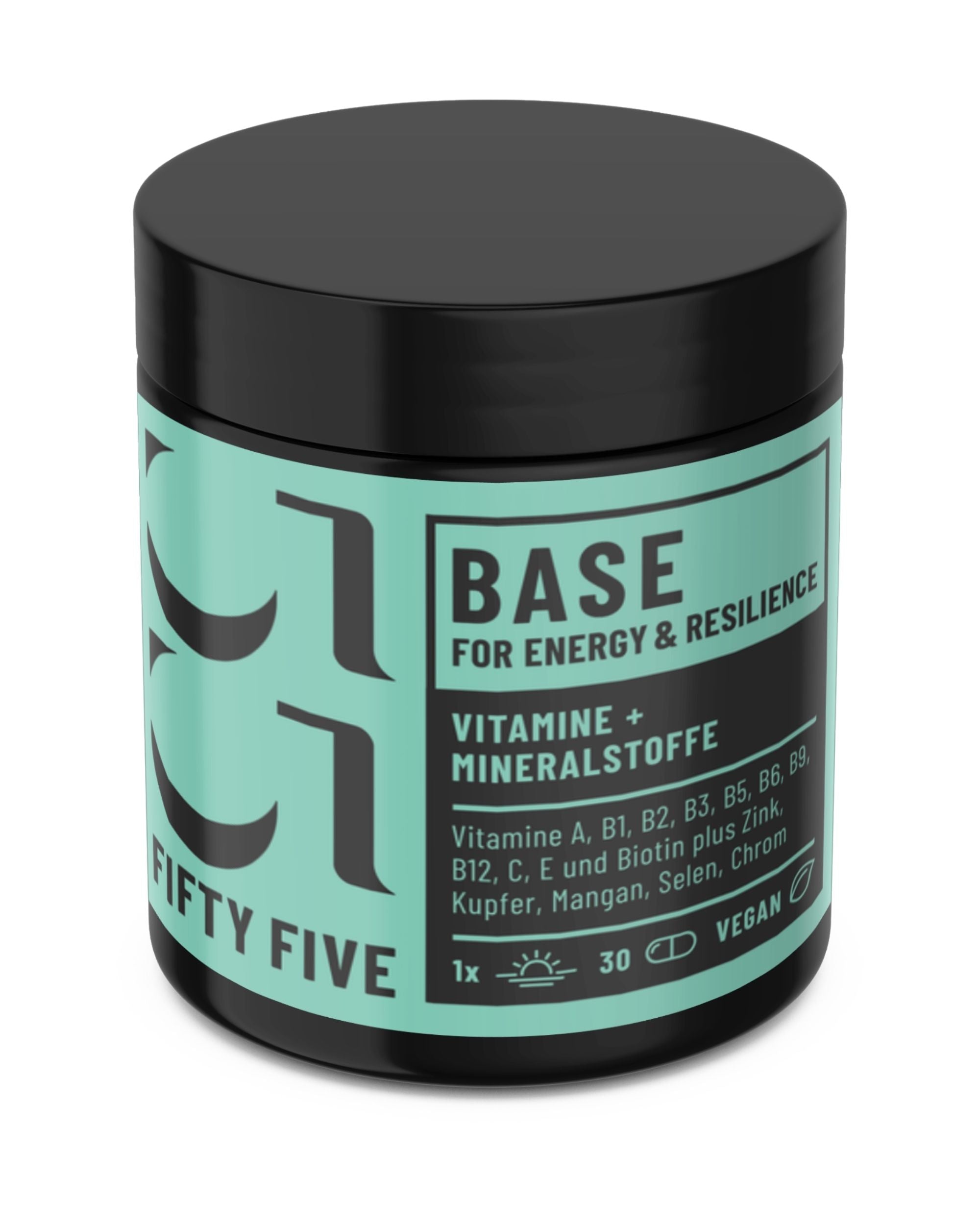
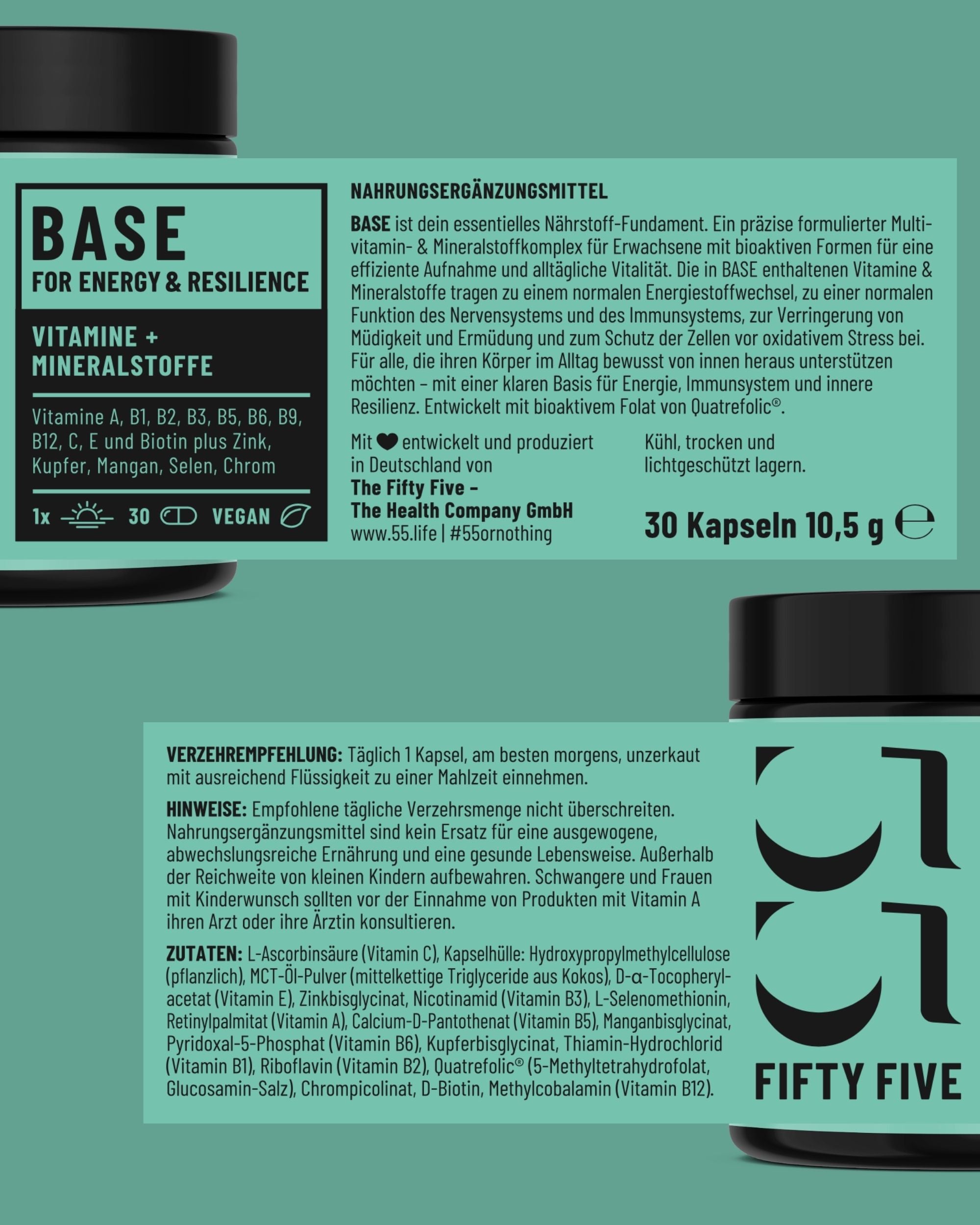
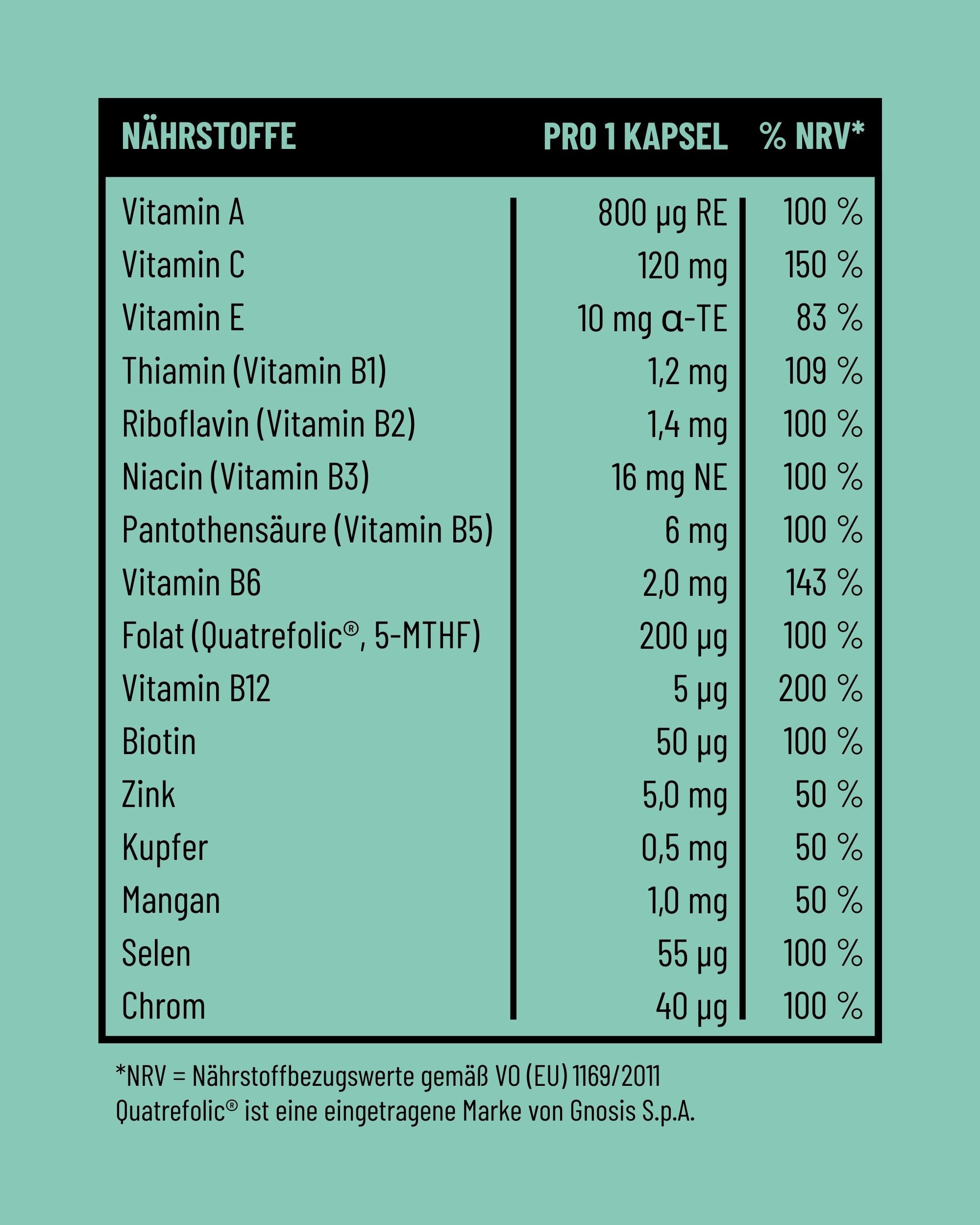
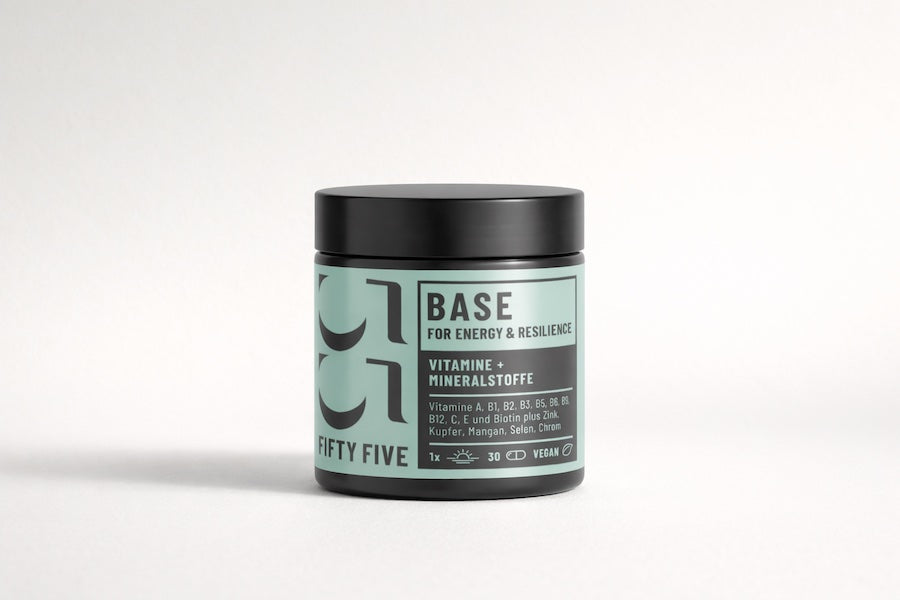
BASE contains folate in the bioactive form 5-MTHF (methylfolate via Quatrefolic). That is relevant because part of the population is genetically less able to convert synthetic folic acid. 5-MTHF bypasses this step.
Iron: important, but not a component of a universal multivitamin
Iron is the nutrient where menstruating women most frequently have gaps. The monthly blood loss raises iron needs considerably. Nevertheless, BASE contains no iron, and that is a deliberate decision. Iron has a narrow therapeutic range: too little is a problem, too much is a real health risk. Universal supplementation without knowing your individual iron status is not sensible. Iron deficiency should be diagnosed and treated in a targeted way, not supplemented across the board.
B vitamins: energy, hormonal balance, and the nervous system
BASE contains the complete B vitamin spectrum: B1, B2, B3, B5, B6, B12 (as methylcobalamin), biotin, and folate. This group is relevant for women for several reasons:
B6 contributes to the regulation of normal hormonal activity and is, among other things, a frequently discussed nutrient for PMS-related complaints. The data is not clear enough for a treatment promise, but B6 belongs to the nutrients where sufficient supply plays a role in the cycle.
B12 (methylcobalamin) contributes to normal energy-yielding metabolism and normal functioning of the nervous system. For vegan and vegetarian women, a secured B12 supply is particularly relevant since B12 occurs almost exclusively in animal foods.
Biotin (in BASE as D-biotin) contributes to the maintenance of normal skin, hair, and nails.
Zinc: frequently underestimated, often undersupplied
Zinc contributes to normal blood testosterone levels and is relevant for the immune system and cell division. Women with heavy menstruation also lose trace elements with the blood, including zinc. BASE contains zinc as zinc bisglycinate, a chelated form with comparatively good bioavailability.
Where a multivitamin reaches its limits
Vitamin D3 is not included in BASE. That is a deliberate decision: vitamin D needs are highly individual. RISE by Fifty Five covers D3 and K2 as a standalone product. Fully vegan formulated for people who want to deliberately extend their baseline supply with a D3/K2.
Iron, as described above, is not included in BASE. Anyone with iron deficiency needs a targeted iron supplement, not a universal multivitamin with iron.
Calcium is also missing: the daily doses that would sensibly cover calcium cannot be integrated into a capsule of this size.
More on the composition of BASE is available in detail in the multivitamin guide.
FAQ
Do women need a special "for women" multivitamin?
Not necessarily. Many "for women" products contain essentially the same nutrients with adjusted dosages. More relevant is the question of whether the nutrients are present in bioactive forms and whether the product contains what matters for your concrete life situation.
Should I take a multivitamin during pregnancy too?
A standard multivitamin is no substitute for a specially formulated pregnancy supplement. Pregnant women should discuss with their doctor which nutrients are relevant in which amounts. BASE is not marketed as a pregnancy product.
Can the pill change nutrient needs?
Yes. Hormonal contraceptives can influence the need for B6, B12, folate, magnesium, and zinc, among others. A well-formulated multivitamin with bioactive B vitamins can help balance these gaps.
When should I ask a doctor about my values?
If you suffer from persistent exhaustion, hair loss, brittle nails, or frequent infections. A blood panel provides clarity before you start supplementing blindly.
Is BASE suitable for vegan women?
Yes. BASE is fully vegan formulated and contains the important vitamin B12 as methylcobalamin. What BASE does not contain: vitamin D3 (= RISE) and omega-3 (= PULSE).
Disclaimer:
This article is for informational purposes only and does not replace medical advice, diagnosis, or treatment by a physician or pharmacist. The information provided here should not be used for self-diagnosis or self-treatment. Food supplements are no substitute for a balanced, varied diet and a healthy lifestyle. For any health questions or complaints, please always consult a doctor you trust. Fifty Five accepts no liability for any inconvenience or harm resulting from the use of the information presented here.
Sources
- German Nutrition Society (DGE). D-A-CH reference values for nutrient intake.
- EFSA. Dietary reference values (overview).
- German Federal Institute for Risk Assessment (BfR). Maximum levels for vitamins and minerals in food supplements.
- European Commission. EU Register of nutrition and health claims.
- Robert Koch Institute (RKI). DEGS – German Health Interview and Examination Survey for Adults.





Magnesium for Women: Support for PMS & Period Cramps
When to Take Vitamin D: Timing, Meals, and What Really Influences Absorption
Share: