


Many people buy a multivitamin, take it in the morning for a few days, then sometimes in the evening, sometimes with breakfast, sometimes on an empty stomach. And then at some point they wonder whether the timing actually matters. The answer: yes, but with caveats. The intake time influences how well individual nutrients are absorbed and whether you risk stomach problems. This article explains what counts.
Why the intake time is relevant at all
A multivitamin contains nutrients of different classes: fat-soluble vitamins like A and E, water-soluble vitamins like C and the B vitamins, plus minerals like zinc and selenium. These classes behave differently in the body, and that has direct consequences for the right timing.
Fat-soluble vitamins need dietary fat to get from the gut into the blood. Without fat in the meal, part of them is not absorbed and goes to waste. Water-soluble vitamins, on the other hand, can in principle be absorbed without fat but are often less well tolerated on an empty stomach.
Taking a multivitamin on an empty stomach is therefore not a good idea for two reasons: the fat-soluble components are absorbed less well, and with a sensitive stomach, the intake can trigger nausea.
Morning or evening: what speaks for which time?
In favor of the morning: Most people treat their breakfast as a constant routine. If you consistently eat in the morning, you automatically have a stable anchor point for your intake. Consistency is the most important factor for the effectiveness of a supplement routine. Not the exactly optimal time, but actually sticking with it.
For nutrients that support energy metabolism, B vitamins contribute to normal energy-yielding metabolism, for example, and vitamin C contributes to the reduction of tiredness and fatigue, taking them in the morning intuitively makes sense.
In favor of the evening: Not much in this context. Multivitamins typically contain no nutrients specifically formulated for nighttime processes. Taking it in the evening is not a bad idea, but there is no substantive advantage over the morning.
The only exception: if you fundamentally have no appetite in the morning and only drink coffee, you should either push the multivitamin back until you eat a first meal, or deliberately eat a few nuts or a little fat with it.
The meal matters more than the clock time
The decisive variable is not the clock time but the food before or alongside it. Breakfast or another main meal delivers the fat needed for the absorption of vitamin A and vitamin E. A classic breakfast with eggs, avocado, olive oil, or nuts already provides enough for that.
So take your multivitamin with or directly after a meal. In the morning or at noon, whichever is most stable for your routine.
How BASE is designed
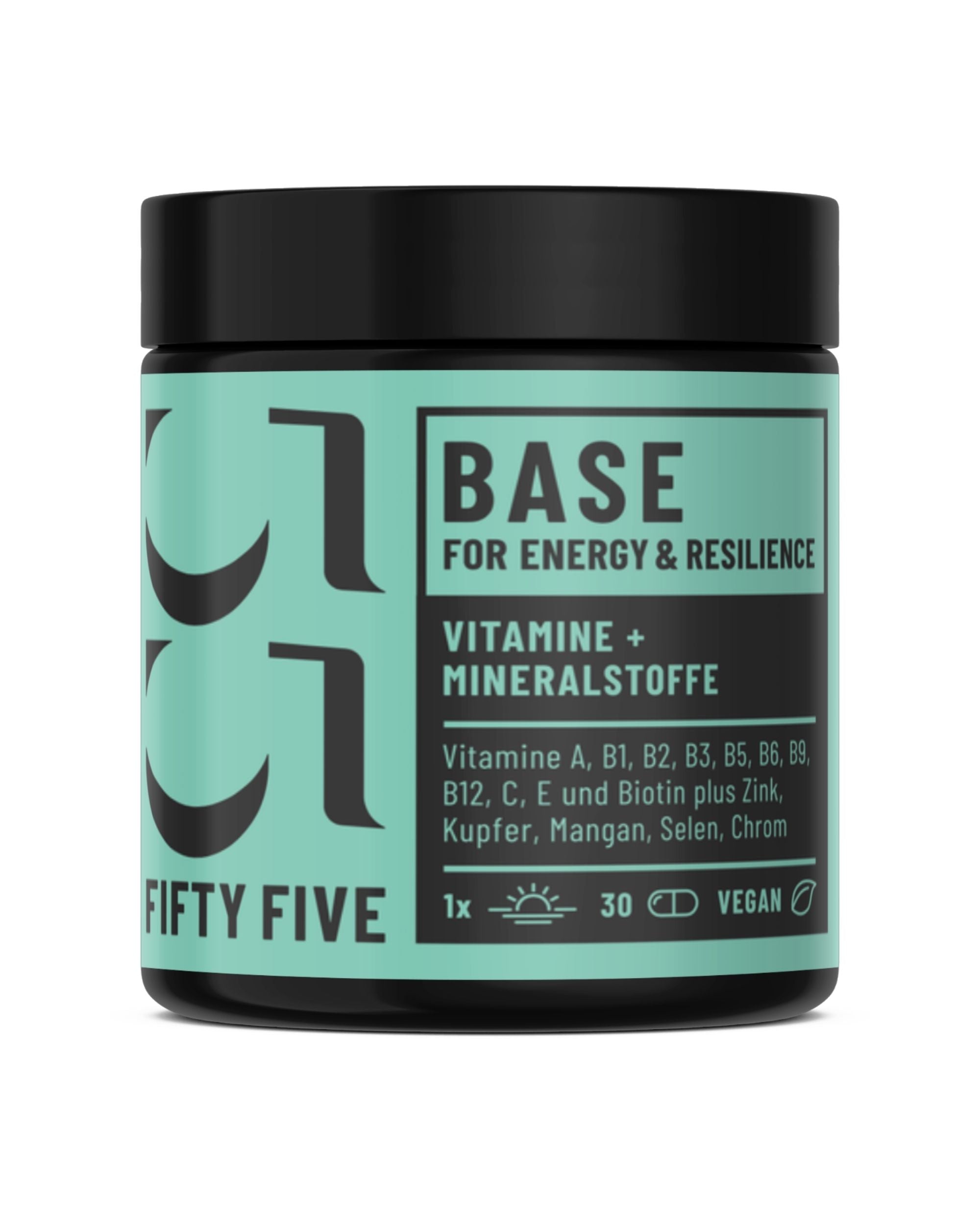
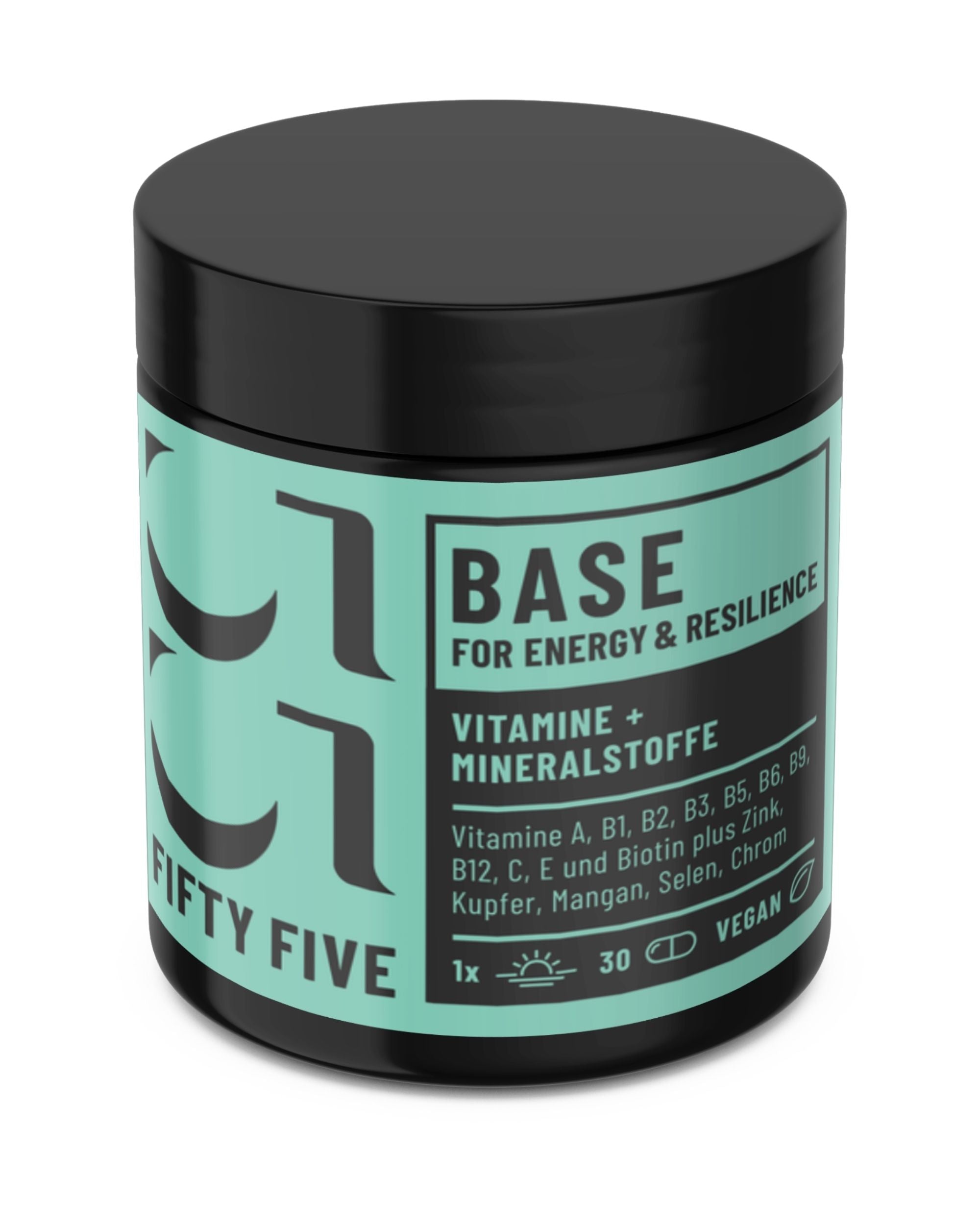
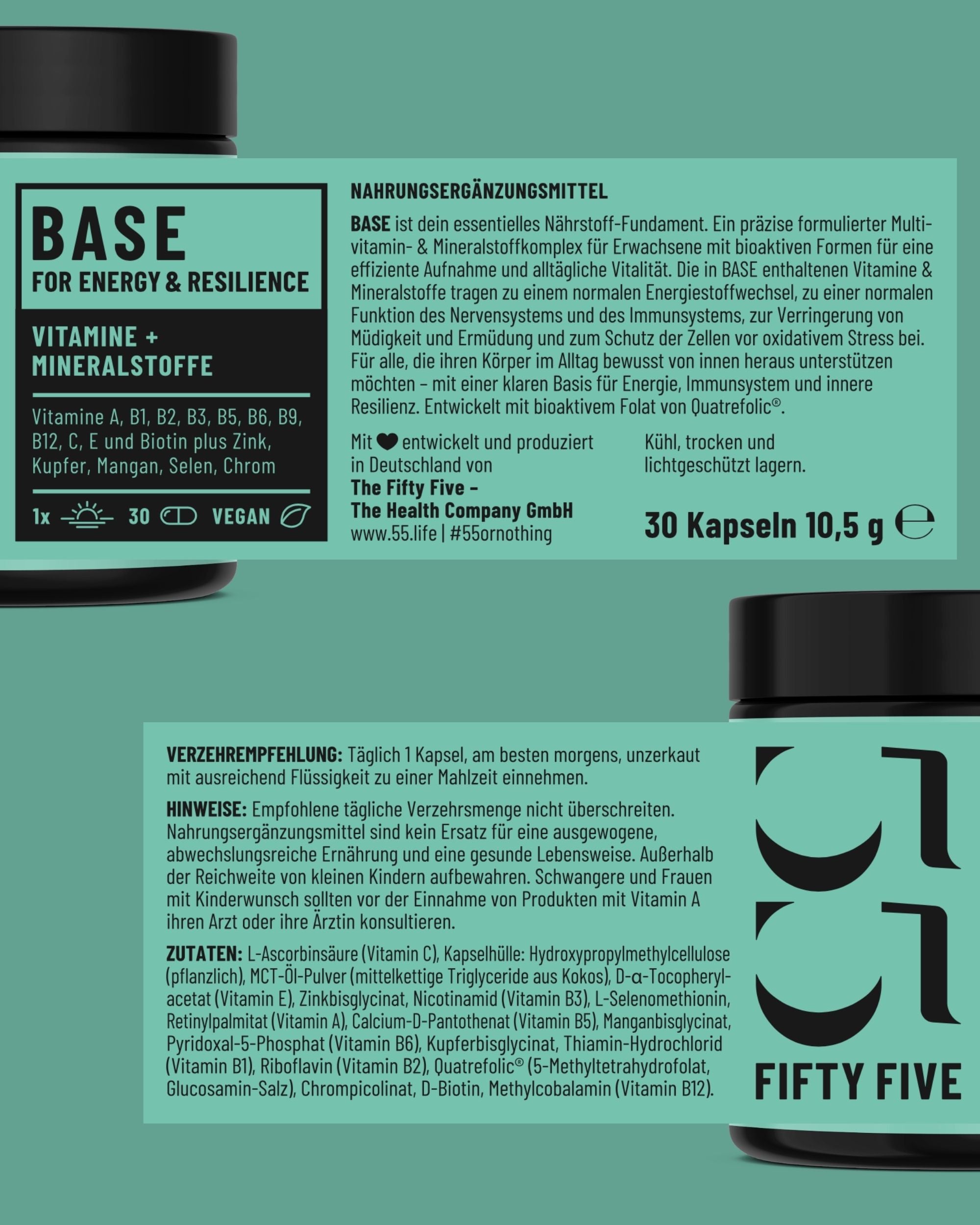
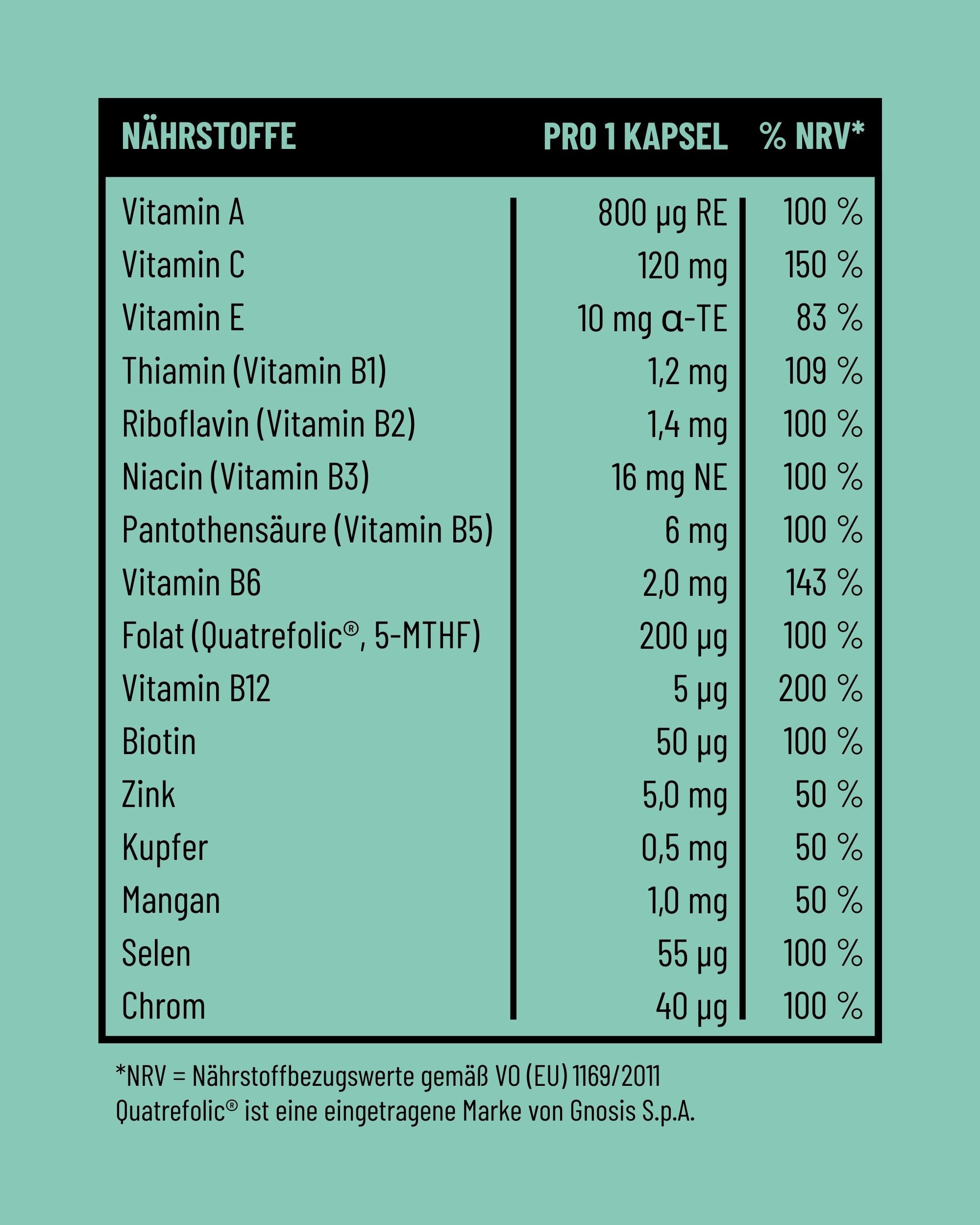
BASE by Fifty Five is designed for one intake per day, ideally in the morning. The formulation contains vitamins A and E as fat-soluble vitamins that need accompanying fat for optimal absorption, which is why the morning with breakfast is the most natural intake time. The formulation design with MCT oil powder as a carrier helps integrate the fat-soluble components better even with a lighter meal.
More on the formulation and the contained nutrients can be found in detail in the multivitamin guide.
Three things you should not do
Take it on an empty stomach. Unnecessary with a full multivitamin, and even risky with a sensitive stomach.
Take it with black coffee alone. No fat, no buffering in the stomach.
Take it at a different time of day every time. The biggest risk with supplements is forgetting them. A fixed spot in your morning routine beats any theoretically optimal time.
FAQ
Do I have to take a multivitamin in the morning?
No, there is no biological obligation to do so. The morning works best for most people because breakfast is a stable anchor point in the routine. If you can build the multivitamin more firmly into your routine at noon or in the evening, you lose no relevant advantage.
Can I take a multivitamin on an empty stomach?
Technically yes, but it is not recommended. Without fat in the meal, vitamins A and E are absorbed less well. If you tend toward fasted intake, you should at least add a little bit of fat, such as a handful of nuts.
Can I take a multivitamin with coffee?
Coffee itself does not significantly interfere with vitamin absorption. The problem is a breakfast that consists only of coffee. If you eat something with your coffee, there is no problem.
How long does it take for a multivitamin to work?
Supplements do not build up a short-term noticeable effect like caffeine. The benefit lies in balancing supply gaps over time. If you supplement regularly over weeks, you give your body the opportunity to build stable nutrient levels.
Should I take my multivitamin and magnesium together or separately?
Separately is more practical: BASE in the morning with breakfast, CALM in the evening before sleep. That covers different needs at different times of day.
Does a multivitamin interact with medications?
Individual nutrients can interact with certain medications. Anyone taking anticoagulants (e.g. warfarin) should discuss vitamin K-containing supplements with their doctor. BASE contains no vitamin K. With other medications, a brief consultation with your pharmacy is advisable.
Disclaimer:
This article is for informational purposes only and does not replace medical advice, diagnosis, or treatment by a physician or pharmacist. The information provided here should not be used for self-diagnosis or self-treatment. Food supplements are no substitute for a balanced, varied diet and a healthy lifestyle. For any health questions or complaints, please always consult a doctor you trust. Fifty Five accepts no liability for any inconvenience or harm resulting from the use of the information presented here.
Sources
- German Nutrition Society (DGE). D-A-CH reference values for nutrient intake.
- EFSA. Dietary reference values (overview).
- German Federal Institute for Risk Assessment (BfR). Maximum levels for vitamins and minerals in food supplements.
- European Commission. EU Register of nutrition and health claims.
- Robert Koch Institute (RKI). DEGS – German Health Interview and Examination Survey for Adults.







Magnesium for Stress and Sleep: How Nutrients Support Your Nervous System
Vitamin D for Women: What the Body Really Needs in Different Life Stages
Share: