


Most people who take a multivitamin do not give it much thought. In most cases, that is appropriate. Nevertheless, there are real risks with certain nutrients, and real interactions worth knowing. This article sorts out what is relevant and what is exaggerated.
The most important distinction: fat-soluble vs. water-soluble
The risk of an overdose depends decisively on whether a vitamin is fat-soluble or water-soluble.
Water-soluble vitamins, meaning vitamin C and all B vitamins, are excreted by the body via the kidneys when in excess. That limits the toxicity risk considerably. At very high amounts, complaints can still occur: vitamin B6 in megadoses can cause nerve disorders, and vitamin C in very high doses can trigger gastrointestinal complaints. The amounts contained in a normal multivitamin, however, lie far below that.
Fat-soluble vitamins, vitamins A, D, E, and K, are stored in the body and not simply excreted. This is where the real overdose risk lies. Vitamin A in particular can lead to liver damage and bone problems with permanently excessive intake.
Which side effects can occur with a multivitamin
Gastrointestinal complaints: The most common reason people experience the intake as unpleasant. The cause is usually taking it on an empty stomach. The solution: always take it with or after a meal.
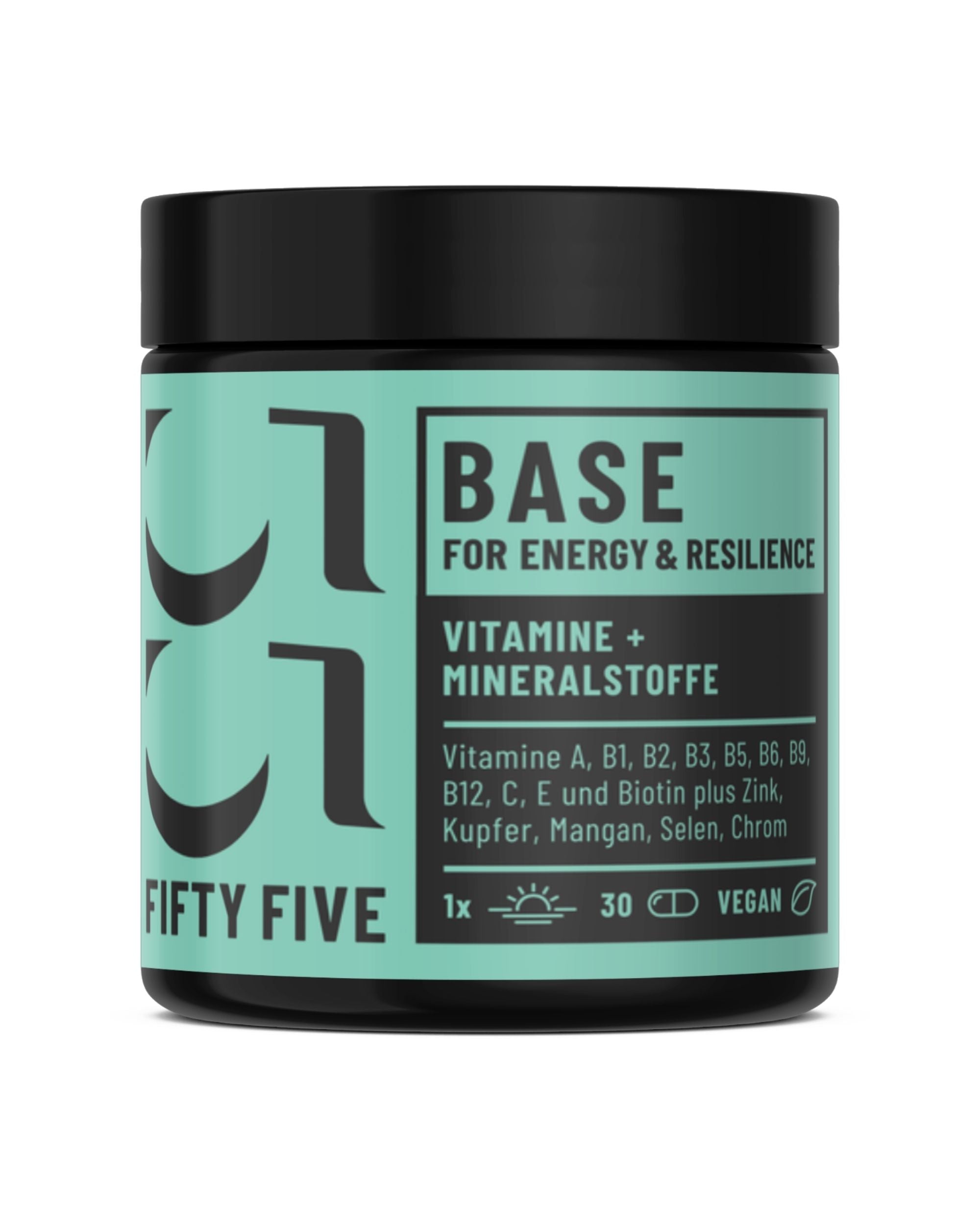
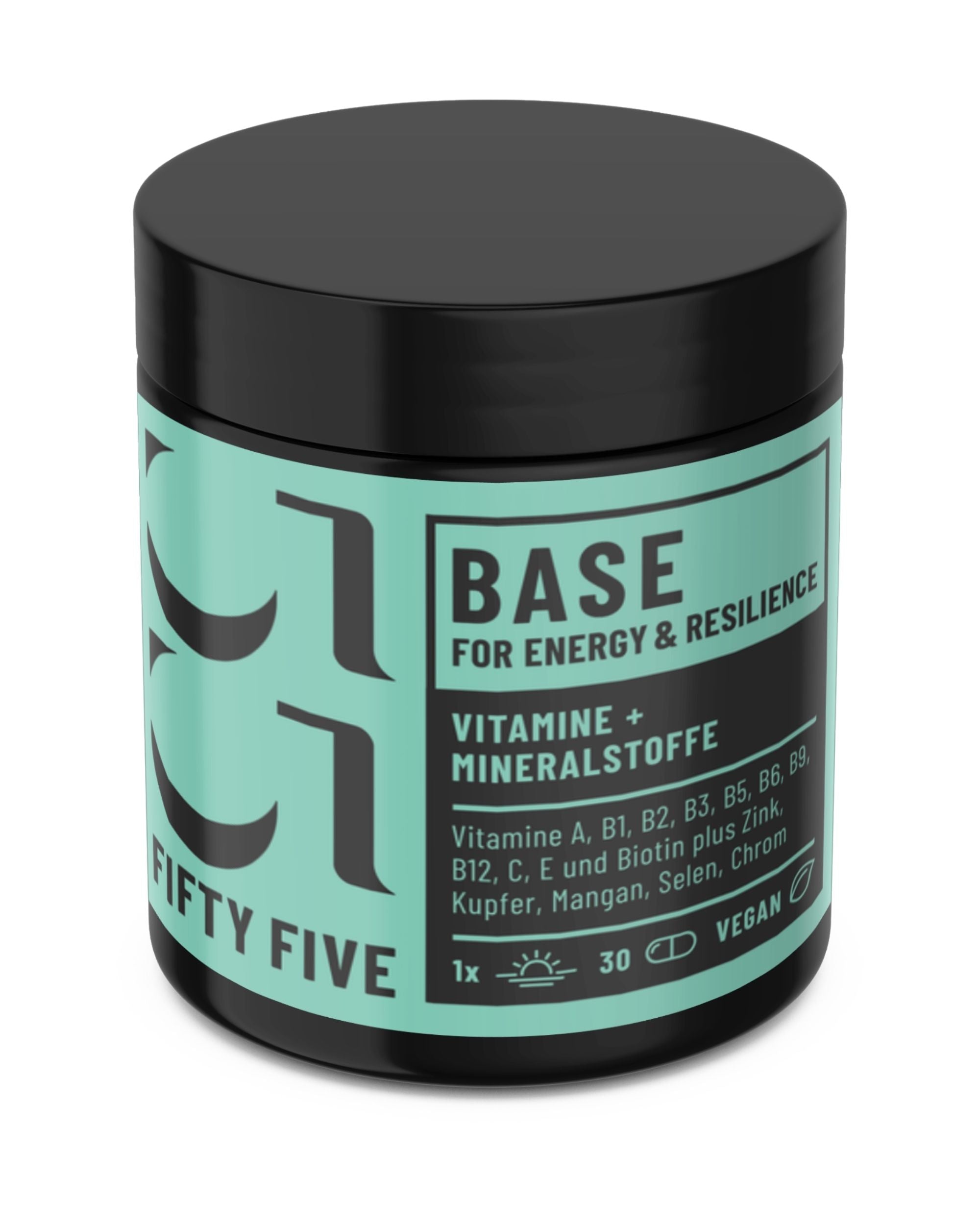
Nausea: Occurs more frequently with higher-dosed zinc or iron products. BASE contains zinc but no iron.
Changed urine: Anyone taking B vitamins for the first time is sometimes surprised by more intensely yellow urine. That is not a sign of a problem but of riboflavin (vitamin B2) that the body excretes.
Allergic reactions: Rare but possible with individual ingredients. With corresponding symptoms, stop the intake immediately and see a doctor.
Interactions with medications
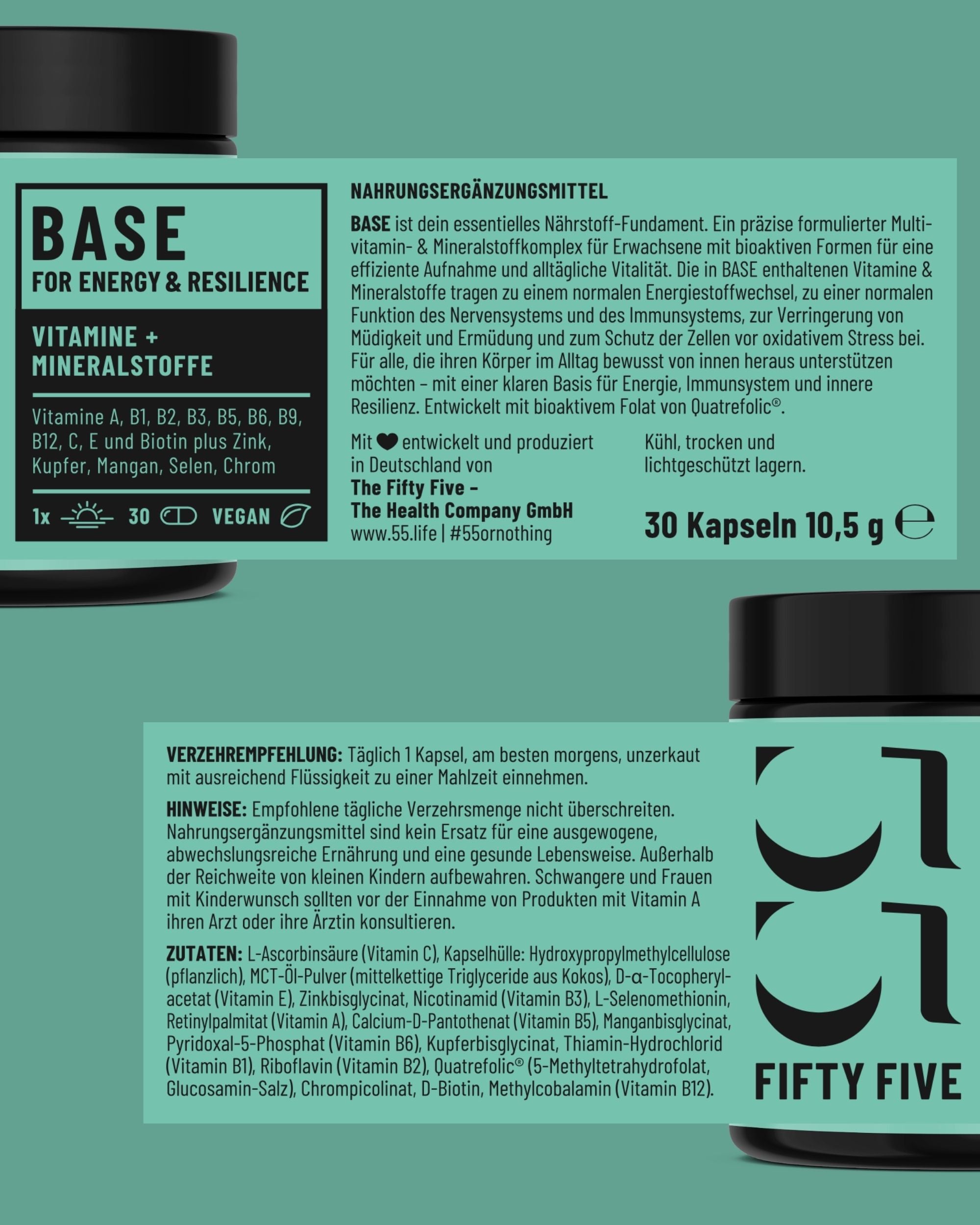
Vitamin K: For patients taking anticoagulants like warfarin or phenprocoumon, vitamin K can influence blood-thinning therapy. BASE contains no vitamin K; it is part of RISE.
Folic acid: Interacts in rare cases with certain chemotherapy drugs (methotrexate). With active cancer therapy, always talk to your treating physician.
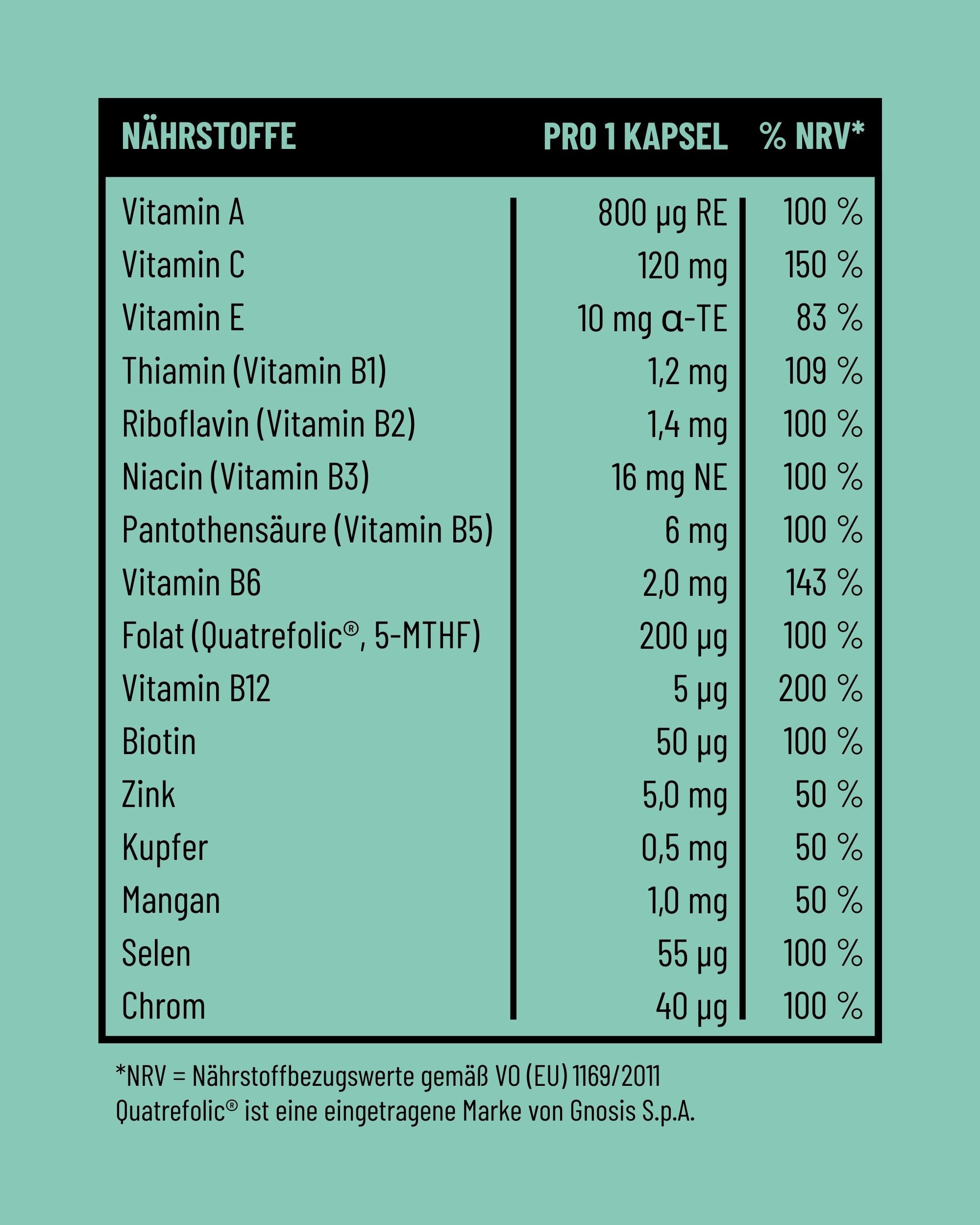
Zinc and copper: Both compete for absorption. A well-formulated multivitamin contains both in a coordinated ratio. BASE contains zinc bisglycinate and copper bisglycinate in amounts matched to each other.
Antibiotics and mineral complexes: Some antibiotic groups form poorly absorbable compounds with zinc. Therefore, take your multivitamin and antibiotics at staggered times, at least two hours apart.
Why BASE cannot be overdosed when taken normally
BASE by Fifty Five is designed for one capsule daily. The contained amounts for all nutrients lie below the maximum levels for food supplements recommended by the BfR (the German Federal Institute for Risk Assessment). Vitamin A is included in an amount that covers the daily reference value without exceeding it. The principle behind BASE: deliberately formulated instead of maximally overloaded. Substance over hype.
More on the formulation and the selection of nutrient forms in the multivitamin guide.
What a real overdose means, and when you do not need to worry
Vitamin toxicity from a normal multivitamin is a very rare event in clinical reality. The relevant cases arise almost exclusively from very high-dose single supplements over a long time, from combining several supplements without an overview of total intake, or from fortified foods being added to supplements without reflection.
FAQ
Can you take in too much vitamin A through a multivitamin?
Not with a normally dosed multivitamin designed for one capsule daily. The risk arises when someone takes high-dose vitamin A single supplements and a multivitamin at the same time. Pregnant women should pay particular attention to preformed vitamin A and consult their doctor.
Why is my urine yellow-orange after taking it?
That is riboflavin (vitamin B2), a water-soluble substance with a characteristic color of its own. The body excretes what it does not need. Not a sign of an overdose.
Can I take a multivitamin and magnesium at the same time?
Yes, without concern. If you combine BASE and CALM, ideally take BASE in the morning and CALM in the evening. Not for safety reasons, but because it makes for the more natural routine.
How long can I take a multivitamin daily?
With a normal multivitamin at the recommended dosage, there is no time limit for ongoing supplementation. Supplements are meant as a complement to everyday supply, not as a short-term cure.
What to do if you do not tolerate it?
Test taking it with a meal richer in carbohydrates and fat. If the complaints persist despite correct intake, stop taking it and review the ingredient list. With persistent symptoms, see a doctor.
Disclaimer:
This article is for informational purposes only and does not replace medical advice, diagnosis, or treatment by a physician or pharmacist. The information provided here should not be used for self-diagnosis or self-treatment. Food supplements are no substitute for a balanced, varied diet and a healthy lifestyle. For any health questions or complaints, please always consult a doctor you trust. Fifty Five accepts no liability for any inconvenience or harm resulting from the use of the information presented here.
Sources
- German Nutrition Society (DGE). D-A-CH reference values for nutrient intake.
- EFSA. Dietary reference values (overview).
- German Federal Institute for Risk Assessment (BfR). Maximum levels for vitamins and minerals in food supplements.
- European Commission. EU Register of nutrition and health claims.
- Robert Koch Institute (RKI). DEGS – German Health Interview and Examination Survey for Adults.







Magnesium Side Effects: Avoiding Diarrhea & Interactions
Vitamin D Dosage: How Much D3 per Day Is Sensible and Safe?
Share: